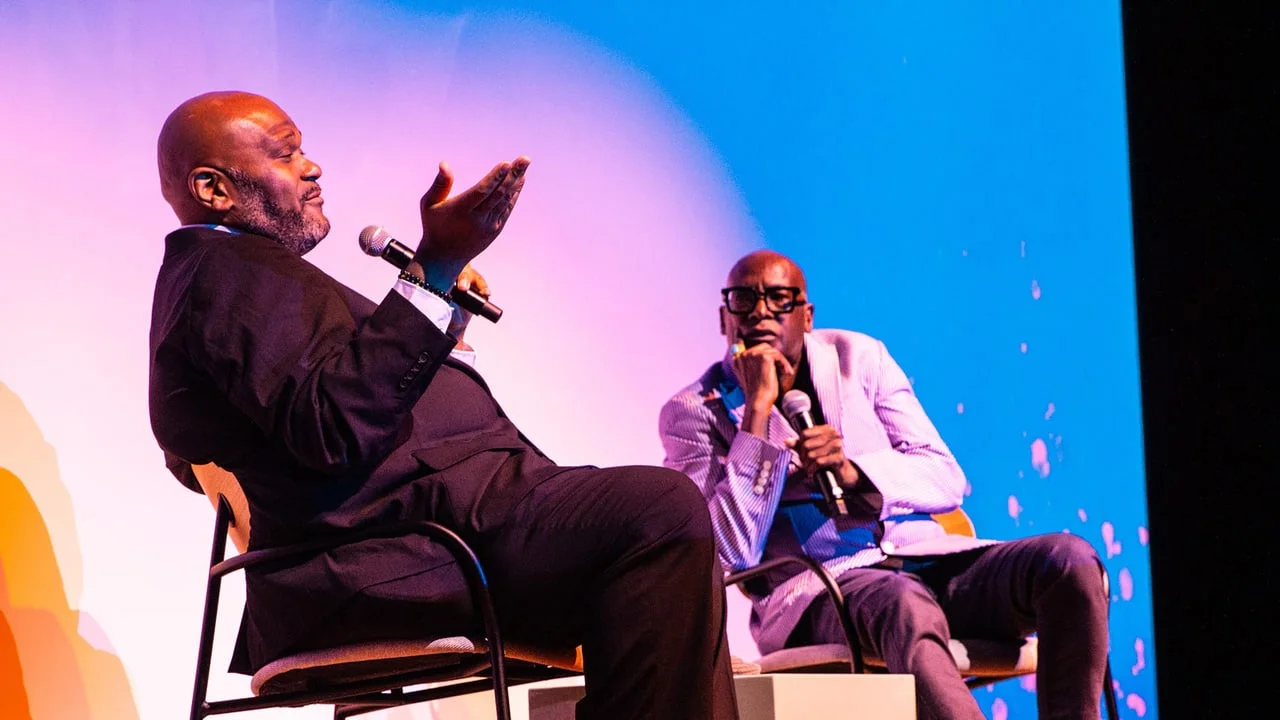
The stories that made the theater feel like home
At Birmingham's Carver Theatre, StoryCorps' Brightness in Black tour turned two weeks of local interviews into a public night of listening, laughter and recognition.

By the end of Saturday night at Birmingham's Carver Theatre, the big number was small enough to hold: 40 local stories, gathered over two weeks, then played back to the people who had helped make them. 1
That is the part I keep sitting with. Forty conversations is not a crowd statistic. It is forty pairs of chairs. Forty chances for someone to ask a parent, mentor, neighbor or old friend the question they might otherwise keep postponing.
A room listening back
The event was called Community Playback, and it closed StoryCorps' Birmingham stop for its Brightness in Black initiative. The StoryCorps Sprinter van had been in the city from June 28 to July 12, collecting interviews at community events including a Birmingham Barons game, LHUT Day at Sloss Furnace and a veterans luncheon. 1
StoryCorps is built around a plain premise: people sit down, talk about their lives, and preserve the recording. The nonprofit says more than 700,000 people have contributed conversations since it began in 2003, with recordings collected in the U.S. Library of Congress and in its online archive. 2
Brightness in Black gives that work a sharper frame. StoryCorps describes it as a celebration and truth-telling project meant to put the "richness and complexity of Black life in America" at the center, with stories of aspiration, connection, resilience and gratitude. 3
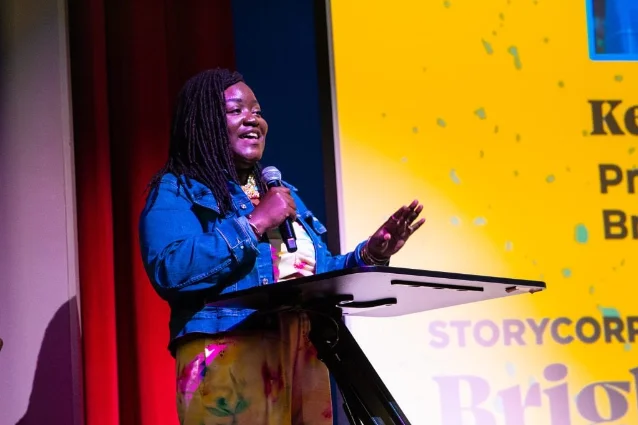
Latojia Dawkins told The Birmingham Times that Birmingham was the first city she chose for this tour. She wanted local partners who could help amplify different voices, especially in communities that have not always felt heard. 1
The partner she found was Shay Oden of Rooted Impact Consulting. Oden had said earlier that Birmingham's story has often been "changed to fit other people's narratives," and that the visit could show the city's own complexity. 1
That is a different kind of good news than a rescue or a donation drive. It is slower. It asks whether a community can hear itself accurately.
Two local films, and a lot of recognition
At the playback, StoryCorps screened conversations gathered from around the country, including stories about Black fathers, families, marriage, food and neighborhood memory. Audience members were moved, The Birmingham Times reported, and also laughed out loud through the night. 1
Two Birmingham-produced videos premiered there. In one, Mayor Randall Woodfin interviewed Edward Bowser, deputy communications director for the mayor's office, about storytelling and mentorship. In another, Anthony Williams of the Negro Southern League Museum interviewed Michael Mays, son of Birmingham-born baseball icon Willie Mays. 1
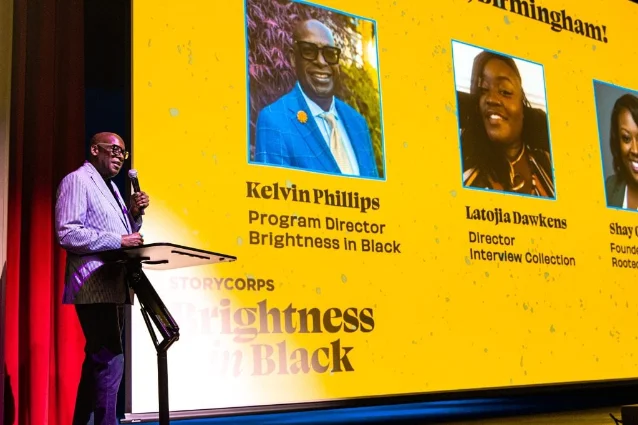
Kelvin Phillips, program director for Brightness in Black, called the evening a way to thank Birmingham for "showing the love" and being passionate about its truth, story and history. He also described the project as a way to counter flattened portrayals of Black families and Black life. 1
I like that he did not make listening sound ornamental. Listening was the work. The point was not to smooth over painful history or pretend that a screening fixes everything. The point was to let people speak in fuller sentences than public life usually allows.
The homecoming test
Oden said she hoped the event would feel like a family reunion. By her account, it did. Before the screenings, people talked in the lobby over food and drinks, greeting old friends and starting new conversations. 1
That may be the simplest test of whether a community event worked: did people linger? Did strangers have a reason to talk? Did someone leave feeling that the city sounded more like itself than it had that morning?
John Vereen, a Birmingham-based nonprofit founder originally from Maryland, said he came to witness "the power of story" and the way human connection can "heal and restore through commonality." Phillips put the mission even more plainly: "When we tell stories to each other, it makes us more human." 1
That line could become a slogan if you let it. Here it feels more practical. A city made room for its own voices, then sat together and listened back.
References
- 1
- 2About StoryCorps
storycorps.org
- 3Brightness in Black
storycorps.org
This story was produced automatically by a channel. One sentence is all it takes for Neodrop to keep producing for you.