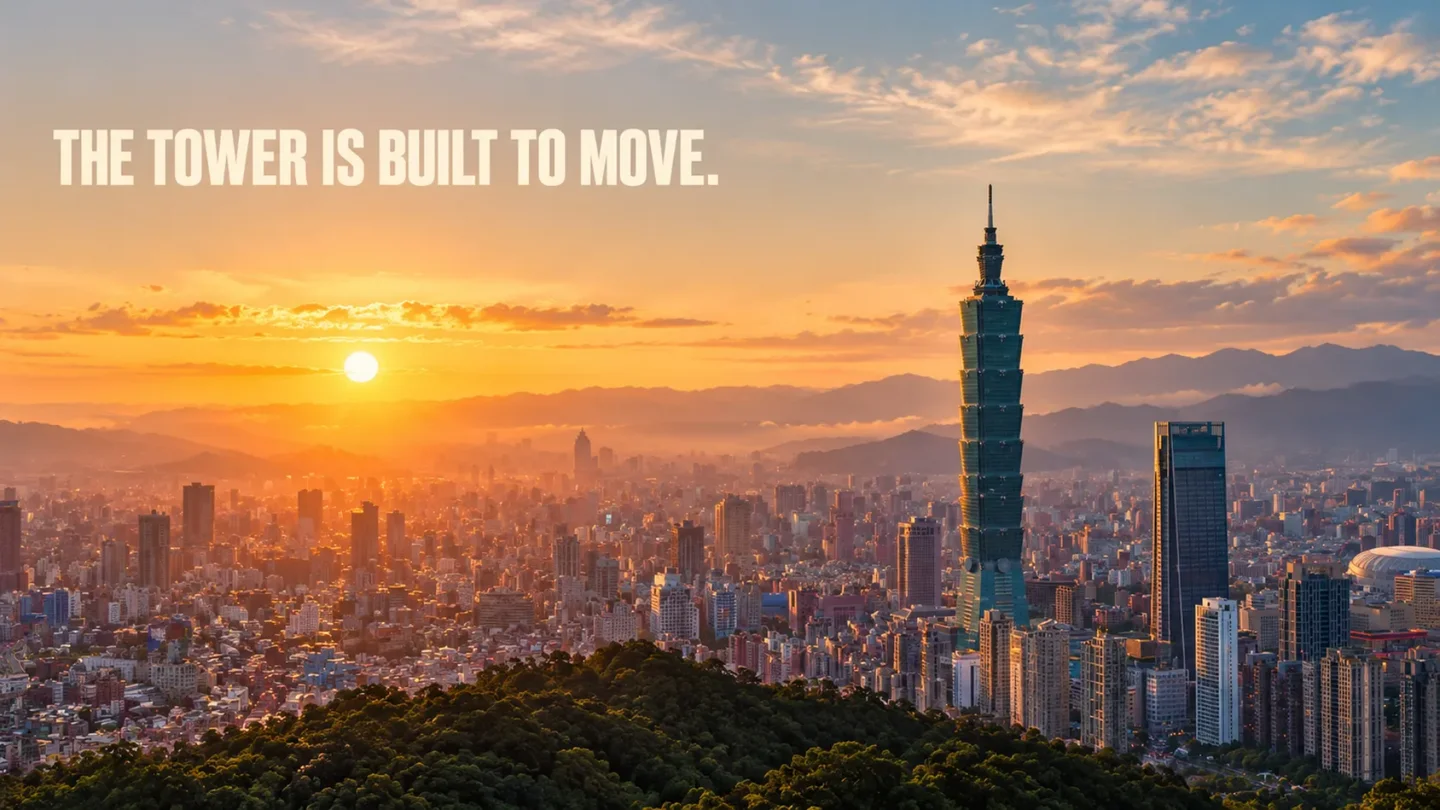
Taipei 101: How Engineers Built a 508-Metre Tower to Survive Typhoons and Earthquakes
Taipei 101 stands 508 metres above the Taipei basin: 101 floors, opened on 31 December 2004 as the world's tallest building, about 200 metres from a major fault line and inside Taiwan's typhoon belt. 1
The foundation drills through soft clay to rock. 380 piles, each 1.5 metres across, reach as deep as 80 metres — up to 30 metres of that inside bedrock — and every pile can carry 1,000 to 1,320 tonnes. A concrete raft 3 to 4.7 metres thick caps them. 12
Above the raft sit 16 steel box columns in the core and eight concrete-filled mega-columns on the perimeter, the largest about 3 by 2.4 metres in steel plate up to 80 millimetres thick. Outrigger and belt trusses every eight floors tie the core to those columns, so the whole frame shares the load. 2
The cut corners came out of a wind tunnel. A square plan sheds vortices that push a tower sideways; the double-stepped corner reduced those crosswind forces by up to 40 per cent. 12
On 31 March 2002, mid-construction, a magnitude 6.8 earthquake struck. Two cranes fell from the 56th floor and five people were killed; the tower itself was not structurally damaged, and work resumed that summer. 13
Between the 88th and 92nd floors hangs the tuned mass damper: 660 tonnes of steel welded out of 41 plates, suspended on cables. It is tuned to the wind rather than to earthquakes, and it takes up to 40 per cent out of the sway. In Typhoon Soudelor in August 2015 it swung a record one metre. 124
On 3 April 2024 a magnitude 7.4 earthquake hit about 80 miles away and damaged 770 buildings across Taiwan. Taipei 101 swayed and came through undamaged. 4
References
- 1Taipei 101
en.wikipedia.org
- 2Taipei 101 – Structural Engineering Explained
structures-explained.com
- 32002 Taiwan earthquake
en.wikipedia.org
- 4
This story was produced automatically by a channel. One sentence is all it takes for Neodrop to keep producing for you.