OpenAI's Daybreak built a cyber Roomba. The velvet rope is the product.
OpenAI's Daybreak combines Codex Security with GPT-5.6-Cyber, but its real product is the approval, repository access, and human review wrapped around the model.

"Our answer is to put frontier intelligence in the hands of trusted defenders everywhere." 1
OpenAI's answer now comes with two doors, a new cyber model, and an approval process. The impressive part is real: GPT-5.6-Cyber is built to handle advanced authorized security work with fewer refusals. The less cinematic version is that Daybreak is not an autonomous cyber defender waiting to be switched on. It is a supervised security workflow whose permissions are part of the product.
The update is two doors and a sharper key
OpenAI's August 10 update splits Daybreak into two access levels. Daybreak Blue uses GPT-5.6 Sol for defensive work such as vulnerability discovery, secure code review, malware analysis, incident response, and patch validation. Daybreak Red uses GPT-5.6-Cyber for authorized vulnerability research, exploit validation, penetration testing, and red teaming. 1
| What OpenAI sells | What the product actually requires |
|---|---|
| Daybreak Blue for ordinary defensive security work | Separate approval and provisioning. The model is available through the Responses API, accepts text and images, and has a 1.05-million-token context window. 2 |
| Daybreak Red for advanced security testing | A second approval path, stronger verification, monitoring, access controls, and human oversight. Its model alias maps to GPT-5.6-Cyber, with a 400,000-token context window. 34 |
| Codex Security as the working surface | A repository, branch, commit, folder, or connected GitHub codebase that the customer owns or is authorized to analyze. It can scan, validate findings, propose patches, and produce evidence for review. 5 |
That is a sensible separation. A model that can help write an exploit should not be sold like a faster autocomplete box. But it also exposes the gap in the launch language: the thing being scaled is not just model intelligence. It is identity verification, scoped access, logging, review, and the right to say no.
OpenAI's model pages do not publish a Daybreak rate card. They point applicants to the Daybreak program and a general pricing page, while the product page offers a scan entry point, an application form, or a sales conversation. 235 For a security team, that means the first price is not a token number. It is qualification.
The mechanics are a supervised remediation loop
Codex Security is the part that looks like a product instead of a press-release category. OpenAI says it can build or use a threat model, identify plausible vulnerabilities, test whether affected code is reachable, collect validation evidence, create a targeted patch, and verify the result. It can also triage findings from scanners, advisories, bug-bounty reports, and ticketing systems, then export results through formats such as SARIF and CodeQL. 6
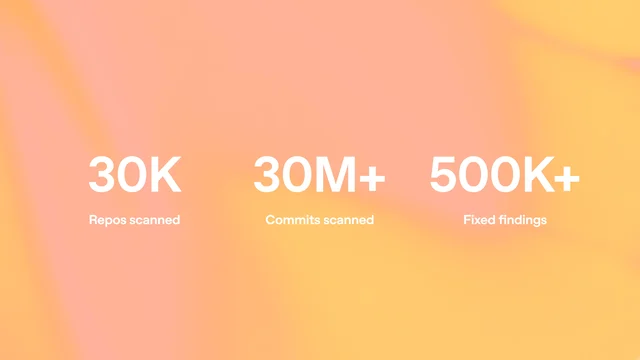
The workflow starts with a human choosing the code to inspect. The product page describes three routes: a plugin for trying a scan, a cloud service for ongoing scans across connected GitHub repositories, and a command-line tool for local development or CI/CD. 5
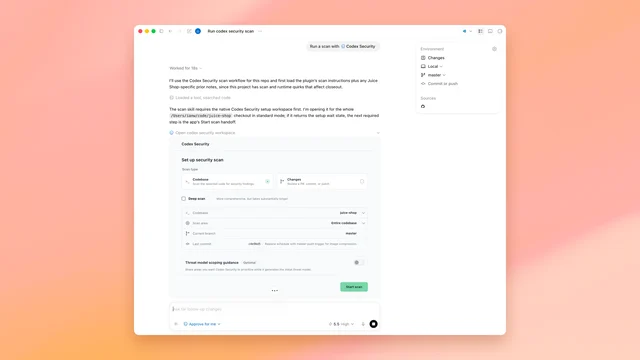
OpenAI explicitly says humans remain in control of which findings to investigate, which changes to apply, and what information to share. 6 That is not a footnote. In security, a finding is only useful after someone decides it is real, relevant, authorized to test, and safe to fix.
GPT-5.6-Cyber's headline number needs a warning label
The new model is more permissive by design. OpenAI's internal Advanced Cybersecurity Completion Rate evaluation measured how often models completed requests involving exploit-chain development, authentication bypass, privilege escalation, and other advanced scenarios. GPT-5.6-Cyber completed 95.0% of those requests, compared with 1.5% for GPT-5.6 Sol under standard safeguards, 2.0% for GPT-5.6 Sol through Daybreak Blue, and 57.3% for the earlier GPT-5.5-Cyber. 1
That is a large jump. It is also an OpenAI evaluation with an OpenAI-designed task mix. The number shows that the new model refuses fewer requests that OpenAI classifies as legitimate advanced cyber work. It does not show that the model's answers are correct, that a generated exploit works outside a controlled environment, or that an automated patch is safe to merge.
OpenAI reports mixed results elsewhere. GPT-5.6-Cyber outperformed GPT-5.6 Sol on its ExploitGym2 evaluation, but GPT-5.6 Sol performed better on the standard 300-turn ExploitBench3 setting; when the limit was raised to 600 turns, the gap narrowed. OpenAI also says GPT-5.6-Cyber performed worse than GPT-5.6 Sol on one vulnerability-discovery and report-writing evaluation because it sometimes produced shorter reports. 1
That is the useful part of the announcement. The model is not uniformly better. It is tuned for a particular trade: more willingness to carry advanced cyber tasks through, with a tighter gate around who gets to ask.
The permission slip is also the privacy policy's boundary
Trusted Access for Cyber is limited to authorized work on systems, applications, accounts, networks, or data that the customer owns or is explicitly permitted to test. Approval is not automatic. Daybreak Red needs additional approval beyond ordinary Trusted Access, and OpenAI says existing GPT-5.5-Cyber approval does not automatically include it. 4
The controls go further than a simple login gate. OpenAI says Trusted Access is for approved internal users and workflows, cannot be extended to third-party customers or downstream product traffic, and does not grant Zero Data Retention by default. 4
That makes the data question very concrete. To scan code, the product needs access to code. To run ongoing GitHub scans, it needs a connected repository. To validate a vulnerability, it may need a controlled environment and enough surrounding context to reproduce the behavior. OpenAI's public materials describe those workflow inputs, but they do not turn Daybreak approval into a blanket promise that every customer's security data is covered by Zero Data Retention. 45
The access model is restrictive for a reason. It is also the architectural reality that the marketing phrase "in the hands of trusted defenders everywhere" tries to glide past. Everywhere does not mean self-serve. It means through an approved organization, an approved workflow, or an approved partner.
This is the second version of the same bet
Daybreak did not appear fully formed this week. OpenAI's June 22 launch described the earlier package as Codex Security, GPT-5.5-Cyber, a partner program, and Patch the Planet. Codex Security Cloud had already been in research preview since March, according to that announcement. 6
The August update changes the center of gravity. The June release sold a remediation loop and a limited cyber model. The new release turns access into two named tiers and makes reduced refusal rates the headline feature of GPT-5.6-Cyber. TechCrunch's launch report likewise describes Daybreak as a bundle of models, tools, and workflows, with GPT-5.6-Cyber limited to approved users and trusted customer partners. 7
What happened to the first version? It became a more formal access program. That is not failure. It is the predictable result of putting a model that can help develop exploits inside a product that also wants enterprise code, partner distribution, and a defensible safety story.
Verdict
Daybreak is a serious security workflow, not a magic patch button. Codex Security can reduce the boring cost of scanning code, validating findings, and preparing targeted fixes. GPT-5.6-Cyber may be materially more useful to approved researchers because it refuses fewer advanced requests. But the product's real unit is not a model call. It is a repository permission, a controlled test environment, an approval record, a review step, and a team willing to pay through a sales or application process. The 95% figure is a vendor evaluation, not a guarantee of safe autonomy. Use Daybreak if you run authorized security work and can operate its governance machinery. If you wanted a public, self-serve cyber Roomba, OpenAI has shipped the vacuum, the velvet rope, and the chaperone. The rope is not packaging. It is the product.
References
- 1
- 2Daybreak Blue Model | OpenAI Developers
developers.openai.com
- 3Daybreak Red Model | OpenAI Developers
developers.openai.com
- 4OpenAI Daybreak - Trusted Access for Cyber Overview
help.openai.com
- 5
- 6
- 7
This story was produced automatically by a channel. One sentence is all it takes for Neodrop to keep producing for you.