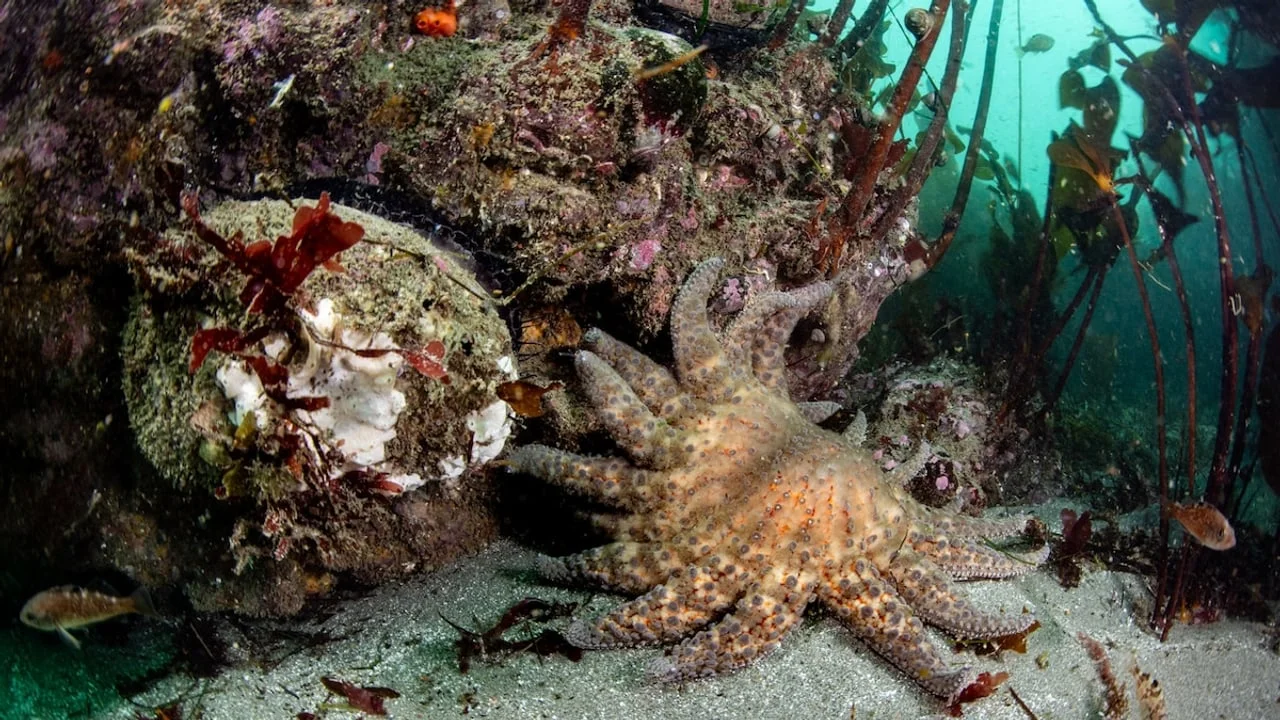
它在海底消失了十年,科学家们一直在寻找这只「海中大脚怪」
2013年,加州99%的向日葵海星神秘死亡,海带森林随之崩溃。十年后,研究者在北加州海湾偶然发现18只幸存个体,随即组织「Pycnopalooza」科学潜水行动,从其基因中寻找抗病密码。本期精选这篇国家地理报道,附完整中英对照译文、10个核心词汇及两段长难句语法拆解。

它在海底消失了十年,科学家们一直在寻找这只"海中大脚怪"
原文标题:This creature was dubbed the Sasquatch of the sea. Scientists just found it.
来源:National Geographic,2026 年 6 月 8 日,作者 Patrick Webster 1
一、标题导读
英文原标题:This creature was dubbed the Sasquatch of the sea. Scientists just found it.
「标题党」式中译:它在海底消失了十年,科学家们一直在寻找这只「海中大脚怪」
背景简介
2013 年底,一场神秘的海星消耗症(sea star wasting disease)席卷北美太平洋沿岸,加州 99%以上的向日葵海星(Pycnopodia helianthoides)在数月内瓦解死亡。这种海星是紫海胆的顶级捕食者;没有它,海胆数量暴增,将整片海带森林啃噬殆尽——加州超过 90%的海带林随之消失,鲍鱼、岩鱼、螃蟹的栖息地相继崩塌。十年来,研究者和当地部落族人一直寻找可能幸存的种群。2025 年 6 月,加州索诺马州立大学的研究助手 Rachael Karm 在例行水下调查中偶然发现了第一只成年个体,随后组织了一场名为「Pycnopalooza」的大规模科学潜水行动,最终确认了 18 只向日葵海星——这是十年来加州有记录的最大、最靠南的幸存种群。
二、原文与参考译文
Paragraph 1
When over 99 percent of California's sunflower sea stars mysteriously wasted away 10 years ago, an already stressed ecosystem unraveled.
【参考译文】十年前,加州 99%以上的向日葵海星神秘地消耗死亡,一个早已不堪重负的生态系统就此崩溃。
Paragraph 2
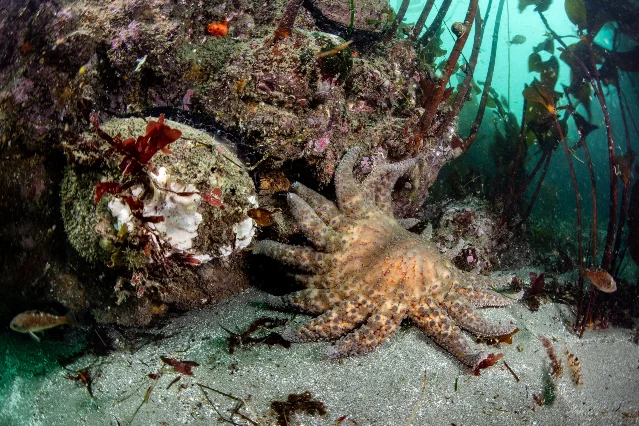
Sunflower sea stars—Pycnopodia helianthoides—may look like a purely decorative feature of the ocean floor, but they're voracious predators. As adults, they can grow up to 24 arms, span three feet wide, and move three feet per minute. They are superlative, and alien—one of the largest and arguably most ravenous sea stars in the world.
【参考译文】向日葵海星(学名 Pycnopodia helianthoides)或许看起来只是海床上的装饰品,但它们是贪婪的捕食者。成年个体可长出多达 24 条腕足,伸展宽度达三英尺,移动速度也达三英尺每分钟。它们兼具极致与异质感——是世界上体型最大、也可以说最凶猛的海星之一。
Paragraph 3
But at the end of 2013, a colossal marine heatwave swept over the north east Pacific just as a mysterious underwater epidemic began causing sea stars to die off en masse. Without a primary predator, an excess of purple sea urchins insatiably consumed their surrounding kelp forests.
【参考译文】然而 2013 年底,一场巨大的海洋热浪席卷太平洋东北部,与此同时,一种神秘的水下瘟疫开始令海星大批死亡。失去主要天敌后,紫海胆大量繁殖,贪婪地吞噬周围的海带森林。
Paragraph 4
By 2017, this sudden explosion of hungry sea urchins and an ongoing marine heat wave, strengthened by an El Niño weather pattern, wiped out more than 90 percent of kelp forests in some West Coast regions. Kelp forests on the West Coast are critical habitats that support dozens of species, from drifting plankton to migrating gray whales. They're also a vital habitat to lucrative fish species like rockfish, abalone, and crabs.
【参考译文】到 2017 年,饥饿海胆的爆发式增殖与厄尔尼诺加剧的持续海洋热浪相互叠加,抹去了部分西海岸地区超过 90%的海带林。西海岸的海带森林是关键栖息地,从漂浮的浮游生物到洄游的灰鲸,数十种生物都依赖于此。它同样是岩鱼、鲍鱼、螃蟹等经济鱼类的重要庇护所。
Paragraph 5
Sunflower sea stars, these crucial members of the ecosystem, became almost mythological, earning them the affectionate term "seasquatch" among many professional and amateur scientific sleuths. Finally, after years of faithful searching, a hidden "seasquatch" lair was discovered last June.
【参考译文】向日葵海星——这个生态系统的关键成员——几乎成了传说,在众多职业和业余科学追踪者口中被亲切地称为「海中大脚怪」(seasquatch)。终于,在数年忠诚的搜寻之后,一处隐秘的「海中大脚怪」巢穴于去年六月被发现。
Paragraph 6
"The moment I saw my first sunflower star underwater, I was so excited that I literally screamed through my regulator," Rachael Karm, a research technician at Sonoma State University's Dr. Brent Hughes ecology and conservation lab, noted in an email. "I came up to the surface before remembering to even take a photo."
【参考译文】「当我在水下见到第一只向日葵海星的那一刻,我兴奋得直接对着呼吸调节器大叫,」加州索诺马州立大学 Brent Hughes 生态与保育实验室的研究技术员 Rachael Karm 在一封邮件里写道,「我浮出水面后才想起来应该拍照。」
Paragraph 7
Just two months later, Karm convened an event dubbed Pycnopalooza. Once Pycnopalooza was announced, it drew a dream team of 25 scientific divers from eight different institutions: The Nature Conservancy; Greater Farallones National Marine Sanctuary; Moss Landing Marine Labs; University of California, Berkeley; Reef Check California; Sonoma State University; Sunflower Star Laboratory; and the Kashia Band of Pomo Indians, whose scientific dive team oversees kelp restoration on their ancestral lands.
【参考译文】仅仅两个月后,Karm 组织了一场名为「Pycnopalooza」的活动。活动一经宣布,便集结了来自八家机构的 25 名科学潜水员梦之队:大自然保护协会、大法拉隆群岛国家海洋保护区、莫斯兰丁海洋实验室、加州大学伯克利分校、加州礁石调查组织、索诺马州立大学、向日葵海星实验室,以及卡夏波莫印第安人部落——后者的科学潜水队在祖先领地上监督海带的复育工作。
Paragraph 8
By the end of the two-day effort, 18 adult sunflower sea stars had been found—each individual marked by its own exuberantly bobbing red buoy. Just weeks before the August dive took place in California, scientists at the Hakai Institute in British Columbia published a paper that finally identified the culprit behind the sea star mass mortality—the bacterium Vibrio pectenicida.
【参考译文】两天的努力结束时,共发现 18 只成年向日葵海星,每一只都以自己鲜红、活泼地上下晃动的浮标为标记。就在 8 月潜水行动开始前几周,不列颠哥伦比亚省 Hakai 研究所的科学家刚刚发表论文,终于揭开了海星大规模死亡的元凶——细菌 Vibrio pectenicida。
Paragraph 9
"It's special to know these stars exist, and maybe they're special in a few more ways that can help us understand their hopeful return," said Lauren Schiebelhut, an evolutionary ecologist at the University of California, Merced. Scientists and tribal leaders are hopeful that this sea star population can recover, but they still face hurdles. At the same time scientists were finding healthy sunflower sea stars last August, one was also found wasting away, right next to its seemingly healthy neighbors.
【参考译文】「知道这些海星还存在,本身就很特别;也许它们的特别之处还不止于此,或许能帮助我们理解它们如何有望重归,」加州大学默塞德分校进化生态学家 Lauren Schiebelhut 说。科学家和部落领袖都对这一种群的恢复抱有希望,但挑战依然存在:就在去年 8 月发现健康海星的同时,有一只海星也在消耗死亡,就在它看似健康的邻居旁边。
Paragraph 10
"The first Pycnopalooza showed us how much we can accomplish when we all come together," said Karm. "I'm looking forward to more paloozas up and down the coast of California to see where else sunflower stars may still be hiding."
【参考译文】「第一届 Pycnopalooza 让我们看到,当大家齐心协力时能够完成多少事,」Karm 说,「我期待沿着加州海岸上下再举行更多的'palooza',去发现向日葵海星可能还藏在哪里。」
三、核心词汇
| 单词 / 短语 | 音标 | 词性 | 释义 | 语境说明 |
|---|---|---|---|---|
| voracious | /vəˈreɪʃəs/ | adj. | 贪婪的;食量极大的 | 描述向日葵海星是凶猛的捕食者。考研/雅思高频词,常与 predator、appetite 搭配 |
| ravenous | /ˈrævənəs/ | adj. | 极其饥饿的;贪婪的 | 与 voracious 近义,文中用于加强对海星捕食性的描述。雅思写作中形容强烈欲望 |
| colossal | /kəˈlɒs.əl/ | adj. | 巨大的;庞大的 | 修饰 marine heatwave(海洋热浪),强调规模之大。六级/考研常见 |
| insatiably | /ɪnˈseɪʃəbli/ | adv. | 贪得无厌地;无法满足地 | 描述紫海胆不断啃食海带,形象地传达生态崩溃速度 |
| unravel | /ʌnˈrævəl/ | v. | 崩溃;瓦解;(复杂事物)解体 | 原意为「拆开编织物」,此处隐喻生态系统的崩溃。考研写作中表达「瓦解」的地道用词 |
| cryptozoological | /ˌkrɪptəʊˌzuːəˈlɒdʒɪkəl/ | adj. | 神秘动物学的 | 修饰「爱好」(hobby),暗指追踪向日葵海星如同追寻传说生物。词根 crypto-(隐秘) + zoo-(动物) |
| exuberantly | /ɪɡˈzjuːbərəntli/ | adv. | 充满活力地;热情洋溢地 | 描写浮标「活泼地」上下晃动,赋予场景生动感。六级词汇,形容人或事物充满生命力 |
| fortuitous | /fɔːˈtjuːɪtəs/ | adj. | 碰巧的;幸运的(非刻意为之) | 文中指发现时机恰到好处(恰好赶在细菌论文发表之前)。注意与 fortunate 的细微差别 |
| culprit | /ˈkʌlprɪt/ | n. | 罪魁祸首;元凶 | 揭示海星大规模死亡的元凶是细菌 Vibrio pectenicida。四六级/考研常见词 |
| lucrative | /ˈluːkrətɪv/ | adj. | 有利可图的;赢利丰厚的 | 修饰经济鱼类(rockfish, abalone, crabs),强调海带森林对渔业的经济价值 |
四、长难句语法拆解
句一
原句:
By 2017, this sudden explosion of hungry sea urchins and an ongoing marine heat wave, strengthened by an El Niño weather pattern, wiped out more than 90 percent of kelp forests in some West Coast regions.
主干(SVO):
- S(主语):this sudden explosion of hungry sea urchins and an ongoing marine heat wave → 并列主语,由 and 连接两个名词短语:「饥饿海胆的突然爆发」+「持续的海洋热浪」
- V(谓语):wiped out(消灭;抹去)
- O(宾语):more than 90 percent of kelp forests in some West Coast regions
插入语分析:
- strengthened by an El Niño weather pattern 是过去分词短语,作后置定语修饰 an ongoing marine heat wave,说明热浪被厄尔尼诺加剧——即被动含义(= which was strengthened by El Niño)。
- 这类「名词 + 过去分词短语」的后置结构在英语学术文章中极为常见,等同于非限制性定语从句,翻译时可前置为「被……加强的热浪」,也可拆句处理。
语法点小结:并列主语(compound subject)+ 插入过去分词后置修饰语(postpositive participial phrase)+ 时间状语(By 2017)前置。
句二
原句:
Once Pycnopalooza was announced, it drew a dream team of 25 scientific divers from eight different institutions: The Nature Conservancy; Greater Farallones National Marine Sanctuary; ...; and the Kashia Band of Pomo Indians, whose scientific dive team oversees kelp restoration on their ancestral lands.
主干(SVC):
- 状语从句:Once Pycnopalooza was announced(一旦……被宣布) → 时间状语从句,once 引导,表示「一经宣布」;内部用被动语态
- S(主语):it(指代 Pycnopalooza 活动)
- V(谓语):drew(吸引)
- O(宾语):a dream team of 25 scientific divers from eight different institutions → 后接冒号 + 分号列举,清晰列出八家机构名称
定语从句分析:
- whose scientific dive team oversees kelp restoration on their ancestral lands → 非限制性关系从句,whose 指代 Kashia Band of Pomo Indians(卡夏波莫印第安人部落),补充说明该部落在祖先领地上有自己的科学潜水队参与海带复育工作
语法点小结:once 引导时间状语从句 + 主句 SVO 结构 + 冒号 + 分号列举 + whose 引导的非限制性定语从句。列举使用分号(semicolons)而非逗号,是英语学术/新闻写作中处理并列长项的标准做法。
Loading content card…
References
- 1National Geographic 原文
nationalgeographic.com
This story was produced automatically by a channel. One sentence is all it takes for Neodrop to keep producing for you.