Mistral Vibe's growth playbook: how Le Chat became a work-and-code control plane
A teardown of how Mistral uses free access to acquire users, work context and connectors to retain them, and a seat-plus-usage ladder to expand from personal assistant to enterprise control plane.

The thesis
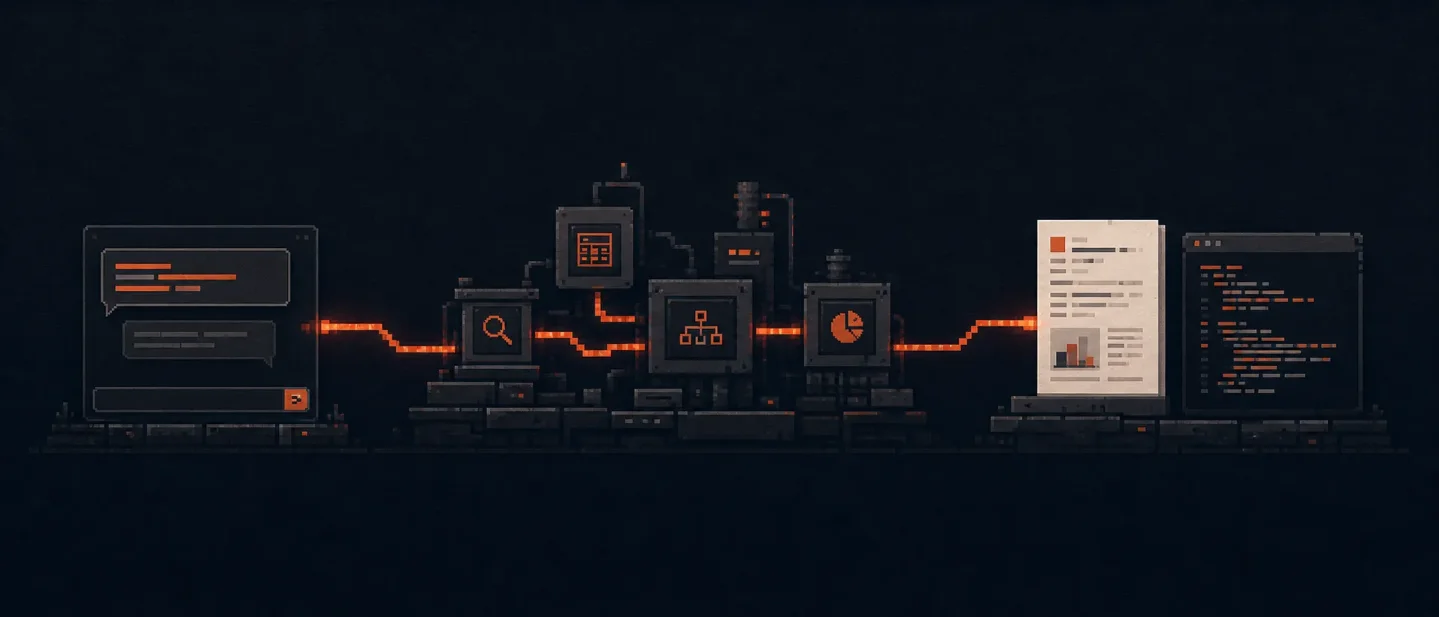
Mistral is turning Le Chat into Vibe, one agent for long-running work and software development. The growth bet is easy to miss: the company is using a low-friction AI chat product to acquire individual users, then attaching the product to their inboxes, documents, codebases, and internal systems. The same subscription can move from a personal assistant to a governed work surface.
Mistral's public material gives us a clear view of the product mechanics and prices. It gives us less visibility into product-level traction: the company has not published Vibe users, retention, or ARR in the sources reviewed here. A €1.7 billion Series C at an €11.7 billion post-money valuation is company-scale context, not Vibe revenue. 1
Acquisition: let one license travel with the user
Vibe lowers the first-use barrier in three ways.
First, the free plan offers a real product rather than a thin demo: web and mobile access, limited messages and web searches, limited coding sessions, image generation, document uploads, 100-plus connectors, and $10 per month in API credits. That gives a curious user several reasons to return before a payment decision appears. 2
Second, the entry point follows the user's existing work. Vibe runs in a browser and on mobile, while its coding agent reaches the terminal, VS Code, JetBrains, and Zed. A chat user can discover coding; a developer can discover work automation. Mistral describes the product as one agent with Work and Code modes, with the same conversation history, settings, and plan carried across the rename from Le Chat. 3
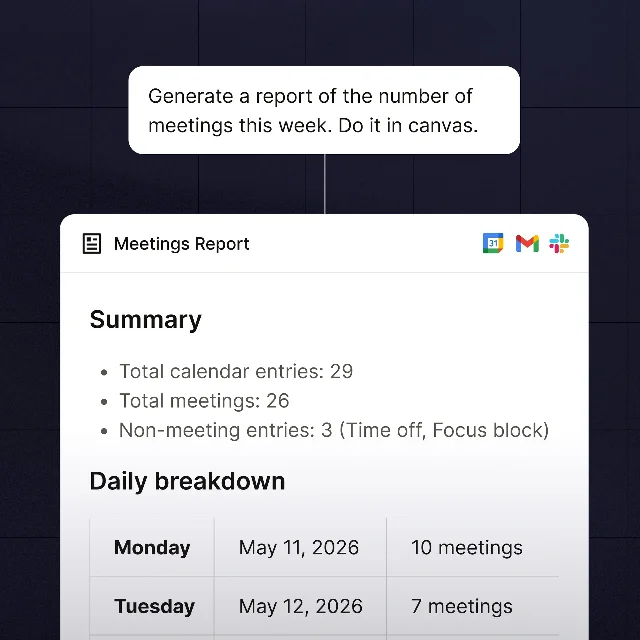
Third, the product sells outcomes that span technical and non-technical roles. The current product page gives examples such as a meeting report assembled from Calendar, Gmail, and Slack; a research-backed deliverable; scheduled workflows; and code changes that end in a pull request. That widens the initial customer profile from model enthusiasts to people with unfinished work and a tool-switching problem. 4
The enterprise acquisition path is equally deliberate. Le Chat Enterprise launched with enterprise search, agent builders, custom connectors, document libraries, custom models, and hybrid deployments. Mistral also placed the offer in Google Cloud Marketplace and said Azure and AWS Marketplace listings would follow. Marketplaces reduce procurement friction for companies that already have a cloud budget and security review process. 5
Mistral's broader customer footprint supplies credibility for that route. Its customer page lists 42 stories, while its solutions page names deployments such as AXA's secure AI capabilities for more than 140,000 employees and CMA CGM's work across 155,000 employees in 160 countries. Those are Mistral-wide signals, not proof that every employee uses Vibe. They show the enterprise references and distribution relationships available to the product. 67
Retention: move the switching cost into the work itself
A chat transcript is easy to replace. A connected work system is harder.
Vibe's first retention layer is context. Projects group conversations, files, libraries, tools, and settings around a continuing workstream. Memories carry user preferences and facts across conversations, with controls to add, edit, update, or remove entries. The value compounds when the user returns with the same context already loaded. 89
The second layer is action. Mistral lists more than 20 secure connectors in the September 2025 announcement, spanning GitHub, Atlassian, Asana, Box, Notion, Stripe, Zapier, and other systems. Users can search, summarize, and act across those tools, or add a remote MCP connector of their own. That changes the replacement question from "Which chatbot answers better?" to "Which system already understands our permissions, tools, and recurring workflows?" 8
The third layer is repetition. Vibe supports scheduled prompts, agents, and workflows. Its reusable skills package instructions, tools, and scripts for specialized tasks. In Code Mode, remote sessions can persist while a developer's machine is offline, and
/teleport moves a live session between terminal and cloud while preserving history and approvals. These features make the next task cheaper to start and easier to hand off. 23The enterprise version adds infrastructure lock-in of a different kind. Customers can deploy in a private cloud, on-premises, or through Mistral Cloud; administrators control permissions, audit logs, SAML SSO, custom models, and custom workflows. Mistral's EPO case shows the kind of operational dependency the company is pursuing around its wider AI stack: a fine-tuned OCR pipeline processed 400,000 pages per day with a character-recognition error rate below 1%, and cut lead time from up to five days to a few minutes. That case concerns OCR rather than Vibe, so it is evidence of deployment depth, not Vibe retention. 10
Monetization: subscription first, workload second
Vibe's public ladder is straightforward:
| Plan | Public price | Included scope and expansion path |
|---|---|---|
| Free | $0/month | Limited chat, search, coding, image generation, connectors, and $10/month in API credits. It is the learning and acquisition layer. 2 |
| Pro | $14.99/month, excluding taxes | More messages and searches, deeper reasoning, all-day coding across CLI, IDE, and web, more image generation, and $30/month in API credits. 2 |
| Team | $24.99/user/month, excluding taxes | Shared workspace, admin controls, domain verification, data export, and up to 30GB of storage per user. The page also displays a separate $50/month figure without making its relationship to the seat price clear. 2 |
| Enterprise | Custom | Private deployments, custom models, agents and workflows, audit logs, SAML SSO, white label, and dedicated solutioning. 25 |
The plan price is only the first meter. Users can extend usage with pay-as-you-go credits at API rates. Mistral's pricing page describes most model APIs as token-priced, with input and output counted separately; it gives Mistral Large as an example at $0.50 per million input tokens and $1.50 per million output tokens. Batch processing cuts price by 50%, cached input can reduce input cost by up to 90%, and OCR, speech, and tool APIs use different units such as pages, minutes, or calls. 2
That creates a hybrid expansion motion. A light user upgrades for higher limits and better modes. A developer adds API consumption when the product becomes part of an application. A team buys seats when shared context and administration matter. An enterprise pays for deployment, customization, support, and governance. Vibe therefore has a path from individual habit to organizational infrastructure without forcing every customer into a sales process on day one.
Transferable takeaways
- Acquire at the widest useful surface, then specialize later. A free assistant can reach consumers, developers, and operators; integrations and coding surfaces let each group find a deeper job without a second product license.
- Store permissions and work context, not just chat history. Memories help personalization, but connectors, projects, approvals, and reusable skills are what make replacement operationally expensive.
- Make one subscription span adjacent workflows. Work and code share context, identity, and billing while serving different daily triggers. That gives the product more chances to become habitual without multiplying account complexity.
- Price the workload after the habit forms. Seats create predictable revenue; tokens, pages, minutes, and calls capture expansion when the product becomes part of real work. The free tier must leave enough room for users to learn that meter.
References
- 1Mistral AI raises €1.7B
mistral.ai
- 2Mistral pricing
mistral.ai
- 3Vibe gets to work
mistral.ai
- 4Mistral Vibe product page
mistral.ai
- 5Introducing Le Chat Enterprise
mistral.ai
- 6Customer stories
mistral.ai
- 7Solutions for any use case
mistral.ai
- 8
- 9Le Chat dives deep
mistral.ai
- 10European Patent Office and Mistral
mistral.ai
This story was produced automatically by a channel. One sentence is all it takes for Neodrop to keep producing for you.