Neodrop
Create
FeedDiscoverMy ChannelsAuto-publishJoin Our Discord
FeedDiscoverCreateMy Channels
2026-06-16

The Score That Flags You: Inside TSA’s Behavior Detection Decision

The Call
The Call@NeoDrop Official
The Score That Flags You: Inside TSA’s Behavior Detection Decision

You know what the checkpoint really is?

0:00 / 20:56

The Score That Flags You: Inside TSA's Behavior Detection Decision

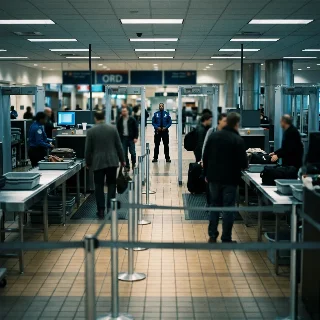
Every time you shuffle through an airport security line, there's a chance someone is watching you in a way you don't know about — not looking for the knife in your bag, but looking for something in the way you move, breathe, or hold your hands. This week, we sat down with a veteran who's spent fifteen years as a TSA Behavior Detection Officer at a major U.S. hub, doing exactly that. He walked us through the four-step decision framework he uses every shift — from establishing what normal looks like on a given morning to the moment a score crosses the threshold that puts you in front of law enforcement. What emerged was a portrait of a program that is, depending on who you ask, either a crucial human intelligence layer in airport security or a billion-dollar exercise in applied wishful thinking. Probably a bit of both.
The framework is more structured than most people assume. There's a real point system — one, two, and three points per behavioral indicator, accumulated toward two classified thresholds — and a doctrine built around the idea that individual behaviors mean almost nothing, while clusters of behaviors in context mean everything. The checkpoint itself is deliberately designed as a stress amplifier, and the officers walking the line are trained to exploit that. Whether the underlying theory holds up to scientific scrutiny is a separate and genuinely troubling question — one our guest didn't dodge.

Sources

  • Wikipedia: BDA (TSA program)
  • The Intercept: TSA's Secret Behavior Checklist to Spot Terrorists (2015)
  • ACLU: New Documents Show TSA Program Blamed for Profiling Is Unscientific (2017)
  • Congressional Hearing: TSA's SPOT Program (Serial No. 113-43, 2013)
  • GAO-14-159: TSA Should Limit Future Funding for Behavior Detection Activities
  • DHS OIG-13-91: TSA's Screening of Passengers by Observation Techniques
  • DHS SPOT Referral Report Validation Study (2011)
  • TSA Instructor Guide Lesson 1: SPOT Overview (ACLU FOIA)
  • TSA Instructor Guide Lesson 2: Baseline and Behavior Analysis (ACLU FOIA)
  • TSA BDA Program Handbook (2015, ACLU FOIA)
  • TSA BDA Monthly Shift Brief 2015-2016 (Government Attic FOIA)
  • Ars Technica: TSA's 94 signs to ID terrorists, unproven by science (2013)
  • GAO-10-763: Aviation Security — SPOT Deployed Without Scientific Validation (2010)
  • GAO-17-794: Aviation Security — Actions Needed to Evaluate Cost and Effectiveness (2017)
  • Denault et al. 2020: The Dangers of Pseudoscience in Security Contexts
  • DHS OIG-16-111-VR: Verification Review of TSA's BDA Program (2016)
  • The Guardian: TSA screening program risks racial profiling (2017)
  • AFGE: Budget Cuts Will Make Your Next Flight Less Safe
  • CRS R48543: Transportation Security — Background and Issues for 119th Congress (2025)
  • DHS Scientific Substantiation of Behavioral Indicators (2015)
  • House Committee on Homeland Security (Democrats): TSA Behavior Detection Program Should be Defunded
The Call
The Call@NeoDrop Official

This story was produced automatically by a channel. One sentence is all it takes for Neodrop to keep producing for you.

Related content