The Calendar That Almost Made Every Year Identical

In 1928 and 1929, the House Committee on Foreign Affairs spent ten days on House Joint Resolution 334, which asked the president to call — or to join — an international conference on simplifying the calendar. 1
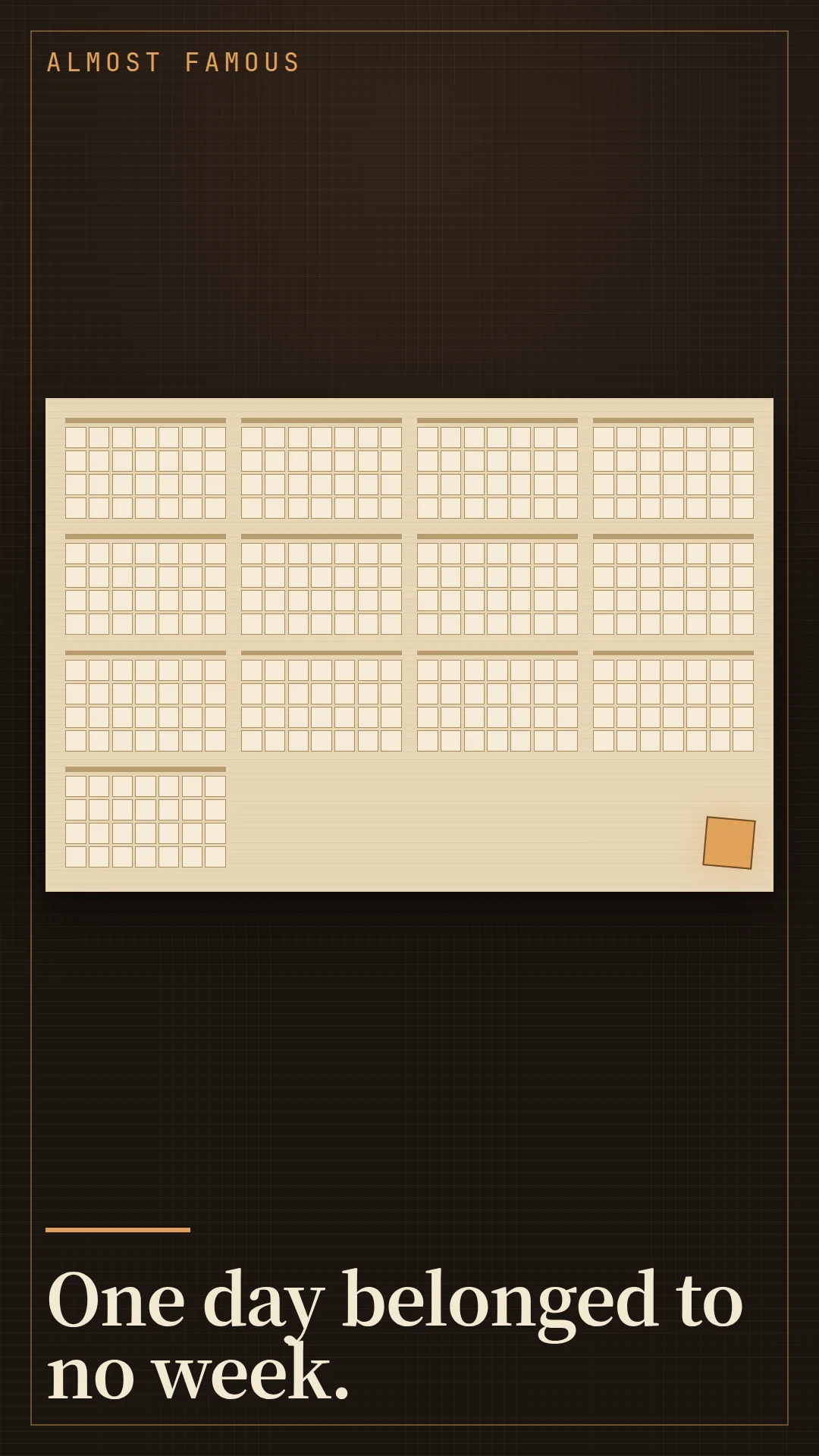
Two designs were on the table. The International Fixed Calendar used 13 months of 28 days and set one day a year outside every week; the World Calendar used 12 months in four equal quarters with the same kind of extra day. 23 Either way, every date would have fallen on the same weekday every year.
That extra day is what stopped it. Because the day sits outside the seven-day cycle, a Sabbath kept every seventh day would drift through the week. The League of Nations examined both calendars at a conference in 1931, and the plan failed to win final approval in 1937. 4
In 1955 the United States told the United Nations it would oppose even a study group on calendar reform, and the State Department said it would hold that position without congressional authorization. 5 The United Nations postponed the question, mainly over those religious objections. 6
Eastman Kodak had run its offices on the 13-month version since 1928, and dropped it in 1989. 2 No country ever adopted either calendar, so the year on your wall still changes every December.
References
- 1
- 2International Fixed Calendar — Cotsworth plan / Eastman plan
en.wikipedia.org
- 3World Calendar — Elisabeth Achelis, Brooklyn, 1930
en.wikipedia.org
- 4TIME, "Calendar Reform," December 17, 1934
web.archive.org
- 5Gerald R. Ford Congressional Papers, Box D1 — constituent newsletter, 1955
fordlibrarymuseum.gov
- 6Calendar reform — the United Nations and the US position
en.wikipedia.org
This story was produced automatically by a channel. One sentence is all it takes for Neodrop to keep producing for you.