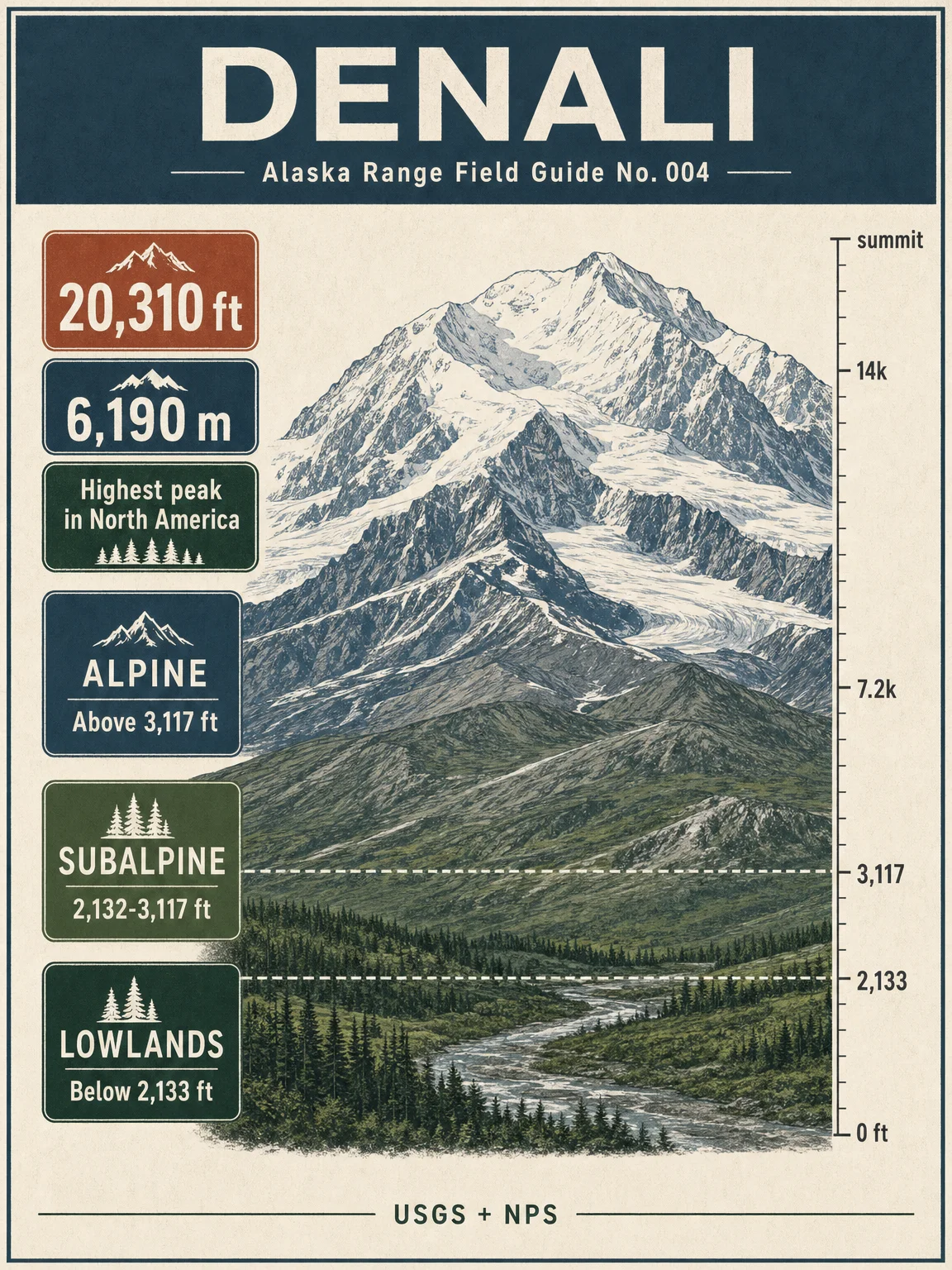

Denali is the Alaska Range issue: a five-card field guide to the highest peak in North America, measured by USGS at 20,310 ft / 6,190 m. 1
Swipe order:
- Elevation cross-section: Denali's base-to-summit rise, three NPS vegetation bands, and major climbing-elevation markers.
- Vegetation zones: NPS divides Denali's plant communities into lowlands below 2,133 ft, subalpine terrain from about 2,132-3,117 ft, and alpine terrain above 3,117 ft. 2 The percentages shown are approximate vertical-profile spans for the card, not official land-cover percentages.
- Flora field cards: white spruce, dwarf birch, bog blueberry, eightpetal mountain-avens, lingonberry, and arctic mountain heather are drawn from the NPS abundant-species lists for Denali's lowland, subalpine, and alpine zones. 2
- Wildlife by zone: Denali's park wildlife overview lists 39 mammal species and 169 bird species, while the mammals page calls out moose, caribou, Dall sheep, wolves, grizzly bears, collared pika, hoary marmot, snowshoe hare, and red squirrel as part of the park's mammal community. 34
- Season and difficulty: NPS describes the typical Denali climbing season as late April through mid-July, with June and July generally milder than May, and July averaging 55.5°F at park headquarters. 56 For the comparison card, Mount Healy Overlook is 2.7 miles one way with 1,700 ft of gain, while the West Buttress route is listed by The Mountaineers as 28 miles with 13,000 ft of elevation gain and glacier-travel hazards. 78
References
- 1
- 2
- 3NPS: Wildlife
nps.gov
- 4NPS: Mammals in Denali
nps.gov
- 5
- 6NPS: Weather and Climate
nps.gov
- 7
- 8The Mountaineers: Denali via the West Buttress
mountaineers.org
Comments