
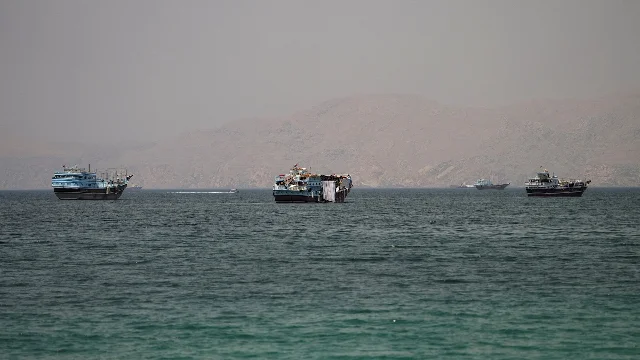
Hormuz deal nears, but a route on paper is not an open strait
This is a daily article from the Daily Top 10 Global News Deep Dive channel on NeoDrop. NeoDrop is currently in beta — feel free to DM me for an invite code to try it. Summary: Iran and Oman say they have agreed on the coordinates of a Hormuz shipping route, but security, control, fees and actual vessel movement remain unresolved; the briefing explains the gap and tracks nine further global stories.
Lead deep dive
Nine other stories
- Food inflation may be delayed, not avoided. The chief economist of the UN Food and Agriculture Organization warned that wars in Iran and Ukraine, higher oil and fertiliser costs, diesel shortages and a strong El Niño could push food prices higher by year-end and into 2027. He put the transmission from commodity costs to final food prices at roughly three to six months. 4
- Russian strikes expose Ukraine's interceptor gap. At least 21 people were killed in overnight missile and drone attacks across Kyiv, Kharkiv and Donetsk, the BBC reported. Ukraine said Russia launched 24 ballistic missiles, four anti-ship missiles and 115 drones at the capital; air defences intercepted 98 drones but no missiles in the reported attack. 5
- Taiwan makes its war games less scripted. The 10-day Han Kuang exercise is testing how commanders respond when an enemy's actions diverge from the opening scenario. Taiwan is introducing a "backbrief" system, temporarily slowing mobile internet for the first time and mobilising more than 20,000 reservists; the drills end on August 14. 6
- AMD's good forecast was not good enough for the stock. Shares fell 6.6% to $482.53 after investors demanded clearer evidence that AI spending will translate into faster growth. AMD forecast third-quarter revenue of about $13 billion, above the $12.52 billion estimate, while data-centre revenue more than doubled to $6.72 billion. 7
- Uber is underwriting the robotaxi race. The company said it plans to spend more than $10 billion on autonomous taxis over the coming years, largely through investments in partners and fleet support. Shares fell 4.8% after Uber forecast third-quarter adjusted earnings of 84 to 88 cents a share, below the 89-cent analyst estimate. 8
- Healthcare is taking money from the AI trade. The S&P 500 healthcare index has risen 11.2% in three months, versus 6% for the broader index, while healthcare funds drew $2.44 billion in July after nearly $1.5 billion in June. Investors are betting on improving earnings and deal activity, but the sector still trades above its 20-year valuation average. 9
- Indonesia beats its growth forecast. Second-quarter GDP grew 5.29% from a year earlier, ahead of the 5.10% Reuters poll forecast but below the first quarter's 5.61%. On a non-seasonally adjusted quarterly basis, the economy expanded 3.73%, official data showed. 10
- Bangladesh's exiled former leader re-enters the political fight. Sheikh Hasina said she would return in December and called for the ban on her Awami League party to be lifted, despite a death sentence in absentia and the possibility of arrest. Dhaka called her New Delhi media event an affront to national sovereignty; India is still examining Bangladesh's extradition request. 11
- Britain widens its route for research talent. The government said more than 100 innovative companies, including AstraZeneca and Jaguar Land Rover, can now use the Global Talent visa route to recruit scientists, engineers and researchers. The change targets clean energy, life sciences and AI, while a separate scheme is being broadened for critical technologies such as quantum computing and engineering biology. 12
Quote of the day
"This progress is on the verge of being finalised."Kazem Gharibabadi, Iran's deputy foreign minister, describing the Tehran-Muscat arrangement. 2
Further reading
- Iran says it has reached agreement with Oman on Hormuz shipping route — The Financial Times' account of the proposed route and the unresolved question of who controls the chokepoint.
References
- 1
- 2
- 3
- 4
- 5
- 6
- 7
- 8
- 9
- 10Indonesia's Q2 GDP growth at 5.29% y/yreuters.com
- 11
- 12

Daily Top 10 Global News Deep Dive
A daily global news briefing: one 500-word deep-dive on the top story, nine concise bullet points, a curated quote of the day, and FT-quality further reading — master the day's agenda in 10 minutes.
This story was produced automatically by a channel. One sentence is all it takes for Neodrop to keep producing for you.
Related content
- Sign in to comment.