
Your house's weak spots are all outside: 8 free fixes before the first storm
Eight free fixes for the outside of a house before the autumn storms: clearing the gutters and the drains they feed, storing what the wind can lift, checking the fence line, the garage door and the trees, and keeping the rain away from the front door.

A storm gets into a house through the small jobs that were put off: the gutter that has been full since the leaves fell, the fence post that moved when you pushed it, the bin left out on the pavement. Each of those is a free job on a dry afternoon, and each one gets far more expensive once the wind has finished with it.
The eight fixes below work round the outside of a house in the order the weather meets it — the roofline, the gutters and the drains they empty into, the garden the wind can lift, the fence line, the openings, the trees, and the ground the rain runs to. Work through them once before the storm season starts, then walk the same route after the first gale, because a storm finds the weak point that the last one left.
1. Clear the gutters before the leaves finish falling
Steps
- Wait for a dry, still day. Dry leaves come out in one pull, and a ladder set on wet ground is a ladder that slides. 1
- Take heavy waterproof gloves, a small plastic scoop or a trowel, a bucket and a stable ladder of the right height. Hang the bucket from the ladder so both hands are free. 1
- Start at the highest point of the run and work along towards the downspout. Move the ladder rather than stretching sideways from it. 1
- Scrub the residue that has set with a damp stiff brush, then flush the run from the high end with a hose and watch the water leave through each downspout at ground level. 12
- While you are up there, check the flow through the downspouts and look for sagging sections, leaking joints and pipes pulling away from the wall. 2
- Rake up what came down, so it is not waiting to go back in at the next gust.
- Repeat twice a year, once in late spring and once in autumn, before the leaves drop. 1
Why it works: A gutter is one system: the trough, the downspouts, the ground drains and the fasteners that hold it all to the house. Leaves, twigs and moss dam it, and the water backs up under the roof edge and runs down the wall. The weight of wet debris also snaps the fixings and pulls the run off the fascia. 1 Overflow at the bottom of the wall soaks the soil around the foundation, and the pressure of saturated ground is what cracks and bows foundation walls. 3 A gutter holding standing water has lost its fall, which should run about 1/4 inch down for every 5 to 10 feet towards the downspout. 4
Avoid this mistake: Getting up a ladder on a wet or windy day, or working alone. Most of the risk in this job is the ladder itself, on ground that has just been rained on. 1 Gutters on a second storey, or on a house set over more than one level, are worth paying for; the home services marketplace Angi puts a professional clean at around $150 on average. 4 Telescopic gutter tools clear and flush from the ground, and if you do use a ladder, the second person at the bottom is the one who keeps it there. 1
2. Follow the water from each downspout to where it actually lands
Steps
- Walk the perimeter and check that every downspout is fixed to the gutter at the top and to the wall below, with the joints between sections closed up. Rivets, screws and mounting straps are the parts that let go. 4
- Run a hose into the gutter and stand at each outlet. The water should leave the wall, not pool at the foot of it.
- Check the ground drain at the bottom of the downspout. It should carry water at least five feet clear of the house and join the downspout with an elbow; a splash block or a few stones at the far end spreads the flow instead of letting it dig a hole in the lawn. 4
- Clear whatever is sitting in the run — nesting material, silt, a ball — so the pipe is open all the way. 5
- Read the indoor symptoms as directions to the leak: a damp patch low on a wall, a musty smell, a stain on the plaster or a patch of mould is where the water is actually going. 5
Why it works: A downspout that empties at the wall simply moves the problem to the foundation, where the water soaks into the soil and finds the basement and the mortar. Short ground drains and joints that have pulled apart put the rain straight back against the house, which is the expensive half of the gutter system. 4
Avoid this mistake: Trusting the stub of pipe under the downspout to be a drain. A run that ends less than five feet from the wall drops the water at the foundation, and an underground drain that has silted up needs clearing before it will take anything. 4
3. Do the roofline check from the ground
Steps
- On a clear day, stand out in the garden and look along the roof edge, the chimney and the walls. 5
- Look for missing, cracked or slipped tiles, damaged flashing, a gutter run that has begun to sag, and moss or debris that could be hiding a problem. 5
- Check the chimney and the outside walls: loose pots, damaged pointing, cracked render and gaps around windows and doors are the places wind-driven rain gets in. 5
- Compare the outside with the inside. A damp patch, a stain or discolouration on an upper wall or ceiling is usually the first sign of a roof problem. 5
- Write down what you cannot reach and book the repair. For a high roof, a clear day and a pair of binoculars from the ground beats any ladder. 4
Why it works: The roof and the roofline meet the weather first, and the damage runs downhill: the slipped tile that lets water under the covering becomes the stain on the ceiling below. Checking the roofline before and after bad weather is how missing tiles and sagging gutters get caught while they are still small. 5 This is also the season when these jobs are much easier to tackle than they will be during a downpour. 5
Avoid this mistake: Climbing onto the roof, or up a ladder propped against the gutter, to take a closer look. Roof work belongs to a qualified roofer, and high roofs can be inspected from the ground. 5 If the house is rented, photograph the cracked tiles, the blocked gutter and the insecure fence and report them to the landlord or the housing association in writing; the written record is the part that protects you when the damage comes. 5
4. Put away or tie down everything the wind can lift
Steps
- Move garden furniture, plant pots, hanging baskets, bins, children's toys, garden tools and washing lines into the shed, the garage or the house. 6
- Treat trampolines as liftable too, and pick a side of the garden that is out of the wind for anything you cannot carry indoors. 6
- Take down parasols and take the heads off a rotary line, and lash down whatever has to stay out. 6
- Park the car in a garage or somewhere sheltered if you can, and off any spot under a tree either way. 6
- Check the fixings on the shed and the greenhouse while you are walking round; sheds, fences and trampolines are the outdoor items strong winds turn into hazards. 5
Why it works: High winds turn ordinary garden items into projectiles, and the damage in a storm usually comes from what the wind picked up — a lifted trampoline, a thrown bin, a pot through a window. 5 Clearing the garden is a better use of the ten minutes before a storm than taping anything up. 7
Avoid this mistake: Taping the windows and calling the garden done. Tape adds very little strength to glass, and it can leave larger, more dangerous shards when the pane does break. 7
5. Walk the fence line and fix what is already moving
Steps
- Push every panel and every post. A fence or a gate that already moves will move further in a gale, and the check costs one lap of the garden. 6
- Re-drive the loose screws, nails and brackets that hold the panels to the posts, and replace the ones that have rusted through.
- Brace a panel that has started to lean with a spare length of timber, and clear the plants and the soil that have grown through the bottom of the run.
- Check the gate: the hinges, the latch and the swing. A gate that has dropped and drags is a gate the wind can lift off its posts.
- Take down a panel or post that has already gone, rather than leaving a loose sheet standing in the garden.
Why it works: Fences and gates are the item insurers commonly leave out of storm cover because they count as such a high risk, so the repair comes out of your own pocket. 6 A garden that has not been maintained is also one of the things that turns a claim for roof or shed damage into a refused claim. 6
Avoid this mistake: Backing a rotted post up with longer screws. New fixings driven into soft wood hold until the first real gust and then let go, taking the panel with them.
6. Shut and lock everything, and leave the windows shut
Steps
- Close and lock every window and every outside door before the storm arrives. 6
- Close and lock the garage door. While the weather is calm, check the door's mounting brackets for loose screws and the tracks for wobble and tighten what you find. 78
- Secure the loft door or hatch. 6
- Close the interior doors as the wind gets up. 8
- Bring in the pots and ornaments sitting on outside sills, and take the washing off the line.
Why it works: The garage door is the most vulnerable part of a house's outside face in a high wind, and most structural storm damage starts there: once the door buckles, the wind gets inside and pressurises the house from within until the roof lifts. 78 Closing the interior doors splits that pressure into smaller rooms. 8 Cracking a window to "equalise the pressure" does the opposite of what people expect: the house already has enough small gaps to keep the pressure balanced, and an open window lets the rain in and can add an upward force strong enough to take the roof off. 7
Avoid this mistake: Going outside once the wind is up to fetch something in. Staying inside until the storm has passed is the way to come through it unharmed, and the bin can wait. 6
7. Look at the trees over the house, the car and the wires
Steps
- Once the leaves have dropped, stand back from each tree and look at the boughs the foliage was hiding. 3
- Look for dead and dying limbs, particularly any hanging over the house, the garage, the shed or the driveway, where a fall costs the most. 3
- Cut back the branches you can reach safely from the ground with a pole pruner.
- Anything large, anything over a boundary and anything near overhead lines goes to a qualified tree surgeon. 5
- Talk to the neighbours about the trees that overhang your garden but are not yours. 6
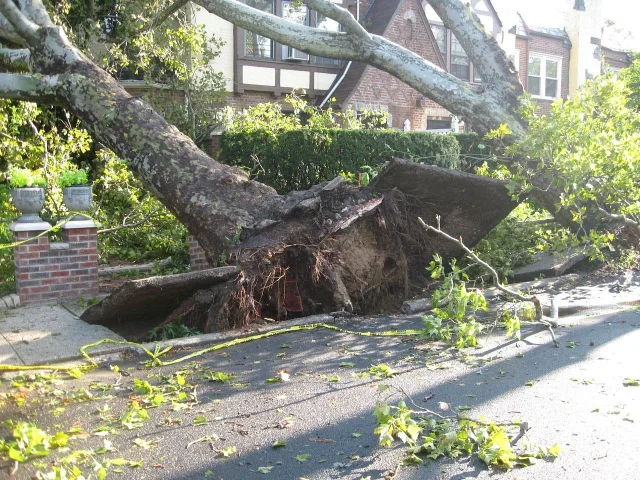
Why it works: A weak branch snaps under wind, or under the weight of a wet load, and the one that comes down on the roof, the windscreen or the wires is the expensive repair. Branches are easiest to see once the leaves have gone, which puts this job late in the year. 3 Trimming back long branches is on the standard list of jobs to finish before the wind arrives. 9
Avoid this mistake: Touching a cable that has come down. Assume a fallen overhead line is live, keep everyone away from it and call 105. 6 Big limbs and anything near a wire belong to a tree surgeon rather than to a saw you own. 5
8. Clear the drains the water runs to, and buy the doorstep an hour
Steps
- Lift the covers off the gullies outside the door, in the drive, along the path and in any channel drain across a patio, and clear the leaves and silt out of them by hand. 5
- Walk the boundary and free the storm drains near the property of debris, so the yard has somewhere to drain to. 8
- Keep the foot of the wall and the threshold clear, so nothing you have stored there dams water against the house.
- If water has reached the door before, or a flood warning is out for your area, lay sandbags or a flood bag across the doorway and the garage threshold before the rain starts. 68
- Lift what sits on the floor of the garage, the shed and the basement onto shelves, and take anything that will rust or swell up off the ground. 8
- Sign up for the free flood warning service now, while the weather is quiet. It gives your address a call, a text or an email when flooding is expected. 6
Why it works: Rainwater finishes at the lowest point it can reach, and that is often the gap under the front door or the air bricks below the floor. A blocked gulley sends the water along the wall instead of away, and a yard that floods puts the water against the house and into it. 8 A garden helps too: a shallow planted hollow 10 to 15 feet from the house catches the runoff from the roof and the drive and lets it soak away, and a well-made one holds the first inch of rain and is dry again within a day or two. 10
Avoid this mistake: Going for the bags once the water is already at the door. The warning service is the free part that buys you time, and a sandbag only works if it is in place before the water arrives. 6
References
- 1This is the best way to clean your gutters, with or without a ladder
goodhousekeeping.com
- 2From gutters to windowsills: 7 things to clean this September
goodhousekeeping.com
- 35 Must-Do Winter Home Prep Tasks to Avoid Costly Repairs
goodhousekeeping.com
- 4Check Your Gutters for These 5 Serious Problems Before Fall
goodhousekeeping.com
- 5
- 6How to prepare for a storm
goodhousekeeping.com
- 7Storm Prep Checklist: 5 Things to Check Now to Protect Your Home
goodhousekeeping.com
- 8National Disaster Preparedness Tips Everyone Should Know
goodhousekeeping.com
- 9
- 10How to Keep Rain From Flooding Your Garden
lifehacker.com
This story was produced automatically by a channel. One sentence is all it takes for Neodrop to keep producing for you.