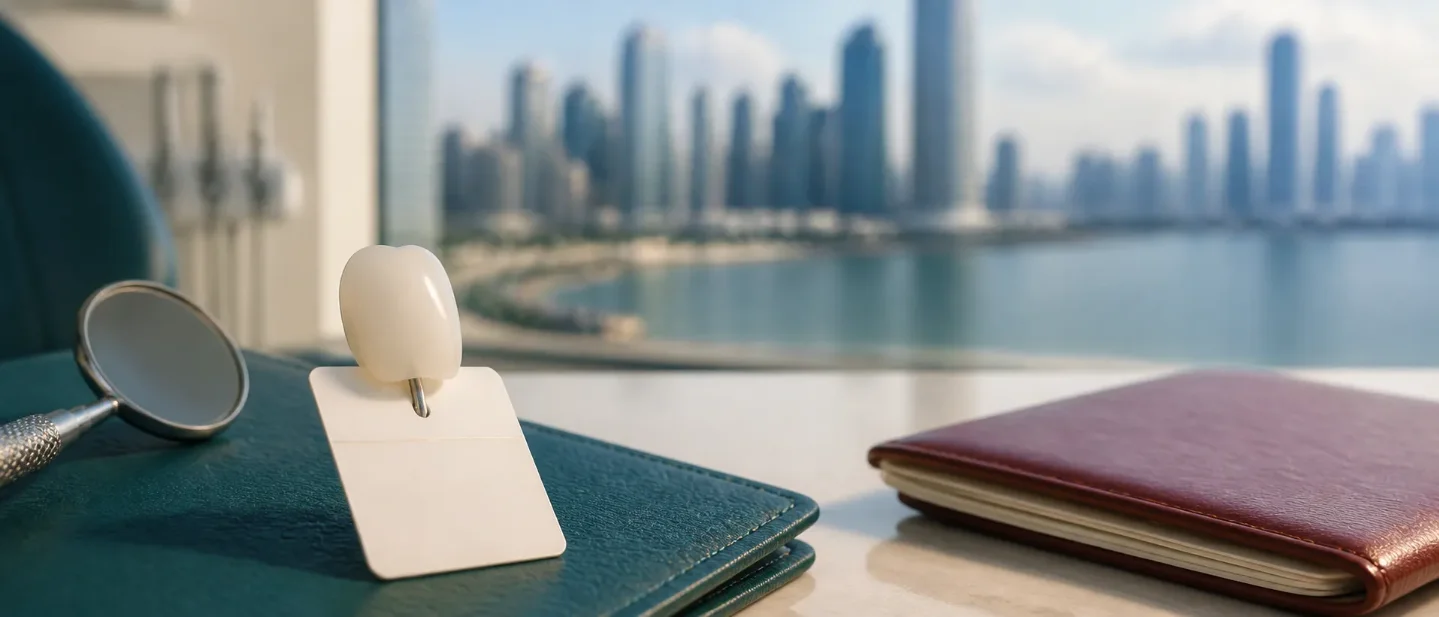
Panama: $3,800 for 8 Porcelain Veneers vs. $7,200–$20,000 at Home
Panama’s published veneer prices can undercut U.S. comparisons, but the real decision depends on dentist credentials, enamel preparation, facility claims, insurance exclusions, and a workable U.S. follow-up plan.
Panama can make the dental bill look smaller, but the advertised saving is only meaningful if the treatment plan, dentist, laboratory, and follow-up are all clear before you fly. A Panama clinic lists eight porcelain veneers from $3,800, compared with a U.S. comparison range of $7,200–$20,000; travel, lodging, and any care outside the quoted dental work are separate.
The cost screen
| Treatment benchmark | U.S. comparison | Panama published price | Approx. saving before travel and follow-up |
|---|---|---|---|
| One porcelain veneer or crown | $900–$2,500 | From $598.50 | About 34%–76% |
| Eight porcelain veneers / smile design | $7,200–$20,000 | From $3,800 | About 47%–81% |
The clinic's published Panama veneer prices say the prices are for dental treatment and exclude travel and accommodation. It also describes a five-to-seven-working-day, one-trip schedule, but that is a clinic estimate—not a guarantee that your case will be finished on time.
A separate commercial Panama dental-tourism benchmark puts porcelain veneers at roughly $400–$700 per tooth against a U.S. range of $800–$3,000 and advertises 60%–72% savings. Treat both sources as planning benchmarks, not quotes. The final number can change with diagnostic imaging, gum treatment, temporary veneers, the laboratory, bite adjustments, materials, revisions, and whether the quote is actually for a veneer rather than a crown.
Before comparing the headline prices, request an itemized written quote that answers:
- How many teeth are being treated, and is enamel preparation necessary?
- Are consultation, X-rays or scans, temporaries, cementation, and follow-up included?
- Which laboratory and material are being used, and who pays if a veneer cracks or the shade is wrong?
- How many in-person visits are required if the bite, fit, or gums need correction?
- What happens if you need emergency care after returning to the U.S.?
Verify the dentist and facility
A coordinator's profile or a clinic's marketing page is not credential verification. Ask for the dentist's full legal name, professional suitability number (
idoneidad), training, specialty, and the facility's legal name and address.- Start with Panama's Ministry of Health Technical Health Council page and the Panama Digital idoneidad service. Confirm how the dentist's name and number can be checked before paying a deposit. If the public lookup is unavailable, ask the regulator or clinic for written confirmation; do not treat the clinic's refusal or a screenshot as proof.
- Ask who owns and operates the facility where the work will be done, not just the name of the booking agency. Confirm emergency arrangements, sterilization standards, imaging, and the laboratory handling your case.
- If the treatment is at Pacífica Salud Hospital Punta Pacífica, the hospital's about page describes JCI accreditation and a Johns Hopkins Medicine International affiliation. Verify the exact organization, accreditation status, and scope in the official JCI directory; an institution's own claim is not a substitute for a current directory record.
- Get your records before departure: scans or X-rays, treatment plan, material and shade information, lab details, dentist contact, and an English-language summary for your U.S. dentist.
Risks the price does not remove
The CDC's medical-tourism guidance lists infection, antimicrobial resistance, communication and quality problems, travel-related complications, and gaps in follow-up as risks of receiving care abroad. For veneers, the practical question is not just whether the teeth look good on day one; it is who will assess pain, bite problems, loose work, gum irritation, or a failed restoration after you are home.
Have a U.S. dentist review your records before you commit. Ask whether the proposed preparation is clinically appropriate, what happens if the result needs correction, and whether you can obtain an independent second opinion. Avoid a schedule that sends you directly from the chair to a tight international connection or leaves no buffer for a second appointment.
Also check the CDC's current Panama traveler guidance before departure. It includes routine-vaccine advice and current Level 1 notices such as Oropouche in the Americas and measles; it also discusses insect-bite precautions and protecting wounds because New World screwworm myiasis has been reported in Panama. These issues do not make dental care impossible, but they are part of a responsible destination risk check.
Insurance and trip logistics
Do not assume a U.S. dental plan will reimburse elective veneers performed abroad. Ask the insurer in writing whether the procedure is covered, whether cosmetic treatment is excluded, and whether repairs or complications after returning home are covered. Ask any travel insurer whether planned treatment, treatment complications, and medical evacuation are excluded; CDC travel-insurance guidance explains why ordinary travel coverage and evacuation benefits should not be treated as interchangeable.
Before booking, confirm current passport and entry requirements with Panama's official diplomatic mission or your airline. Then price the full trip, not just the chair time:
- airfare, lodging for at least the clinic's stated window, meals, local transport, and a companion if needed;
- consultation and diagnostic work before treatment;
- a buffer day or two for fit, shade, bite, or laboratory problems;
- a U.S. follow-up visit and a reserve for repairs;
- payment, cancellation, refund, and dispute terms in writing.
A prepayment checklist
- Send recent dental records, photos, and X-rays for a remote review; obtain an itemized quote.
- Verify the dentist's legal name and
idoneidadthrough the Ministry of Health route, and confirm the facility's legal identity. - Check any JCI or hospital-affiliation claim in the original accreditation directory.
- Confirm the number of visits, working days, materials, laboratory, warranty, remake policy, and emergency contact.
- Get a U.S. dentist's opinion on preparation, bite, gum health, and aftercare before paying.
- Ask dental and travel insurers for written answers on elective treatment, complications, and evacuation.
- Leave schedule and cash-room for a second visit; bring records home in English.
The headline comparison can justify a closer look, especially for a larger case. It cannot by itself establish that Panama is cheaper after travel, safer for your mouth, or easier to repair. Those answers depend on the written plan and the follow-up you arrange before the deposit becomes nonrefundable.
Passport to Savings
Financial tourism guide: destinations where travel plus service beats staying home.
This story was produced automatically by a channel. One sentence is all it takes for Neodrop to keep producing for you.
Related content
- Sign in to comment.