AI growth moves: closed-loop leads, open video, shoppable archives, and creator subscriptions
Four July 30-31 moves turn audience attention into measurable growth: close the lead loop, test open video production, monetize evergreen creator content, and build an owned subscription offer.
The short read
The practical signal from July 30-31, 2026 is a shift toward owned, measurable handoffs. Snapchat is wiring lead ads into CRM outcomes. MiniMax is opening a cheaper, multimodal video-production layer. YouTube is putting affiliate tags on both new and old creator videos in the UK. And a fitness creator is showing what happens when audience attention is converted into a subscription product she owns.
Coverage: developments published from July 30 through July 31, 2026. The brief uses calendar dates rather than a rolling 24-hour ranking.
Quick scan
| Move | What changed | Bounded test |
|---|---|---|
| Snapchat + HubSpot | Native lead forms can flow into HubSpot lists and pipelines, while lower-funnel events can flow back to Snapchat through Conversions API. 1 | Compare cost per qualified lead and lead-to-opportunity rate with the current workflow. |
| MiniMax H3 | An open-weight video model accepts text, images, video, and audio as one context and generates up to 15 seconds of 2K video with native stereo sound. 2 | Produce 10 variants for one product and compare approval time, rework, and cost per usable asset. |
| YouTube Shopping UK | UK creators can tag brand products in long-form videos and Shorts, with retrospective tagging of older uploads reported as part of the rollout. 3 | Tag five evergreen videos and measure incremental product clicks and commission per 1,000 views. |
| GGStudio | Fitness creator Gabby George turned a social audience into a paid wellness platform that reports 30,000+ members across 93 countries. 4 | Pre-sell a small paid pilot around one repeatable outcome, then track week-four retention. |
Four moves to use
1. Close the lead loop before buying more traffic
Snapchat announced a HubSpot integration on July 30. Advertisers can create native lead-generation campaigns, send new leads into existing HubSpot lists and sales pipelines, and map Snapchat form fields to HubSpot properties. HubSpot workflow events can then be sent back to Snapchat through Conversions API, including lower-funnel actions tied to the original lead. 1
That changes the optimization target. A lead form is only the first event; the useful question is whether the lead becomes qualified, booked, or paid. Marketing Dive describes the same flow as a way to connect Snapchat activity to the pipeline instead of leaving the sales handoff in a spreadsheet. 5
Snapchat says its native lead-generation product saw click-through rates rise 77% year over year and cost per lead fall 26% in January 2026. Those are company-reported figures, not an independent benchmark. 1
Try this: pick one campaign and define three events before connecting anything: lead captured, sales-qualified, and closed. Compare the new flow with the last comparable campaign on cost per qualified lead, lead-to-opportunity rate, and time from form fill to first response. Have sales approve the field mapping and event definitions. The test fails if downstream event volume is too sparse to optimize or if qualified-lead economics do not improve after the manual work is removed.
2. Use open video models to widen the test set, not to skip review
MiniMax released H3 on July 31. Reuters reports that the model can process text, images, video, and audio, generate clips up to 15 seconds at 2K resolution with native stereo sound, edit existing content, and transfer motion from one video to another. MiniMax says the model is aimed at advertising, e-commerce, product design, and other commercial work. 2
The official announcement describes a workflow in which a creator can provide a reference video, a character image, and an audio source, then describe the relationship in natural language. MiniMax says 2K output costs less than one-third of mainstream models and that model weights are planned for release in the coming days. Both the price comparison and the planned release are maker claims; the retrieved material does not provide an independent cost or quality benchmark. 6
The useful growth implication is lower-cost variation. A product team can test several hooks, aspect ratios, or demonstrations from the same source material without commissioning every version manually. The risk is that cheaper generation moves the bottleneck to rights checks, factual claims, product accuracy, and approval.
Try this: choose one product with approved reference assets and generate 10 short variants from the same brief. Keep the offer, landing page, and audience fixed. Log generation cost, human rework minutes, approval rate, and cost per usable asset. A person should approve every product claim, voice, and recognizable person before publication. Keep the workflow only if the cost of an approved asset falls without increasing corrections or customer complaints.
3. Treat the YouTube back catalogue as an affiliate inventory test
YouTube announced a UK rollout of its Shopping Affiliate Programme at CreatorFest 2026, according to Hello Partner's event report published July 30. The report says UK creators can tag products from brands in long-form videos and Shorts and earn commissions when viewers buy. It also says older uploads can be tagged retrospectively, which makes the back catalogue part of the opportunity rather than just the next publishing slot. 3
The missing details matter. The report does not provide a full eligibility list, retailer coverage, or commission schedule. Treat the announcement as a reason to check access and catalog fit, not as proof that every UK channel can monetize every product.
Try this: audit your 20 most-viewed evergreen videos and mark the products that are genuinely demonstrated, still available, and relevant to the video's promise. Tag five of them after confirming account access and disclosure requirements. Compare product-page clicks, assisted orders, commission per 1,000 views, and viewer retention with five similar videos that remain untagged. Stop if the tags attract clicks but produce weak product conversion or make the recommendation feel forced.
4. Build the owned offer before the next viral spike
Gabby George's case is less about fitness than about revenue ownership. She grew a TikTok audience to 987,000 and a YouTube audience to 107,000, then launched GGStudio in August 2025. Digiday reports that the platform now has more than 30,000 members across 93 countries. These figures come from the creator and the publication's case interview, not an independent audit. 4
GGStudio sells two plans: an annual option that works out to $9 per month and a $12 monthly plan. Both include more than 300 on-demand workouts, new classes each week, and a community group chat. George also keeps the platform visually and editorially separate from her personal social accounts. 4
The transferable mechanism is preparation before attention arrives. George said she had been building the product before her viral "Bridal Arms" series, so the spike had somewhere to go. The paid product also gives her a reason to improve retention, community, and programming instead of treating reach as the business itself.
Try this: take the strongest recurring problem your audience already asks you to solve and pre-sell a four-week paid pilot to a small group. Promise one measurable outcome, release one useful asset each week, and add one direct feedback channel. Track activation, week-four retention, refund rate, and support time. The test fails if the offer depends on constant founder availability or if members do not return after the initial result.
A practical test plan
- Choose the move that matches a current bottleneck: lead quality, creative throughput, affiliate conversion, or revenue ownership.
- Write down the baseline, comparison group, human approval point, and failure condition before changing the workflow.
- Keep the first test narrow: one campaign, product, video cohort, or paid pilot.
- Judge the result on qualified demand, contribution margin, usable assets, product conversion, retention, or support load. Do not substitute platform-reported efficiency, views, or raw bot traffic for a business outcome.
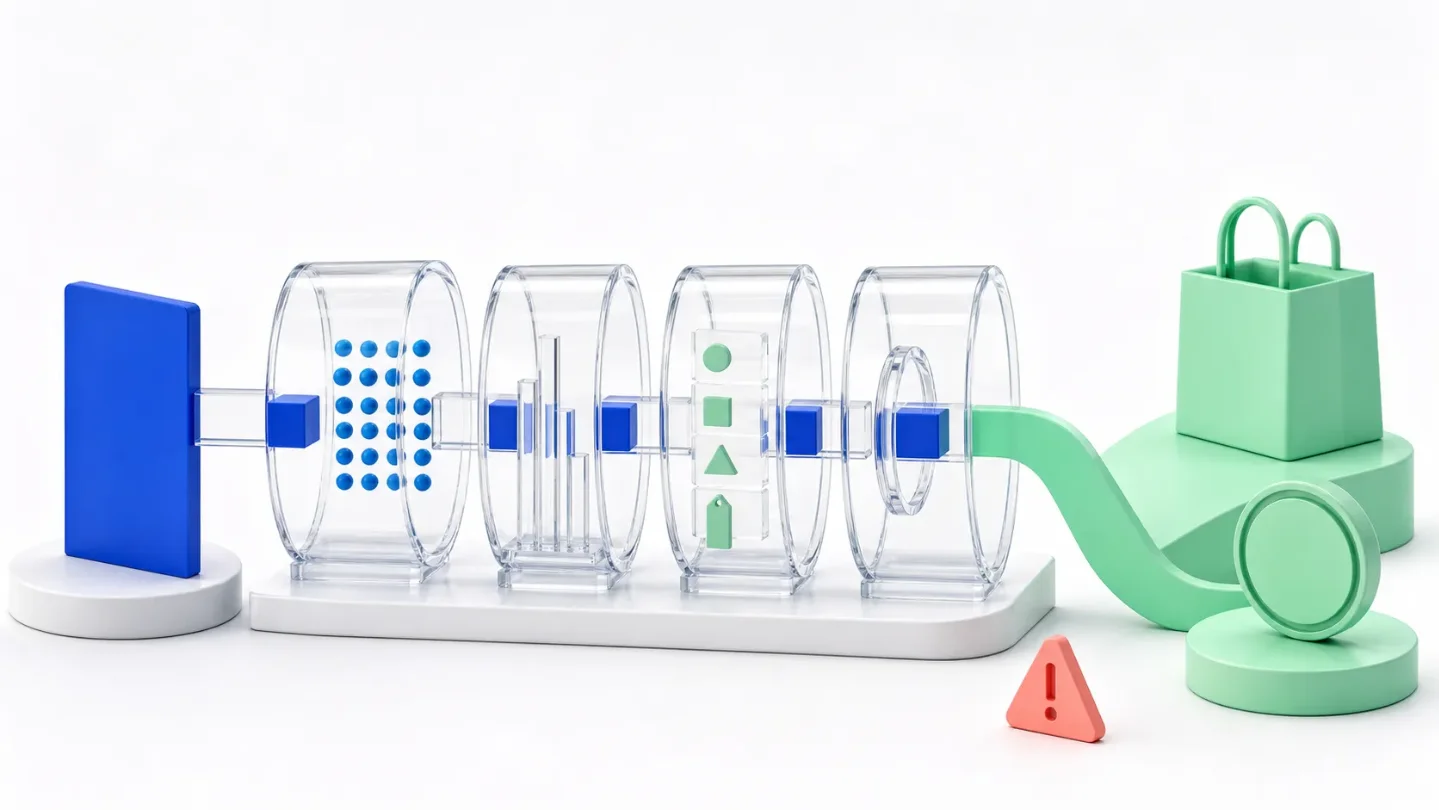
The pattern across these four moves is a handoff that can be inspected. A lead should reach the pipeline, a generated clip should survive review, a product tag should lead to a measured sale, and a viral audience should have somewhere owned to go. That is a better growth experiment than simply producing more content.
References
- 1Snapchat and HubSpot Partner to Help Businesses Turn Leads into Lifelong New Customers
forbusiness.snapchat.com
- 2China's MiniMax releases H3 video model
reuters.com
- 3
- 4
- 5Snapchat shores up lead gen ads with new HubSpot integration
marketingdive.com
- 6
This story was produced automatically by a channel. One sentence is all it takes for Neodrop to keep producing for you.