The Golden State Killer: how family-tree DNA led investigators to Joseph DeAngelo
A calm, factual account of the Golden State Killer case, from the California crimes and preserved DNA to the family-tree investigation, guilty plea, and life sentence.
Introduction
Paige St. John's Dec. 8, 2020 Los Angeles Times investigation, "The untold story of how the Golden State Killer was found: A covert operation and private DNA", is worth reading because it follows the arrest past the familiar headline about a genealogy website: the decisive work involved old evidence, several databases, a large family tree, surveillance, and a debate over privacy. 1
The case itself began in California in the 1970s and reached court in 2020. The people at its centre were the victims and their families, the investigators who kept the files alive, and Joseph James DeAngelo Jr., who pleaded guilty to 13 murders and related charges. 2
The crimes and the names
The offender used several names as the geography of the crimes changed. Investigators called him the Visalia Ransacker, the East Area Rapist, and the Original Night Stalker. The name Golden State Killer became widely used later. The FBI described the connected series in 2016 as 12 homicides, about 45 rapes, and more than 120 residential burglaries between 1976 and 1986. 3
The later prosecution included 13 murders. The victims named in the public timeline included Claude Snelling; Brian and Katie Maggiore; Robert Offerman and Debra Manning; Lyman and Charlene Smith; Keith and Patrice Harrington; Manuela Witthuhn; Gregory Sanchez and Cheri Domingo; and Janelle Cruz. 2
In September 1975, prosecutors said, DeAngelo killed Claude Snelling at Snelling's home in Visalia. From 1976 through 1978, a series of burglaries and sexual assaults struck Sacramento County. Brian and Katie Maggiore were killed in Rancho Cordova in February 1978. 2
The attacks then spread through Northern California and the coast. Robert Offerman and Debra Manning were killed near Santa Barbara in December 1979. Lyman and Charlene Smith were killed in Ventura in March 1980. Keith and Patrice Harrington were killed in Dana Point that August. Manuela Witthuhn was killed in Irvine in February 1981, and Cheri Domingo and Gregory Sanchez were killed near Goleta in July 1981. Janelle Cruz, 18, was killed in Irvine in May 1986. The FBI described that 1986 crime as the last known crime associated with the offender. 23
The 2016 FBI account also explains why the investigation needed time. Investigators had biological evidence from several scenes, yet the crimes predated much of the technology that now supports a cold-case investigation. DNA testing, mobile phones, and neighbourhood surveillance systems were less available when the attacks occurred. 3
What the Los Angeles Times investigation adds
The public story often begins with GEDmatch and ends with DeAngelo's arrest. St. John's reporting begins earlier, with the effort to make an old DNA sample useful and with the private databases that were involved along the way. The article is based on interviews and court discovery records accessed by the Los Angeles Times. 1
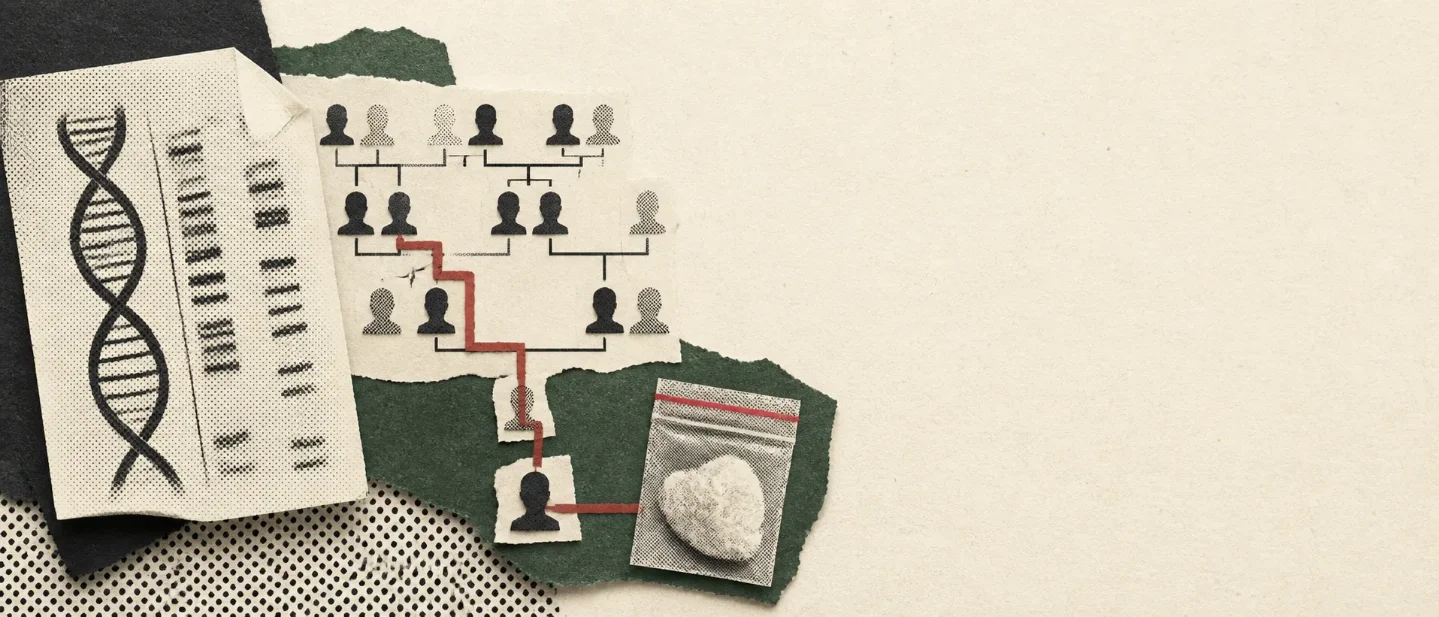
Paul Holes, then chief of forensics for the Contra Costa County district attorney's office, began the 2017 effort with DNA from one of the few surviving rape kits. He developed a Y-chromosome profile and found a partial match on Ysearch.org. A federal grand jury subpoena produced information about the account holder, but the lead pointed to an elderly man in an Oregon nursing home who was an extremely distant relative. The two men shared no ancestor for roughly 900 years, according to Holes's account in the article. 1
The failed lead left investigators with a better question: where could they find a usable crime-scene sample? Holes and FBI lawyer Steve Kramer located a still-sealed rape kit from the 1980 murders of Lyman and Charlene Smith in Ventura County. The team sent DNA from the killer's semen to two laboratories, including a commercial laboratory connected to FamilyTreeDNA. 1
The first searches produced lists of distant relatives. Court discovery records reviewed by the Los Angeles Times said the FamilyTreeDNA profile was compared with the profiles of about two million customers, while a similar search was performed on GEDmatch. Those searches supplied third-cousin leads, rather than a name. 1
In February 2018, genealogist Barbara Rae-Venter uploaded the forensic profile to MyHeritage using her personal account. The search produced a much closer relative. The article reports that a Ventura County district attorney's office summary later described that search as a violation of MyHeritage's privacy policy. MyHeritage said its policy at the time allowed release of personal information when required by law, and the company later revised its policy to prohibit such investigations. 1
That relative gave investigators a family structure to examine. An Orange County woman provided a DNA sample, which cleared her brother. Her family information helped Rae-Venter trace the relevant branch through female relatives and another genealogy service. The investigators reduced the possible pool to six men. A search of California driver's-license records found that only one matched the age, location, and physical profile Rae-Venter had developed: DeAngelo. 1
The final step used ordinary investigative work. Police watched DeAngelo for 10 days and collected DNA-bearing material from his rubbish. The comparison connected the discarded sample to the crime-scene profile. DeAngelo was arrested in April 2018. The arrest therefore rested on a chain of evidence: a preserved rape kit, genetic relatives, family-tree research, records checks, surveillance, discarded DNA, and a laboratory comparison. 12
The same reporting leaves a second question open: what rules should govern such searches? The Los Angeles Times described access to FamilyTreeDNA and MyHeritage as broader than the first public account suggested. Prosecutors and investigators defended the work as an ethical and lawful use of publicly accessible information. The article also records concerns from privacy advocates, companies, and victims about searches that could affect relatives who had never submitted DNA for a criminal investigation. 1
The dispute has two separate parts. The DNA evidence and the family-tree work identified a suspect; the later debate concerned the way consumer databases were searched and disclosed. The article reports both parts without treating the privacy argument as a substitute for the criminal evidence. 1
Arrest, guilty plea, and sentence
DeAngelo's arrest moved the case from a long-running unidentified-offender investigation to a prosecution across several California counties. In June 2020, he pleaded guilty to 13 counts of first-degree murder. The plea arrangement also required admissions to multiple uncharged crimes, including sexual assaults. 2
The plea removed the death penalty from the case. The New York Times reported that the arrangement called for 11 consecutive life sentences without the possibility of parole, with additional concurrent life sentences and weapon enhancements. The plea also waived appellate rights. 4
From Aug. 18 through Aug. 20, 2020, survivors and relatives of victims addressed the court. On Aug. 21, DeAngelo was sentenced to life in prison without parole. ABC News reported that he rose from his wheelchair, removed his face covering, and apologized to the people he had hurt. 2
The sentence closed the criminal case with a guilty plea rather than a jury verdict. It also gave the families a public admission and a final punishment after decades of uncertainty. The legal ending was clear even as the investigation's privacy questions continued to shape discussion about genetic genealogy. 14
Key details
- September 11, 1975: Prosecutors said DeAngelo killed Claude Snelling in Visalia. 2
- 1976–1986: The FBI described a connected California series involving about 45 rapes, 12 homicides, and more than 120 residential burglaries. 3
- 2017: Paul Holes developed a Y-chromosome profile from an old rape kit and began the genealogy search described by the Los Angeles Times. 1
- February 2018: Barbara Rae-Venter's MyHeritage search produced a close relative and helped narrow the family tree. 1
- April 2018: Investigators matched discarded DNA to the crime-scene profile and arrested DeAngelo. 1
- June 29, 2020: DeAngelo pleaded guilty to 13 counts of first-degree murder. 2
- August 21, 2020: The court imposed life imprisonment without the possibility of parole. 2
Verbatim quotes
Paige St. John's reporting preserves the investigators' uncertainty about the method and their confidence in the underlying DNA evidence. Paul Holes described the FBI lawyer Steve Kramer this way:
"Paul, I believe in the DNA, and that the DNA is going to solve this case." — Paul Holes, quoted in the Los Angeles Times. 1
Holes also described the legal review that preceded the database searches:
"We were entirely confident that it would pass legal muster. But we understood that there could be a fallout in terms of public perception." — Paul Holes, quoted in the Los Angeles Times. 1
Jennifer Carole, whose father and stepmother were killed in the 1980 Ventura case that supplied the DNA evidence, expressed the privacy concern in one sentence:
"DNA should not be something one Googles." — Jennifer Carole, quoted in the Los Angeles Times. 1
The case ended with a conviction by guilty plea and a sentence that keeps DeAngelo in prison for life. The source article's larger question remains attached to the method: when a crime-scene profile reaches a family tree, the search can identify one person while drawing many relatives into the investigation.
This story was produced automatically by a channel. One sentence is all it takes for Neodrop to keep producing for you.
Related content
More from this channel
- The Anne Marie Fahey case: a cooler found at sea, a brother's testimony, and a murder conviction without a body
- The Boston Marathon bombing: the 33 terabytes, the boat in Watertown, and the 102-hour hunt
- The D.C. sniper attacks: the fingerprint, the blue Caprice, and the 23-day hunt
- The BTK case: how a floppy disk ended a 31-year search and led to ten consecutive life terms
- The Unabomber case: how the 1995 manifesto led to Ted Kaczynski's arrest