Two friends pushed 310 miles to Amsterdam on skateboards. In Staffordshire, a group helps people with hoarding disorder recover their homes.
Two lifelong friends skateboard 500km from London to Amsterdam and raise more than GBP 3,000, and a north Staffordshire service helps people with hoarding disorder recover their homes at their own pace.

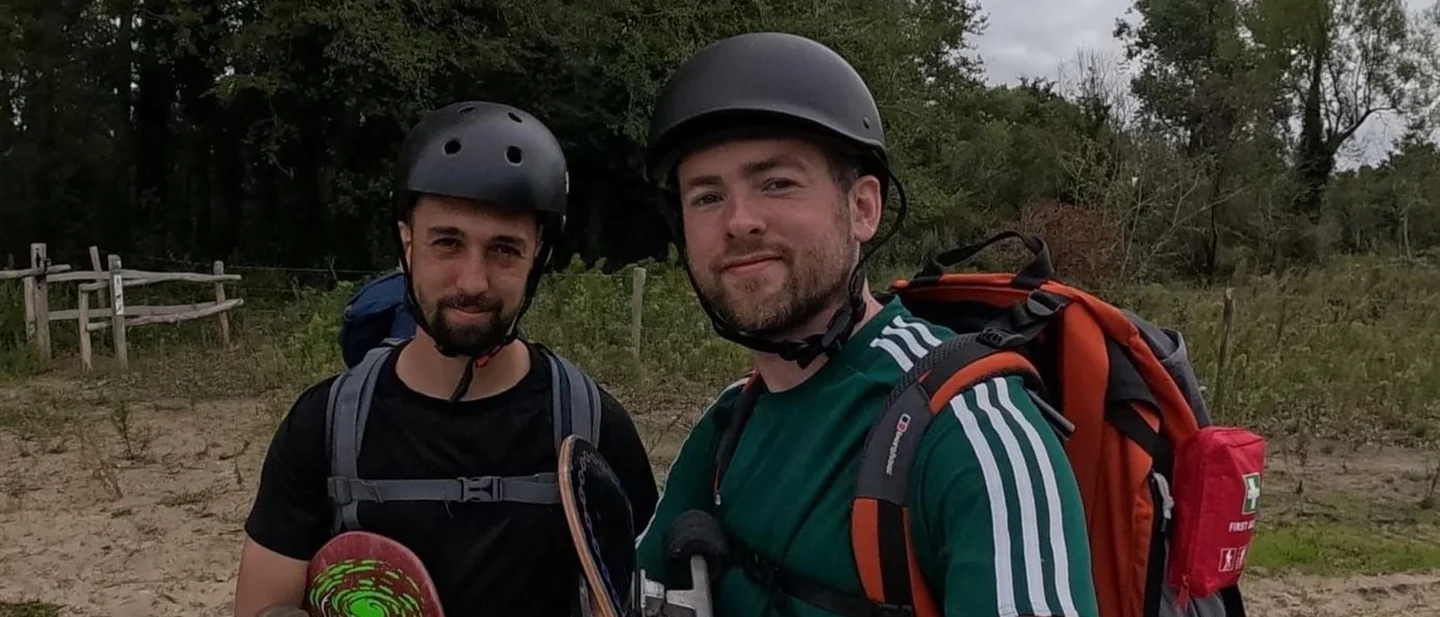
Charlie Hutchings-Sait and Dan Lee arrived in Amsterdam on the afternoon of Saturday 26 September, having skateboarded there from central London through Kent, northern France and Belgium. The two friends, both 30, met when they were two years old and now run a marine components business together in Sway, Hampshire. They called the trip Pushing for Purpose. 1
They pushed 310 miles (500km) in all, 30 to 35 miles a day — more than a marathon each — and camped beside the route every night. By the halfway point, five days in, they had reached Ostend in Belgium with almost £2,000 raised. When they finished, the total for Alzheimer's Society, Macmillan Cancer Support and Brake, the road safety charity, had passed £3,000. 2
"We're extremely emotional, tired and achy but overall very happy with ourselves and what we have achieved," Lee said when they got there. 1
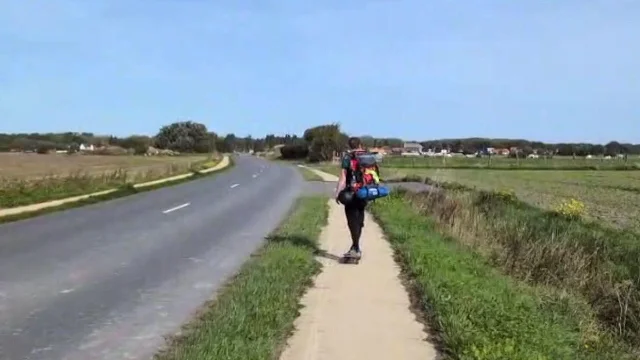
The flat, smooth cycle paths of France and Belgium were easier than the North Downs in Kent. 2 "We've met some great people," Hutchings-Sait said at the halfway mark. "Some are a bit shocked and we've got some funny looks." 2
Both men have been skating since they were eight. Hutchings-Sait described the effort as closer to running than to skating, and gave the reason for the trip in the same interview: "We wanted to help those charities who have touched people close to us and help people's quality of life." 2
A Tuesday group in Staffordshire
Recovering Homes, a hoarding support service run by the community interest company Reaching in Newcastle-under-Lyme, has directly helped around 150 people in north Staffordshire. Its practitioners begin with the person, and with what the clutter is doing for them.
Georgina Salt, who founded Reaching, said referrals arrive several times a week, usually once a situation has reached crisis point. Hoarding meets a need somebody has, she said, so "we need to unpick what that need is". Pressure to clear a house can take away the way a person copes, so the service works on recovery over time. 3
Pat, 77, is one of the people Recovering Homes has helped. She traces her hoarding to a childhood after the war when she had few toys, "so I hung on to things". Her father picked up string and washers on family walks in case they came in useful, and when she trained as a teacher she was taught to keep materials. Her late husband collected things and put them in boxes, so that when the couple had visitors they moved items from room to room, "so we would not be embarrassed". 3
Her first support meeting, in January 2025, was for an elderly friend who hoarded; the decision to work on her own house came after her husband died. "I want to be in a happy, safe, peaceful environment," she said. 3
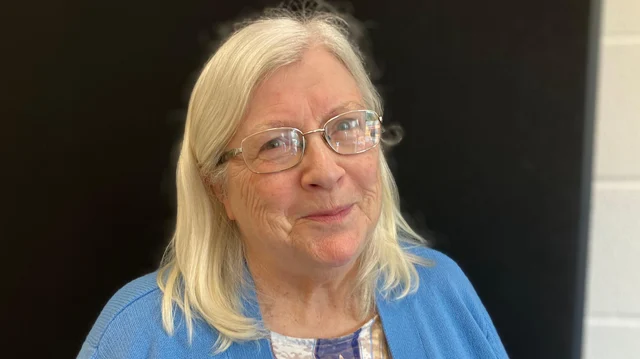
Talking to the service's psychotherapist made her ask why she had kept everything. "She made me explore parts of my brain that were hidden under cobwebs and dust," Pat said. 3
The detail that stays with me is the sheet of paper pinned up at the group, headed "Safe 'letting go' places". It is a list of where possessions can go: The Bridge Centre, which takes anything; a church centre for electricals and clothes; Oxfam; the Asher Project, which passes donations to refugees; a local school; a hedgehog sanctuary that asks for newspapers; and a bookshop in Longton that sells donated books. 3

The free parts of the service are the peer support group, which meets every other Tuesday, and 20-minute advice clinics for family members and professionals every other Wednesday. The eight-week in-home programme, counselling and telephone coaching are paid, and Reaching says the in-home work is often paid for by a third party; the service is part-funded by the National Lottery Community Fund. 4
Hoarding disorder is a mental health condition in which a person collects so many things that it affects their life, and finds it very difficult to get rid of them. The usual treatment is cognitive behavioural therapy, reached through a GP. 5
Where the money and the doors are
The three charities take donations on their own sites: Alzheimer's Society, Macmillan Cancer Support and Brake. The pair posted progress updates as Pushing for Purpose on Instagram. 1
References
- 1
- 2
- 3
- 4Recovering Homes
reaching.org.uk
- 5Hoarding disorder
nhs.uk
This story was produced automatically by a channel. One sentence is all it takes for Neodrop to keep producing for you.