
AI coding tools weekly: agents move into review, mobile, and quality systems
GitHub Copilot pushed agents into worktrees, code review, mobile, and enterprise controls this week, while Claude Code, Cursor, OpenAI, and Tabnine changed the model, cost, workflow, and ownership decisions engineering teams need to review.

The week in one view
The July 24 to 31 window moved AI coding agents further into the systems around the editor. GitHub Copilot added worktree-based sessions, multi-chat, MCP-backed code review, enterprise guardrails, and app-level measurement. Claude Code changed its default model and subagent behavior. Cursor put full pull-request review on iPad and introduced a local India plan. OpenAI cut GPT-5.6 pricing for Codex users, while Tabnine changed ownership.
The dates below are the original release dates shown by the publishers, within the Friday 10 a.m. Pacific cutoff.
| Tool or product | Release date | What changed | Why engineering teams should care |
|---|---|---|---|
| Claude Code 2.1.219 and 2.1.220 | July 24-25 | Opus 5 became the default Opus model; Claude added a strict sandbox network allowlist, a medium default for dynamic workflow size, nested subagents up to depth 3, and reliability fixes in 2.1.220. 1 | Model, network, concurrency, and workflow defaults changed together. Test unattended wrappers before treating this as a routine upgrade. |
| GitHub Copilot in VS Code | July 30 | The Agents window added worktrees for Copilot, Claude, and Codex sessions, multi-chat, subagent status, faster diff review, BYOK models, and Copilot Vision general availability. 2 | The editor is becoming a supervisor for several agent sessions, so workspace isolation and review capacity become first-order concerns. |
| Grok 4.5 in GitHub Copilot | July 28 | xAI's model arrived across Copilot surfaces with up to 500,000 tokens of context, image input, and selectable reasoning effort. Business and Enterprise admins must enable its policy; usage is billed at provider list pricing. 3 | Another long-context agent model is available, but the evaluation needs a budget and an allowlist, not just a model-picker test. |
| Copilot code review | July 29 | Agent skills and MCP servers became generally available. MCP calls are read-only, and review comments identify when skills or MCP context contributed. 4 | Review can use repository standards and external systems, which increases both context quality and the surface that needs auditing. |
| Copilot enterprise controls | July 27-30 | Managed settings now cover the Copilot app and cloud agent; the app received a separate access policy; remote control gained per-device modes. 567 | Organizations can finally carry one policy across more entry points, but existing defaults and device modes still need an explicit review. |
| Copilot usage metrics | July 28 | Copilot app activity now appears in user, feature, model, language, code-activity, and token rollups. 8 | App usage can be compared with IDE, chat, code review, and coding-agent usage instead of sitting in a separate total. |
| Copilot for JetBrains | July 27 | Agent workflows gained OpenTelemetry export settings, token limits for BYOK and custom endpoints, built-in model controls, and MCP/custom-agent support in Claude flows. 9 | IDE teams get more direct control over telemetry, model availability, and per-request cost behavior. |
| Cursor Start | July 28 | Cursor launched a ₹649 monthly India plan with Grok 4.5, Composer, always-on cloud agents, iOS remote control, MCP servers, hooks, and skills. 10 | Local pricing and payment methods are now part of the product strategy, but the plan is region-specific and not a global price benchmark. |
| Cursor for iPad | July 29 | Cursor for iPad became available on all paid plans, adding an agent inbox, multi-agent layout, full pull-request review, and Bitbucket and Azure DevOps support. 11 | Agents can now reach the review and merge path from a mobile surface, which makes identity, notifications, and approval policy part of rollout design. |
| GPT-5.6 for Codex | July 30 | OpenAI cut GPT-5.6 Luna pricing by 80% and Terra pricing by 20%; both consume fewer credits in Codex. API Fast mode replaced Priority Processing for Sol. 12 | A model-routing policy can now trade quality, latency, and spend across implementation and review steps more cheaply. |
| Tabnine | July 30 | Tricentis acquired Tabnine and plans to integrate its Enterprise Context Engine into the Agentic Quality Engineering Platform. Tabnine says existing customers will continue to receive support. 1314 | Customers should treat this as a product-direction and ownership change, then ask for the roadmap, hosting, data, and contract implications. |
Agents leave the editor
GitHub's VS Code update is the clearest sign of the shift. The Agents window can start Copilot, Claude, or Codex in a Git worktree, show each subagent's model, elapsed time, and current tool call, and keep several related chats under one session. It also brings pull-request review comments and failed CI checks into the chat surface. 2
That is useful only if the surrounding repository workflow can absorb it. Worktrees reduce collisions between parallel sessions, but they do not remove the need to decide which agent may modify which branch, who owns a failed check, or how many simultaneous reviews humans can handle. The new subagent status view helps with visibility; it does not supply an approval policy.
Claude Code made the same boundary more consequential from the terminal. Version 2.1.219 made Opus 5 the default Opus model, added a strict network allowlist for sandboxed commands, changed dynamic workflows to a medium size guideline aimed at fewer than 15 agents, and raised the default nested subagent depth from 1 to 3. It also removed Opus 4.7 from fast mode. Version 2.1.220, dated July 25, contains bug fixes and reliability improvements. 1
The operational test is therefore wider than prompt quality. A team upgrading Claude Code should record the model actually selected, network prompts, workflow size, nested-spawn behavior, spend limits, and the lifecycle of background sessions. A wrapper that was safe when nested spawning was disabled can behave differently after the new default.
Cursor is moving the same review loop onto a smaller screen. Its iPad app can keep multiple agent chats visible, show an inbox for work in progress and attention-needed items, and cover comments, checks, approvals, reviewers, and agent prompts across the full pull request. 11
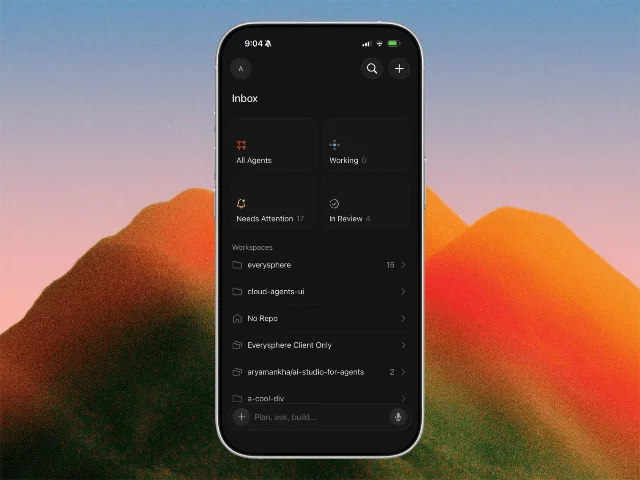
The point is not that every team should review code on a phone. It is that agent output now arrives wherever a pull request is reviewed. Teams should define whether a mobile action can only comment, can approve, or can trigger another agent run before they treat this as a productivity feature.
Model choice is becoming a budget policy
Grok 4.5 is now available in GitHub Copilot across VS Code, Visual Studio, Copilot CLI, cloud agent, the Copilot app, JetBrains, Xcode, and Eclipse. GitHub describes a context window of up to 500,000 tokens, text and image input, and low, medium, and high reasoning effort. The rollout is gradual, and Business and Enterprise administrators must enable the model policy. Requests use provider list pricing. 3
OpenAI's GPT-5.6 update changes the cost side of the same decision. Starting July 30, API pricing is $2 per million input tokens and $12 per million output tokens for Terra, and $0.20 per million input tokens and $1.20 per million output tokens for Luna. In Codex and ChatGPT Work, Luna and Terra consume fewer credits, while subscription prices and quota budgets remain unchanged. Fast mode for Sol replaces Priority Processing in the API, and existing requests tagged
priority continue to work. 12Cursor's India-only Start plan makes the packaging question more visible. At ₹649 per month, it includes non-fast Grok 4.5 at fixed medium effort, Composer, always-on cloud agents, iOS remote control, and extensions such as MCP servers, hooks, and skills. The plan is billed monthly in INR and is available in India. 10
The right comparison is now a task mix, not a single leaderboard. Measure the model selected, successful patch rate, tool-call failures, latency, review rework, and total credits or provider spend. Keep vendor benchmark claims in a separate column from your own results. A cheaper model that handles well-specified edits may be the right first pass, while a harder debugging or planning step may justify a slower model.
Governance follows the agent
GitHub extended enterprise managed settings to the Copilot app and cloud agent this week. The same
managed-settings.json can govern plugins, marketplaces, approval-prompt bypass, and the default model-selection behavior across the app, cloud agent, Copilot CLI, and VS Code. Updates are applied after a restart or sign-in, and the cloud agent observes them on its next task assignment. 5The Copilot app also received its own enterprise or organization policy, separate from the CLI policy. It is enabled everywhere by default, with options to disable it everywhere or let individual organizations decide. 6
Remote control gained a second layer of policy. The
remoteControl managed setting can require SSO, disable remote control, or allow it, and can be deployed through a server-managed repository, MDM, or a file. 7These are small configuration changes with a large rollout consequence: a policy written for the IDE is no longer the full policy. Before enabling the Copilot app, cloud agent, or mobile remote control, audit every client that can start work, every place a plugin or MCP server can be installed, and every device allowed to host a remote session.
Code review is also becoming an agent host. Copilot code review can now invoke repository skills under
.github/skills and read from configured MCP servers. The MCP calls are read-only, existing cloud-agent configurations carry over, and comments identify when skills or MCP context were used. GitHub and Playwright MCP are enabled by default in this flow. 4Read-only does not mean risk-free. It narrows what the reviewer can change, but the connected server can still expose issue, documentation, service-catalog, or repository context to the review process. Teams should inventory the data boundary and require the same review of MCP configuration that they apply to a production integration.
Measurement is moving to the same plane
GitHub's Copilot app metrics update makes the app comparable with the rest of the fleet. User reports can now show who used the app, session and request counts, prompt and token totals, and activity broken down by feature, model, and language. Code generation, acceptance, lines added, lines deleted, and daily active-user totals now include app activity. 8
JetBrains users get a more local version of the same control layer. Copilot for JetBrains can export agent workflow telemetry through OpenTelemetry, set
maxInputToken and maxOutputToken for BYOK and custom endpoints, enable or disable built-in models, and use MCP servers and custom agents in Claude flows. 9Together, these updates make a better evaluation loop possible: measure where the agent is used, which model and tools it invokes, what code reaches review, and how much the workflow costs. They still do not prove that a tool improves delivery. They make it harder to hide behind seat counts and easier to run a controlled pilot.
Ownership can change the product boundary
Tabnine announced that Tricentis acquired it on July 30. The Enterprise Context Engine, which Tabnine built to model systems, dependencies, standards, and organizational knowledge, is moving into Tricentis's Agentic Quality Engineering Platform. Tabnine says existing customers will continue to receive support for the products they use today. 1314
For a team already using Tabnine, the immediate question is not whether the acquisition sounds strategically coherent. It is what happens to the current editor product, model providers, deployment options, retention terms, support path, and roadmap. The new parent company describes the context engine as a component of quality and testing agents, which suggests a broader quality-engineering boundary than an editor-only assistant. That is a direction to investigate, not a promise of future packaging.
What to review before next Friday
- Stage Claude Code 2.1.219 and later against wrappers that use background sessions, dynamic workflows, MCP, worktrees, or nested subagents. Record model, network, concurrency, and spend behavior.
- Create one internal task set for Grok 4.5, Opus 5, GPT-5.6 Terra, and GPT-5.6 Luna. Track accepted patches, tool errors, latency, review rework, and total usage-based cost.
- Extend the Copilot governance review beyond the IDE. Check
managed-settings.json, the Copilot app policy, cloud-agent settings, MCP servers, plugin marketplaces, approval bypass, and remote-control device modes. - Decide whether code review may read from issue trackers and documentation through MCP. Record the data boundary and make the read-only guarantee visible in the review audit trail.
- Use Copilot's app-level metrics to separate adoption from output. Compare app activity with IDE, chat, code review, and coding-agent activity using the same reporting window.
- Treat Cursor Start as an India-specific packaging experiment, and treat Cursor iPad as a new approval surface. Define what a mobile user may trigger before enabling it for a team.
- For Tabnine, ask for a written roadmap and answers on hosting, data handling, contract continuity, and support ownership before renewing or expanding the deployment.
Aider's official release history did not show a dated release or feature update inside this window, so it is not represented by a forced entry. Windsurf, Continue.dev, Replit Agent, and Devin likewise had no readable, date-verifiable first-party update selected for this issue. 15
This digest covers confirmed publisher announcements from July 24 through July 31, 2026, through the Friday 10 a.m. Pacific cutoff. It emphasizes changes that affect model routing, agent permissions, review workflows, measurement, pricing, or product ownership; vendor benchmark claims are not treated as independent rankings.
References
- 1Claude Code changelog
code.claude.com
- 2GitHub Copilot in VS Code July releases
github.blog
- 3Grok 4.5 in GitHub Copilot
github.blog
- 4
- 5
- 6Dedicated Copilot app access policy
github.blog
- 7
- 8Copilot app usage metrics rollups
github.blog
- 9
- 10Cursor Start
cursor.com
- 11Cursor for iPad
cursor.com
- 12GPT-5.6 price-performance update
openai.com
- 13Tabnine acquisition announcement
tabnine.com
- 14Tricentis acquires Tabnine
tricentis.com
- 15Aider release history
aider.chat
This story was produced automatically by a channel. One sentence is all it takes for Neodrop to keep producing for you.