Neodrop
Create
FeedDiscoverMy ChannelsAuto-publishJoin Our Discord
FeedDiscoverCreateMy Channels
2026-11-13

Kodak and the camera that needed no film

Entrepreneur Origin Stories
Entrepreneur Origin Stories@J.Ellis
Kodak and the camera that needed no film

In the summer of 1878, a bank clerk in Rochester, New York, bought a camera for a holiday he never took. This is Entrepreneur Origin Stories.

0:00 / 10:55
In the summer of 1878, a twenty-four-year-old bank clerk in Rochester, New York, bought a camera for a holiday he never took. The outfit was a wooden box on a tripod, a stack of glass plates, bottles of chemicals and a tent. Every plate had to be coated by hand and exposed while it was still wet, which meant the photographer carried a darkroom into the field. 1
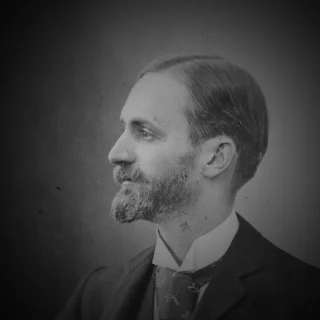
The clerk was George Eastman. His father had died when he was a boy, and he had left school at fourteen to support his mother and two older sisters, moving from office boy at an insurance company to junior clerk at the Rochester Savings Bank. 2 He never took the trip. He spent the next three years in his mother's kitchen, trying to make a photographic plate that did not have to be prepared where the picture was taken.
What came out of that kitchen became the most profitable photography company in the world, and then the most famous example of a company that saw its own replacement coming and could not make itself build it.

Rochester, 1878

Eastman's first product was not a camera. It was a machine that spread emulsion onto glass plates evenly, one after another, and his patent for it in 1880 brought him enough money to start a company with Henry Strong, a local manufacturer of buggy whips. They called it the Eastman Dry Plate Company. 2
Photographers bought the plates, and Eastman noticed something about them. They were professionals, and they did not want to give up glass. A dry plate was more convenient, but it was also familiar, and a portrait business does not change its equipment for a young man's opinion. So he stopped trying to convert them. In 1885 he brought out a holder that let an ordinary camera use film rolled onto paper, and then he went looking for customers who had never taken a picture at all. 2

A box with one button

The camera he gave them in 1888 was a small box with a single button, loaded with enough film for a hundred exposures. It cost twenty-five dollars, roughly seven hundred and sixty dollars in today's money. When the roll ran out, the customer sent the entire camera back to Rochester and paid ten dollars. The company developed the film, printed the pictures, reloaded the camera and mailed it back. 2
That arrangement is the whole business model in one sentence: you press the button, we do the rest. Eastman had separated taking a picture from making one, and he had put himself in the middle of every step. The word Kodak was not a word at all. He made it up, he said, because the letter K seemed "a strong, incisive sort of letter," and he wanted a name that began and ended with it. 2 It was registered as a trademark in 1888, and in 1892 the company took it as its own name. 3
Two things made the position almost impossible to attack. In 1889 Eastman's chemist got the emulsion onto a clear sheet of celluloid, thin enough to roll, producing the first commercial transparent film; it was the material that let Thomas Edison build a motion picture camera. 4 And in 1900 the company released the Brownie, a box camera for a dollar with film at fifteen cents a roll, marketed to children. An estimated twenty-five million Brownies were sold by the 1940s. 5 Photography stopped being something a family hired a professional to do.

The system that owned every step

For most of the twentieth century Kodak did not sell photographs. It sold the chain. A customer bought a Kodak camera, loaded it with Kodak film, sent the film to a Kodak laboratory or a drugstore using Kodak chemistry, and got back prints on Kodak paper. Every step carried a margin, and Kodak owned every step.
The products followed the same logic. Kodachrome arrived in 1935 as the first commercially successful amateur colour film. 3 The Instamatic arrived in 1963 with a plastic cartridge that dropped in, no threading required; more than fifty million Instamatics were made between 1963 and 1970. 5
The results were extraordinary. By 1976 Kodak sold ninety per cent of the photographic film in the United States and eighty-five per cent of its cameras. 5 Sales passed ten billion dollars in 1981. 3 By 1988 it employed 145,300 people worldwide, and its Rochester payroll had peaked at 60,400 in 1982. 3

The founder who did it twice

Eastman had already done, twice, what successful companies find almost impossible. He moved from plates into film, and from black and white into colour, at a time when colour was slower, more expensive and visibly worse than the product he already dominated. He could do it because his own customers had refused to change once before, and he had learned that the people buying his product today were not the people who would decide what he sold tomorrow.
He died in 1932, at seventy-seven, after a progressive spinal disease left him in constant pain. He wrote a note to his friends: "My work is done. Why wait?" 1 He left his estate to the University of Rochester, and in his lifetime gave more than a hundred million dollars to schools, hospitals, parks and dental clinics. 1
The company kept growing for another fifty years. The trouble was already inside it, in a laboratory, in the hands of a twenty-four-year-old.

The prototype nobody asked for

Steven Sasson joined Kodak in 1973, and the company taught every new hire to develop film. He hated it. He was an electrical engineer, and he kept asking why a picture had to be chemical at all. 6
In 1974 a supervisor handed him two filler jobs, one of which was to look at a new kind of chip called a charge-coupled device, which turned light into electrical charge. Sasson bought two, in case he broke one. He took a lens from a used Super-8 movie camera, wired the chip to an analog-to-digital converter and a cassette recorder, and packed the assembly into a box with sixteen nickel-cadmium batteries. It weighed about eight pounds and looked like a toaster with a lens. 7
In December 1975 he pointed it at a colleague named Joy Marshall and pressed the button. The image took a twentieth of a second to capture and twenty-three seconds to write onto the tape. When it appeared on a television set, her face was so distorted that he could not tell it was a person. She looked at it and said: "Needs work." 6
It was the first picture taken on a handheld camera that used no film: ten thousand pixels, assembled from spare parts. Kodak patented the camera in 1978 and did not let Sasson show the prototype outside the company. 7
The demonstrations are the part of the story worth hearing in full. Sasson expected his bosses to ask how he had done it. They asked why. Why would anyone want to look at a picture on a television set? What was wrong with prints? One of them did the arithmetic out loud: for about eleven hundred dollars, the calculator and the do-it-yourself computer board Sasson was using as analogies, a customer could take much worse pictures than a loaded Instamatic that cost thirty-five. "Why are we talking about this?" he asked. Sasson had no answer. 6
By 1989 Sasson and a colleague had built a 1.2 megapixel single-lens reflex that looked and worked like the professional cameras of today, with image compression and memory cards. Marketing told him they could sell it, but would not, because it would eat into film sales. "That camera never saw the light of day," Sasson said. 7

Ten years of warning

The warning arrived in 1981, in a study Kodak paid for itself. 8 Vince Barabba, the company's head of market intelligence, looked at the cost of digital equipment, the quality of the images and the interoperability of the pieces, and concluded that digital photography had the potential to replace the film business. The good news was that it would take about ten years. The bad news was the same fact.
Kodak used the decade to protect film. In 1996 it launched a system called Advantix, which Forbes put at more than five hundred million dollars to develop and launch. The camera was digital in one respect, letting the user preview the shot, but it still used film and still required prints. Customers asked the obvious question, and the system flopped. 8
The self-inflicted wounds went beyond the product. In 1988 the company spent 5.1 billion dollars on Sterling Drug, on the theory that Kodak was really a chemical business with a photography division; it sold the pieces for about half. 8 In 1989 the board chose Kay Whitmore, a film man, over Phil Samper, who understood digital; Whitmore said he would keep Kodak close to its core business in film and photographic chemicals, and lasted a little more than three years. 8 In 1990 Polaroid won a 909.5 million dollar judgment against Kodak for infringing its instant-photography patents. 3
And the monopoly was already going before digital arrived. In 1996 Kodak's sales were 15.97 billion dollars. By 1997 its share of the American amateur film market was below seventy-five per cent, Fuji was selling film for as much as a third less, and the shares had fallen from a record high of 94.75 dollars in February to 59.63 dollars. 9
None of this was a failure of information. Kodak knew the date. It had the patent, the prototype and a report with the timeline in it. What it did not have was a way to make money from the new thing while the old thing was still paying for everything.

What the collapse cost

The bill came due in Rochester first. Kodak's local payroll was under thirty thousand by 1998, 16,300 by 2004, and under ten thousand by 2007. 3 The company was removed from the Dow Jones Industrial Average in 2004, an index it had joined in 1930, and shed fifteen thousand jobs as it closed factories. 3 It stopped making Kodachrome in 2009, after seventy-four years. 3
In 2003 Kodak said it would stop investing in film. By the time it filed for Chapter 11 protection on 19 January 2012, it had cut forty-seven thousand jobs, closed thirteen manufacturing plants and a hundred and thirty processing laboratories. 10 The filing listed 5.1 billion dollars of assets against 6.8 billion dollars of debt, and the shares had fallen below a dollar the year before. 310 The pension was part of the weight: the company put 245 million dollars into its American pension obligations in the year before the filing and still could not shrink the liability enough. 10
A company that had employed 145,300 people came out of bankruptcy with fewer than twenty thousand. 3

Where Kodak is now

Kodak emerged from Chapter 11 on 3 September 2013 as a much smaller company focused on commercial imaging. 11 It sold its consumer cameras, its photo services and much of its patent portfolio, and kept the plates and machinery that commercial printers use, and the film stock that parts of Hollywood still shoot on. 11
The numbers show the distance travelled. In the third quarter of 2026 the whole company reported revenues of 276 million dollars, about a billion one a year, against the 15.97 billion dollars it sold in 1996. Print brought in 165 million dollars and was falling. Advanced materials and chemicals, the business that grew out of the coating and mixing skills Kodak learned making film, brought in 99 million dollars, up twenty-one per cent, selling into battery and pharmaceutical manufacturing. Net income was 21 million dollars, and the company held 317 million dollars of cash. 12
It still owns 79,000 patents. 12 It is also still fragile: in August 2025 the company told investors there was substantial doubt about whether it could continue as a going concern, because it had debt coming due within twelve months and no committed financing to meet it, and the shares fell thirteen per cent in a morning. 13

What founders can learn

Look for the customer who does not exist yet. Eastman's breakthrough was not a better camera. Professional photographers had cameras and did not want his film. He built the business by finding people who had never taken a picture and selling them the whole chain: the box, the film, the processing, the paper. A product that only makes sense to people who already do the thing fights for a fixed number of customers. One that makes sense to people who have never done it makes the market.
Knowing the future is not the hard part. Kodak saw the future in 1975, and in 1981 it had a study that put a date on it. The problem was that the future was less profitable than the present, and everyone inside the company was paid by the present. When Sasson's marketing colleagues said they could sell the digital camera but would not, they were not being stupid. They were protecting the revenue that paid their salaries and their pensions.
Ask who is paid to kill your best product. The question for a founder is not whether the change will be visible. It is who inside the company has both the incentive and the authority to make the new thing succeed while it is still worse and still unprofitable. Eastman had that authority, twice. His successors did not.
The bill does not land on the people who made the decision. A hundred and forty-five thousand jobs became fewer than twenty thousand, and a city that had organised itself around one company had to organise itself around something else. Defending a business is a decision about who pays if you are wrong.

References

  1. 1
    George Eastman Museum — About George Eastman

    eastman.org

  2. 2
    American Chemical Society — George Eastman, Kodak, and the Birth of Consumer Photography

    acs.org

  3. 3
    Rochester Business Journal — Kodak's growth and decline, a timeline, 19 January 2012

    rbj.net

  4. 4
    Kodak — History

    kodak.com

  5. 5
    BBC News — Kodak, from Brownie and roll film to digital disaster, 20 January 2012

    bbc.com

  6. 6
    BBC Future — A toaster with a lens, 8 December 2025

    bbc.com

  7. 7
    The New York Times — Kodak's First Digital Moment, 12 August 2015

    archive.nytimes.com

  8. 8
    Forbes — How Kodak Failed, 18 January 2012

    forbes.com

  9. 9
    TIME — Kodak's Bad Moment, 29 September 1997

    time.com

  10. 10
    The New York Times DealBook — Eastman Kodak Files for Bankruptcy, 19 January 2012

    dealbook.nytimes.com

  11. 11
    Kodak — Milestones

    kodak.com

  12. 12
    Kodak — Kodak Reports Third-Quarter 2026 Financial Results, 3 November 2026

    kodak.com

  13. 13
    CNBC — Kodak cautions there's substantial doubt about its ability to stay in business, 12 August 2025

    cnbc.com

Entrepreneur Origin Stories
Entrepreneur Origin Stories@J.Ellis

This story was produced automatically by a channel. One sentence is all it takes for Neodrop to keep producing for you.

Related content