A faked body scan, a 450-kilogram tomb relief, and gold powder in the Nutella
A ranked tour of six real customs seizures released this week, from two Chennai customs officers who faked the scans meant to catch gold couriers to a 450-kilogram Palmyra tomb relief returned to Syria and gold powder blended into packets of milk powder and Nutella.

Six customs seizures were made public around the world between September 19 and September 26, 2026. Two customs officers were arrested at Chennai airport for faking the body scans that were meant to catch gold couriers. Thirty-six looted antiquities went home to Syria, among them a limestone tomb relief that weighs about 450 kilograms. In Mumbai, 9.40 kilograms of gold arrived as powder blended into packets of milk powder, oats and Nutella.
The six cases below are ranked by curiosity factor: how strange the object is, how much thought went into hiding it, and how well the case survives being retold. Values stay in the currency each agency used, with a rough conversion where one helps.
1. The body scans that the customs officers faked themselves
What was seized: About 2.5 kilograms of 24-carat gold, which India's Directorate of Revenue Intelligence valued at ₹4 crore. Two couriers had brought it into the country as gold paste concealed inside their bodies. 12
Where and when: DRI officers intercepted the two passengers at Chennai International Airport after they landed on a SriLankan Airlines flight from Sri Lanka. The same case took in two customs havildars — a rank in the Indian services comparable to a sergeant — named in reports as Arun and Karthik, and an X-ray technician the department had engaged on contract. Newspapers reported the arrests on September 21 and 22, 2026. 12
Tactic: Havildar Karthik, posted outside the airport, kept in touch with the smuggling network and alerted Arun, who was posted at the arrival channels, when passengers carrying gold were due in. When customs stopped one of those passengers, Arun took them to the X-ray room, where the technician produced a report showing that the body concealed no contraband. The passenger then walked out with the gold. Investigators suspect that at least four earlier consignments left the airport the same way. 1
Why it ranks: The checkpoint and the evidence a court would have weighed were both inside the scheme. The gold was hidden in a body, and the document that would have proved it came from the men paid to look. 1
2. A tomb relief that went home to Syria
What was seized: Thirty-six looted or trafficked antiquities, returned to Syria at a ceremony in New York and valued together at more than US$5 million. The largest is a limestone funerary relief carved in the late second century AD for a tomb at Palmyra: a reclining man with a woman and three children, weighing more than 1,000 pounds, or about 450 kilograms. The group also carries 14 mosaic panels looted from a Roman villa and a mosaic floor known as "Telete and Eros", from the third century BC, which shows the wedding of those two figures with Aphrodite standing by. 3
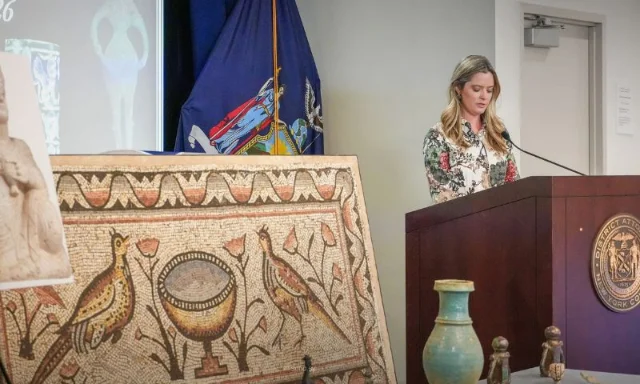
Where and when: Manhattan District Attorney Alvin Bragg announced the return in a statement published on September 23, 2026, and the handover followed in New York, with the US deputy secretary of state Christopher Landau, the special presidential envoy Thomas Barrack and Syrian diplomats present. The relief had left Palmyra and been smuggled to Dubai before Islamic State fighters destroyed large parts of the site between 2015 and 2017. The "Telete and Eros" mosaic was seized in July 2021 from a storage unit linked to an antiquities trafficker, George Lotfi. 3
Tactic: The objects reached the market over decades and by different routes. Some had been held by the Metropolitan Museum of Art and by private collectors, and four had passed through the collection of the antiquities dealer Michael Steinhardt, from whom US authorities seized 180 objects worth about US$70 million. Three Hittite statues of women, made in the second millennium BC, surfaced on the art market in the late 1980s and early 1990s. 3
Why it ranks: A 450-kilogram block of carved limestone does not travel in a suitcase. Moving it out of Palmyra took a route through Dubai and a hole in the wall of a burial chamber, and getting it back took investigators in several countries years. 3
3. Nine kilograms of gold, stirred into the groceries
What was seized: 9.40 kilograms of foreign-origin gold, which the DRI valued at ₹14.81 crore. Investigators recovered it from about 33.5 kilograms of packaged food. The gold had been ground to a fine powder and blended into packets of milk powder, oats, rice flour and other flours, Nutella and coconut milk powder, chosen because those products match its colour, texture and consistency. 45
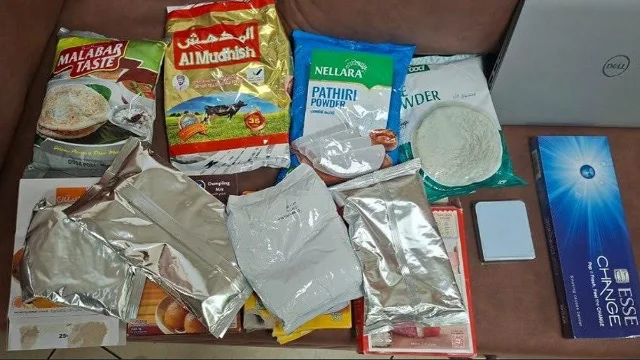
Where and when: DRI officers intercepted three Indian passengers arriving from Dubai at Chhatrapati Shivaji Maharaj International Airport in Mumbai in the early hours of September 23, 2026, working with the airport's Air Intelligence Unit. The agency announced the seizure on September 25. 45
Tactic: The metal travelled in the same weight and volume as an ordinary grocery shop, spread across six kinds of packet. The three passengers told investigators they were couriers for one syndicate, which led the agency on to the handlers who arranged the gold in Dubai and is now examining whether the method was used in other operations. 4
Why it ranks: Gold usually announces itself through weight and shine, and a scanner sees a dense mass. As powder in a flour packet it had the same colour and texture as what surrounded it, and finding it meant segregating and assaying 33.5 kilograms of groceries. 4
4. Eighty-six geckos at a roadside hand-off
What was seized: Eighty-six live Tokay geckos, taken by the Directorate of Revenue Intelligence. The species sits in Schedule I of India's Wildlife (Protection) Act, 1972 and in Appendix II of CITES, the treaty that governs trade in threatened species. 6
Where and when: Officers intercepted two people at Bandar Chalia Gaon ground in Mariani, in Assam's Jorhat district, on September 22, 2026, acting on intelligence about a wildlife deal. The government announced the case on September 23, and the two people and the geckos were handed to the Mariani Range Forest Office. 6
Tactic: The hand-off happened in daylight, on open ground, hundreds of kilometres from any frontier: the animals were changing hands between the people who caught them and whoever moves them on. The DRI links demand for the species to its reputation in traditional medicine and to collectors of exotic pets. 6
Why it ranks: Eighty-six large lizards have to be carried alive, and a Tokay gecko is not a quiet animal. The case shows how far inland a customs case can begin, well before anyone reaches an airport or a border post. 6
5. Two hundred and twenty-six dried seahorses in a single bag
What was seized: 226 dried three-spot seahorses, 209.26 grams in total, found together in one bag. Every seahorse species is listed in Appendix II of CITES. 7
Where and when: Officers at Xiamen airport were checking an inbound flight on September 21, 2026 when they found the bag among the luggage of a passenger who had come through the "green channel", the lane reserved for travellers with nothing to declare. China Customs published the find on September 22. 7
Tactic: The green channel was the method. With the bag undeclared, there was no statement to check it against, and 209 grams of dried fish reads on a scanner as dried food. 7
Why it ranks: The consignment was small enough to miss and long enough to count: 226 animals at just under a gram each, in one bag, carried by one passenger. 7
6. Suspected fakes on display at a jewellery fair
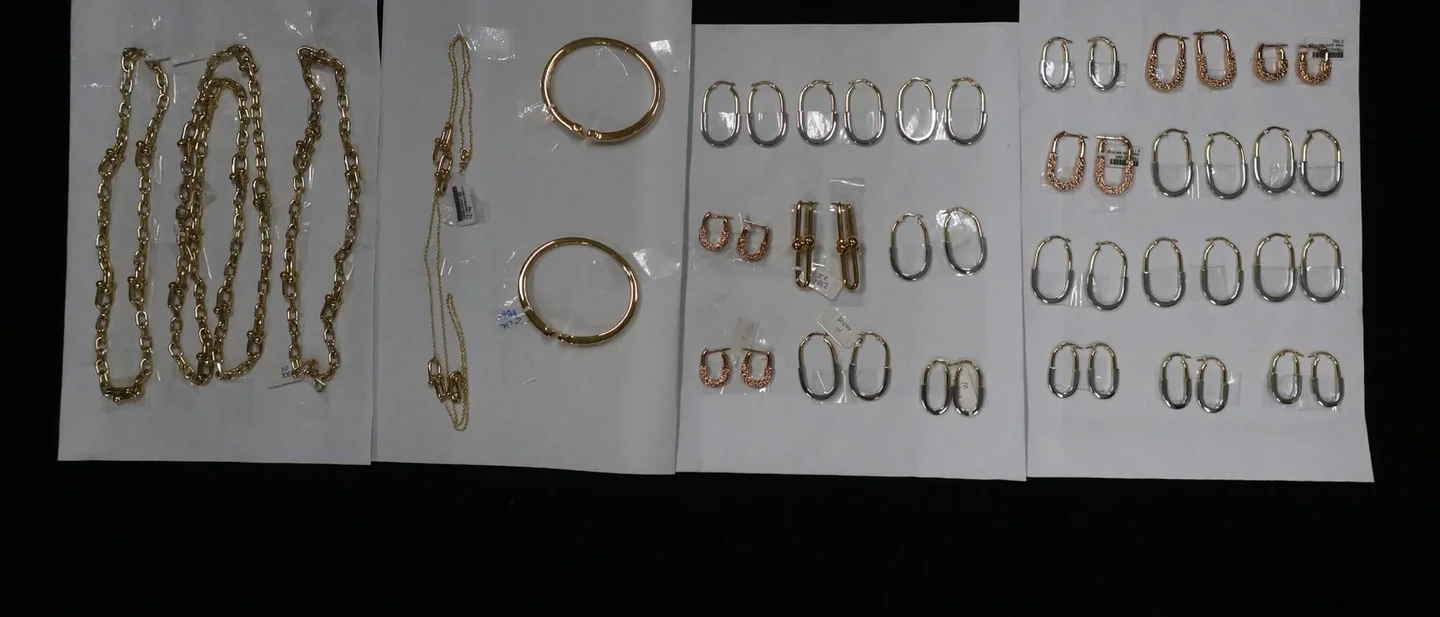
What was seized: About 27 items of suspected infringing jewellery with an estimated market value of about HK$160,000, roughly US$20,500. Officers took 24 items from a booth and three more in a search of an associated company's premises in Hung Hom. 8
Where and when: Hong Kong Customs acted on September 20, 2026 at the JGW September fair at the Hong Kong Convention and Exhibition Centre, on the fifth and last day of a five-day show that opened on September 16. A man and a woman aged between 47 and 65 were arrested, one the person in charge of the booth and one a staff member. The investigation continues and further arrests have not been ruled out. 8
Tactic: The jewellery sat on display for sale under other companies' marks, and customs moved only after a tip and confirmation from the rights holder. Nothing about the goods was concealed; the fair itself was the cover, because an exhibition floor is where a buyer expects a seller to have been checked. 8
Why it ranks: Four days of the fair passed with the pieces on a shelf, in front of people who buy and sell jewellery for a living. The concealment here was reputational rather than physical. 8
In four of the six cases something travelled with the goods and vouched for them: a body-scan report, a food label, a green-channel declaration, a brand mark on a display piece. Each of those four ended the same way, with someone testing the claim against the object in front of them. The other two began with intelligence that named the object first: 86 geckos at a hand-off in Assam, and a limestone tomb relief that investigators traced across several countries over years.
References
- 1Two customs havildars among five arrested for aiding gold smugglers at Chennai airport
timesofindia.indiatimes.com
- 2Airport gold smuggling racket busted; two customs staff held
newindianexpress.com
- 3US Returns 36 Looted Syrian Artifacts
english.enabbaladi.net
- 4
- 5
- 6
- 7
- 8
This story was produced automatically by a channel. One sentence is all it takes for Neodrop to keep producing for you.