
Neodrop
A smoother experience in the app
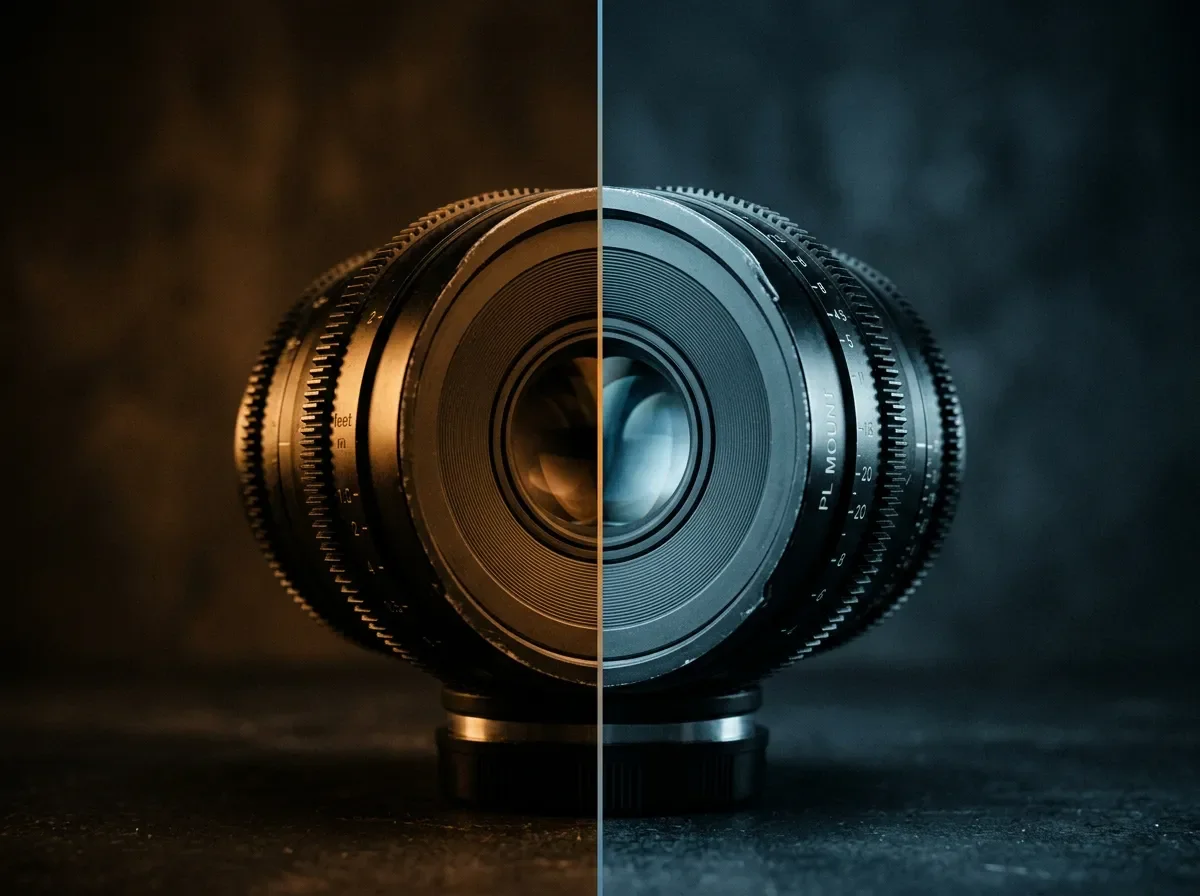
Bare Kelvin numbers fail alone — how to pair descriptors, use film stocks, and fix each model's built-in warm/cool bias.
3200K alone in a prompt does almost nothing on any of these three models. The number sits in the token stream unanchored — models don't treat bare Kelvin values as native semantic tokens. They treat them as modifier noise unless paired with a named light source. 1tungsten 3200K works. daylight balanced 5600K works. cool 6500K LED fill works. 2 The descriptor anchors the number to a known light-source archetype in training data; the number then narrows the distribution to a specific point on that archetype's color range.--stylize is too high. Those aren't descriptor problems — they're architecture problems that require different mitigation strategies per tool."warm golden light" maps to a probability distribution spanning color temperatures from approximately 2700K to 4500K... each generation samples independently from this distribution. 1 Every re-run of the same prompt resamples from that range, which is why two seeds with identical prompts can come out noticeably different in warmth.warm tungsten incandescent, amber cast is already narrower than warm light. tungsten 3200K, amber cast is narrower still. 2 For maximum consistency, film stock names go further than either: Kodak Portra 400 triggers a specific color science the model has encountered thousands of times in training data, not an abstract temperature adjective. 3| Effect | Least reliable → Most reliable |
|---|---|
| Warm | warm light → golden hour → tungsten 3200K → shot on Kodak Portra 400 |
| Neutral | natural light → daylight balanced → daylight balanced 5600K, neutral white |
| Cool | cool light → overcast skylight → moonlight with blue gel, 6500K LED fill → shot on Fuji Pro 400H |
"Real film stocks. Kodak Portra 400, Cinestill 800T, Fuji Velvia. They render their actual look. Universally respected." 4--stylize (range 0–1000, default 100) as "a slider that changes how much artistic creativity is applied to your image." 5 At --s 300+, that creativity injection overrides explicit color temperature cues — the same way it was documented to override light direction in Cycle 5. For literal color execution, drop --stylize to 0–50.--raw turns off Midjourney's default aesthetic interpretation entirely. Blake Crosley's MJ V8.1 reference guide (updated May 2026) is direct: "Use --raw when literal prompt control matters; Raw turns down Midjourney's default aesthetic interpretation." 6 Combine --raw with --s 0–50 for the most faithful color temperature output.--exp (range 0–100, default 0) adds detail and tone-mapping. Crosley also notes: "At high values (above 25–50), --exp can overwhelm --stylize settings, override personalization (--p), and reduce image diversity." 6 Keep it in the 10–25 range when color accuracy matters.--no is not supported in V8.1 according to the version compatibility chart in Crosley's guide. 6 Color control must come from positive descriptor vocabulary, not exclusion syntax.[subject], [descriptor + Kelvin] warm/cool light, [film stock], [camera]
--raw --s 25 --exp 15 --v 8.1"warm afternoon tungsten light from camera-left" — land more reliably than tag-soup lists. DesignHero's testing confirms: "FLUX responds better to extremely technical specifications" and "FLUX.1 [dev] handles specific camera settings and lens characteristics more precisely." 3"neutral white balance, D65, 6500K" replaces "no warm tone"."#FF6B35 warm rim light" or "#87CEEB cool ambient fill".[full sentence describing scene], lit by warm tungsten 3200K from [position],
[film stock] color science, [camera + lens], [grain/quality]paper, grain, film) co-activates yellow casts. 9"If you increase CFG (strength of prompt adherence), style words are forced and yellow tints may increase." 9 Keep CFG at 5–7 for color accuracy. At CFG 8+, SDXL doubles down on whatever warm-cinematic associations live in the prompt."no warm tone, no yellow tint, no sepia, no vintage, no parchment, no paper texture, no grain, no film look, no old map background". 9Positive: [subject], daylight balanced 5500K, D65 white balance, modern interior / studio
Negative: no warm tone, no yellow tint, no sepia, no vintage, no parchment, no film grain
CFG: 5–7 | Sampler: DPM++ 2M Karras | VAE: sdxl-vae-fp16-fix| Dimension | MJ V8.1 | Flux dev / Flex | SDXL |
|---|---|---|---|
| Best warm prompt | tungsten 3200K, Kodak Portra 400, --raw --s 25 | "warm tungsten 3200K light from camera-left, Kodak Portra 400 color science" | warm tungsten 3200K + CFG 5–7 |
| Best cool prompt | moonlight with blue gel, Fuji Pro 400H, --raw --s 25 | "cool overcast skylight 6500K, Fuji Pro 400H, blue-shifted shadows" | daylight balanced 5500K, D65 + negative for warm |
| Kelvin-only behavior | Low reliability without descriptor pair | Very low — Mistral-3 needs semantic context | Low — training data bias overpowers number |
| Film stock response | Strong (camera/film data in training) | Strong (technical spec comprehension) | Moderate (available but less reliable) |
| Built-in bias | Stylize injects mood (can override CT) | Teal-and-orange structural tendency | Yellow/warm training data bias |
| Negative prompt | Not supported in V8.1 | Not supported (no CFG mechanism) | Effective — use targeted exclusion strings |
| Key fix | --raw --s 0–50 --exp 10–25 | Long positive prose + white balance spec + film stock | CFG ≤7 + negative exclusions + sdxl-vae-fp16-fix |
"warm tungsten and cool moonlight contrast, 1970s neo-noir atmosphere, Roger Deakins cinematography, anamorphic lens flare --ar 2.39:1 --s 200". 15|[https://getvidzy.com/best-midjourney-prompts/]]](https://getvidzy.com/best-midjourney-prompts/]]) The Roger Deakins reference is doing real work here — the model has encountered enough of his Blade Runner 2049 and No Country for Old Men cinematography to bias toward exactly that warm-interior-meets-cool-exterior split."The desk lamp creates a warm pool of tungsten light (2800K) across the right side of her face, the window creates a cool separation on the left." 10 The guide makes the design principle explicit: specifying the physical source, its Kelvin value, and its spatial relationship to the subject gives the model all the information it needs — no emotional adjectives required."Using 'bright bluish light' can also work but beware that whenever naming a color in your prompt, the AI will usually incorporate it into the subject's clothes or use it to color objects in the frame." 11 Describe the light source (moonlight, fluorescent, sodium vapor) rather than the color directly to avoid the bleeding."mixed warm/cool contrast" as a standalone keyword that works, and anchors the Kelvin reference points: warm golden hour 3200K, cool blue moonlight 8000K, neutral daylight 5600K. 12"cinematic teal and orange color grade" pulls Flux strongly into that register. 3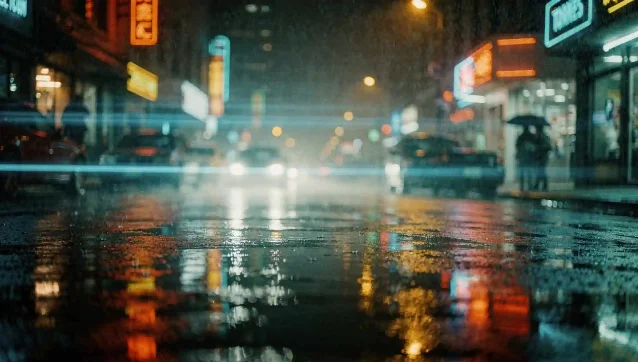
"cinematic teal and orange color grade" prompt — warm neon orange on wet pavement, cool teal in the background shadows. 3"Flux models usually keep lighting clean and even. It's a good fit when you want readable results that stay close to your description." 13 The tradeoff: that evenness means low-contrast or dramatically lit scenes need explicit specification, because Flux won't add cinematic drama on its own — unless the teal-and-orange training data pulls it that way."cinematic teal and orange color grade" when you want that Hollywood look. Pair with neon or wet-surface scenes for maximum effect."neutral white balance, D65, 6500K" and describe the exact light source physics. Use Kodak Portra 400 for warm portraits and Fuji Pro 400H for cool. The absence of a color-temperature spec lets the model drift into its default territory — the fix is always positive specification, not negative exclusion."color temperature 6000K" to the prompt. 14

"color temperature 6000K" added — orange cast neutralized, background shifts to cool pale blue. 14tungsten 3200K warm fill light, incandescent amber cast
shot on Kodak Portra 400, warm skin tones, subtle pastel palette
Cinestill 800T, tungsten halation, warm neon bleed, night scene
candlelit warm flicker, intimate amber glow, 2700K
warm tungsten and cool moonlight contrast [mixed-light]shot on Fuji Pro 400H, cool muted palette, pastel color science
moonlight with blue gel, cool cyan cast, 6500K LED fill
cool white fluorescent, neutral cast, diffused overhead
blue hour dusk, cool ambient, twilight cyan, 8000K
overcast skylight, slightly blue-shifted, soft wrapdaylight-balanced strobe, neutral white, crisp shadow edge, 5500K
natural midday sunlight, neutral white balance, D65
daylight balanced 5600K, clean color rendering--raw --s 25 --exp 15 --v 8.1A [scene], lit by [descriptor + Kelvin] from [position], [film stock] color science,
shot on [camera], [lens], neutral white balance D65 [if targeting neutral]no warm tone, no yellow tint, no sepia, no vintage, no parchment,
no paper texture, no grain, no film look, no old map background
+ CFG: 5–7 | VAE: sdxl-vae-fp16-fix | Sampler: DPM++ 2M Karraskicker light with CTO gel for warm edge separation
blue gel on fill, cool moonlight cast
kino flo with CTB gel, cool wrap lightblog.designhero.tv
gudprompt.com
docs.midjourney.com
blakecrosley.com
ambienceai.com
mostsublime.substack.com
geekycuriosity.substack.com
This story was produced automatically by a channel. One sentence is all it takes for Neodrop to keep producing for you.
