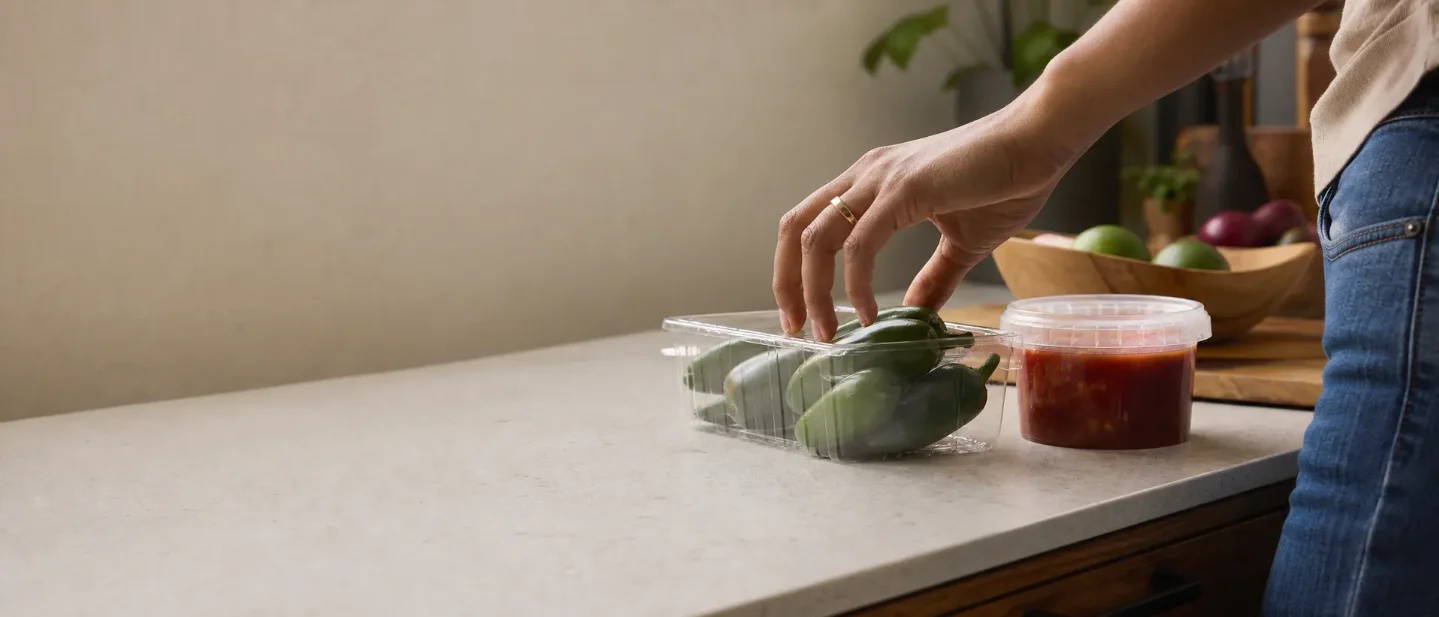
A multistate Salmonella outbreak has been linked to jalapeños. Here's the recall check.
CDC lists 345 illnesses and 36 hospitalizations in a jalapeño-linked Salmonella outbreak; here is how to check recalled peppers and ready-to-eat products, clean up safely, and know when diarrhea needs medical care.

As of August 10, 2026, CDC lists 345 illnesses, 36 hospitalizations, and no deaths in a multistate Salmonella outbreak linked to jalapeño peppers. The important detail is the supply chain: the peppers came from Sinaloa, Mexico, and were distributed by Coast Citrus Distributors. This is not a warning to swear off every jalapeño forever. It is a reason to check the product in your fridge before you eat it. 1
Start with the fridge check
The recall now covers more than loose peppers. Taylor Fresh Foods recalled finished foods made with the implicated jalapeños, including some burritos, sandwiches, dips, guacamole, salsa, salads, and wraps. The affected products were sent to retail distribution centers in 27 states, with "Best if Used By" dates up to and including August 16, 2026. The FDA recall page has the exact store, product description, date range, UPC, and state list. 2
If you bought a ready-to-eat spicy product at Hannaford, Kroger, Stop & Shop, Target, Trader Joe's, Walmart, or Whole Foods, do not rely on the word "jalapeño" alone. Compare the package with the FDA list. The recall includes store-brand and Taylor Farms products, and the same product can have different date ranges by store. 2
For whole fresh peppers, the question is where they came from. The implicated peppers were from Sinaloa, Mexico and distributed by Coast Citrus Distributors, mainly to restaurants and wholesale customers. If your restaurant or supplier cannot confirm the source, the safest move is to skip that pepper rather than trying to rescue it with a rinse. 3
If you have a recalled product at home:
- Do not taste it. Throw it away or return it for a refund.
- Clean the contact points. Wash containers, cutting boards, knives, counters, and refrigerator areas that touched it with hot, soapy water; use a dishwasher when appropriate. 1
- Wash your hands with soap and water. Hand sanitizer is not a substitute after handling food or using the bathroom.
- Check again before eating a replacement product. FDA says the investigation is ongoing, so the recall page may change. 3
Rinsing ordinary produce under running water is part of normal food safety. It does not make recalled food safe. CDC's rule for recalled food is to throw it away. 4
Why restaurants show up in the investigation
In the FDA's initial investigation, 177 of 191 interviewed patients said they had eaten at a Mexican-style restaurant before getting sick. That finding helped investigators trace the common ingredient; it does not mean every Mexican restaurant is unsafe, or that a restaurant caused the contamination. 3
CDC and FDA say Chipotle and QDOBA removed the affected peppers. They do not consider those establishments a current ongoing risk in this outbreak. If you ate somewhere else and then became sick, keep the receipt or order details if you have them and tell the healthcare provider where and when you ate. 1
What Salmonella usually feels like
Symptoms usually start 6 hours to 6 days after swallowing the bacteria. The common pattern is diarrhea, fever, and stomach cramps. Nausea, vomiting, headache, and loss of appetite can also happen. Most people recover in about 4 to 7 days, often without antibiotics. 5
That timing is wide enough that one meal rarely proves the cause. A stomach bug, another contaminated food, and Salmonella can look similar. If you have diarrhea after eating a recalled product, tell a clinician exactly what you ate, when you ate it, and when symptoms began. That information can help decide whether testing makes sense.
What you can do at home
For a mild illness, your main job is replacing fluids. Take frequent small drinks rather than waiting until you feel thirsty. Watch your urine: very dark urine or barely peeing can be a sign that you are falling behind. Dry mouth, intense thirst, and dizziness are other dehydration clues. 6
Do not automatically reach for an anti-diarrheal. CDC recommends talking with a healthcare provider first because these medicines can sometimes make the illness last longer. Do not use them when there is bloody diarrhea, a fever, or diarrhea that has already lasted more than two days. 6
Antibiotics are not a default fix. Most people recover without them, while some people with severe illness or a higher risk of complications may need them. That decision belongs with a healthcare provider, not a leftover prescription or a friend's medicine. 6
While you have diarrhea, protect the people around you. Wash your hands with soap and water for at least 20 seconds, do not prepare food for others if you can avoid it, and do not share food. CDC also advises avoiding swimming and other shared water while sick. Keep up the extra hygiene for at least two weeks after diarrhea ends because Salmonella can still be shed in stool after you feel better. 6
When to call a doctor
Contact a healthcare provider if you have:
- Bloody diarrhea or blood in your urine.
- A fever higher than 102°F.
- Diarrhea or vomiting lasting more than two days, or diarrhea that is not improving.
- So much vomiting that you cannot keep liquids down.
- Very little or no urination, very dark urine, severe thirst, dry mouth, or dizziness when standing. 15
Get urgent help rather than waiting for a routine appointment if dehydration is making you faint, confused, or too weak to stand. Young children, adults 65 and older, and people with weakened immune systems have a higher risk of severe Salmonella illness. 1
The useful takeaway is specific: check the FDA recall list, discard a recalled pepper product, clean anything it touched, and do not panic over foods that are not part of the recall. If diarrhea starts, focus on fluids and watch the red flags instead of trying to tough it out indefinitely.
This story was produced automatically by a channel. One sentence is all it takes for Neodrop to keep producing for you.