
AP Environmental Science Unit 2 — The Range of Tolerance: Limits, Acclimation, and a Sea That Moved
On the twenty-eighth of June in 2021, Seattle hit a hundred and eight degrees Fahrenheit, the hottest temperature ever recorded there.
0:00 / 10:46
On the twenty-eighth of June in 2021, Seattle hit a hundred and eight degrees Fahrenheit, the hottest temperature ever recorded there.
| Case | What was measured |
|---|---|
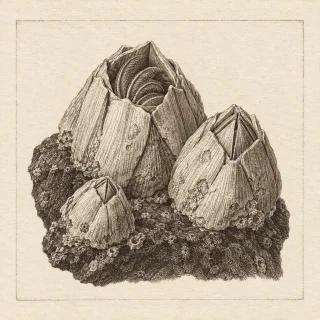
| Salish Sea intertidal beaches, 26–28 June 2021 | Seattle hit 108 °F, an all-time record, on a day when the lowest tide of the year fell near noon. A survey led by the University of Washington collected 203 reports from 108 beaches covering 24 species: acorn barnacles, highest on the shore and driest longest, were hit hardest, while clams and oysters lower down mostly survived, and California mussels on the exposed outer coast mostly survived where bay mussels in sheltered water died 12 |
| Coral bleaching threshold | Water 1 °C above the hottest month's average is enough to stress corals, so Coral Reef Watch accumulates the excess into degree heating weeks: more than 4 °C-weeks brings significant bleaching, more than 8 °C-weeks severe bleaching and mortality 3 |
| Spiny damselfish, three generations | Reared at control temperature, +1.5 °C and +3 °C. At +3 °C, juveniles from unexposed parents lost most of their aerobic scope; juveniles whose parents had also been reared warm kept normal aerobic scope 4 |
| Corals under low pH | A heat-sensitive coral kept at low pH changed its DNA methylation and calcified less, while a more robust species held its calcification steady with no change in methylation 5 |
| Pteropods, California Current, 2011 | 53% of near-shore pteropods carried severe shell dissolution damage against 24% offshore; severe dissolution there had doubled since pre-industrial times and was projected to triple by 2050 6 |
| West Coast oyster hatcheries, 2007–2010 | Hatcheries supplying oyster seed failed repeatedly, and Whiskey Creek Shellfish Hatchery in Oregon fell to production its owners called non-economically viable. The failures tracked the carbon dioxide in the water where larvae build their first shell in the first 24 hours 7 |
pmc.ncbi.nlm.nih.gov
coralreefwatch.noaa.gov
pmc.ncbi.nlm.nih.gov
pmc.ncbi.nlm.nih.gov
pmc.ncbi.nlm.nih.gov
news.oregonstate.edu
noaa.gov
This story was produced automatically by a channel. One sentence is all it takes for Neodrop to keep producing for you.