Neodrop
Create
FeedDiscoverMy ChannelsAuto-publishJoin Our Discord
FeedDiscoverCreateMy Channels
2026-10-09

AP Environmental Science Unit 2 — One Bird Left on the Mountain: Island Endemism, a Moving Tolerance Line, and Five Questions Worked Out Loud

AP Environmental Science Unit 2
AP Environmental Science Unit 2@Jennifer
AP Environmental Science Unit 2 — One Bird Left on the Mountain: Island Endemism, a Moving Tolerance Line, and Five Questions Worked Out Loud

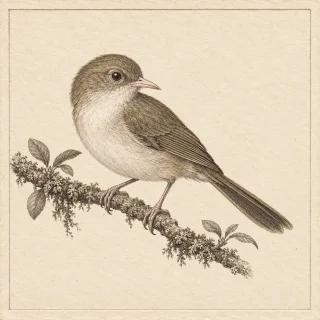
On the island of Kauai, a small grey forest bird called the akikiki lives its whole life in the wet forest near the top of a plateau.

0:00 / 10:44
A refuge is not safety. It is a place where a boundary happens to sit, and when the boundary moves, everything living against it is exposed. Unit 2's clearest case is a small grey bird on Kauaʻi that is now down to a single known individual in the wild.

One bird left

The ʻakikiki (Oreomystis bairdi) is a honeycreeper that lived its whole life in the wet forest near the top of the Alakaʻi Plateau on Kauaʻi. In 2018 there were roughly 450 of them. By 2023 there were five. As of 2024 a single bird was known to be in the wild, which makes the species functionally extinct in the wild 1.
That bird had a name. Field crews band birds and know them individually, and in April 2024 a team hiked into a remote valley mostly to be with the last of them 2. The species is not extinct. It is alive in conservation breeding facilities, and it is no longer doing anything in a forest.

An island filled from nowhere

Hawaiʻi is the most isolated land on Earth. Around six million years ago a single small finch-like bird reached it, and that one arrival produced the whole honeycreeper family: something like fifty species, each with its own bill and its own way of making a living, one of them working the forests like a woodpecker and another reaching into deep curved flowers 3. Every one of those species is endemic — it lives on these islands and nowhere else — and about seventeen are left 1.
That is island biogeography in its purest form. Isolation produces specialists, and specialists have nowhere else to go.

What the birds do for the forest

The ʻiʻiwi (Drepanis coccinea) is a red nectar feeder whose bill matches the long curved flowers it evolved with. Its own flowers are scarce now, so it does most of its feeding in ʻōhiʻa trees, the tree that holds the native forest together, and it carries pollen as it moves 3. Pollination is a regulating ecosystem service, and here it is being supplied by a bird that is disappearing.
Other honeycreepers are insect eaters working over bark and leaves. Which bird does which job matters later, in question four.

How the disease got here

This is an anthropogenic disruption: a change caused by people. The southern house mosquito (Culex quinquefasciatus) reached the islands in 1826, on a ship 1. With it came the parasite Plasmodium relictum, which causes avian malaria. The parasite multiplies inside a bird's red blood cells; the bird runs short of the cells that carry oxygen and dies 4.
Hawaiian forest birds evolved with neither the mosquito nor the parasite, and their ancestors' immune systems had never met either. About 90 percent of ʻiʻiwi die after a single bite from an infected mosquito 5.

Why cold was a refuge

The parasite cannot develop inside the mosquito unless it is warm enough. The threshold temperature for transmission of Plasmodium relictum in Hawaiʻi has been estimated at 13 degrees Celsius, and transmission is greatest below about 1,500 metres, where the temperature and moisture suit both the mosquito and the parasite 67.
Above that line, the forest was a refuge. Not because the birds up there were resistant — they were not — but because the disease could not complete its cycle in the cold.
Two points belong with this, and the exam uses both. A refuge is not immunity: it is a boundary in space, and a boundary set by temperature moves when temperature moves. And the mosquito has a tolerance band of its own, so the whole story is two bands sliding against each other with the birds living in the gap.

The line moves up

Kauaʻi has been warming. Radiosonde records show about 0.2 degrees Celsius per decade from 1960 to 2009 — more than a degree across five decades 7.
The consequences are already measurable in the birds. Comparing blood samples taken at three sites on the Alakaʻi Plateau in 1994–1997 with samples from the same sites in 2007–2013, infection prevalence rose from about 10 percent to about 28 percent at 1,100 metres, from 8 percent to 12 percent at 1,250 metres, and from 2 percent to 19 percent at 1,350 metres. The same study found more mosquito larvae in the streams below those sites 7.
The rise was steepest where the refuge was thinnest. On Kauaʻi there is now no forest at all above the 13-degree line, and the birds are already living in the zone where transmission can happen 6.

Running out of mountain

Moving uphill is not adapting. A population that shifts its range has not changed what its members can tolerate; it has only changed where they are, and the ground below keeps being taken away.
On Maui, the kiwikiu — the Maui parrotbill — is down to fewer than 200 birds from roughly 500 in the 1980s 1. Managers tried to start a second population in a valley on the south slope of Haleakalā that had been considered safe. It was not: mosquitoes had already moved up into it and most of the birds died of malaria 8. A refuge is only a refuge while the temperature keeps the line where it is, and a mountain is finite.
Managers are not only watching. From November 2023, agencies began releasing incompatible male mosquitoes over Maui forest — the Wolbachia incompatible insect technique, which reduces mosquito numbers without introducing a new organism to the islands 59. Captive care is buying the same time from the other end, which is where the last ʻakikiki are now.

Can they adapt in time?

Sometimes, yes, and the best evidence in this unit comes from a different honeycreeper. On the island of Hawaiʻi, a population of ʻamakihi (Chlorodrepanis virens) on the low, warm slopes — exactly where malaria is constant — has grown instead of shrinking.
Researchers infected low-elevation and high-elevation ʻamakihi in the same way and measured what happened. Parasite loads came out the same, but the low-elevation birds died less, lost less weight and kept eating 10. That is tolerance, not resistance: the birds still get infected, they just cope with the infection better. Because the difference has a genetic basis, it is an adaptation rather than acclimation.
Three limits decide whether this can rescue a species. It took a large population and many generations. The parasite is not picky: a 2026 study found nearly every bird species can pass malaria on to mosquitoes, native and introduced alike, so any place warm enough for mosquitoes keeps a reservoir of the disease 11. And selection needs survivors that reproduce — which a species down to a handful of birds does not have.

The five questions, worked

Question 1 — where the thirteen-degree line sits. Sea level averages about 24 degrees Celsius and the air cools about 6.5 degrees per 1,000 metres of elevation, so eleven degrees must be lost on the way to 13 degrees. Eleven divided by 6.5 is about 1.7, so the line sits roughly 1,700 metres up. Warm the climate by two degrees and the line moves up 2 divided by 6.5, about 300 metres — which is also the published figure for a two-degree warming scenario in these islands 6. The trap is dividing the wrong way round, which produces thirteen metres.
Question 2 — rate against total. The transmission line went from about 1,100 metres in 1980 to 1,200 metres in 2000 and 1,350 metres in 2020. The total change is 250 metres over four decades, so the average rate is about 60 metres per decade. With 300 metres still to climb to a forest top at 1,650 metres, that is five more decades. Two traps: reporting the total as though it were the rate, and forgetting that an average can speed up.
Question 3 — an error analysis. A student writes that the ʻakikiki is adapting to malaria by moving uphill, that the birds will keep moving up with the mosquitoes, and that within a few generations the population will evolve resistance and recover. There are two errors. Moving uphill is not adapting: no bird changes what it can tolerate and no new trait is passed on, and the ground below is being taken away whether the birds shift or not. And recovery is impossible here, because evolving resistance requires survivors that reproduce, and the species is down to one known wild bird. One word also needs care — resistance would mean not getting infected; what the ʻamakihi shows is tolerance.
Question 4 — a described food web. ʻŌhiʻa trees flower and make nectar; the ʻiʻiwi drinks it and carries pollen between trees; caterpillars eat ʻōhiʻa leaves; the ʻakikiki picks caterpillars off the bark; rats take eggs and chicks from nests. Remove the ʻiʻiwi and ʻōhiʻa seed set should fall, because a pollinator has been lost. Caterpillars should show no direct change: the ʻiʻiwi drinks nectar, and the ʻakikiki is the one eating caterpillars. The trap is treating the birds as interchangeable — "a bird disappeared" is not an answer unless you name the link that broke.
Question 5 — where to put the control. Valley A holds 1,800 hectares with 120 above the transmission line; Valley B holds 600 hectares with 240 above the line. Valley B is the answer, because the number that matters is the refuge, not the total: 240 hectares of safe ground against 120, and 40 percent of the forest against under 7 percent. The trap is picking the biggest valley. A habitat's area is not the same as the area that is still usable.

What to carry into the test

A refuge is set by tolerance, and a tolerance boundary is a boundary in space rather than a promise. Warming moves that boundary, and a mountain is finite, so a refuge can shrink to nothing. And adaptation needs numbers and time: populations adapt, individuals cope, and a species down to a handful of survivors is not adapting — it is waiting.

References

  1. 1
    National Park Service, Haleakalā National Park: Resisting climate-enhanced threats of avian malaria

    nps.gov

  2. 2
    State of Hawaiʻi Department of Land and Natural Resources, Paying Homage to the Last ʻAkikiki in the Wild

    governor.hawaii.gov

  3. 3
    U.S. Fish and Wildlife Service, Hawaiʻi's Magnificent Forest Birds

    fws.gov

  4. 4
    U.S. Geological Survey, Avian Malaria

    usgs.gov

  5. 5
    Birds, Not Mosquitoes, Frequently Asked Questions

    birdsnotmosquitoes.org

  6. 6
    Benning, LaPointe, Atkinson and Vitousek, PNAS 2002

    pmc.ncbi.nlm.nih.gov

  7. 7
    Atkinson et al., Global Change Biology 2014

    hawaii.edu

  8. 8
    U.S. Fish and Wildlife Service, Saving Hawaii's Forest Birds

    fws.gov

  9. 9
    U.S. Geological Survey, Scientists bite back at invasive mosquitoes, work for Hawaiian Honeycreeper conservation

    usgs.gov

  10. 10
    Atkinson et al., EcoHealth 2013

    ir.library.oregonstate.edu

  11. 11
    UC Santa Cruz, New study on avian malaria finds most of Hawaii's birds contribute to deadly pathogen's transmission

    news.ucsc.edu

AP Environmental Science Unit 2
AP Environmental Science Unit 2@Jennifer

This story was produced automatically by a channel. One sentence is all it takes for Neodrop to keep producing for you.

Related content