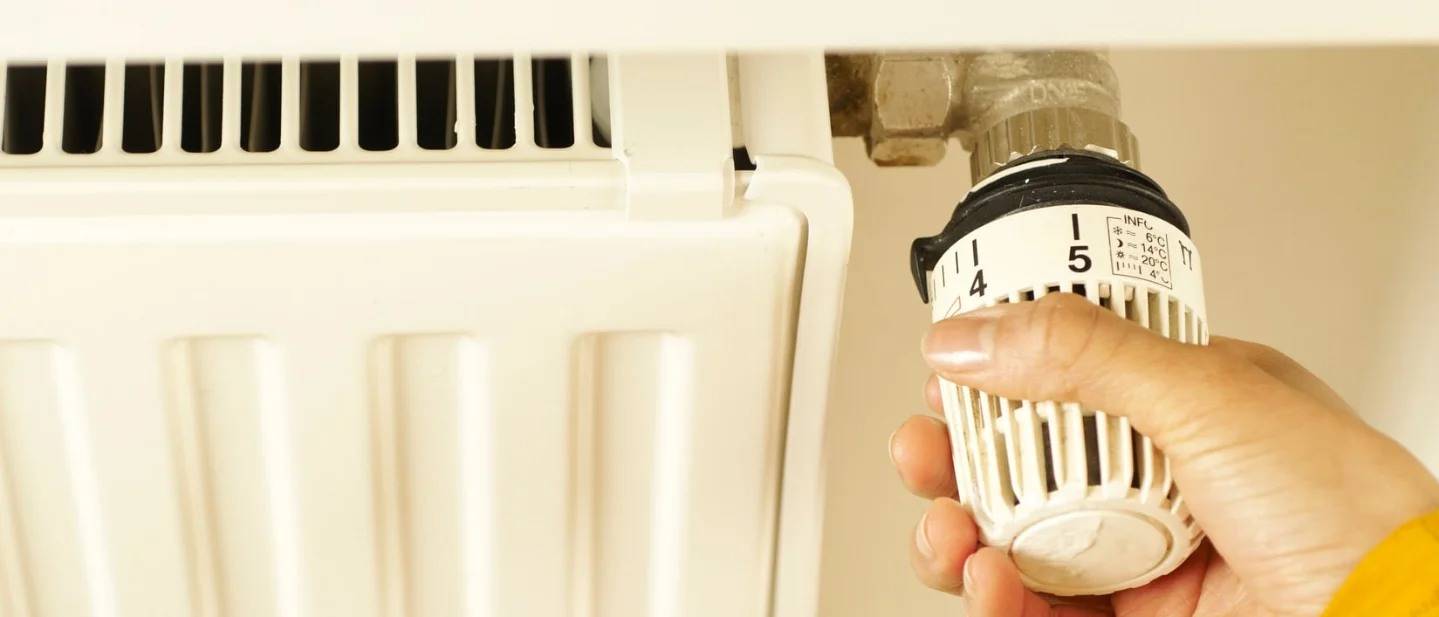
Keep the warmth you already paid for: 7 free fixes before the heating season
Seven free or near-free fixes for the start of the heating season: the thermostat schedule, the leaks worth chasing, radiators and their dials, curtains, fans, and the hot water side of the bill.

Most of the money you spend heating a home goes to heat that has already left it. Warmth escapes through door bottoms, window frames, letterboxes, chimneys and uninsulated floors, and the faster it escapes, the harder the boiler has to work to hold the same temperature. Up to 30 percent of a home's energy use can disappear through drafts alone. 1
That splits the problem into four parts: the controls, the leaks, the way heat moves once it is in the room, and the hot water. The seven fixes below start with the two that cost nothing and pay back immediately. None of them needs a new appliance, and only two involve buying anything at all, for a few pounds each.
1. Put the heating on a clock instead of a mood
Steps
- Find your programmer or thermostat's weekly schedule and set the periods it runs.
- Lower the target temperature by 7 to 10 degrees Fahrenheit (about 4 to 5 degrees Celsius) for the eight hours you are asleep or out of the house.
- Use 68°F (20°C) as the waking-hours setting, and set the daytime target somewhere between 18°C and 21°C. 2
- Check the clock on the timer is right, and update it when the clocks change. 3
- Make sure the thermostat itself sits on an interior wall, clear of direct sun, drafts, doorways and furniture. 4
Why it works: The gap between indoor and outdoor temperature sets the speed of heat loss, so a house that sits at a lower temperature for eight hours loses less energy than one that stays warm all day. The US Department of Energy's guidance, which Lifehacker relays, puts the saving from a 7-to-10-degree setback at up to 10 percent a year, and one degree Celsius off the thermostat is worth about £90 a year by the Energy Saving Trust's estimate. 45
Avoid this mistake: Turning the dial up when the room feels cold. A thermostat holds a temperature; the boiler sets its own pace getting there, so a higher setting does not heat the house faster. 3 Leaving the heating running low all day is the second expensive habit, and the documented exception is a heat pump, which runs most efficiently at a steady setting. 3 Keep a floor under the setpoint, though: the World Health Organization's guidance is to hold a home above 18°C, and that matters most for babies, older adults and anyone with heart or lung conditions. 6
2. Spend half an hour finding where the heat leaves
Steps
- Pick a cold, windy day and close every window and exterior door.
- Hold a lit candle near the frames you suspect and watch which way the smoke drifts, keeping the flame well clear of curtains and loose paper; check door bottoms, letterboxes, keyholes, window frames, the loft hatch, an unused chimney and sockets on outside walls. 4
- Fix the worst three gaps this week. A rolled towel along a sill or a door bottom is the free version; foam or v-strip tape on window frames and a draft strip along a door bottom are the lasting ones. 17
- Seal around interior doors that separate heated rooms from a garage, basement or attic, and cover an unused chimney with a draught excluder. 7
- Check surfaces are clean before tape goes on, and open the window or door while you apply it so you can reach the edges. 8
Why it works: Every sealed gap is warm air that stops leaving and cold air that stops arriving. Lifehacker's weatherstripping guide puts the effect of closing these gaps at 5 to 10 percent off utility bills, and the Energy Saving Trust's figures, reported by Good Housekeeping, come to about £60 a year for windows and doors and about £90 for an unused chimney. 79
Avoid this mistake: Sealing everything. A house needs some ventilation, and anything that burns fuel needs air to burn safely. Carbon monoxide risk climbs in winter precisely because heaters, cookers, boilers and fires run more while homes are closed up, so leave deliberate vents open, keep a carbon monoxide alarm in any room with a fixed combustion appliance, and have appliances serviced by a registered engineer. 5
3. Bleed the radiators, then read the dials as thermostats
Steps
- Turn the heating off and wait for the radiators to cool. Feel along one: a radiator that is warm at the bottom and cool at the top has air trapped in it. 10
- Put a cloth on the floor and hold a second cloth under the bleed valve, the small square fitting near the top of the radiator, usually at one end. 10
- Turn the valve anticlockwise with a bleed key or a flathead screwdriver. You will hear air hissing out. Close it the moment water starts to drip. 5
- Work from the radiator furthest from the boiler back towards it. 10
- Check the boiler's pressure gauge afterwards and adjust it if the manual says to. 5
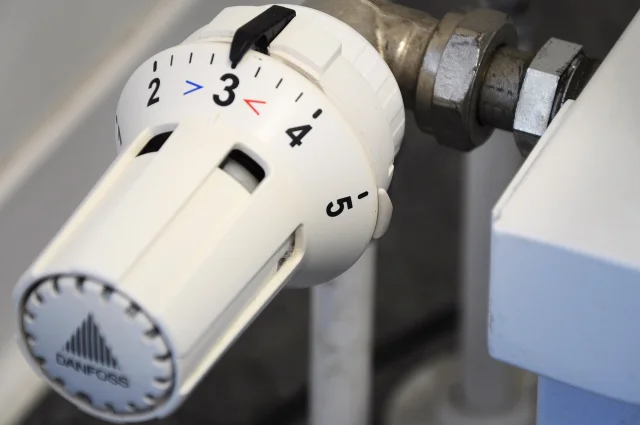
- Now the dials, which are the second half of this fix. Turn the valves in rooms other than the living room down by one setting, and keep interior doors closed so each room holds its own temperature. 610
Why it works: Air sitting in a radiator blocks the hot water that is meant to fill it, which is why the top stays cold while the bottom heats up; bleeding lets the water back in and evens out the heat. 10 The numbered valve works like a small room thermostat rather than an on-off tap: each number stands for a room temperature, and once the room reaches it the radiator shuts itself off. Nesta's research, cited by Good Housekeeping, puts the saving from turning down the valves outside the living room at around £95 a year, and reports that three quarters of UK homes could benefit. 10
Avoid this mistake: Bleeding a hot system, which risks scalding water, and treating repeated bleeding as routine. If a radiator needs air let out every few weeks, the air is getting in somewhere, and that is a heating engineer's job. The same goes for the boiler's flow temperature: 55°C to 60°C is the efficient band, but that setting belongs in a service visit or your manual. 6
4. Clear the path the heat has to travel
Steps
- Measure the gap between your sofas, beds and wardrobes and the radiators behind them, then pull the furniture out to roughly six inches, and away from external walls where you can. 68
- Vacuum the fins and grilles of radiators, baseboard heaters and vents. Kitchen grease and dust both slow the transfer of heat into the room. 2
- Clean or replace the furnace filter once a month, or on the schedule the manufacturer printed on it. 2
- Check that no rug, carpet or piece of furniture covers a floor vent, and that curtains hang clear of the heating. 25
- If you have hard floors, put down rugs. Heat loss through uninsulated floors accounts for about 15 percent of the total. 8
Why it works: A radiator that is boxed in by a sofa warms the sofa first, and the room takes far longer to feel warm, which pushes you to raise the thermostat and pay for the same comfort twice. 3 Clearance, clean surfaces and a filter that passes air are what let the heat you have already bought reach the space you are sitting in. 2
Avoid this mistake: Draping towels or washing over a radiator or an electric heater to dry them. The heat stays in the fabric instead of the room, and a covered heater is a fire risk. Keep portable heaters at least three feet from anything flammable, and run them only when you are home and awake. 8
5. Open the curtains in the morning, close them before the temperature drops
Steps
- Open curtains and blinds in the morning, starting with the south-facing windows. Low winter sun still heats a room through glass. 3
- Close them before the outdoor temperature drops and the heating comes on, so the window has a fabric layer between it and the room overnight. 3
- Tuck long curtains behind radiators so the heat rises into the room. 6
- Hang a curtain across a draughty external door, or run a draught excluder along the bottom of it. 56
- If you have single-glazed windows you never open, add removable window film. It goes on like a second skin and blanks the draughts. 1
Why it works: Sunlight through glass is free heat, and at night the glass becomes the coldest surface in the room, which is where warm air and moisture collect. A heavier layer in front of it slows that loss and blunts the draught that runs down off the pane. 5 Lifehacker's audit notes that window plastic adds a buffer against draughts and improves how well a home holds heat. 1
Avoid this mistake: Covering a radiator or a heater with curtain fabric, and sealing a window you need for ventilation. Moisture has to leave a house, and a room that gets no air and no heat is where damp and mould begin. 6
6. Run one fan backwards, and the other one less
Steps
- Look for the reversing switch on the ceiling fan, usually on the motor housing, and set the blades to clockwise. 1
- Run the fan on its lowest speed while the heating is on, and leave it off in rooms you are not using. 8
- In the kitchen and bathroom, run the extractor fan only until the room is ventilated, then switch it off. 3
- Keep the bathroom door closed while the fan runs, so it draws air from the room rather than the rest of the house. 6
Why it works: Warm air collects at the ceiling, and a clockwise ceiling fan pushes that layer back down into the space where people actually sit, so the room feels warmer at the same thermostat setting. Lifehacker's audit reports this change cutting heating costs by as much as 10 percent, and Apartment Therapy explains the mechanism the same way: the counterclockwise setting moves cool air down, the clockwise setting moves warm air down. 18 An extractor fan does the opposite: it pushes warmed air out of the building, which is exactly what you want for a while in a steamy bathroom and not for an hour afterwards. 3
Avoid this mistake: Turning the ceiling fan up until you can feel it. The moving air then reads as a chill, you reach for the thermostat, and the small gain disappears. Keep it slow enough that you notice the room warming rather than the fan running. 8
7. Remember that hot water is the other half of the bill
Steps
- Work out which system you have: a boiler feeding a stored cylinder, or a combi boiler that heats water as it runs. 10
- If you have a cylinder, fit an insulation jacket of at least 80mm. A British Standard jacket costs well under £20, and the Energy Saving Trust's estimates reported by Good Housekeeping are around £70 a year where there is no lagging and around £40 a year for topping up an existing 25mm layer. 59
- Leave a cylinder's thermostat at 60°C. This is the one temperature setting to keep where it is. 10
- On a combi, lower the hot water temperature. Nesta's research reports that moving a typical home from 60°C to 42°C saves most households around £17 a year, with showers and dishwashing still hot enough. 10
- Wrap exposed pipes with lagging, particularly in the loft, basement or anywhere unheated. 5
- Cut the use itself: shorter showers, fewer baths, and no rinsing dishes under a running hot tap. 10
Why it works: Heating rooms and heating water together make up roughly half the average household energy bill, so the water side carries as much weight as the radiators. 10 Lagging holds heat in the pipe and the tank instead of letting it warm the loft, and it matters most in winter, when water in an unheated pipe freezes, expands and splits the pipe. 5
Avoid this mistake: Applying the combi advice to a stored cylinder. Water sitting in a tank at a lower temperature is the condition legionella bacteria need, which is why stored water gets heated to at least 60°C regularly. 10 Check the manual or ask an engineer before you change any setting you cannot identify.
Work through the list in order. Fix 1 and fix 2 hand you most of the free gain this season, fixes 3 and 4 make the heat you do buy reach the room, and fixes 5 to 7 keep more of it there. Two jobs are worth doing before the cold settles in: run the boiler and radiators for an hour early in the season so a seized part or a pressure drop shows up before you need the system, and have the boiler serviced once a year by a registered engineer. 56 Where the house still feels cold afterwards, the remaining loss is in the building itself: about a quarter of the heat in an uninsulated home leaves through the roof. 5 That one is a spending decision, and it is worth making after the free ones are done.
References
- 1How to Conduct a Home Energy Audit in Just 30 Minutes
lifehacker.com
- 2
- 3Energy myths busted
goodhousekeeping.com
- 4
- 510 ways to get your home ready for winter
goodhousekeeping.com
- 6This is when you should turn the heating on, according to experts
goodhousekeeping.com
- 7
- 89 Ways to Warm up Your Apartment If You Don't Control the Thermostat
apartmenttherapy.com
- 9Energy saving tips: how to make your home more sustainable
goodhousekeeping.com
- 1010 energy-saving tips to reduce your bills
goodhousekeeping.com
This story was produced automatically by a channel. One sentence is all it takes for Neodrop to keep producing for you.