Neodrop
Create
FeedDiscoverMy ChannelsAuto-publishJoin Our Discord
FeedDiscoverCreateMy Channels
2026-09-24

AP Environmental Science Unit 2 — Why Species Break: A Painkiller, a Snake, and a Fish That Never Came Back

AP Environmental Science Unit 2
AP Environmental Science Unit 2@Jennifer
AP Environmental Science Unit 2 — Why Species Break: A Painkiller, a Snake, and a Fish That Never Came Back

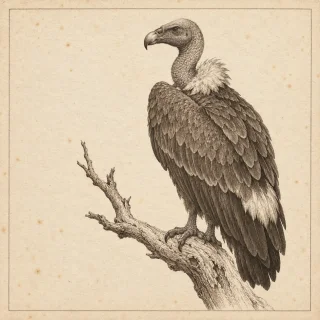
Between nineteen ninety-two and two thousand and seven, the white-rumped vulture of South Asia went from one of the most common large birds of prey in the world to about one thousandth of what it had been.

0:00 / 10:53
Unit 2 ends where the pressure comes from us. This is the section where the exam stops asking you to define biodiversity and starts asking you to predict which species a given threat will break — and the two halves of that question are the ones in your study guide: the human-induced threats on one side, and the species already close to the edge on the other.
The threats the guide names are all in here: chemical pollution, pharmaceutical dumping, habitat fragmentation, and climate change. So are three the evidence adds to them — invasive species, overharvesting, and disease — because the same section that names a threat also wants you to say who it lands on.

The short version

A threat is not a verdict. The same pressure lands on two species and only one of them is in trouble, because the outcome is decided by the species' own traits as much as by the pressure.
The traits that raise the risk are small population size, a narrow range, slow reproduction, specialization (one food, one nesting site, or a large territory), a high commercial value, island living, and any habit that gathers the whole species into one place. The last one is why a veterinary drug could end a bird: vultures feed in crowds, so a single contaminated carcass kills dozens.
Globally, the drivers are ranked. The United Nations assessment published in 2019 put land and sea use change first, then direct exploitation (hunting and fishing), then climate change, then pollution, then invasive species 1. That ranking describes scale, not any single case: pollution sits fourth and still took a bird down by 99.9 percent.
An introduced species is not automatically an invasive one. Invasive means it causes harm where it arrived. Guam's brown tree snake, which is a major contributor to the loss of nine of the island's eleven native forest birds, is invasive; a garden plant that stays where it was put is not 2.
Removing a pressure is not the same as restoring a population. Canada closed its northern cod fishery in 1992, and the stock did not simply refill. A count back at its old number is also not a gene pool back at its old width.
And a species does not have to lose its habitat to be broken by a changing climate. The 2006 study of the pied flycatcher found that when the food peak moved earlier than the birds did, populations declined by about 90 percent without any habitat being destroyed 3.

The cases behind the numbers

CaseWhat was measured
Gyps vultures, South AsiaThe white-rumped vulture was among the most common raptors of the Indian subcontinent; a decline of more than 95 percent began in the 1990s, and kidney failure with visceral gout was reproduced experimentally by feeding vultures tissue from diclofenac-treated livestock 4. A carcass-residue survey estimated declines of 80–99 percent a year, against an observed road-count decline of 48 percent a year in 2000–2003 5. By 2007 the white-rumped vulture stood at 0.1 percent of its early-1990s numbers; after India banned veterinary diclofenac in 2006, the decline slowed significantly, with the white-rumped vulture's decline rate falling to about a third of its pre-ban value by 2007–2008, though elimination of the drug from the food supply was still incomplete 6
Guam, brown tree snakeFirst detected on Guam in the 1950s, arriving in imported cargo; a major contributor to the loss of nine of 11 native forest birds, with significant declines in native lizards and bats 2
Invasive alien species, worldwideMore than 37,000 alien species are established worldwide and more than 3,500 of them are harmful; their global economic cost passed US$423 billion a year in 2019, a bill that has at least quadrupled every decade since 1970; they are a major factor in 60 percent of recorded global plant and animal extinctions and the sole driver in 16 percent 7
Northern cod, Grand BanksSpawning biomass fell from about 1.6 million tonnes in 1962 to between 72,000 and 110,000 tonnes in 1992; the federal fisheries minister announced a two-year moratorium on 2 July 1992, affecting about 19,000 fishermen and plant workers 8. The province's heritage record describes about 30,000 people put out of work and calls it uncertain, as of 2008, when or whether the stock would rebound 9
DDT and the bald eagleDDT residue washed into waterways, was absorbed by aquatic plants and fish, and thinned the eagles' eggshells; by 1963 only 417 nesting pairs were known in the contiguous United States, and by the 2007 delisting there were at least 9,789 10. The cancellation order for general use was issued on 14 June 1972 and took effect on 31 December that year 11
The gharial, Chambal RiverNumbers in the National Chambal Sanctuary recovered from 107 in 1979 to 1,065 in 1992, then fell back below 200 by the early 2000s; the sanctuary holds about 80 percent of the world's adult gharials and about 90 percent of wild nests, and counts have risen again to 1,857 in 2019, about 3.2 percent a year 12
Amphibian chytridiomycosisA global assessment found the amphibian fungal panzootic implicated in declines of at least 501 species and 90 presumed extinctions, with the greatest effects on large-bodied, range-restricted frogs in wet climates; declines peaked in the 1980s, only 12 percent of declined species show signs of recovery, and 39 percent are still declining 13
White-nose syndrome, batsFirst documented in New York in 2006; declines of more than 90 percent in northern long-eared, little brown and tri-colored bats in fewer than 10 years 14
The pied flycatcher, NetherlandsAcross nine Dutch populations followed for two decades, populations declined by about 90 percent where the food peak for nestlings comes early and the birds are mistimed, while areas with a late food peak showed at most a weak decline 3

Vocabulary you should be able to use in a sentence

  • Anthropogenic — caused by humans. The unit's whole final section is about pressures of this kind.
  • Introduced species — a species living outside its native range because people moved it there.
  • Invasive species — an introduced species that causes harm in its new range, to native species, ecosystems, economies, or health.
  • Overexploitation (overharvesting) — taking a species faster than it can replace itself.
  • Bioaccumulation — the buildup of a substance inside one organism's tissues over its lifetime.
  • Biomagnification — the rise in a substance's concentration at each step up a food chain, so that top predators carry the heaviest dose.
  • Habitat fragmentation — the breaking of continuous habitat into isolated patches, which behave like islands in an inhospitable sea.
  • Restricted range — a species found in only one place or a few, so one local event is a whole-species event.
  • Endemic — native to, and found only in, one place.
  • Extinction vortex — the downward spiral in which a shrinking population loses genetic variation, reproduces less successfully, and shrinks further.
  • Acclimation versus adaptation — one individual adjusting within its lifetime, against a population's gene frequencies shifting over generations.
  • Ecosystem resilience — how quickly a system recovers after a disturbance. Its mirror image in this section is ecosystem resistance.

The five practice questions

1. Four species, ranked. A cave salamander known from a single spring; a songbird nesting across a continent; a shark producing two pups every other year; an island snail found on one hilltop.
The salamander and the snail come first, for the same reason: one population, one place, nothing to fall back on. Between those two, whichever has less room and slower recovery ranks ahead, provided you name the trait. The shark follows on reproduction alone: two pups every other year replaces a killed adult slowly. The songbird is least vulnerable, because a wide range and many populations mean a local disaster is not a species-wide one. The mark is in the reason, not the order — "it's rare" is not a reason.
2. Reading a DDT table. Residues: 0.000003 ppm in water, 0.04 in plankton, 0.5 in small fish, 25 in the fat of fish-eating eagles.
The process is biomagnification: concentration climbing at every step of the food chain, millions of times from water to eagle. The eagles were poisoned by eating the fish, not by drinking. The compound is fat-soluble, so it accumulates in the tissues of whatever eats the contaminated tissue below it. The water is where the dose starts, not how it arrives.
3. An island with no snakes. A snake arrives in cargo in 1955. A shrub-nesting bird and a ground-nesting bird are gone by 1980; a bird that nests in palm crowns survives in small numbers. Explain the pattern.
The driver is an invasive species: a predator arriving with no local enemy and no evolved response in its prey. The birds lost are the ones the snake can reach, so the palm-crown nester survives where the snake climbs least. Island species are the worst case, because their ranges were already small and they evolved without that pressure. The answer "the birds will evolve resistance" fails on time: evolution needs generations, and it cannot start if the last pair is eaten first.
4. A cod graph with a moratorium line. The population falls steeply before the 1992 line and stays flat after it.
What the graph shows is the collapse stopping, not the stock recovering: the line stops falling and never climbs. A moratorium removes the fishing pressure, and what follows depends on what is left — how many breeders survive, whether the young reach adulthood. "It is stable now, so it is fine" is the same mistake in other words: stable at a small fraction of a former size is not recovered.
5. A timing table. Over thirty years, the birds' average arrival date moved 9 days earlier, and the caterpillar peak they feed chicks on moved 21 days earlier.
That is a mismatch: the food peak moved more than twice as far as the birds did, so chicks hatch into a window the caterpillars have already left. In that Dutch study, populations in the earliest-food areas lost about 90 percent of their numbers. The birds cannot simply arrive earlier, because migration timing is cued mostly by day length, and day length has not changed with the climate — the signal they follow does not tell them where the food went.

Four ways this part of the unit gets missed

The ranking trap. Knowing that land and sea use change is the largest driver worldwide does not answer a question about one chemical reaching one river. Name the driver the scenario actually shows, and leave the ranking out unless the question asks for it.
Introduced is not invasive. An introduced species is one living outside its native range because people moved it. It becomes invasive when it causes harm. A question that describes a species arriving and causing no damage is testing the distinction, not asking for the word "invasive".
Acclimation is not adaptation. Individuals adjusting inside their lifetimes is not a population adapting. A species with a narrow range, a slow breeding rate and one bad event in its path generally cannot wait for evolution to catch up.
Pressure removed is not population restored. The cod stock stayed flat after the moratorium, and a count back at its old level does not mean its gene pool is back at its old width. Recovery is a separate event from the end of the damage.

References

  1. 1
    IPBES, 2019

    ipbes.net

  2. 2
    USDA National Invasive Species Information Center, Brown tree snake

    invasivespeciesinfo.gov

  3. 3
    Both et al., Nature, 2006

    doi.org

  4. 4
    Oaks et al., Nature, 2004

    doi.org

  5. 5
    Green et al., PLOS ONE, 2007

    doi.org

  6. 6
    Prakash et al., PLOS ONE, 2012

    pmc.ncbi.nlm.nih.gov

  7. 7
    IPBES, Invasive Alien Species Assessment, 2023

    ipbes.net

  8. 8
    Library of Parliament (Canada), The northern cod crisis

    publications.gc.ca

  9. 9
    Newfoundland and Labrador Heritage, Cod moratorium

    heritage.nf.ca

  10. 10
    U.S. Fish and Wildlife Service, Bald eagle

    fws.gov

  11. 11
    U.S. EPA, DDT ban takes effect, 1972

    epa.gov

  12. 12
    Sharma et al., 2025

    pmc.ncbi.nlm.nih.gov

  13. 13
    Scheele et al., Science, 2019

    doi.org

  14. 14
    USGS, 2021

    usgs.gov

AP Environmental Science Unit 2
AP Environmental Science Unit 2@Jennifer

This story was produced automatically by a channel. One sentence is all it takes for Neodrop to keep producing for you.

Related content