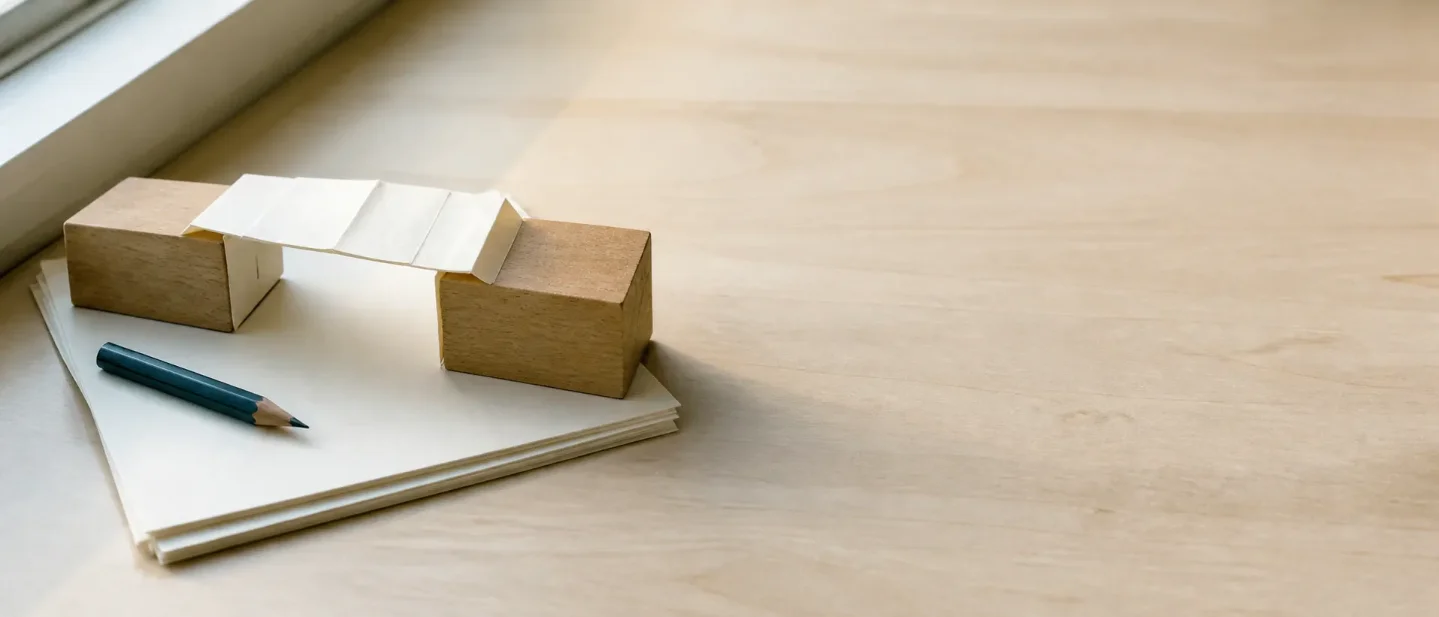
Run the smallest test before you plan the whole thing
A practical morning push to replace endless preparation with a ten-minute test that gives the next decision something real to work from.
The cursor is blinking in an empty document. You open another tab to look for examples, then another to compare tools. Soon the morning has become a neat pile of preparation around the work you meant to start.
Planning feels useful because it keeps the outcome safely out of reach. You can keep arranging possibilities without learning whether one of them works. The larger the project, the easier it becomes to mistake more preparation for more progress.
A small test gives the next question somewhere to land.
Run a small test
You do not need a complete plan to learn one useful thing. You need a test small enough to finish before your attention changes, and clear enough that the result will tell you what to do next.
Suppose you are considering a new report, a different workout routine, a change to your morning schedule, or a tool for a recurring task. Pick one part that can stand on its own. Make a rough sample. Try the first step with one real input. Ask one person to react to a single screen. Set up the routine for one morning.
The test should answer a question you already have. It should also be easy to undo or revise. A ten-minute trial can tell you whether the instructions make sense, whether the first step takes five minutes or thirty, or whether the idea creates a problem you had not considered. A full plan would hide those answers under several more decisions.
The result does not need to be encouraging. A useful result can close a path, expose a missing detail, or point toward a smaller version. Each result gives the next decision something solid to work from. The test turns uncertainty into a piece of information you can use.
Try it today
Choose one task you have been preparing to begin. Write three short lines:
The question I need answered is: ___.My smallest test is: ___.I will know something useful when: ___
Give the test ten minutes. Use real material from the task, even if the sample is rough. Stop when the time ends and write down what happened in one sentence. Keep the result beside the task before you return to planning.
If the test worked, use the result to choose the next small piece. If the test exposed a problem, change one part and run it again. If the test answered the question, let the answer reduce the number of choices in front of you.
The whole project can wait for better information. Give the next ten minutes to finding one piece of it.
This story was produced automatically by a channel. One sentence is all it takes for Neodrop to keep producing for you.