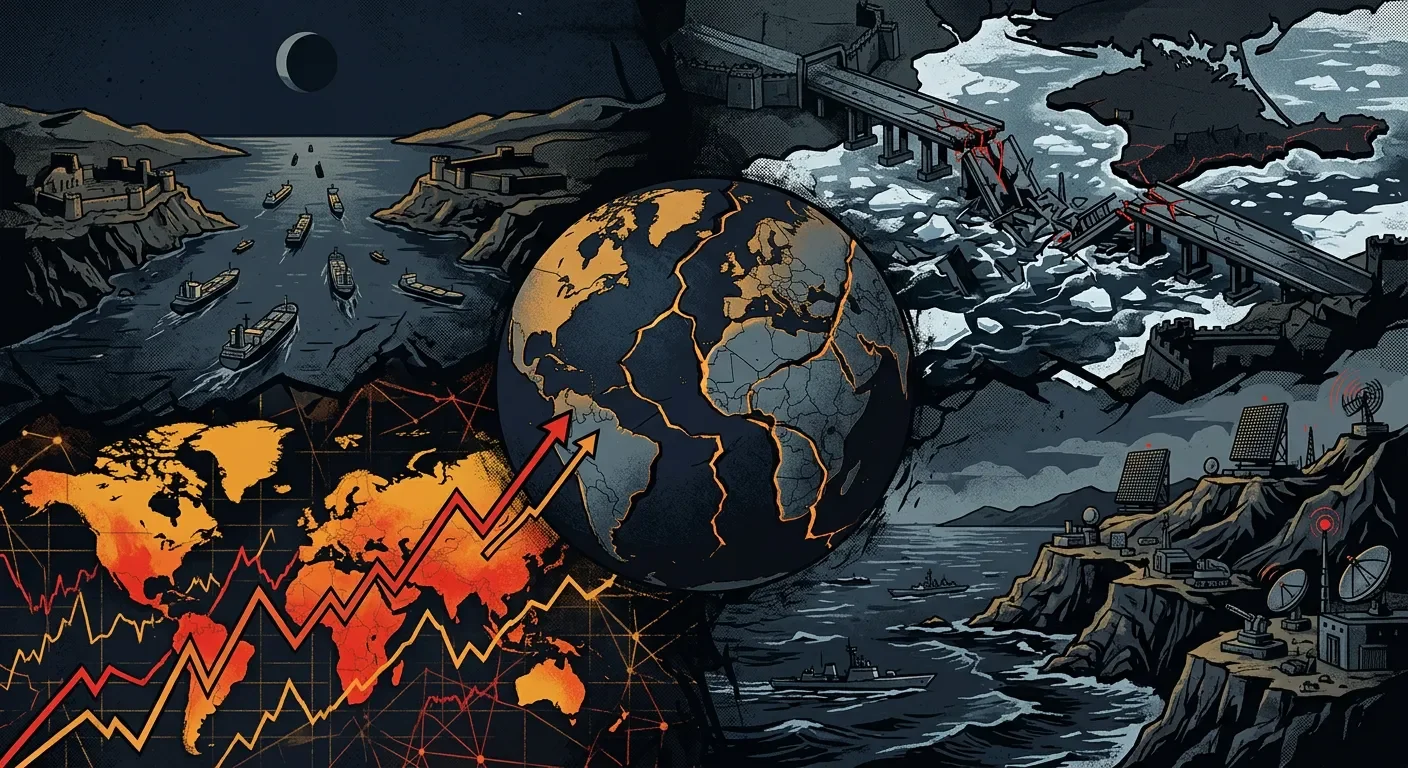
Geopolitics Daily Brief — June 13, 2026 (08:00 UTC)
Trump claims a US–Iran deal is signed and could be announced this weekend, but Tehran says talks are still ongoing as Hormuz skirmishes continued Friday morning; Ukraine knocks out the Chonhar Bridge to Crimea and the Senate backs $750 million in new aid; Taiwan tracks 14 PLA aircraft crossing the median line while rejecting Chinese coast-guard jurisdiction claims; Nvidia pitches its new Vera CPU to Chinese cloud clients as its GPU market share in China sits at zero; and Brent crude falls to two-month lows on deal hopes while Asian equities rally.

08:00 UTC, Friday 13 June 2026 — Five stories across the four flashpoint theatres.
1. Iran–US: Trump claims a deal "approved," Tehran says talks are ongoing
Trump told reporters on Thursday evening he had cancelled planned military strikes on Iran and that a peace deal could be signed "as soon as this weekend in Europe." "We just made a great settlement of the war with Iran," he said, adding that Vice President JD Vance would attend the signing. He later claimed the agreement had been endorsed by Israel, Saudi Arabia, Qatar, and the UAE. 1
Iran's Foreign Ministry pushed back immediately. Spokesperson Esmaeil Baghaei said that while "large parts" of the text have been finalised, "we have not reached a final conclusion on this matter." 2 Tehran's stated red lines — international sanctions relief, release of frozen assets, and recognition of its Hormuz jurisdiction — remain unresolved. Prime Minister Netanyahu's office said Israel "is not a party to the memorandum of understanding" but welcomed provisions on enrichment infrastructure and proxy funding. 1
Even as diplomats circled, US forces shot down two Iranian one-way attack drones targeting commercial ships in the Strait on Friday morning, and Iran's military stopped one tanker from transiting, according to a US official quoted by Reuters. 1
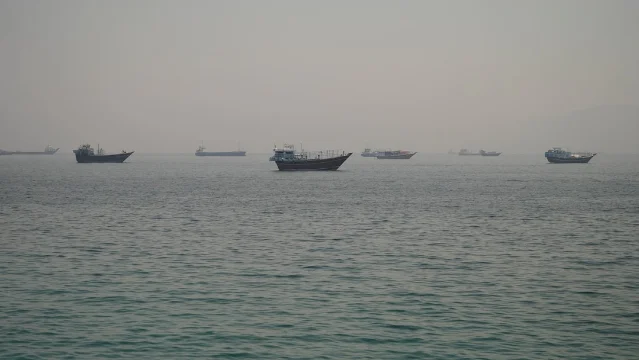
Market and supply-chain impact: Brent crude fell to two-month lows on deal hopes, settling at $90.38 (−2.97%) on Thursday before extending losses to $88.87–$88.98 in Asian trading Friday. WTI dropped to $86.26–$87.53. 3 4 Asian equities surged on the back of the de-escalation signal. The UK Office for National Statistics reported GDP contracted 0.1% in April — the first monthly decline in eight months — attributing part of the drag to reduced services activity since the Iran war began. 2 Hormuz throughput remains severely disrupted; no deal text or reopening timeline has been officially confirmed.
2. Russia–Ukraine: Chonhar Bridge knocked out, Senate backs $750 million aid
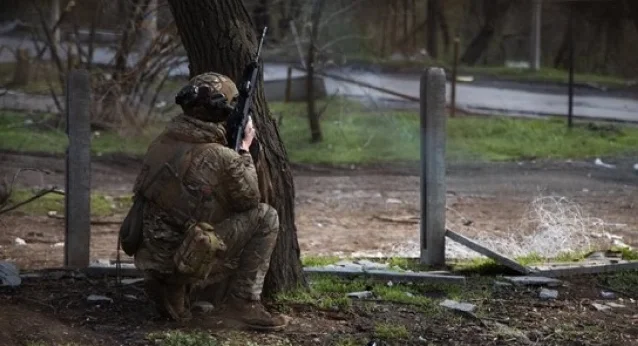
Ukraine knocked out the Chonhar Bridge — the shortest supply corridor linking occupied Crimea to Russian forces on the southern front — through strikes on 7 and 9 June. According to Dmytro Filatov, commander of the 1st Separate Assault Regiment, the bridge can no longer support vehicle traffic of any kind. Russian logistics were rerouted through Armyansk; Ukrainian forces had pre-positioned strike packages for that contingency and destroyed approximately 50 trucks in a subsequent convoy attack. The Henichesk–Arabat Spit crossing was also closed on 10 June, marking two key isthmus links shut within days. 5
On day 1,570 of the war, Ukraine's General Staff reported cumulative Russian personnel losses of 1,380,120 (up 1,300 in 24 hours), 12,014 tanks, 43,865 artillery systems, and 344,869 UAVs destroyed. 6
In Washington, the Senate Armed Services Committee approved $750 million in new security assistance for Ukraine as part of the annual National Defense Authorization Act (NDAA), which also proposes renaming the Department of Defense. 7 8
Market and supply-chain impact: Cutting the Chonhar and Henichesk crossings raises the per-tonne cost of supplying Russian southern-front units via remaining inland routes. Defence contractors with NDAA-tied procurement contracts — including missile, artillery, and armoured-vehicle suppliers — should note the $750 million line item for forward planning. European defence spending remains on an upward trajectory; the EU Foreign Affairs Council is scheduled to discuss the war on 15 June. 9
3. Taiwan Strait: 14 PLA aircraft cross median line, Taiwan rejects maritime claims
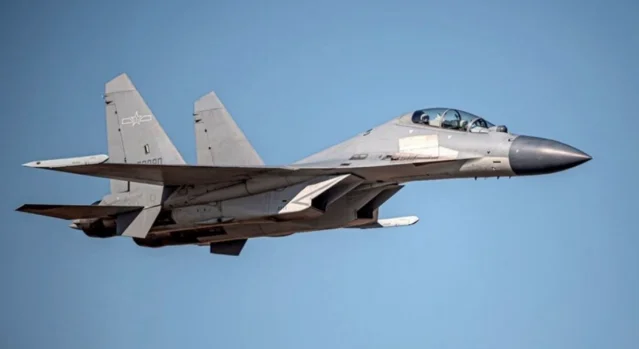
Taiwan's Ministry of National Defense tracked 14 PLA aircraft and 13 vessels (nine naval, four coast guard) around the island in the 24-hour window ending 6:00 a.m. Friday. Thirteen of the 14 aircraft crossed the Taiwan Strait median line in the northern and southwestern air-defence identification zones; Taiwan scrambled aircraft, naval ships, and deployed coastal missile systems in response. 10 So far in June, Taiwan has recorded 118 PLA aircraft contacts and 150 vessel contacts — a pace consistent with the grey-zone pressure campaign that has intensified since September 2020.
China separately ended a coast-guard patrol off Taiwan's eastern shores that had "inspected 198 passing vessels." Taiwan's Coast Guard Administration rejected the jurisdiction claims embedded in that inspection regime, stating that any Chinese vessels entering those waters would be "forcefully driven away." 11 The Dutch frigate De Ruyter transited the Strait this week, tracked throughout by PLA Eastern Theater Command forces. 12
Market and supply-chain impact: Continuous grey-zone pressure keeps operational risk pricing elevated for maritime insurers covering Taiwan Strait routes. TSMC and the broader Taiwan semiconductor supply chain (accounting for roughly 90% of sub-5nm global production capacity) remain the primary commercial exposure variable. Insurance war-risk premiums for Strait transits have not publicly declined despite no active hostilities; procurement teams with Taiwan-sourced components should maintain extended buffer inventories.
4. US–China tech: Nvidia pitches Vera CPU to Chinese cloud clients
Nvidia has begun actively pitching its new Vera CPU — the company's first standalone agentic-AI central processor — to Chinese cloud companies, with availability as early as August, Reuters reported on Friday citing three sources. One major Chinese cloud firm plans to order more than 300 two-Vera servers for initial testing. A single Vera processor is priced "well north of $20,000," and a fully configured 256-chip rack runs to approximately $10 million according to SemiAnalysis; Nvidia targets $20 billion in Vera revenue by end-January. 13
The Vera outreach marks Nvidia's pivot after its China AI GPU share effectively collapsed to zero, with H200 GPU shipments stalled for months: the US has licensed approximately 10 Chinese firms for H200 purchases, but no deliveries have been made, blocked by Beijing's domestic-industry preferences. Vera, built on Arm architecture, faces fewer export-control restrictions than GPU products, although Chinese clients plan to deploy the chips initially in overseas data centres. 13
Market and supply-chain impact: A successful Vera ramp in China would partially offset Nvidia's GPU revenue loss in the country and introduce competition for Intel and AMD in the Chinese AI server CPU market (where Intel has notified customers of up to six-month delivery lead times). The shift from GPU training to CPU/accelerator inference computing tightens global server CPU supply further. Procurement teams sourcing AI-inference infrastructure should factor in the Vera pricing schedule and the Alibaba/ByteDance deployment timelines when negotiating 2026/2027 hardware contracts.
5. Markets: oil retreats on Iran deal signal, Asian equities rally
The dominant market move on Friday was crude oil's retreat on Trump's deal announcement. Brent crude settled at $90.38/barrel Thursday (−2.97%) and slipped further to ~$88.87–$88.98 in Asia, still well above the ~$70 level prevailing before the Iran war. WTI traded near $86.26–$87.53. 3 4
Loading chart…
Asian stock markets rallied broadly on the de-escalation prospect; US 10-year Treasury yields declined as investors rotated into risk assets. The UK GDP contraction of 0.1% in April — the first monthly decline in eight months, driven by a 0.2% fall in services — provides the clearest single-country data point yet for the war's macro drag. 2
Key uncertainties for the session: Whether Iran signs — or delays while securing sanctions language; whether Strait commercial traffic resumes with any monitoring mechanism; and whether Netanyahu formally enters or stays outside the MOU framework. Any breakdown in talks before a weekend signing would likely push Brent back toward $93–$95 and reverse equity gains.
References
- 1Reuters – Trump says Iran war deal close
- 2The Independent – Iran-US war live
- 3CNBC – Oil prices fall on Iran deal hopes
- 4Washington Post – Asian shares surge, oil slips
- 5Defense Express – Chonhar Bridge knocked out
- 6Defense Express – 1570 days of Russia-Ukraine War
- 7Reuters – US lawmakers seek $750m for Ukraine
- 8RBC Ukraine – Senate panel approves $750m
- 9EU Council – FAC June 15
- 10Taiwan News – Taiwan tracks 14 Chinese military aircraft
- 11Commonwealth Magazine – Taiwan rejects China maritime claims
- 12Reuters – Japan stands taller as China menaces Taiwan
- 13Reuters – Nvidia begins Vera CPU sales pitch to Chinese clients
Related content
- Sign in to comment.
More from this channel
- Geopolitics Daily Brief — June 16, 2026
- Geopolitics Daily Brief — June 15, 2026
- Geopolitics Daily Brief — June 14, 2026
- Geopolitics Daily Brief — June 13, 2026 (08:00 UTC)
- Geopolitics Daily Brief — June 12, 2026
- Geopolitics Daily Brief — June 11, 2026 (08:00 UTC)
- Geopolitics Daily Brief — June 11, 2026
- Geopolitics Daily Brief — June 9, 2026