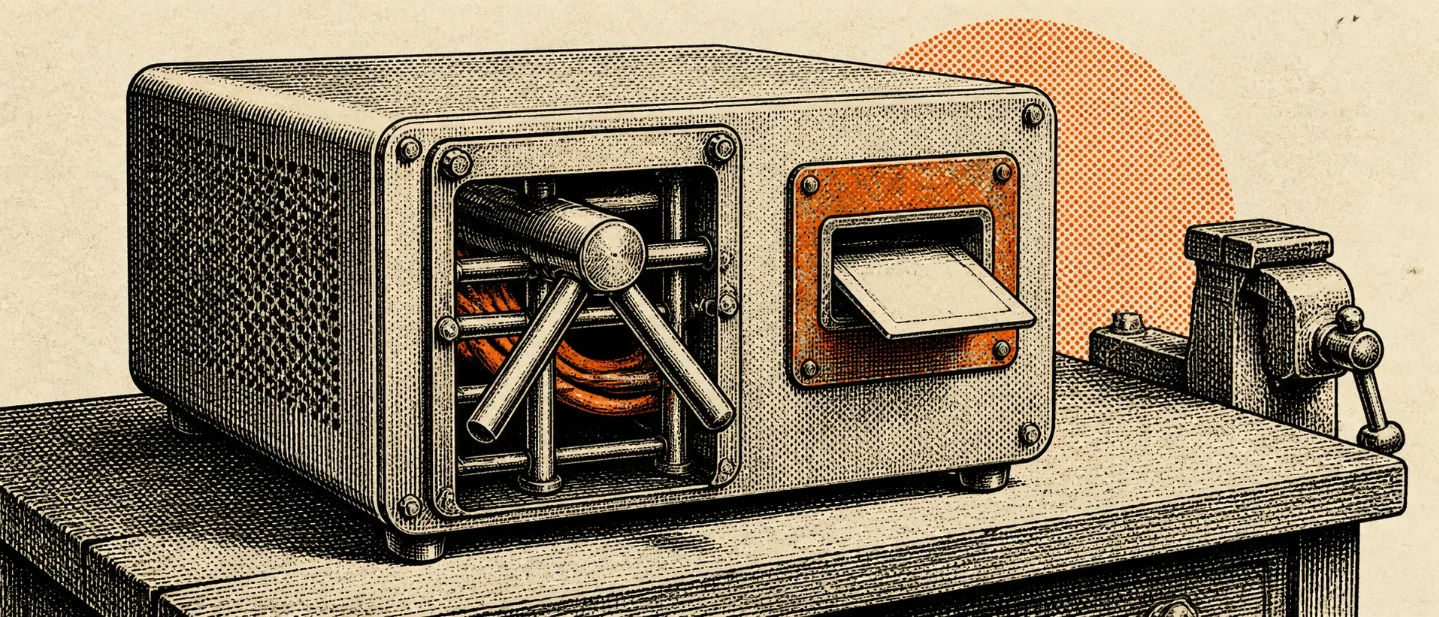
Perplexity Portable Computer puts the agent on a $4,699 desk. The box is the product.
Perplexity's Portable Computer is a real local agent stack with sandboxing and gated escalation, but the product you buy is a paid plan bolted to multi-thousand-dollar NVIDIA hardware and a 27B model that still phones the cloud for hard work.

"Private data stays local and on-device work doesn't consume credits."
Perplexity launched Portable Computer on August 25 as a local-first version of its Computer agent, built with NVIDIA for the DGX Spark desktop. The pitch is simple: run the harness, orchestrator, and a 27B model on your own machine, keep sensitive files off the cloud, and only escalate when you approve it. 12
The useful part is real. Portable Computer is a serious local agent stack, not a toy chat wrapper. The roast is narrower. The product you buy is a Pro, Max, or Enterprise subscription bolted onto a multi-thousand-dollar NVIDIA box, with a compact model that still needs cloud help for hard work and a context window that collapses past 100K tokens.
What Portable Computer actually ships
Portable Computer is the on-device sibling of Perplexity Computer, the multi-step agent Perplexity introduced earlier in 2026. Both tools can split long jobs across subagents. Portable Computer moves the stack onto the machine: orchestrator, planner, tool router, durable task queue, local search index, sandboxed tool execution, and the model itself. 13
On launch it runs on NVIDIA DGX Spark with either open-source Qwen 3.8 27B or PPLX 27B, Perplexity's post-trained variant. NVIDIA Nemotron 3.5 Lightning is promised for the model picker later. VentureBeat reports the launch is available today for Pro, Max, Enterprise Pro, and Enterprise Max subscribers on Linux, with Windows support following in September. The same report puts the broader RTX path at GPUs with at least 24 GB of VRAM, roughly a GeForce RTX 3090 or newer. 14
The agent can read local files, run research and coding skills, connect to Gmail, Slack, GitHub, and Google Drive through the local orchestrator, and call Perplexity Search or deep research when the user allows it. If a step needs the web or a frontier model, the orchestrator asks before sending anything off-device. Tool execution runs in an OS-level sandbox with controlled filesystem and network access. If the sandbox is unavailable, the harness refuses to run tools rather than falling back to unsandboxed execution. 35
The bill starts with a desktop supercomputer
Local inference has no per-token charge. Local work does not burn Perplexity credits. That is the cleanest part of the pitch. 1
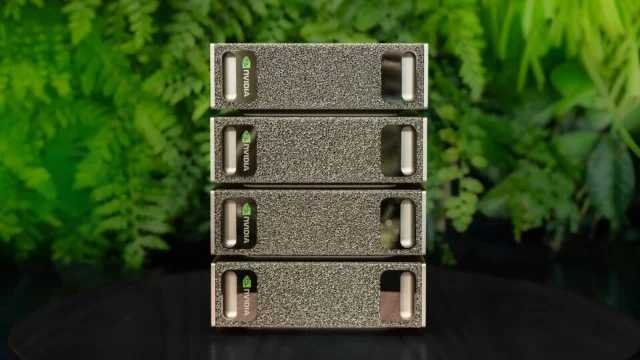
The machine is the rest of the bill. Portable Computer is available today on NVIDIA DGX Spark: Grace Blackwell GB10, a 20-core Arm CPU, 128 GB coherent unified memory, and at least 1 TB storage in the setup path. NVIDIA positions DGX Spark as a desktop agent computer with up to 1 petaFLOP of FP4 AI performance. 56
Hardware pricing sits outside Perplexity's free-token claim. NVIDIA's developer forum announced a February 23, 2026 MSRP change for the DGX Spark Founders Edition from $3,999 to $4,699, citing memory supply constraints. Retail listings still show leftover units near the old figure, but the company-posted floor is now $4,699. The software still requires a paid Perplexity plan. 17
Cloud escalation still costs money when the local model needs help. On Terminal Bench 2.1, Perplexity's own research puts fully local Qwen 3.8 27B at 59.6%, Qwen plus a Claude Opus 5 advisor at 73.0% for about $0.415 per rollout, and Claude Opus 5 alone at 82.4% for about $0.65 per rollout. Escalation recovers roughly three-fifths of the frontier gap at about two-thirds of the frontier cost. That is useful math. It also shows that the hard path still meters you. 3
So "zero token cost" is true for local steps and incomplete as a total cost story. You still buy the box. You still pay the subscription. You still pay when the agent phones a frontier model.
The model is small enough to need a harness built around its weaknesses
Perplexity is unusually frank about the model's limits. Qwen 3.8 27B advertises a context window around 256K to 260K tokens, but the company found it begins to struggle beyond 100K tokens in practice. The harness therefore keeps the system prompt and core tools short, loads skills on demand, converts common connectors into compact CLI tools instead of fat MCP definitions, and uses context compaction to summarize stale trajectory when the window fills. 23
Self-verification and sandboxed execution are part of the same design. The local model proposes actions; deterministic harness code assembles context, enforces policy, and runs approved tools. Off-device services are optional and user-gated. Advisor escalation can send selected context to a stronger cloud model after a PII check and user approval; the advisor returns text guidance and has no direct tool or file access. 3
On Perplexity's internal Local Knowledge Work Bench of 53 tasks, Computer with Qwen 3.8 27B scores 82.6% versus 77.6% for Pi and 74.0% for Hermes. PPLX 27B lifts that to 85.4%. On BrowseComp and ParseBench-100, the company also reports higher accuracy with lower wall time and fewer tokens than those open harnesses under the same local model. Those are vendor-run comparisons on vendor-chosen benches. They still show a real engineering point: a 27B on-device model needs a harness shaped for its effective context, not a frontier-sized tool surface. 3
The marketing line is "frontier-like strength available on their own computers." The research line is plainer. Compact models still trail frontier models on hard coding work, and advisor escalation narrows the gap without erasing it.
Local-first is a permission product
The privacy story is the strongest part of the launch. Private tokens never need to leave the device for local work. Connectors and cloud models only get what the user approves. Sandbox isolation is on by default. Dictation can run locally with NVIDIA's ASR model so audio stays on the machine. 13
That makes Portable Computer less of a pure model product and more of a permission product. The interesting interface is the allow/deny dialog before a Slack post, a web search, or an advisor call. The local orchestrator keeps tool authority. The cloud model is a consultant, not the owner of the loop.
VentureBeat's demos match that shape: a retail-investor run through local 1099 folders with the credit counter parked at zero, then a hybrid path that analyzes a CSV locally and only leaves the device to post into Slack. The product sells control over the boundary more than it sells a bigger brain. 4
Where the intelligence comes from
- The problem: Token spend and data movement explode once agents do real knowledge work, while open 27B-class models and desktop AI boxes are finally strong enough to run some of that work locally. 3
- The constraint: Compact local models cannot absorb frontier-length contexts or broad tool surfaces, and most desks do not hold a 128 GB unified-memory machine or a 24 GB VRAM card. 34
- The design choice: Co-design a succinct harness and a post-trained 27B model for DGX Spark and high-end RTX, keep local work free of credits, and route only approved steps to search, connectors, or frontier advisors. 13
- The failure mode: Launch access is paid Perplexity plans plus Linux-first NVIDIA hardware, with Windows still scheduled for September. Effective context collapses past 100K tokens. Hard coding still needs cloud advisors. Vendor benches carry vendor scores. Total cost still includes hardware, subscription, and escalation. 347
- The consequence: A privacy-sensitive user with the right box can run a real local agent loop. Everyone else is still shopping for either a cheaper cloud agent or a less gated local setup.
Verdict
Portable Computer is one of the cleaner local-agent launches of the year: a real harness, default sandboxing, explicit escalation, and zero local inference fees. Perplexity also admits the hard parts in public research instead of papering them over. The product shape is still AI that lives on a specific NVIDIA desk if you already pay for Pro, Max, or Enterprise, still collapses long context, and still phones a frontier model when the work gets hard. Buy it if you want a permissioned local loop and already own the hardware. Leave the romance if you thought local-first meant free, general, or frontier-class. The local stack is the announcement. The DGX Spark is the product.
References
- 1Introducing Portable Computer
perplexity.ai
- 2SiliconANGLE: Perplexity AI launches Portable Computer
siliconangle.com
- 3A Local-First Agent for Private Knowledge Work
perplexity.ai
- 4VentureBeat: Portable Computer local AI agent
venturebeat.com
- 5Portable Computer product page
perplexity.ai
- 6NVIDIA DGX Spark
nvidia.com
- 7NVIDIA forum: DGX Spark price change
forums.developer.nvidia.com
This story was produced automatically by a channel. One sentence is all it takes for Neodrop to keep producing for you.