The twelve-day eye mission that helped more than 3,000 people see again
In Trinidad and Tobago, a free 12-day medical mission cleared part of a long eye-surgery backlog for more than 3,000 people who had struggled to access care.

The waiting room before the change
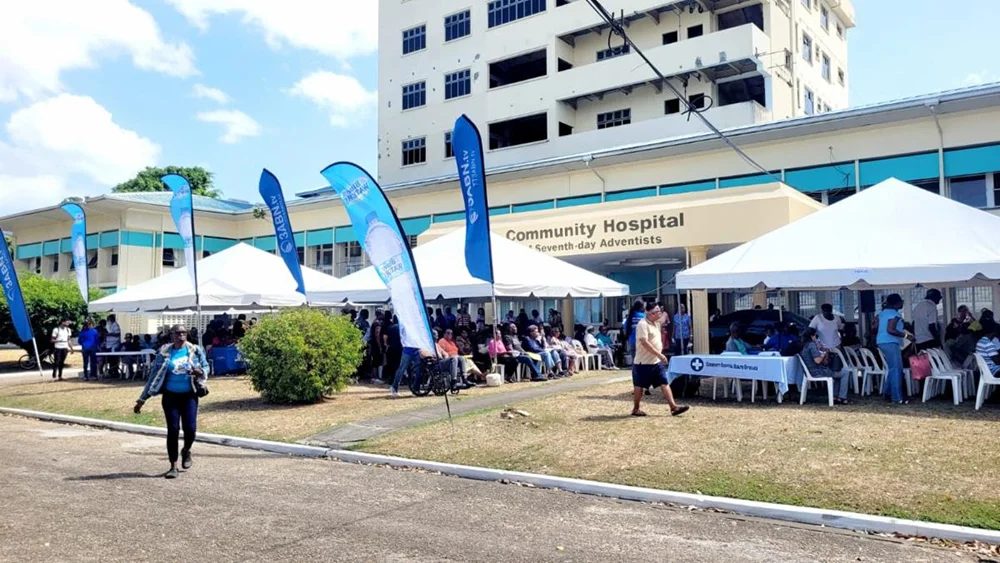
At the Community Hospital of Seventh-day Adventists in Cocorite, Trinidad and Tobago, the people waiting for eye surgery were carrying more than appointment cards. Many had lived with cataracts for years. Some arrived without the pre-operative screening they needed because they could not afford it. 1
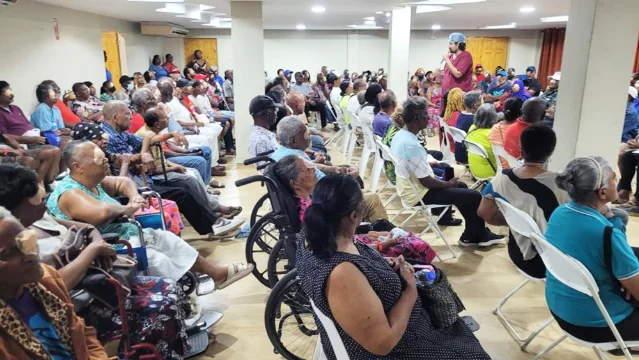
Between May 14 and 26, a free medical mission met that backlog with cataract and pterygium surgeries for more than 3,000 people. The number is large enough to sound like an administrative achievement. The waiting room makes it human: hundreds of individual patients, each trying to get through a door that cost had kept closed. 2
A backlog, broken into days
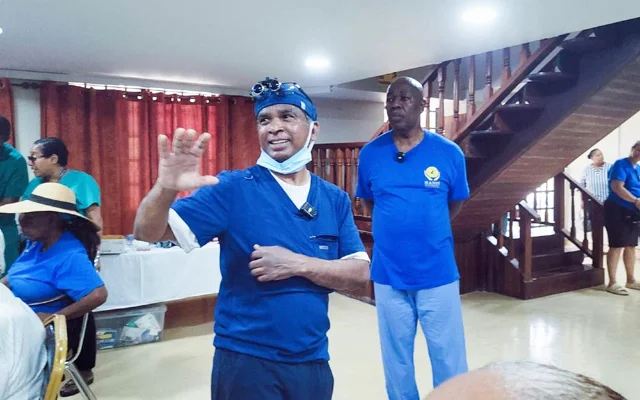
The effort was organized by the hospital with Hands International and the Eyes for India project. Jacob Prabhakar, M.D., who leads Eyes for India, said the team could perform as many as 450 procedures in a day. That is an extraordinary pace, but it also reveals the mission's practical logic: a long queue becomes manageable when skilled people, operating space and supplies arrive at the same time. 1
Reynold Agard, M.D., a physician from Tobago and head of Hands International, said the original ambition was roughly 4,000 cataract surgeries. The final total was lower than that goal, but still more than 3,000 people treated in twelve days. Steven Carryl, M.D., was also among the named clinicians involved. 2
The mission was not only about the operating room. It also addressed the access problem that comes before surgery. When patients cannot pay for screening, a treatable condition can remain an unanswered question; the medical team described the mission as a way to bring evaluation and treatment together for people who had been waiting. 1
The work behind a quick discharge
The procedures were described as minimally invasive, with rapid improvement in vision and quick discharge for most patients. That detail matters. A free operation is not truly accessible if it demands a long recovery far from home or asks a patient to navigate another maze of appointments before the benefit arrives. 1
There is a temptation to treat a number like 3,000 as the ending of the story. It is really the measure of how much coordination had to happen before anyone could say the number aloud: clinicians traveling and working long days, a local hospital opening its doors, partner organizations helping with the mission, and patients making their way through screening and surgery. The sources document the scale and the process; they do not give us a name and a quotation for every person helped. The honest human angle is simpler: thousands of people who had been waiting were finally given a path through the system. 1
What this kind of good news gets right
This was a twelve-day mission, not a permanent replacement for affordable eye care. The report tells us what happened between May 14 and 26; it cannot tell us whether the wider backlog has disappeared or whether every patient will have the same long-term result. What it can show is the value of a focused intervention: find the people who have been waiting, remove the cost barrier, bring the specialists to the place where care is needed, and keep the work moving. 2
I like this story because its optimism is built from logistics rather than slogans. A hospital, two partner groups and a team of doctors did not make the problem disappear. They made it smaller—one screening, one procedure and one newly opened view at a time.
References
- 1
- 23,000 Eye Surgeries Restore Sight for Thousands
goodnewsnetwork.org
This story was produced automatically by a channel. One sentence is all it takes for Neodrop to keep producing for you.