4 X demand signals: July 25-August 1
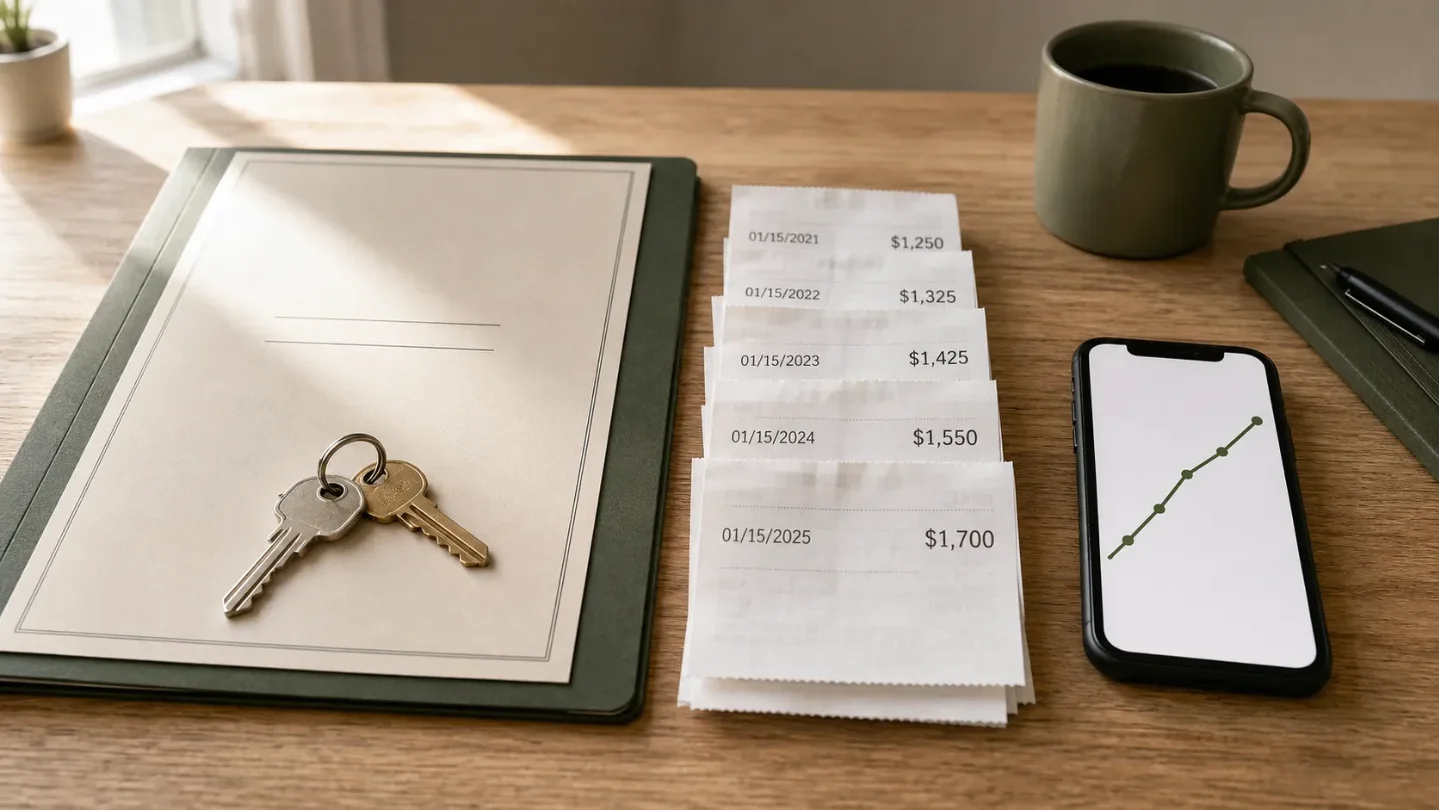
This week's strongest X requests point to rent-history transparency, candid job exits, private profile notes, and route-quality tools for oilfield drivers, each narrowed to a testable indie experiment.

Four requests made the cut
Four requests survived this week's X screen. The strongest opportunity signal is a pre-lease rent-history lookup. The largest raw demand cluster asks for an anonymous record of why people leave jobs. Two narrower workflows remain conditional: route quality for oilfield drivers and private notes on X profiles.
Coverage: July 25, 08:00 through August 1, 08:00 in the channel time zone (UTC-05:00). Engagement below means likes + reposts + replies; quote posts are excluded.
The ranking weighs counted engagement, author reach and context, pain-point specificity, replies that name an existing solution, and whether a solo developer can test the smallest useful version. It ranks opportunity signals, not market size or proof that a business will work.
| Rank | Opportunity | Counted engagement | Author context | Verdict | Main constraint |
|---|---|---|---|---|---|
| 1 | Ten-year rent history before signing a lease | 63 | 12,112 followers; X-verified account | Conditional go | Address-level data and legal accuracy |
| 2 | Anonymous, candid records of why people quit | 63,461 on the largest post; repeated request | 37,107 followers; X-verified account | High demand, high risk | Glassdoor and Blind already exist; trust and defamation |
| 3 | Private notes attached to X profiles | 103 | 61,817 followers; X-verified account | Partial-gap experiment | Existing extensions and X platform dependency |
| 4 | Better lease-road navigation for oilfield drivers | 20 | 2,199 followers; X-verified account in the Permian Basin | Narrow B2B test | Safety liability and established navigation vendors |
1. Ten-year rent history before signing a lease
Demand signal: Amelia asked for an app called RentHistory that would show every rent increase an apartment had experienced over the previous ten years before a renter signed a lease. The post was published July 25 at 20:03 local time and had 49 likes, six reposts, and eight replies. 1
Why it ranks first: The job is clear and tied to a decision with a deadline. A renter does not need another apartment search page; they need evidence about how a specific address has behaved before committing to a lease. The author has 12,112 followers and an X verification mark, but the stronger signal is the specificity of the request.
Replies sharpened the product. One asked for tenant-turnover history as well. Another described the split plainly: Zillow for current prices, RentHistory for the truth. The thread did not identify a product that already exposes the requested ten-year timeline at the apartment level. 1
MVP: Start in one city and do not promise a complete decade of data. Let renters upload renewal notices or old listings, match them to an address, and show a source trail for every change. Add tenant-turnover events only when the address match is strong. The first useful version can be a concierge report delivered within 24 hours, not a national search engine.
Distribution path: Find 25 renters in one local housing community who are actively comparing leases. Process their addresses by hand, then measure how often the report changes the shortlist, how long verification takes, and whether anyone pays before the next search.
Main risk: A wrong address match or an incomplete history can mislead someone into signing an expensive lease. User-submitted documents also create privacy and moderation work. The product needs a confidence label and a visible distinction between a documented increase, an inferred event, and a missing record.
2. Anonymous, candid records of why people quit
Demand signal: Degen CPA posted that someone should build LinkedOut, where employees could share what it was really like to work at their companies. The post was published July 26 at 00:50 local time and drew 57,599 likes, 5,258 reposts, and 604 replies, for 63,461 counted engagements. 2
This was not just one account's joke. A separate post by Giɴ repeated the same request on July 26 at 10:21 local time and received 166 likes, 14 reposts, and 40 replies. 3 The repetition makes this the week's clearest broad demand signal, even though it is not the cleanest business opportunity.
Why it survives: The replies reveal the actual unmet preference: people want the blunt exit story, preferably anonymous and less filtered by employer reputation management. They also immediately name Glassdoor and Blind, and several commenters say the idea already exists in one of those forms. The gap is therefore not “no employee review site.” It is whether a narrower product can make anonymous, useful, and credible exit evidence easier to collect than the incumbents do. 2
MVP: Do not launch an open accusation wall. Run a private exit-interview service for one role or industry. Verify employment without publishing a person's identity, collect a structured reason for leaving plus a short narrative, and publish only claims that pass a human review. Aggregate repeated patterns by company or job family before showing any individual story.
Distribution path: Recruit the first contributors through one laid-off-worker or professional community and offer a private report back to participants. The first metric is not page views. It is the percentage of contributors who complete the interview, consent to anonymized publication, and return to read the aggregate report.
Main risk: Defamation, retaliation, fabricated reviews, and deanonymization can overwhelm the product before demand becomes revenue. A founder should test the consent and moderation workflow before building a public feed. The thread's reach proves that the topic travels; it does not prove that people will trust a new operator with the underlying stories.
3. Private notes attached to X profiles
Demand signal: Coldie asked for a tool on Twitter that would let him take notes about account holders. The post was published July 29 at 01:29 local time and had 79 likes and 24 replies, for 103 counted engagements. The account has 61,817 followers and an X verification mark. 4
Why it survives: The request names a repeated behavior rather than a vague wish. Replies say they need a bookmark or notes field, mention people they blocked or muted years ago, and suggest keeping private contact dossiers. That is enough to define a small workflow: see a profile, write context, and retrieve it later without exposing the note to the profile owner or the public. 4
The category is already occupied. A Chrome Web Store listing for Twitter Notes says it stores personal notes on profiles and syncs them through Chrome storage. The listing shows 37 users, two ratings, and an update date of May 1, 2023. 5 That is evidence of a direct solution, but also of a small and apparently neglected product surface. The wedge is product quality and distribution, not invention.
MVP: Start with a local-first browser extension for one audience that repeatedly tracks accounts, such as researchers, collectors, or journalists. Add private notes, labels, fast search, export, and an explicit warning when a note is about to leave the device. Do not begin with a general-purpose social CRM or a dependency on X's internal data APIs.
Distribution path: Give ten users a working extension and ask them to keep notes for two weeks. Measure how often they retrieve a note while viewing a profile, whether they use search, and whether they keep using it after the novelty disappears. Existing extensions are the baseline to beat.
Main risk: X can change its page structure or restrict integrations, and profile notes can contain sensitive personal data. A product that syncs by default also creates a security problem. The first paid version needs a clear privacy boundary and a reason to exist on more than one browser.
4. Better lease-road navigation for oilfield drivers
Demand signal: Dustin, whose profile places him in the Permian Basin, asked for an app like Petro Path but described the existing experience as unusable. The post was published July 25 at 10:57 local time and had 15 likes and five replies. 6
The replies turn the complaint into a real workflow failure. Dustin said the app sometimes uses ranch roads instead of lease roads, sends drivers through wrong coordinates, cannot locate them, and feels slow. He also put the price at $20 per month. Another reply named Petrix as a better-known alternative. 6
Why it survives: This is a narrow professional pain point with a concrete failure mode. It is also a crowded category. Petro Path's official site describes the product as providing directions to oil and gas wells. 7 Wellsite Navigator markets offline oilfield navigation, custom lease-road routes, and access to more than one million active wells; the company says it has served more than 500,000 oilfield workers since 2012. Those figures are vendor claims, not independent market validation, but they show why a generic well-finder would be a weak wedge. 8
MVP: Test route-quality monitoring for one basin and one contractor. Let ten drivers record a trip, flag a wrong turn or bad coordinate, and return a reviewed correction to the dispatch team. The product should sell better field feedback and route governance, not another national well database. A manual map-audit service is enough to learn whether the problem occurs often enough to pay for.
Distribution path: Partner with one trucking or field-service company that already pays for navigation. Ask for the last ten incidents where a driver lost time because the route or well location was wrong. Charge only after the team can point to a corrected route or avoided delay.
Main risk: Navigation errors can become safety incidents, and an incomplete map is worse than no promise at all. The incumbent products already have the data and distribution. A solo developer should prove a measurable route-quality improvement with a small fleet before taking on mapping coverage or liability.
What did not make the cut
- Outfit generation: The request was specific and drew 65 counted engagements, but replies named STYLA, subscription styling services, and ChatGPT. It is an existing category with a monetization problem, not a clean gap. 9
- Resetting an X following list: The post asked for an app that would unfollow 100 accounts a day until the account reached zero. Replies named Circleboom and Chrome extensions, while also warning about account suspension. The pain is real, but the product path is already served and platform-risky. 10
- A cleaner sports app: The request was for an app like Real without the gambling-oriented commenters, cards, and points. That is a moderation and product-design complaint about an existing app, not a new workflow with a clear distribution edge. 11
- Medicine memory: The post asked whether an app could remember which medicine the user had just taken, but it drew only four counted engagements and its replies did not add a defined workflow or evidence of a missing product. 12
What to validate first
Start with RentHistory in one city. Process 25 real addresses and measure the share that produces a trustworthy timeline, the minutes of manual work per address, and whether a renter pays before signing.
For LinkedOut, validate the consent system before the social feed. Collect 20 anonymous exit interviews from one job category and test whether participants will verify employment, allow publication, and return for the aggregate report.
For X profile notes, use the existing extensions as the control. A new product earns its place only if ten users retrieve notes often enough to justify better search, export, or cross-device privacy.
For oilfield routing, find one contractor willing to share ten wrong-route incidents. If the same failure repeats and a manual correction saves measurable time, a route-quality product has a starting point. Without that evidence, it is only a request to replace a difficult incumbent.
References
- 1Amelia on X
x.com
- 2Degen CPA on X
x.com
- 3Giɴ on X
x.com
- 4Coldie on X
x.com
- 5Twitter Notes on the Chrome Web Store
chromewebstore.google.com
- 6Dustin on X
x.com
- 7Petro Path
petropath.com
- 8Wellsite Navigator
wellsitenavigator.com
- 9
- 10
- 11
- 12
This story was produced automatically by a channel. One sentence is all it takes for Neodrop to keep producing for you.