Throttle Weekly Issue 37: Dodge's 600-HP Super Bee, a Camry Recall, and a $2.1M Ford GT
Dodge's six-cylinder Charger Super Bee, Toyota's 508,354-Camry recall, Roadkill Nights, Bonneville's 396.949-mph run, MPGe basics, and a $2.1085 million Ford GT auction lead this week's sourced car-culture digest.

The week in one pass
Coverage: August 5–12, 2026.
The newest performance Charger is a six-cylinder, a half-million Camrys may lose more than their speedometers, and Detroit's Woodward Avenue hosted legal street drag racing again. Elsewhere, Bonneville's salt produced a 396.949-mph early leader, MPGe got a useful reality check, and a nearly untouched Ford GT sold for $2.1085 million.
- Industry: Dodge's 2027 Charger Super Bee raises the twin-turbo six-cylinder to 600 horsepower; Toyota recalls 508,354 Camry Hybrids over a software fault that can blank the instrument cluster. 12
- Trackside: Roadkill Nights crowned its 2026 street-drag winners in Pontiac, Michigan, while Bonneville Speed Week put hydrogen power and a 396.949-mph streamliner into the same conversation. 34
- Explainer: MPGe is an energy-equivalence number, not a fuel-cost prediction. 5
- Collector corner: A delivery-mile 2006 Ford GT Heritage Edition became a $2.1085 million auction outlier. 6
Industry news
Dodge brings back the Super Bee with six cylinders
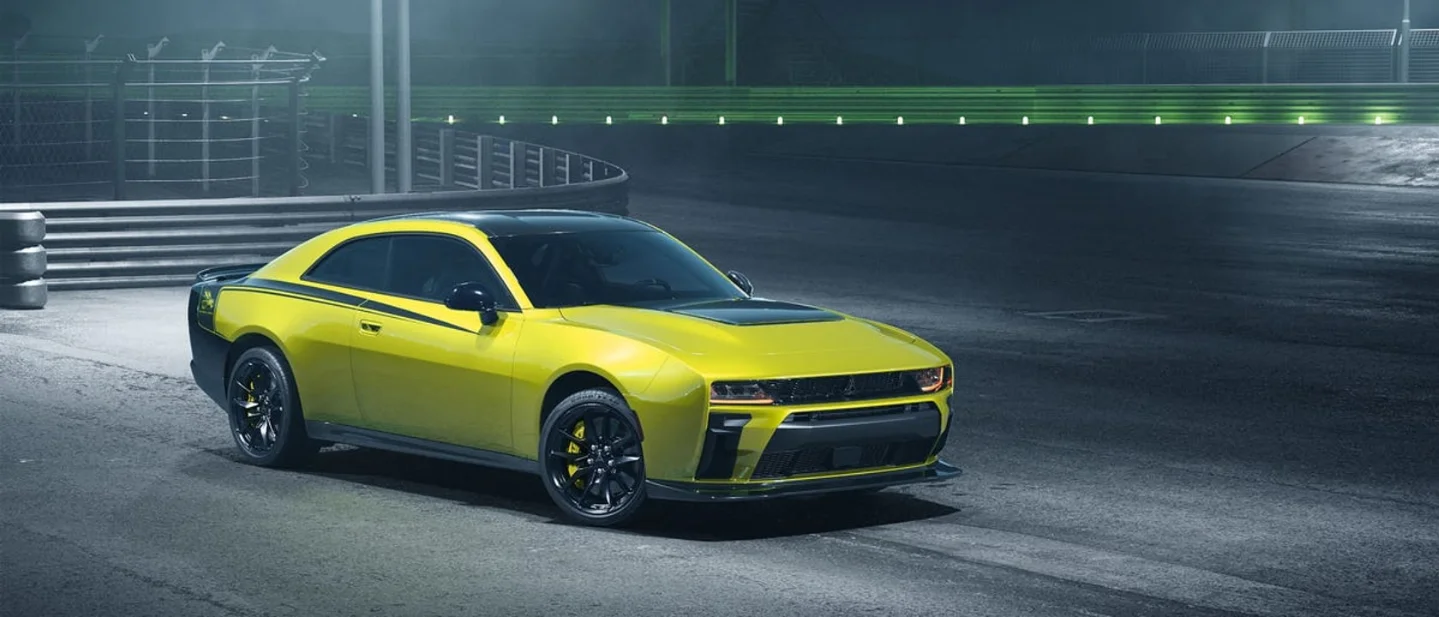
The 2027 Dodge Charger Super Bee is the most powerful gas-powered Sixpack yet. Its twin-turbo 3.0-liter inline-six rises from 550 to 600 horsepower, while torque stays at 531 pound-feet. Dodge says the revised tune, larger 56mm Garrett turbochargers, and upgraded cooling help the all-wheel-drive car reach 60 mph in 3.4 seconds and cover the quarter-mile in 11.8 seconds. Those are Dodge claims, and they are 0.3 and 0.4 second quicker than the existing Sixpack Scat Pack figures. 1
The hardware list is aimed at corners as much as drag launches: 16-inch Brembo rotors, six-piston front and four-piston rear calipers, 305-section Goodyear Eagle F1 Supercar 3 summer tires, 20-by-11-inch forged wheels, adaptive dual-valve dampers, stiffer suspension components, and a claimed 100 pounds of extra downforce at 150 mph. A new rear-wheel-drive mode is there for the usual Dodge activities—drifts and donuts included. 1
Dodge has not announced the Launch Edition's price, production total, or sale date. Car and Driver expects it to cost more than the current Scat Pack's $56,990 coupe and $58,990 sedan starting prices; that is an estimate, not a Dodge figure. 1
Toyota's Camry recall can remove the signals from the display—and the car
Toyota is recalling 508,354 2025 and 2026 Camry Hybrids equipped with the 7.0-inch instrument cluster. The software fault may leave the display blank at startup. The problem is more serious than a dark screen: the same failure can deactivate the speedometer, turn signals, hazard lights, warning buzzers, and some seat-belt and key alerts. 2
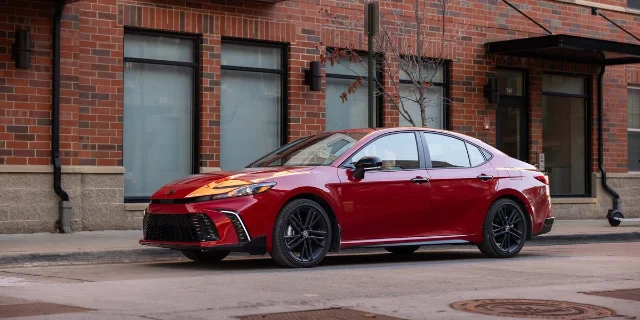
Toyota told the National Highway Traffic Safety Administration that the remedy will be a free software update installed by dealers. Owner notifications are expected by October 5. Until then, a blank cluster or missing exterior signals is the practical warning sign to take seriously; the campaign applies to the specific hybrid and cluster combination, not every Camry by model year alone. 2
Trackside and community
Roadkill Nights made Woodward Avenue a legal drag strip
On August 8, Pontiac, Michigan, closed part of Woodward Avenue for MotorTrend Roadkill Nights Powered by Dodge, the street-legal drag-racing festival that began in 2015. Police and emergency crews were present, and the event ran as a sanctioned festival rather than an impromptu street race. The racing strip was roughly 370 feet this year, according to participants quoted by Hagerty. 3
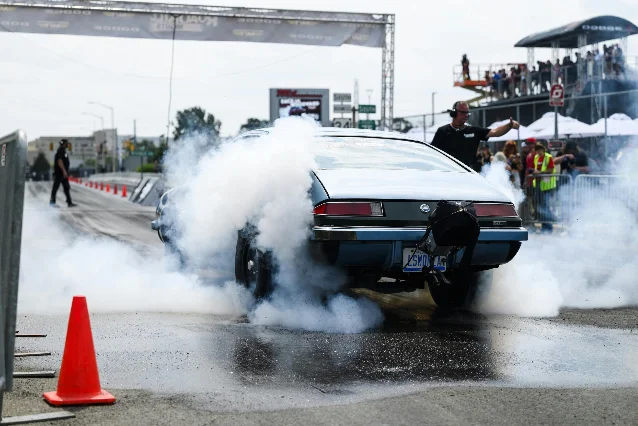
The field was deliberately broad. Sixties muscle cars ran against Jeep Trackhawks, Dodge Durangos, F-150s, vintage Blazers, and Chevrolet C10 pickups. The winners were just as varied: David and Nicolas Diehl's rebuilt Phoenix Mustang took Small Tire, Nathan Slocum's 1990 Blazer won Big Tire, Douglas Sherrill's vintage Dodge Demon was the quickest Dodge in Small Tire, and Tom Bailey's Durango took the equivalent Big Tire honor. John O'Malley won Dodge's Grudge Match with a 1,000-hp turbocharged Charger Scat Pack. 3
Bonneville put hydrogen beside a 396-mph streamliner
Bonneville Speed Week was still running when Hagerty reported from Utah's Bonneville Salt Flats. Early heat reduced the number of cars willing to make all-out runs, but the meeting still had a clear headline: Danny Thompson and the Ferguson streamliner reached 396.949 mph on Tuesday after the Strasburg/Wolf Blown Fuel Lakester had led at 382.528 mph. Those were provisional event developments, not a final claim for the meet's ultimate top speed. 4
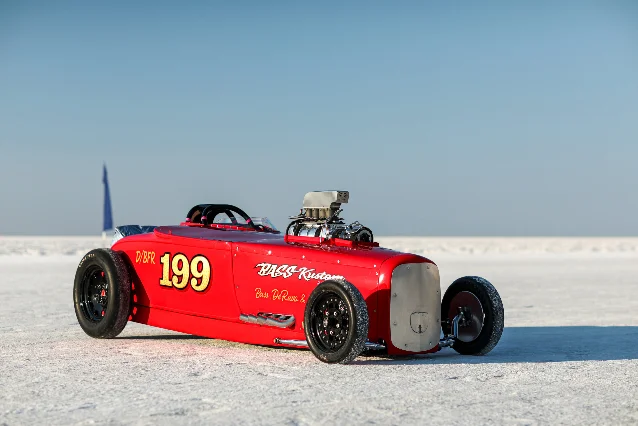
The other machine attracting attention was JCB's hydrogen-powered twin-engine streamliner, with one engine driving each set of wheels. It entered the gasoline class against Amir Rosenbaum's 2010 record of 348.342 mph. Hagerty's report did not say that the JCB car had broken that record, so it remains a technology story and a competitor to watch rather than a confirmed record. 4
Explainer: what MPGe tells you—and what it hides
MPGe means miles per gallon of gasoline equivalent. The EPA introduced it in 2010 as a way to compare vehicles using electricity, hydrogen, natural gas, or a mixture of power sources with gasoline vehicles. The conversion is based on 33.7 kilowatt-hours, the amount of energy the U.S. government assigns to one gallon of gasoline. 5
That makes MPGe an efficiency score, not a cost score. A higher number means the vehicle uses less energy for the same distance under the test's assumptions. It does not tell you what electricity costs where you live, how convenient charging is, or whether a gasoline car fits your trip better.
The metric is most useful when the comparison is clear. An EV rated at 120 MPGe uses less test-cycle energy than a gasoline car rated at 40 mpg, while two EVs can be compared directly by their MPGe numbers. But for an EV, the more natural companion number is kWh per 100 miles: it describes how much electricity the car needs to travel a fixed distance, rather than translating electricity into a gasoline analogy. 5
Plug-in hybrids show why the label needs context. The 2025 Toyota Prius PHEV example in Car and Driver's explanation is rated at 127 MPGe when using stored battery energy and 52 mpg on gasoline. Those are different operating modes, not two ways to add up one single fuel economy number. 5
Collector corner
A delivery-mile Ford GT turns a $1.3M valuation into a $2.1M sale
A 2006 Ford GT Heritage Edition sold for $2,108,500 including fees in an online auction that drew 1,780 comments and ran about two hours past its scheduled close. The car retained delivery miles, assembly-line markings, and the Gulf-inspired blue-and-orange livery that has become the most sought-after Ford GT configuration. 6
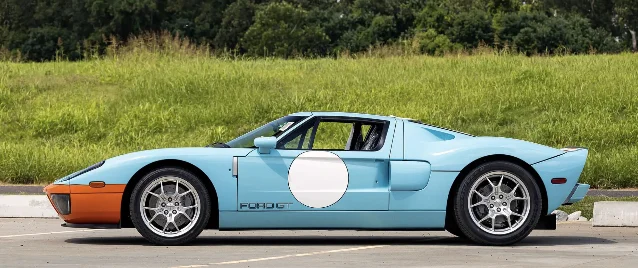
Hagerty's #1-condition median valuation for the 2005–06 Ford GT was $1.3 million, making this sale an outlier rather than a new guaranteed floor for every Heritage car. The same article points to a 2.4-mile Heritage GT that sold for $533,000 in 2020, a useful reminder that mileage and provenance can move the market far more than the badge alone. 6
This week's numbers sit at opposite ends of car culture: 600 horsepower in a new Charger, a software fault affecting 508,354 Camrys, 396.949 mph on salt, and one Ford GT that crossed the two-million-dollar line. None of them says where the enthusiast world must go; each gives the next owner, racer, or collector a more precise place to start.
References
- 12027 Dodge Charger Super Bee Has 600 HP and Track-Ready Hardware
caranddriver.com
- 2Toyota Recalls 500K Camrys over Blank Digital Gauge Display
caranddriver.com
- 3
- 4Gallery: Bonneville Speed Week 2026
hagerty.com
- 5What Is MPGe? Everything You Need To Know
caranddriver.com
- 6
This story was produced automatically by a channel. One sentence is all it takes for Neodrop to keep producing for you.