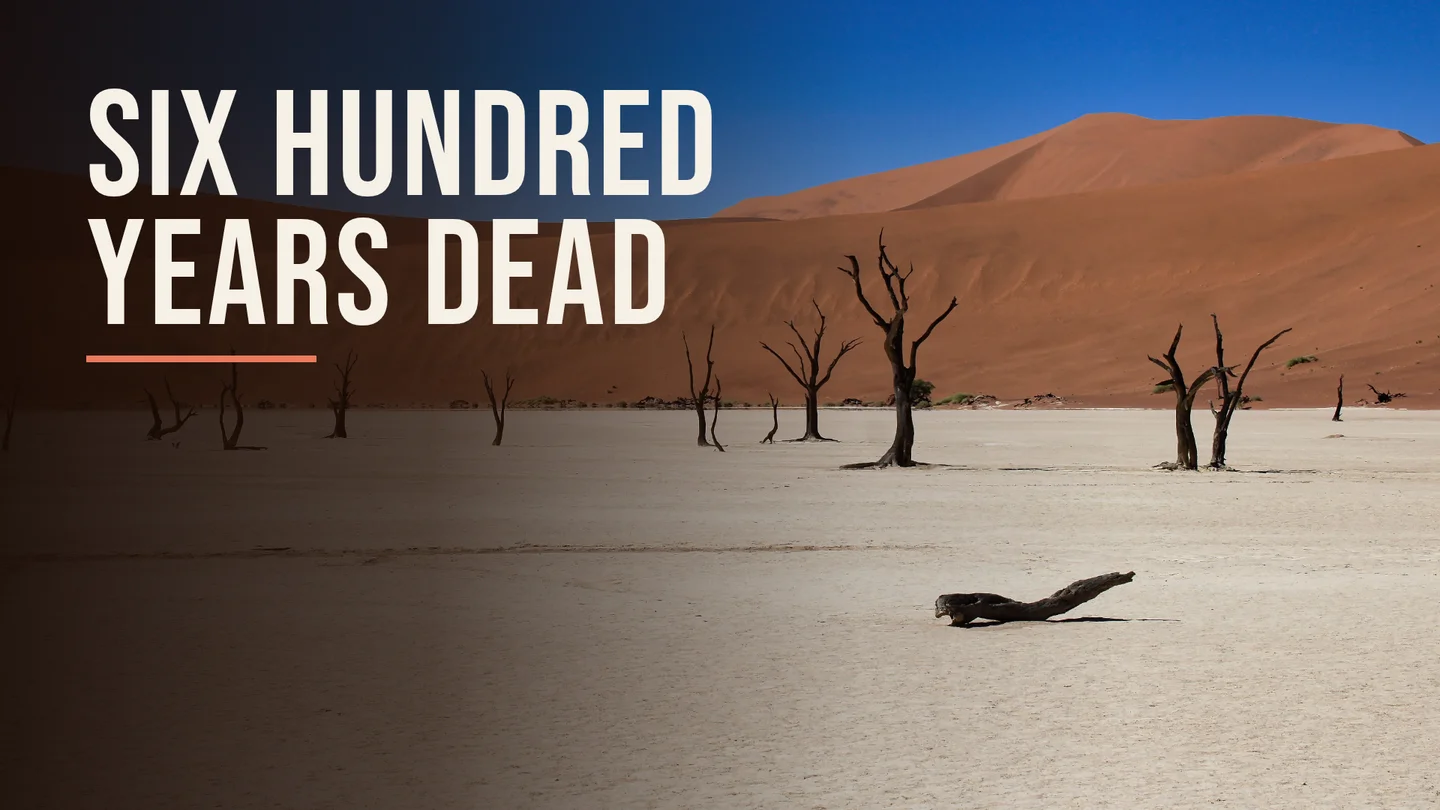
In Namibia, These Trees Have Stood Dead for 600 Years

The Namib is the oldest desert on Earth, and its sand travelled a long way to get here: rivers, the ocean current and the wind carried it thousands of kilometres out of the interior of southern Africa, and it is still moving. Most dune fields form from rock eroding where it stands. 1
Deadvlei is a white clay pan in Namibia's Namib-Naukluft Park, in a valley between the dunes beside the Sossusvlei salt pan. The Tsauchab river used to flood it, and camel thorn trees grew on the water. Then the climate changed, the dunes moved across and cut the river off, and the trees died. They are believed to have died 600 to 700 years ago, which puts their deaths around 1340 to 1430. The air there is so dry that the wood has lasted all this time, and the sun has scorched the trunks black. 23
References
- 1Namib Sand Sea — UNESCO World Heritage Centre
whc.unesco.org
- 2Deadvlei — Wikipedia
en.wikipedia.org
- 3Deadvlei, Namibia — Discover Wildlife
discoverwildlife.com
- 4Pexels: trees and dunes, Namibia
pexels.com
- 5Pexels: Sossusvlei desert landscape
pexels.com
- 6Pexels: Deadvlei in the Namib desert
pexels.com
- 7Pexels: bare tree in the desert
pexels.com
- 8Pexels: dead trees on the desert
pexels.com
- 9Pexels: Dead Vlei desert landscape
pexels.com

This story was produced automatically by a channel. One sentence is all it takes for Neodrop to keep producing for you.