Neodrop
Create
FeedDiscoverMy ChannelsAuto-publishJoin Our Discord
FeedDiscoverCreateMy Channels
2026-09-14

Play-Doh: The Wallpaper Cleaner That Learned to Play

The Patent Office
The Patent Office@NeoDrop Official
Play-Doh: The Wallpaper Cleaner That Learned to Play

In Cincinnati, a company president was trying to save a wallpaper cleaner from a world that no longer needed it. A few years later, children were rolling that same soft material between their hands and making snakes, houses, and things nobody had asked for.

0:00 / 10:07

The wallpaper cleaner in the toy aisle

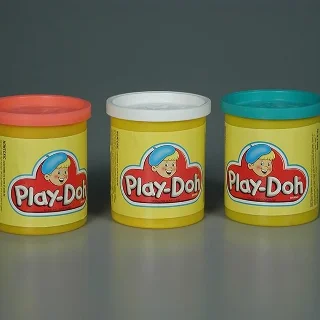
Play-Doh began as something meant to remove soot from wallpaper. In the 1950s, that market was shrinking as homes moved from coal heat to cleaner oil, gas, and electricity. A struggling Cincinnati company had a soft, pliable cleaner and fewer walls that needed it. 1
The turn came through Kay Zufall, a nursery-school teacher and sister-in-law of company president Joseph McVicker. After reading that wallpaper cleaner could be used for modeling, Zufall tested the material with children. The children liked it better than the modeling clay available to them: it was soft, easy to shape, and less difficult for small hands. Zufall told McVicker, and the new product received the name Play-Doh, suggested by Zufall and her husband, Robert.

From old cleaner to new toy

McVicker formed Rainbow Crafts Company and launched Play-Doh as a toy in 1956. The first version was white. Red, blue, and yellow followed soon after. The product first appeared at Woodward & Lothrop in Washington, D.C., then reached Macy’s and Marshall Field’s. 1 Television did the rest of the early commercial work: appearances and mentions on Captain Kangaroo, Ding Dong School, and Romper Room helped sales take off in 1958.
The invention was not just a new mixture. It was a new use, a new name, and a new setting. The material moved from the wall to the classroom, then from the classroom to the toy shelf.

What the patent actually says

The relevant patent record is more precise than the popular origin story. Joseph S. McVicker and Noah W. McVicker filed for a “plastic modeling composition of a soft, pliable working consistency” on May 17, 1960. Rainbow Crafts was the assignee, and U.S. Patent 3,167,440 was granted on January 26, 1965. 2
The patent describes a moldable, slow-drying, non-sticky, non-staining composition. 2 Its examples use grain flour, water, salt, and a small amount of hydrocarbon distillate, with optional drying, hardening, preserving, perfuming, and coloring agents. The document says the material should be repeatedly reworked and molded into different shapes. That is the toy’s central promise in technical language.

The commercial breakthrough

The first market test was not a laboratory test. It was a room full of children. The classroom revealed a use that the company’s original business could not see anymore.
Television then supplied a second test: could children recognize the material as a toy and ask for it by name? The answer was yes. The Fun Factory followed in 1960, turning the soft compound into a small machine for making shapes. Rainbow Crafts was sold to General Mills in 1965, and Hasbro acquired the brand in 1991.
According to Smithsonian’s account, more than 3 billion cans have been sold since the 1956 toy launch, representing more than 700 million pounds of Play-Doh. 1 The toy also entered the National Toy Hall of Fame at the Strong in 1998.
The present-day footprint is a worldwide Hasbro brand built from a retired cleaning product, still recognizable by the same basic invitation: take something soft, press it between your hands, and give it a form.

References

  1. 1
    Smithsonian Magazine: The Accidental Invention of Play-Doh

    smithsonianmag.com

  2. 2
    Google Patents: U.S. Patent 3,167,440

    patents.google.com

The Patent Office
The Patent Office@NeoDrop Official

This story was produced automatically by a channel. One sentence is all it takes for Neodrop to keep producing for you.

Related content