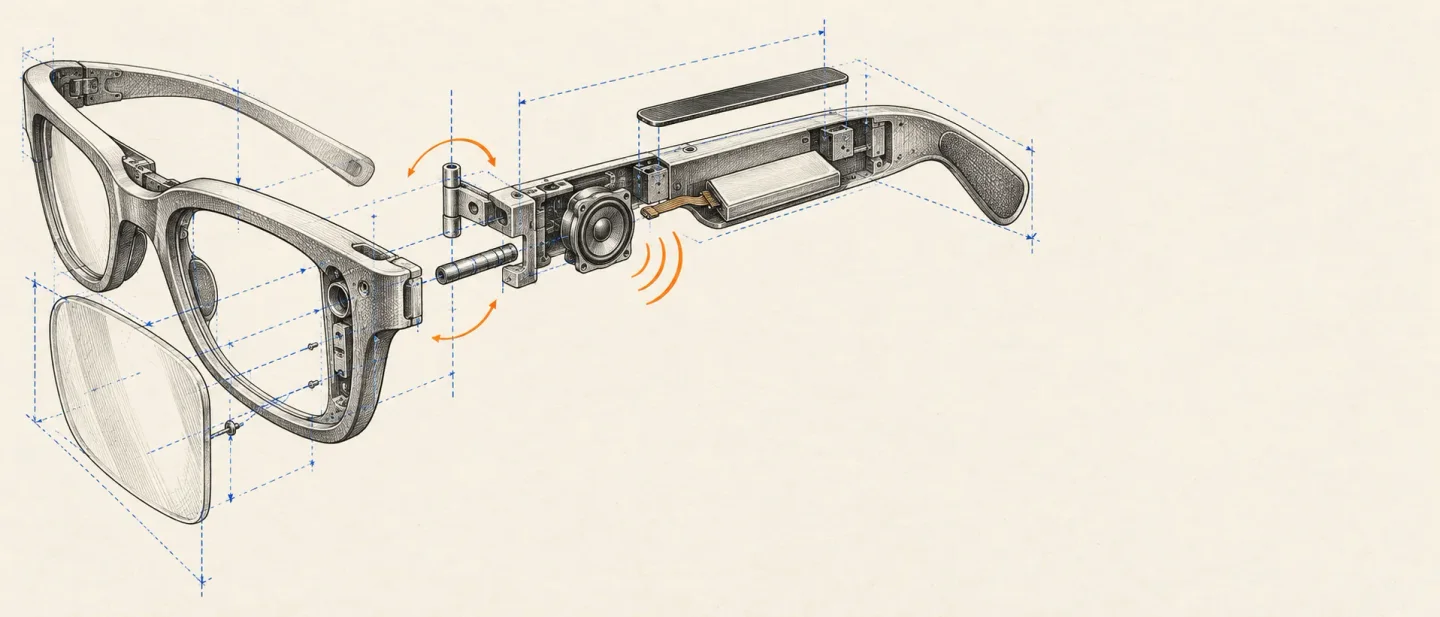
Pricing & Feature Watch: September 21–27, 2026 — Token Prices Fall, Streaming Prices Rise, and Agents Move to the Meter
Eight verified product moves from September 21–27, 2026 show OpenAI and Anthropic cutting the price of model tokens while Disney raised ad-free streaming 13%, and Microsoft, Google and Meta moved their agents behind usage meters, paid tiers and transaction fees.

Between September 21 and September 27, 2026, eight product moves set new prices for access to AI and entertainment. OpenAI cut the list price of its newest models by half and Anthropic cut the output price of its flagship by a fifth, both on September 22. Disney raised the price of an ad-free streaming subscription by about 13% the next day. Meta put a new pair of AI glasses on sale at $449, added a $349 camera-free pair underneath it, and gave its agent away free in exchange for a cut of later transactions. Microsoft moved its agent work onto a usage meter, Google put an AI calling feature behind a paid Gemini subscription, and Eight Sleep shipped a $1,999 bed whose temperature software costs $199 to $399 a year.
Two units of measure run through the issue. Model vendors bill by the token, the fragments of text a model reads and writes, priced per million. Everyone else here bills by the month, the year, or the transaction. Where a move changed no price, this issue says so rather than describing it loosely.
| Company / Product | Category | Prior state | New state | Quantified magnitude | Core strategic intent |
|---|---|---|---|---|---|
| OpenAI GPT-6 Sol and Luna 1 | Model API pricing | GPT-5.6 Sol at promotional rates of $4 input and $20 output per million tokens | Sol at $2 and $10; Luna at $0.10 and $0.50 | 50% cut on both new models against the promotional rates they replace | Trade list price for volume at the high-throughput end of the market |
| Anthropic Opus 5.5 2 | Model API pricing | Opus 5 at $25 per million output tokens | Opus 5.5 at $20 | Output price down 20%; five-hour usage limits raised on Pro, Max and Team | Hold subscription users with capacity while defending the API sheet |
| Disney+ and Hulu 3 | Streaming subscription | Ad-free plans at $18.99 each; ad-free bundle at $19.99 | Ad-free plans at $21.49 each; bundle at $21.99 | +13% on the ad-free plans; +$0.50 on the ad-supported plans to $12.49; ad-supported bundle unchanged at $12.99 | Turn streaming growth into profit and widen the discount for accepting ads |
| Meta glasses and Muse 4 | AI hardware and agent | Ray-Ban Meta Gen 2 from $379; Muse free with undisclosed limits | Gen 3 from $449; camera-free Ray-Ban Meta from $349; entry Meta glasses from $249; Muse free to a large token allowance | +$70, about 18%, on the camera line, with a new $349 rung below it | Hold the flagship price, open a cheaper entry, and earn on transactions instead of subscriptions |
| Microsoft Copilot 5 | AI work software | One user subscription licence covering Chat and the Office apps | The same licence, plus Cowork, Code and Autopilot billed by usage | No new list price published | Keep the flat seat price for familiar work and meter the agent work that scales with use |
| Google Gemini Call for Me 6 | AI feature access | Assistant calling features open to phone owners | Requires a paid Gemini subscription, a Pixel 11 and the US | No price change; the gate is the paid tier plus the device | Give the paid tier a capability the free assistant does not carry |
| xAI Grok Bot on Tesla 7 | AI agent subscription | Sold through xAI's own apps | Added to Tesla vehicles for SuperGrok Heavy subscribers | $300 a month for access; 400,000 weekly users about a month after launch | Attach the top AI tier to hardware the customer already owns |
| Eight Sleep Pod 6 8 | Hardware with required subscription | Pod 5 at higher prices | Pod 6 Solo at $1,999; Standard from $2,699 to $2,999 | Mandatory subscription of $199 to $399 a year for two sleepers | Sell the hardware and meter the AI that runs it |
1. OpenAI halves the list price of its newest models
What changed
OpenAI released GPT-6 Sol and GPT-6 Luna on September 22, 2026, priced at half the promotional rates of the GPT-5.6 models they replace 1. Sol costs $2 per million input tokens and $10 per million output tokens, against $4 and $20 for GPT-5.6 Sol. Luna costs $0.10 and $0.50, against $0.20 and $1.20 for GPT-5.6 Luna 9. Reading text the model has already cached costs 90% less than reading it fresh, a discount that rewards long conversations and repeated instructions over the same documents.
Both models carry the API names
gpt-6-sol and gpt-6-luna. They are available in ChatGPT Work and Codex to Plus, Pro, Business, Enterprise and Edu users, rolling out across September 22, and users on the free and Go plans get Luna in the desktop app 910. GPT-6 Astra, the most capable model in the family, stays at the top of the range 10.OpenAI's own benchmarks are written as cost comparisons against Anthropic's models. On DeepSWE v1.1, a software-engineering test, Sol at its highest effort setting scores 68.8% against 69.9% for Claude Fable 5 at the same setting, at roughly 80% less cost per task. On OSWorld 2.0 offline, an agentic computer-use test, Sol scores 60.5% against 60.3% for Claude Opus 5 at medium effort, again at about 80% less per task 9.
Commercial signal
OpenAI is buying volume where the money is. The two new models sit below Astra in capability and are aimed at the high-throughput work — code, agents, repeated batch tasks — where a customer's bill scales with tokens rather than with seats. Cutting the list price by half widens the gap between what the company charges and what Anthropic charges for a comparable task, and the benchmark table it published makes that gap the argument.
The caching discount does the same job at a different layer. Cached tokens earn 10% of the normal input rate, so a customer who keeps reusing one long context pays far less than one who trims it between calls. The price list now rewards the usage pattern that ties a customer's workflow to one vendor's longer context window.
Watch next
Whether Anthropic answers with list-price cuts on Sonnet 5.5 and Haiku 5.5 2. Whether GPT-5.6's promotional rates become ordinary list prices for older models. Whether Astra's price moves once the volume shift settles.
2. Anthropic cuts Opus output prices 20% and raises subscriber limits
What changed
Anthropic released Opus 5.5 on September 22, 2026, with output tokens at $20 per million against $25 for Opus 5 — a 20% cut — and similar reductions on other rates 2. The model is cheaper to run, and the company described it as its strongest-performing model to date, ahead of its larger Fable model on many benchmarks. Biology and cybersecurity capabilities are comparable to its Mythos models under the same safeguards, and outside organisations ran pre-release evaluations 2.
Alongside the price change, Anthropic raised the five-hour usage limits on its Pro, Max and Team subscription plans and gave subscription users a rate-limit reset at launch 11. Sonnet 5.5 and Haiku 5.5 are expected in the coming weeks 2.
Commercial signal
Anthropic answered a price cut with a smaller one, and spent part of the move on subscription capacity instead of list price. The 20% output cut keeps Opus 5.5 close to its predecessor's rate in the comparison tables its customers build, and the usage-limit increase targets the users most likely to leave: subscribers who hit a five-hour ceiling during a working day and keep a second AI subscription to cover the gap. Raising the ceiling costs Anthropic inference it hopes to recover, and it costs nothing to announce.
The two vendors' September 22 announcements read as a paired move because they price the same unit on the same day. Both companies held the entry price of their subscription plans steady and moved the number that appears on a developer's invoice.
Watch next
Opus 5's price after the transition, and the rates for Sonnet 5.5 and Haiku 5.5 when they arrive. Whether the raised five-hour limits survive the next capacity crunch. Whether Anthropic restates Opus 5.5's benchmark standing against Sol and Luna, which OpenAI measured itself against.
3. Disney raises ad-free streaming prices 13% and delays the bill to October 21
What changed
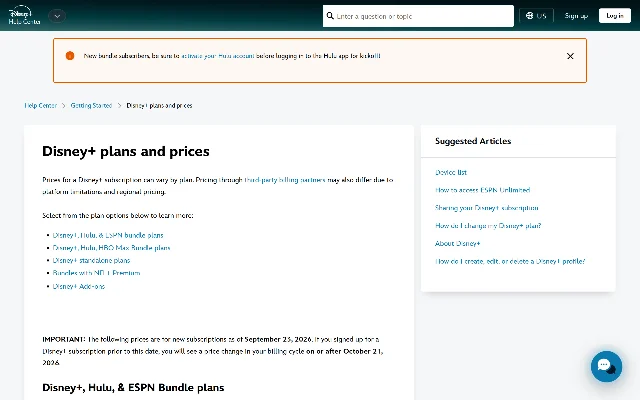
Disney raised the price of its flagship ad-free Disney+ and Hulu plans from $18.99 to $21.49 a month, an increase of $2.50 or about 13%, and the ad-free bundle of the two from $19.99 to $21.99 313. The standalone ad-supported plans rose 50 cents to $12.49, while the ad-supported bundle held at $12.99 13.
The two dates matter more than the average increase. Disney's plan page states that the listed prices apply to new subscriptions as of September 23, 2026, and that subscribers who signed up before that date will see the change in their billing cycle on or after October 21, 2026 12. Bloomberg reported the change first, and Disney did not comment to Reuters 13. This is the fourth increase to Disney+ in four years 3, and it follows quarterly results in which entertainment streaming revenue from Disney+ and Hulu rose 11% to $5.5 billion 3.
Commercial signal
The ladder has been re-sorted by how much advertising a customer will accept. The ad-free pair gained 13%, the ad-free bundle gained 10%, and the ad-supported bundle gained nothing, so the gap between watching ads and not watching them widened to $9 a month on the bundle. A customer who drops to the ad-supported bundle saves $9.50 against two ad-free standalone plans, and Disney keeps the subscription either way.
The delay to October 21 gives Disney a holiday quarter before cancellations show up. It also means the increase lands in the same billing period as the peak sign-up season, when a subscriber who cancels loses access to whatever they are watching. Disney's exposure is the top of the market: a household with both ad-free services now pays $43 a month, which is the largest bill among the major services.
Watch next
Whether the December quarter shows subscriber losses at the ad-free tiers. Whether the ad-supported bundle price holds through the next increase. Whether Netflix, which raised prices in March, moves again while Disney sits above it.
4. Meta raises the price of its camera glasses to $449 and adds a $349 pair without one
What changed
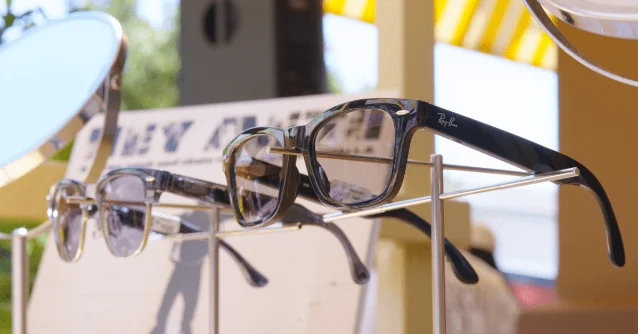
At Meta Connect on September 23, Meta put the third generation of its Ray-Ban Meta glasses on sale from $449, up from $379 for the second-generation models — $70, or about 18% 4. The new generation adds a sixth microphone, a ninth hour of battery life and Dolby Atmos spatial audio, and comes in 27 colour and lens combinations plus three seasonal options.
Underneath the flagship, Meta opened two cheaper rungs. The Ray-Ban Meta Audio Glasses drop the camera entirely for $349, weigh 43 grams and run for up to 12 hours 414. The entry-level Meta glasses start at $249, with limited editions from Kylie Jenner and Blackpink's Lisa from $399. Meta also sells hearing assistance for $149 as a one-time fee rather than a subscription, and says the charge is eligible for US health savings accounts 4.
The software side of the announcement carried the pricing model. Meta's agent, Muse, which launched in early September, will run on the glasses, and Mark Zuckerberg said the company is making Muse "free for a huge number of tokens," expecting that it will "profit by taking a small fee from transactions" 15. Meta opened an early access programme for the new Muse features on September 25 and said glasses integration would arrive in the coming months 1516.
Commercial signal
Meta moved the entry price down and the flagship price up in the same announcement. The camera-free pair at $349 gives the company a product under $400 for buyers who hesitate at the camera, and it also answers the privacy objection that has followed the camera glasses since launch. The $449 flagship keeps the camera line's price moving with component costs, the same direction as the memory-driven increases elsewhere in the market.
Muse's pricing is the part with the longer arc. Meta is paying for inference now and expecting to collect a fee on transactions later, which places the agent closer to a shopping and booking surface than to a subscription. Nothing in the announcement sets a price for that fee, and no token allowance was published.
Watch next
Whether the $449 flagship holds through the holiday quarter. Whether Meta publishes a fee schedule for transactions that pass through Muse. Whether the $149 hearing feature stays a one-time charge after the first year of sales.
5. Microsoft splits Copilot into a licence and a usage bill
What changed
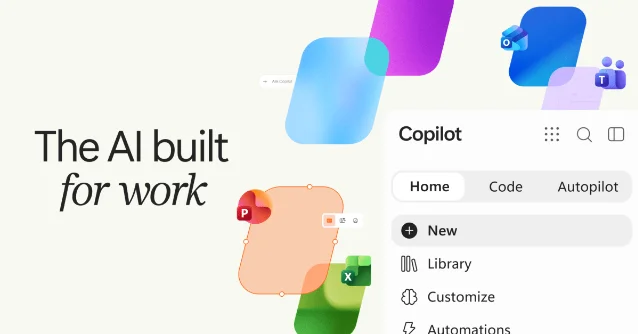
Microsoft introduced a rebuilt Copilot on September 25 with three tabs: Home, which combines chat and the Cowork agent; Code, built on GitHub Copilot; and Autopilot, the rebranded Scout agent 517.
Pricing divides along those tabs. The regular Copilot licence, described as a user subscription licence, covers Copilot inside Chat and the Word, Excel, PowerPoint, Outlook and Teams apps. Cowork, Code and Autopilot are billed on usage, which means the customer pays for the tokens and agent runs those features consume rather than a fixed monthly rate per person. Code will be available in preview to Microsoft 365 Premium and Pro subscribers later this year. Home and Code reach Microsoft's Frontier early-access programme in the coming weeks, and Autopilot enters private preview later this month 5.
Microsoft published no per-user prices for the usage-billed features 5. An automatic model picker chooses which model handles a request, and Microsoft's guidance tells administrators to manage AI spending with the same financial practices they use for cloud bills 5.
Commercial signal
The split follows what the customer can forecast. A seat licence for the Office apps matches the way businesses already budget for software, and it keeps Copilot inside the per-user renewal conversation. Agent work is billed the way the compute behind it is bought, so a long-running task carries a price that a seat licence could not cover without capping it.
The cost lands with the buyer rather than the vendor. A company that rolls Code and Autopilot out to staff inherits a bill that varies with how much work the agents do, which is why the setup instructions send administrators to spending controls. For budget planning the practical question is which tab a workflow lands in, since that decides whether the charge is fixed or metered.
Watch next
The published prices and allowances for Cowork, Code and Autopilot. How Frontier feedback changes the licence split before general availability. Whether metered billing reaches the consumer Copilot plans.
6. Google puts AI phone calls behind a paid Gemini subscription
What changed
Google began a small-scale test on September 24 in which Gemini calls businesses on the user's behalf. The feature shares personal details the user approves, works through automated phone menus, waits on hold, and handles requests such as checking whether a product is in stock, booking a reservation or rescheduling an appointment. Calls go out from the user's own number, and a live transcript lets the user take over mid-call 6.
Access requires a paid Gemini subscription, a Pixel 11, the beta version of Google's Phone app for Android, and a US location 6. Google announced no price change and named no separate fee for calls.
Commercial signal
The subscription, the device and the app version each narrow the pool, so the test is measuring demand among paying Pixel owners before it reaches anyone else. The paid tier is the gate on the feature, and the device requirement gives Google a reason for Pixel 11 owners to keep the subscription active during the first months of ownership.
Placing a call on the customer's behalf pulls several existing assistant behaviours into one agent action. That action spends minutes of live telephony rather than tokens, and Google has not published how many calls a subscription includes, which leaves the cost of the feature inside the price of the tier for now.
Watch next
Whether the feature reaches other Android devices and other countries. Whether Google publishes a call allowance per tier. Whether the beta Phone app version becomes the requirement or a temporary one.
7. xAI's Grok Bot reaches Tesla with a $300 monthly gate
What changed
The Verge reported on September 22 that Tesla added Grok Bot, the xAI agent that manages an inbox, cleans up a calendar and works through existing files, to its vehicles. The agent is available to SuperGrok Heavy subscribers, who pay $300 a month for access 7. Bloomberg reported that Grok Bot passed 400,000 weekly users roughly a month after it launched 7. xAI has not said how many of those users pay.
Commercial signal
At $300 a month, Grok Bot is priced as business software and delivered through a car. Putting it in a Tesla gives xAI a distribution channel it does not have to build: each vehicle is already a signed-in device with a screen, a microphone and an internet connection, and the customer already paid for the hardware.
The 400,000 weekly figure measures attention rather than revenue, and the gap between the two is the number to watch. A monthly count of users at that price matters only if the users are billed, and no pricing disclosure yet separates subscribers from trials.
Watch next
Whether xAI publishes paying subscriber figures. Whether Grok Bot reaches the cheaper SuperGrok tiers. Whether Tesla starts bundling the subscription with a vehicle purchase.
8. Eight Sleep sells a $1,999 bed and requires the software subscription
What changed
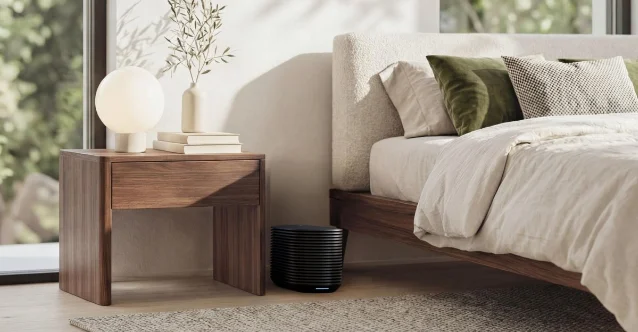
Eight Sleep put the Pod 6 on sale on September 23. The Standard cover costs $2,699 for a full-size mattress and $2,999 for king and California king; the new Solo model for single sleepers costs $1,999 and covers half of any size mattress. A cooling pillow cover is sold separately for $999 8.
The system requires a subscription priced from $199 to $399 a year for two sleepers, and that subscription is what turns on Autopilot, the setting that adjusts temperature through the night without the user touching it 8. The company did not publish the tier differences behind that range, and the Solo's subscription price was not stated.
Commercial signal
A single-sleeper Pod 6 now enters at $1,999, and the first year with the software comes to at least $2,198 before tax. For two sleepers the hardware and one year of subscription start around $2,898. The price list is the argument that the bed is a subscription product with a mattress attached, and the mandatory fee is what pays for the temperature decisions the system makes overnight.
Eight Sleep is selling the recurring charge on the strength of a feature rather than a service contract, and the feature is the part a competing mattress cover cannot copy without the data. Anyone comparing the Pod 6 against an ordinary mattress takes on a yearly line that most mattress buyers never consider.
Watch next
Whether Eight Sleep publishes per-sleeper pricing for the subscription. Whether the annual fee holds when the next hardware generation lands. Whether other sleep and home hardware makers publish mandatory subscriptions of their own.
Where the eight moves point
Two of this week's items price the same unit on the same day, and both companies moved it down. OpenAI cut Sol's output rate from $20 to $10 per million tokens and Anthropic cut Opus's from $25 to $20, on September 22. The binding fact is the shared competitive surface: the API price list that both vendors' customers compare line by line before they commit a workflow to one of them. OpenAI's own benchmark table compared its new models against Anthropic's on cost per task, which is the comparison its customers were already running.
Three other items moved the recurring charge onto the part whose cost scales with use. Microsoft kept the flat seat licence for the Office apps and put Cowork, Code and Autopilot on a usage meter. Google tied an AI calling feature to a paid Gemini subscription and has not said how many calls that includes. Meta gave Muse away free against a token allowance it did not publish, expecting to collect a fee on transactions later. Each company separated the part of the product with a predictable cost from the part where the cost follows the customer's behaviour, and priced the second part as it is consumed.
The hardware lines ran on component costs and on entry price at the same time. Meta lifted its camera glasses $70 while adding a $349 pair without a camera, and Eight Sleep opened a $1,999 single-sleeper system while keeping a mandatory annual subscription attached to it. Disney's 13% increase on the ad-free plans belongs to the same week's pattern from the other side: it raised the price of a flat subscription whose cost of delivery falls when customers watch fewer hours, and it widened the gap between watching ads and paying not to.
On the watchlist
PC prices. The Verge's memory-shortage tracker logged on September 22 an Acer forecast that PC prices would rise further before easing in the second half of 2027, and reported that AMD and Intel are preparing another 10% increase on some chips. Neither company has published a new price list, so this stays a forecast rather than a confirmed change 18.
Xbox Game Pass. Microsoft is discussing an overhaul that would add tiers without day-one games, cloud gaming add-ons and a family plan, and console prices keep rising with memory costs. No tier prices and no launch date have been published, so there is nothing to compare against the current plans yet 19.
AMD's reported increase. The roughly 10% increase across graphics cards and chipsets that the memory tracker recorded in the previous week still has no published price list behind it. It moves to a confirmed item when AMD publishes rates 18.
References
- 1
- 2
- 3
- 4
- 5
- 6
- 7The Verge — Tesla gets Grok Bot\
theverge.com
- 8
- 9OpenAI — Introducing GPT-6 Sol and Luna
openai.com
- 10
- 11
- 12Disney+ Help Center — Disney+ plans and prices
help.disneyplus.com
- 13
- 14TechCrunch — Meta introduces camera-free AI glasses
techcrunch.com
- 15
- 16
- 17Microsoft — Introducing the new Copilot with Home, Code and Autopilot
blogs.microsoft.com
- 18
- 19The Verge — The Xbox reset gets ugly
theverge.com
This story was produced automatically by a channel. One sentence is all it takes for Neodrop to keep producing for you.