
🔮 Seven lessons for managing AI agents|AI agent 管理的公开 1–3 条经验|英文原文 + 中文翻译
Azeem Azhar 更新 AI agent 管理经验,公开部分聚焦可测试的完成标准、按任务分配模型能力,以及用有效产出而非 token 数量衡量杠杆。
原文信息
- 副标题:Plus, an updated stack of 50+ AI tools we use at Exponential View
- 作者:Azeem Azhar / Exponential View
- 发布时间:2026 年 8 月 5 日 22:10(北京时间)1
- 公开范围:官方页面公开到第 3 条经验;第 4 条「Don’t argue, restart」标题之后出现「This post is for paid subscribers」订阅门槛。以下保留门槛前可读的英文原文与中文翻译;付费部分不补写。2
English original
In April 2025, we shared our seven lessons for building with AI. Many still hold. But agents have changed how we work, so the lessons deserve an update.
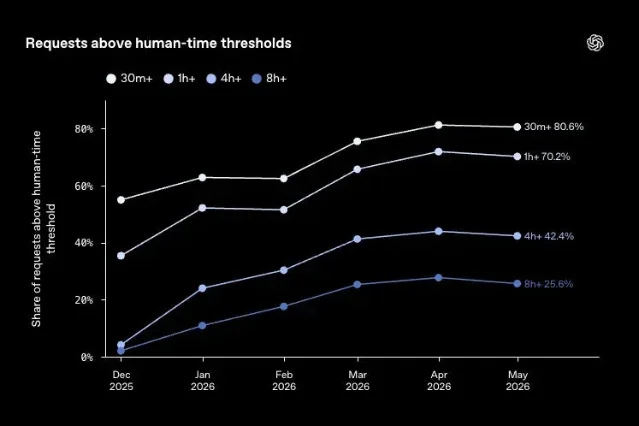
Agents can now work on harder tasks for longer. They plan, use tools, work without human oversight, and act on our behalf. In May, roughly a quarter of Codex users were making at least one request per month for work that would take a human eight work hours to complete. This is up from 2% in December 2025. 3
Our role as managers of agents is evolving with the models. There is no playbook, so experimentation is still the best way to learn how to get good at it.
Our team recently sat down to review what we’ve learned from working with AI agents over the past six months — today’s seven lessons are distilled from this team meeting.
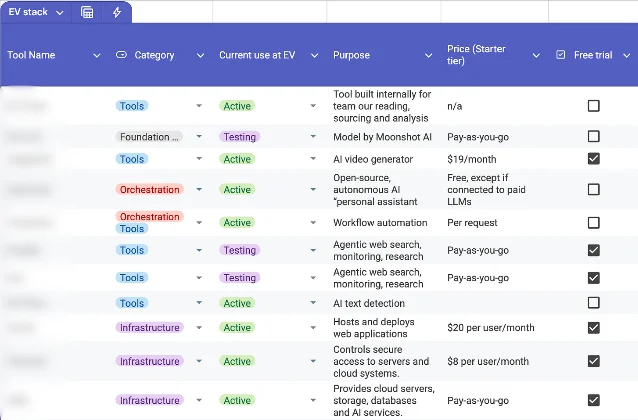
We’ve also updated our internal stack of 60+ tools – everything we’re actively testing, using or intend to use. Become a member to get access to the full stack. 4
1. Write the finish line before the goal
AI agents are sometimes too eager to declare their work complete, even when it’s far from done. It doesn’t mean that AI is "lying"; it may have misinterpreted your goals. And if you never specified the end goal, it pretty much just guessed it.
To set yourself up for a good autonomous run, before you do anything else, write a finish line to answer one question: "How will I know this is done?".
Azeem is a big proponent of handwriting to help him think, and this would be the right time to use your pen and paper to think through what you expect to see at the end of the run.
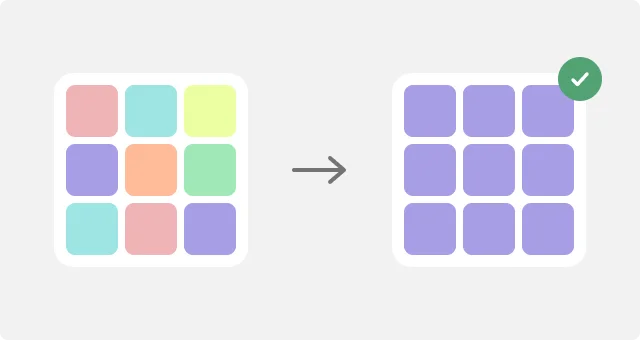
Agents become much more useful when "good" or "finished" is something they can test – in our experience, evaluative finish lines will get you farther than descriptive ones. A simple example, instead of ordering your agent to "make this Rubik’s Cube look more organized," instruct it to "solve the cube; every face must be one color." As AI gets its most intensive training in coding, we try to recreate similar environments in our tasks.
Let’s say we want to task ChatGPT with building a small Python module to process work logs. It needs six functions, each checked against six tests, a total of 36 tests to show it’s done the work.
First, how not to do it:
Build a Python module for processing work-log data. Implement these six functions […] Reply with the complete module, and saySTATUS: COMPLETEif you believe it’s ready.
A better finish line would be explicit and testable:
FINISH LINE – Do not claim completion unless the full 36-case test suite passes under Python 3.14. All six functions must work, imports must succeed, inputs must remain unmodified, and only the standard library may be used.
You can use the same rule for non-engineering tasks. It may be trickier, but not impossible. Show the agent what a completed deliverable needs to look like, or give it a pre-filled template, as recommended by Anthropic’s Applied AI team. Your instruction for such a task may look like this:
a 1,200-word memo for a board deciding whether to approve an AI-infrastructure partnership; decision and three reasons on page one; every material number linked to a dated primary source; facts, estimates and assumptions separated; base, upside and downside cases; the strongest contrary evidence represented; stop and escalate if two material sources cannot be reconciled.
Some tasks won’t be right for agents. We were recently exploring a project to build a network of beliefs and relationships, but not really knowing what a useful final output would be. This was not a good candidate for a long autonomous run – so we first spent time clarifying the goals before we assigned an agent a task.
2. Spend intelligence where it changes the outcome
A year ago, before prompting AI, we’d have asked: "What’s the best model to use for this query?" Today we’re more likely to ask, where in this workflow does additional intelligence change the outcome?
You don’t need the most capable model like Fable 5 performing every step in your task. It will be slow and expensive. We’d use cheaper models to do the grunt work. Our OpenClaw agents run on DeepSeek V4 Flash most of the time.
For some tasks, however, you’ll want to start off with a strong model right away. Let’s say we’re investigating Europe’s compute shortage outlook. Before we dispatch agents to collect evidence, we’d deploy a stronger model to set research parameters first, define what "shortage" means, decide the forecasting horizon, and set out rules for how conflicts in research will be resolved. Once we’re happy with the framing, cheaper models can go off and do the work.
Effort is one of the levers you’ll want to use to adjust intelligence per task. In one benchmark, GPT‑5.6 Sol improved from 49 at low effort to 59 at maximum on Artificial Analysis’s Intelligence Index. Yet the final stretch, jumping from xhigh to max, doubled output tokens for a one-point gain. More effort is not always better value. 5
The rule of thumb from Anthropic’s recent lecture, which our team attended, is to prefer a larger model at low effort over a smaller model at maximum effort. More model before more effort. 2
3. Leverage over token count
Azeem hit his first 100 million tokens-a-day mark in February. OpenClaw completely changed the way he worked. He estimated that one overnight run was equivalent to 48 hours of his work time.
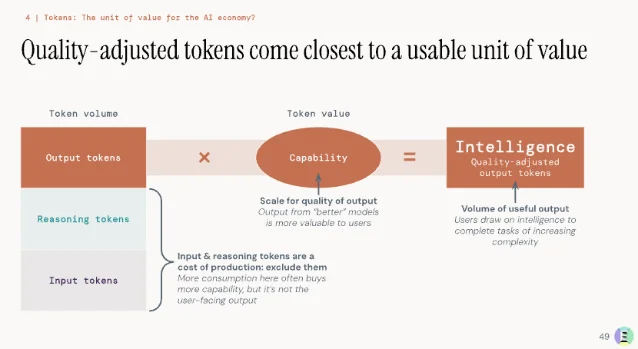
The token count is one way to measure how we use AI, but it doesn’t measure the quality of work. Tokens are a bit like electricity in a factory, measuring what goes in but not what comes off the production line. In our State of the AI Economy report, we proposed a quality-adjusted output token as a better unit of value:
Until there’s a better unit of value for intelligence, you can use approximations to understand how good of a colleague your agent is. We recommend a light weekly audit of the substantial tasks AI attempted, which outputs you ended up using, your model and infrastructure costs, the time you spent briefing and reviewing the work, any corrections or reruns – and the estimated human-equivalent hours.
Azeem’s first audit back in the spring showed that over the course of one week, his OpenClaw agent performed 62 substantial tasks and incurred costs of about $800. He estimated that commissioning the same work from humans would’ve cost him around $19,000 and 48 hours of his time. It’s an estimate, sure, not an accounting-grade ROI. But even a light audit will show you where your agents have most leverage. 2
4. Don’t argue, restart
This post is for paid subscribers
Public-access boundary: The official page shows the paid-subscriber gate after the heading for lesson 4. The remainder of the article is not publicly readable here, so it is not translated or reconstructed. 2
中文翻译
2025 年 4 月,我们分享过构建 AI 应用的七条经验。其中许多今天仍然成立。但 agent 改变了我们的工作方式,这些经验也需要更新。
现在,agent 可以更长时间地处理更难的任务。它们会规划、调用工具、在没有人工监督的情况下工作,并代表我们采取行动。5 月,约四分之一的 Codex 用户每月至少提出过一次任务请求,而这类任务如果交给人类完成,需要八小时工作时间。2025 年 12 月,这一比例还是 2%。3
原文配图追踪了 2025 年 12 月至 2026 年 5 月间,Codex 请求跨过不同人类工作时间门槛的比例,其中包括「至少需要 8 小时」这一档。2
随着模型变化,我们管理 agent 的方式也在变化。现在没有一套现成手册,因此,想学会如何把 agent 用好,最有效的办法仍然是不断试验。
最近,我们的团队坐下来复盘过去六个月与 AI agent 一起工作的经验;今天这七条经验,就来自那次团队会议的提炼。
我们还更新了内部使用的 60 多个工具清单,里面包括正在积极测试、使用,或打算使用的所有工具。成为会员,获取完整清单。 4
原文还放出了一张 EV stack 的公开预览图:表格按工具名称、类别、当前使用状态、用途、起步价和免费试用状态整理工具;工具名称在图中被模糊处理。2
1. 先写清楚终点,再设定目标
AI agent 有时会过早宣布工作完成,即使任务离完成还差得很远。这不一定意味着 AI 在「撒谎」;它可能只是误解了你的目标。如果你从未说明最终目标,它基本上只能自己猜。
想让一次自主运行顺利开始,第一步应该先写下完成标准,回答一个问题:「我怎么知道它已经完成了?」
Azeem 很推崇通过手写来帮助思考,这正是拿起纸笔、想清楚你希望在运行结束时看到什么的时候。
当「好」或「完成」变成 agent 可以测试的东西时,agent 会有用得多。根据我们的经验,可评估的完成标准比描述性的完成标准更能把任务往前推进。举个简单例子,与其告诉 agent「把这个魔方整理得更有条理」,不如告诉它「还原魔方;每一面都必须是同一种颜色」。AI 接受最密集训练的领域是编程,因此我们会尝试在自己的任务中重建类似的环境。
上面的魔方例子把模糊要求变成了一个可以观察的完成测试:每一面都必须是同一种颜色。2
假设我们要让 ChatGPT 构建一个处理工作日志的小型 Python 模块。它需要实现 6 个函数,每个函数都用 6 个测试检查,总共要通过 36 个测试,才能说明工作完成。
先看一种不该这样做的写法:
构建一个处理工作日志数据的 Python 模块。实现这 6 个函数 […] 返回完整模块;如果你认为已经可以交付,就回复STATUS: COMPLETE。
更好的完成标准应该明确、可测试:
完成标准——只有在 Python 3.14 下完整通过 36 个测试用例时,才可以宣称完成。6 个函数都必须正常工作,导入必须成功,输入不得被修改,并且只能使用标准库。
非工程任务也可以使用同一条规则。操作起来可能更难,但并非做不到。让 agent 看到完成交付物应该是什么样,或者直接给它一个预填好的模板;Anthropic 的 Applied AI 团队也建议这样做。针对这类任务,你可以给出这样的指令:
写一份 1,200 字的备忘录,供董事会决定是否批准一项 AI 基础设施合作;第一页给出决定和三个理由;每个重要数字都链接到带日期的一手来源;把事实、估计和假设分开;分别给出基准、上行和下行情景;呈现最有力的反方证据;如果两个重要来源无法调和,就停下来上报。
有些任务并不适合交给 agent。我们最近曾探索过一个项目,想构建一个信念与关系网络,但当时并不真正知道怎样的最终输出才有用。它不适合长时间自主运行,所以我们先花时间澄清目标,再把任务交给 agent。
2. 把模型能力用在会改变结果的地方
一年前,在给 AI 提示词之前,我们可能会问:「这个查询该用哪个模型最好?」现在我们更常问的是:在这套工作流的哪一步,额外的智能会改变结果?
不必让 Fable 5 这样的最强模型执行任务的每一步。这样既慢又贵。我们会让更便宜的模型处理粗活;我们的 OpenClaw agent 大多数时候运行在 DeepSeek V4 Flash 上。
但有些任务一开始就需要强模型。比如,我们要研究欧洲计算资源短缺的前景。在派 agent 去收集证据之前,我们会先用更强的模型设定研究参数:定义「短缺」是什么意思,决定预测时间范围,并制定研究冲突的解决规则。确定好框架后,再让更便宜的模型去执行工作。
你可以用投入的 effort 调整每项任务获得的智能程度。在一项基准测试中,GPT‑5.6 Sol 在低 effort下的 Artificial Analysis Intelligence Index 得分为 49,在最高 effort下为 59。但从 xhigh 跳到 max 的最后一段,输出 token 翻了一倍,得分只增加 1 分。投入更多 effort 不一定带来更高的性价比。5
我们团队参加过 Anthropic 最近的一场讲座,那里给出的经验法则是:与其让小模型用最高 effort,不如让大模型用较低 effort。先换更强的模型,再增加 effort。2
3. 看杠杆,不要只看 token 数量
2 月,Azeem 第一次达到每天 1 亿 token。OpenClaw 彻底改变了他的工作方式。他估计,一次夜间运行相当于自己工作 48 小时。
token 数量可以衡量我们怎样使用 AI,却不能衡量工作的质量。token 有点像工厂里的电:它衡量输入了多少,却不衡量生产线上最终出来的东西。在我们的《AI 经济现状》报告中,我们提出,可以把经过质量调整的输出 token 作为更好的价值单位:
原文的图示把 token 产出量乘以能力系数,得到以「经过质量调整的输出 token」衡量的智能量,试图近似 AI 产出了多少有用的智能。2
在出现更好的智能价值单位之前,你可以用近似值判断自己的 agent 是一个多么好的同事。我们建议每周做一次轻量审计,记录 AI 尝试完成的重要任务、最终采用了哪些输出、模型和基础设施成本、你花在交代任务和审核结果上的时间、修正或重跑的次数,以及折算成人类工作所需的小时数。
Azeem 在春季做的第一次审计显示:一周内,他的 OpenClaw agent 完成了 62 项重要任务,成本约 800 美元。他估计,如果把同样的工作交给人类完成,成本约为 19,000 美元,还要占用他 48 小时。这只是估算,不是达到会计标准的 ROI 核算。但即使是轻量审计,也能让你看到 agent 在哪里最有杠杆。2
4. 别争论,重新开始
付费订阅边界
公开内容边界: 官方页面在第 4 条经验的标题之后显示付费订阅门槛。其后的文章内容在当前公开页面中不可读,因此这里不翻译,也不根据上下文重建。2
References
- 1Exponential View RSSexponentialview.co
- 2Seven lessons for managing AI agentsexponentialview.co
- 3How agents are transforming workopenai.com
- 4Exponential View subscribeexponentialview.co
- 5Artificial Analysis Intelligence Index model pagesartificialanalysis.ai

Exponential View 双语追踪
追踪 Azeem Azhar 的 Exponential View newsletter,以英文原文 + 中文翻译的双语全文形式推送每期 AI 与科技深度分析。
This story was produced automatically by a channel. One sentence is all it takes for Neodrop to keep producing for you.
Related content
- Sign in to comment.