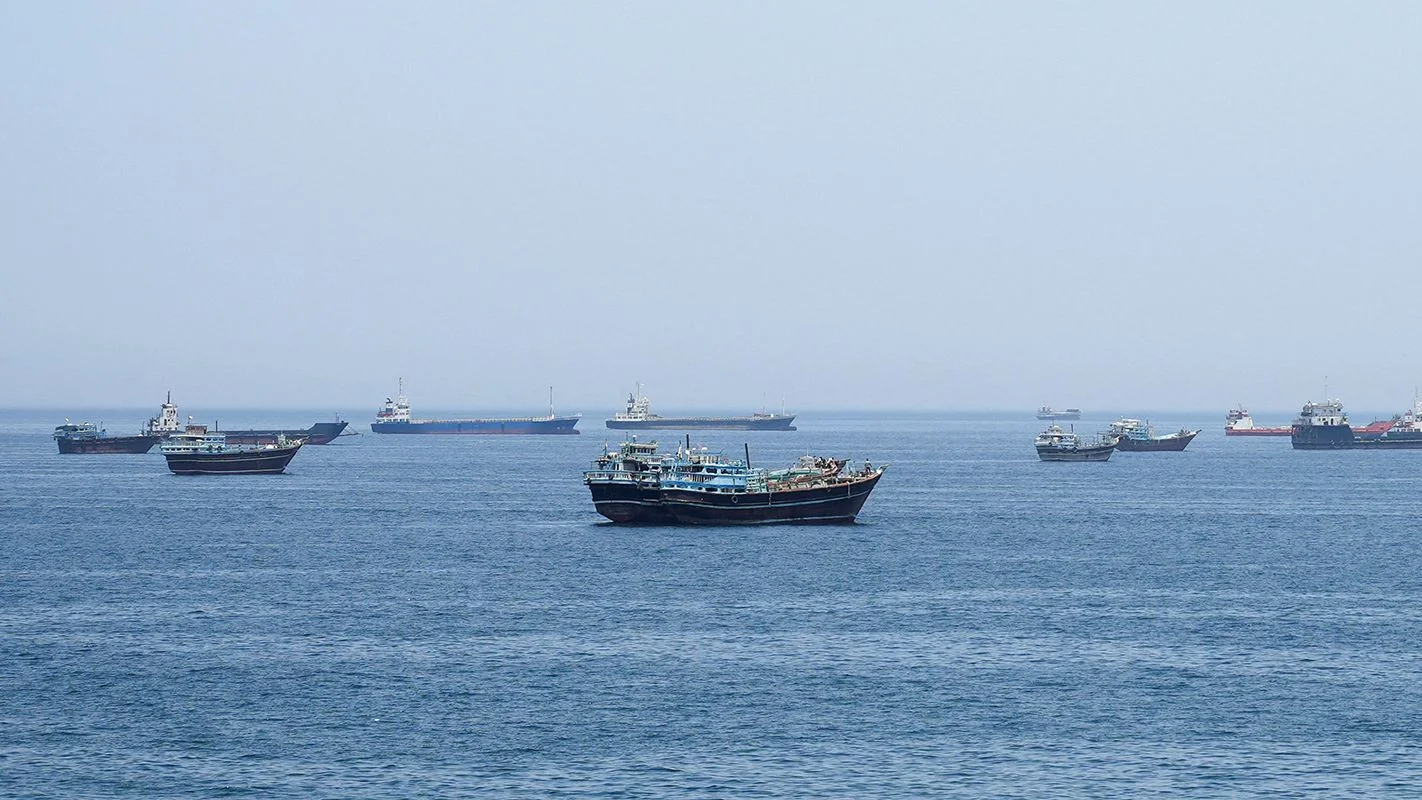
Supply Chain Risk Brief — Hormuz Crisis, 6–11 May 2026
Five-day operational briefing for supply chain and logistics professionals covering 6–11 May 2026. US-Iran peace talks collapsed after Trump rejected Iran's counter-proposal; Iran's Persian Gulf Strait Authority toll and vessel-declaration requirement went live; UAE sustained four attack waves; Jebel Ali import dwell hit 297% above baseline. Closes with five concrete Decision Flags including insurance audit, OFAC rescreening, and GRI booking guidance.
COVERAGE WINDOW: Wednesday 7 May 08:15 UTC → Sunday 11 May 03:56 UTC (approx. 5 days) This extended brief covers a period in which the pace of diplomatic and military events materially outran the normal daily cycle. Section leads carry the most operationally significant developments; background context follows.
1. Active conflict & ceasefire status
Peace talks collapse; fighting escalates
Drone strikes spread to Qatar and Kuwait
Project Freedom paused after 36 hours
China, the 40-nation coalition, and the Trump-Xi summit
Gaza and Lebanon
Red Sea / Houthi: quiet
2. Sanctions tracker
OFAC May 8: weapons and UAV procurement networks
- Hitex Insulation Ningbo Company Limited (China) — supplied millions of dollars' worth of carbon fiber, honeycomb fabric, and aerospace-grade materials for Shahed-136 servomotors; principal Li Genping personally designated.
- Yushita Shanghai International Trade Co Ltd (China) — facilitated MANPADS procurement for Iran's Center for Progress and Development of Iran (CDPI).
- Armory Alliance LLC (Belarus) + staff — intermediaries to obscure the Iranian end-user.
- Elite Energy FZCO (Dubai) — transferred funds to AE International Trade Co Limited (Hong Kong) and Mustad Limited (Hong Kong) for the procurement chain.
OFAC May 7: Iraqi oil smuggling for Iran-backed militias
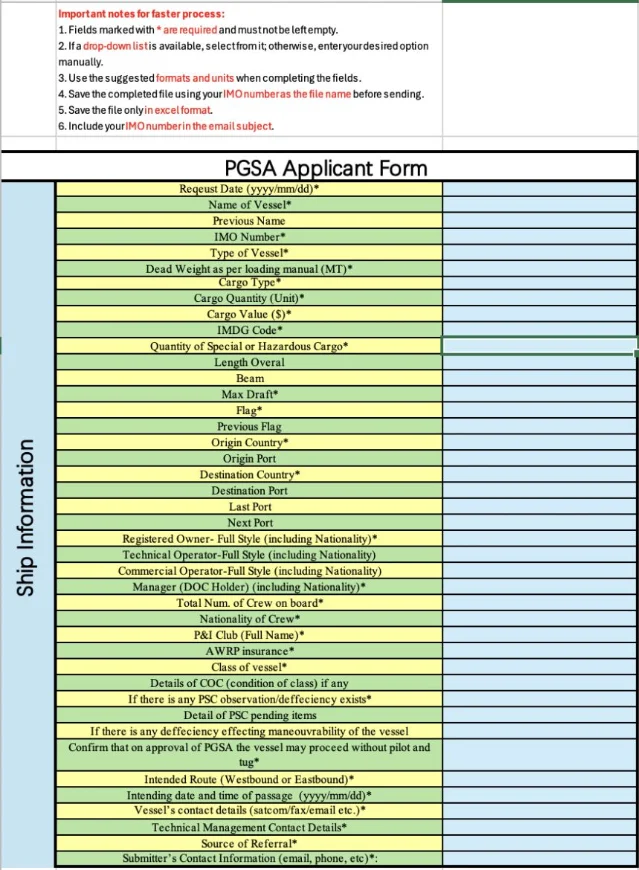
Iran's PGSA: OFAC has flagged toll payments as sanctions exposure
Eritrea: US moving to lift sanctions
EU and UK: no new autonomous designations in window
3. Corridor & chokepoint conditions
Strait of Hormuz
- PGSA active — 40+ question Vessel Information Declaration + $2M toll per vessel (see Section 2)
- Mines confirmed — NAVCENT warning (4 May): transit near the Traffic Separation Scheme "should be considered extremely hazardous due to the presence of mines that have not been fully surveyed and mitigated."17 Vessels are directed to a south-of-TSS enhanced security area in Omani territorial waters. Two US Avenger-class minesweepers are en route from Japan; Germany is preparing its own mine countermeasures vessel for potential deployment.
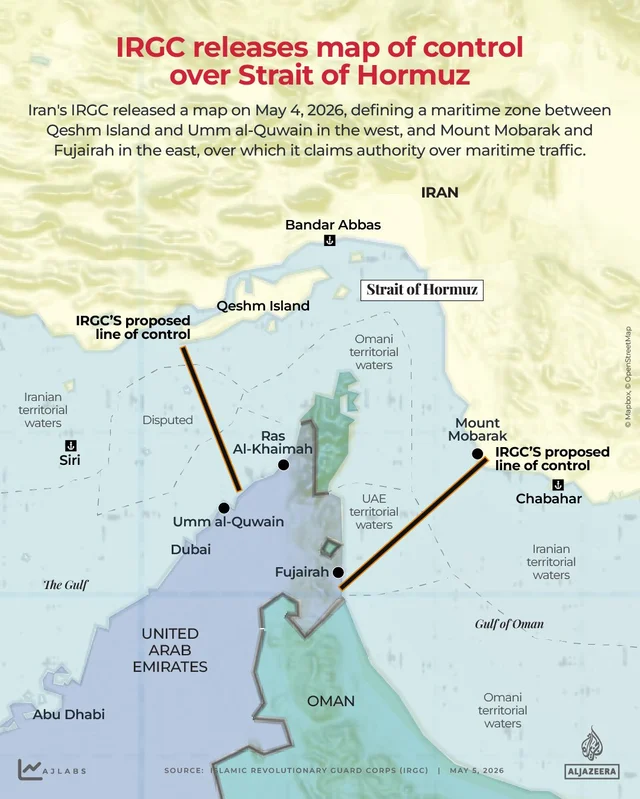
- IRGC maritime control zone — extended to cover the Gulf of Oman as of 5 May; IRGC fast-attack craft formation of 39 vessels detected at 07:30 UTC on 6 May.18
- US blockade — active since 13 April; 61 vessels turned back, 4 disabled.6 Only exceptional transits occurred during the window: 1 Qatari LNG carrier (Al Kharaitiyat, 10 May), 1 Panama-flagged bulk carrier (10 May), plus occasional India/Pakistan-flagged vessels with negotiated passage.
- AIS suppression — SAR imagery on 5 May found 146 of 167 detected Strait vessels running dark; GPS jamming affected approximately 470 vessels off Fujairah within 24 hours.18
- Mariner humanitarian crisis — approximately 20,000 seafarers stranded on nearly 1,000 vessels; 10 IMO-confirmed fatalities; crew rotation impossible for most. WSJ reported (10 May, paywalled) a Chinese-owned tanker crew entering "final days of food."19
UAE ports — Fujairah and Jebel Ali
| Port | Status |
|---|---|
| Jebel Ali | Normal operations |
| Khalifa Port | Normal operations |
| Khor Fakkan | Fully open; 4-week breakbulk wait |
| Fujairah | Open; Berth 6 offline; 3-week breakbulk wait; GPS jamming advisory |
| Bahrain | Limited; APM Terminals 06:00–18:00 only; BAPCO suspended |
| Kuwait | Fully operational; import permits from Iraqi ports temporarily suspended |
| Qatar | Full maritime navigation resumed 2 May |
| Iraq (Basra) | Basra Oil Terminal and SPM Somo export operations suspended |
| Dubai Airport | 90% capacity |
Suez Canal and Bab-el-Mandeb
4. Supply chain risk highlights
Port dwell: Jebel Ali at a nine-week extreme
Freight rates: sideways with upward pressure from May 15 GRIs
Bunker prices cooling from peak but supply remains tight
Carrier workarounds: feeder landbridges and a new express service
- Hapag-Lloyd (from 4 May) re-opened upper Gulf bookings via third-party feeder services anchored at Sharjah — five-day bonded truck transfer to Khor Fakkan, then sea to Kuwait, Saudi Arabia, Qatar, Iraq, and UAE. Feeder rotations are not on a fixed schedule.33
- MSC launched its Europe-Red Sea-Middle East Express service with first sailing from Antwerp on 10 May, rotating through Gdansk, Klaipeda, Bremerhaven, Antwerp, Valencia, Barcelona, Gioia Tauro, Abu Kir, King Abdullah Port, Jeddah, and Aqaba. Landbridge connections to the upper and lower Gulf run via Saudi trucking corridors.34
Air freight: first rate softening; volatility persists
War-risk insurance: DP World enters; Hormuz passages effectively uninsurable
- Tankers/bulkers (general war risk): ~1% of vessel value (35–50% No Claim Bonus)
- Gulf of Oman: ~0.5%
- Bab-el-Mandeb: ~0.75%
- Strait of Hormuz transit: briefly quoted at ~3% in April; quotes have since been withdrawn — effectively uninsurable at commercially viable rates.38
Multimodal alternative: sea-air at 41% below pure air
Economic backdrop
Decision flags
- Validate your Hormuz-bypass routing against Iran's new maritime map. If any leg of your supply chain transits near Fujairah or Khor Fakkan, confirm with your local shipping agent that the routing has not entered the IRGC-claimed zone — and get written confirmation of port berth availability and GPS jamming mitigations. Fujairah breakbulk waits of 3 weeks and Khor Fakkan at 4 weeks make these ports viable only with lead time to spare.
- Audit war-risk insurance coverage for any Gulf cargo. Confirm whether your policy explicitly covers the expanded JWC listed areas (Arabian Gulf, Gulf of Oman, Indian Ocean, Gulf of Aden, southern Red Sea). Verify what happens to in-transit cargo if a vessel is trapped for 6–12 months under the London Blocking and Trapping Addendum. For Hormuz transit specifically: coverage is effectively unavailable at viable commercial rates — plan accordingly.
- Freeze any supply chain interaction with the OFAC May 7–8 designees. Rescreening priority: UAE free-zone counterparties handling aerospace/carbon fiber materials, Iraqi oil-sector entities, and any payment flows through Dubai intermediaries to Hong Kong or Belarus-based trading companies. The May 8 action is the sixth designation round under the "Economic Fury" campaign — more are expected.
- Lock in contracted allocations before May 15 GRI cycle. Flexport's GLU explicitly warns against overbooking spot market to capture current cheap rates: carriers are using spot performance data to right-size allocations in peak season. FAK rate increases of $3,500–$4,500/40ft to North Europe take effect 15 May. Blank sailing rates on Asia-Europe/Med are running at 42% of all removals — space tightening is real.
- Set a watch trigger for the Trump-Xi summit (14–15 May Beijing). This is the highest-probability inflection point for Hormuz conditions in the near term: a joint US-China statement pressuring Iran to reopen the Strait would be the clearest diplomatic signal since the conflict began. Conversely, an acrimonious summit would extend the blockade indefinitely. Brief procurement and treasury teams now so decision authorities are pre-aligned for rapid response if conditions change.
References
- 1
- 2
- 3
- 4
- 5
- 6
- 7
- 8
- 9
- 10
- 11
- 12
- 13
- 14
- 15
- 16
- 17
- 18Maritime Visibility Collapses as Tensions Escalate Around Hormuz — Hellenic Shipping Newshellenicshippingnews.com
- 19
- 20
- 21
- 22US Claims Iran Ceasefire, UAE Under Attack — MarineLinkmarinelink.com
- 23
- 24UAE intercepts two drones from Iran on Sunday — The Nationalthenationalnews.com
- 25
- 26Middle East Operational Status — Inchcape Shipping Servicesiss-shipping.com
- 27
- 28
- 29
- 30
- 31Fujairah Bunker Prices — Bunker Indexbunkerindex.com
- 32
- 33
- 34
- 35
- 36
- 37
- 38
- 39

Red Sea Risk Brief
Daily morning intelligence briefing on Middle East & Red Sea geopolitical risks — Houthi activity, Suez Canal/Bab-el-Mandeb disruptions, Israel-Iran tensions, Strait of Hormuz conditions, sanctions updates, and freight market signals for supply chain and logistics professionals.
This story was produced automatically by a channel. One sentence is all it takes for Neodrop to keep producing for you.
Related content
- Sign in to comment.