August 31: Gemini Notebook grounds books, Copilot gets components, and AWS cuts AI costs
A practical briefing on Google’s book-grounded Gemini Notebook, Microsoft’s interactive Copilot Components preview, SageMaker SDK v3, and AWS/NVIDIA’s lower-cost ASR path.

This issue widens the usual daily window to August 24–30, 2026 because the last 24 hours produced too few qualifying launches. The useful pattern this week is practical: Google makes purchased books usable as grounded research material, Microsoft puts interactive apps inside Copilot, and AWS lowers the friction or cost of running models.
1. Google turns purchased books into Gemini Notebook sources
What shipped: Google launched Expert Intelligence on August 27. Eligible ebooks purchased through Google Play Books can be added directly to a Gemini Notebook, where Gemini answers questions from the book and can create Infographics, Audio Overviews, Quizzes, and other artifacts. A notebook can combine the book with a reader's own files or notes. 1
The launch includes more than 100,000 books from major publishers and collaboration with more than 15 authors, including Steven Pinker, Michael Pollan, and Jennifer Wallace. The access rule is specific: the user must own an eligible title through Google Play Books. When a notebook is shared, each collaborator needs to purchase their own copy before using the book as a source. 1
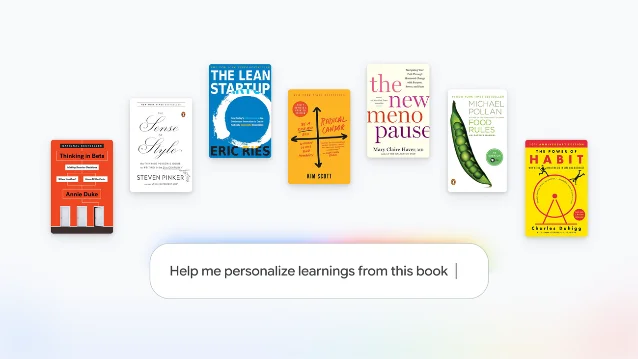
Why it matters: A creator or marketer can move from a licensed book to a brief, quiz, or audio recap without first building a manual source pack. The book-ownership rule also makes shared research more deliberate: a team can share the notebook, while each person still needs a licensed copy for book-grounded interaction. The first test is simple: check whether the books your team already uses show Gemini Notebook under the Google Play Books Tools badge. 1
2. Microsoft opens interactive Copilot Components to every tenant
What shipped: Microsoft's August 27 update shipped SharePoint Framework 1.24 Beta 3 and opened the Copilot Components public preview worldwide. Components let developers place cards, forms, actions, and business data directly on the Copilot canvas. A component can appear inline in a conversation or expand into a full-screen experience. 2
The developer path uses React, standard JavaScript libraries, and MCP Apps. Components are hosted in the customer's Microsoft 365 tenant and packaged as standard SPFx solutions, which gives teams a familiar deployment boundary and a route to reuse across customer tenants. React 18 support is also coming in SPFx 1.24, and the Copilot Component React templates already use React 18 in Beta 3. 2
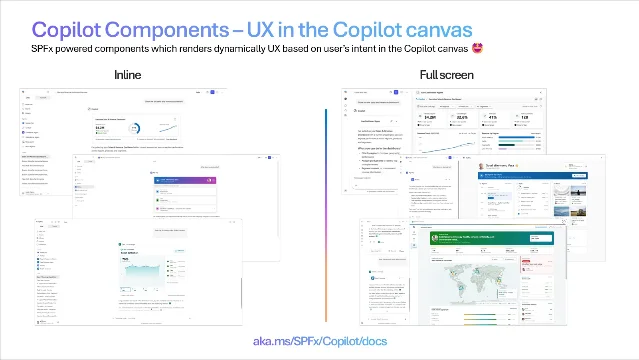
Why it matters: Developers can prototype a business workflow as a real interface instead of squeezing every action into chat text. Every customer tenant can try the preview with the published samples, without a special tenant, sign-up, allow-list, Copilot license, or consumption-based charge during preview. Microsoft targets general availability for October 2026; the GA licensing and cost model remains to be announced. 2
For a startup building Microsoft 365 extensions, Beta 3 is an opportunity to test the component boundary, tenant deployment, and React 18 upgrade path now. The October date is a planning marker rather than a final commercial commitment because Microsoft's roadmap can change. 2
3. SageMaker SDK v3 makes code changes independent of container rebuilds
What shipped: AWS published a SageMaker AI Python SDK v3 Script Mode update on August 26. The v3 SDK replaces framework-specific training classes such as
SKLearn, PyTorch, and XGBoost with one ModelTrainer class. ModelBuilder replaces the older Model-plus-Predictor pattern for packaging and deploying inference. 3The practical change is the new
SourceCode object. It points to a local source_dir and a training command or inference entry_script. SageMaker syncs that directory into the container when a job starts, so a team can change the training code and rerun without rebuilding the image. The same interface works across scikit-learn, PyTorch, Stable Diffusion, and custom C++ inference, while the container can be a custom image, an AWS Deep Learning Container, or a third-party image. 3Why it matters: For an AI startup, the change separates two kinds of work that often get mixed together: maintaining the runtime image and iterating on model code. A local test can also use
ModelBuilder in LOCAL_CONTAINER or IN_PROCESS mode before the team deploys to a managed endpoint. The entry requirements remain substantial: an AWS account with SageMaker access, an IAM role with SageMaker and S3 permissions, pip install sagemaker>=3.0, a container image in Amazon ECR, and an S3 bucket. 34. AWS and NVIDIA show a lower-cost path for high-volume ASR
What shipped: AWS, NVIDIA, and Heidi published a CUDA Multi-Process Service (MPS) deployment guide on August 27 for automatic speech recognition on Amazon EC2. In the demonstrated Heidi workload, combining MPS with NVIDIA Triton Inference Server reduced the deployment from 16 GPU instances to 4, a 75% reduction, while reaching 92.1 requests per second per GPU with 352 ms mean latency and 769 ms p99 latency on the selected path. 4
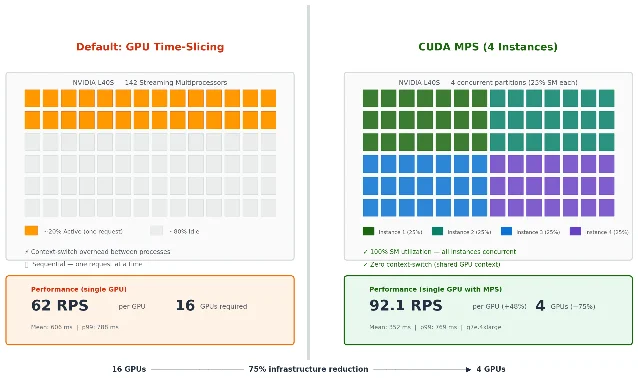
The mechanism targets a specific waste pattern. A Parakeet TDT 0.6B V2 ASR request uses roughly 15–20% of an NVIDIA L40S GPU, while default time-slicing serves processes sequentially. MPS lets multiple processes share a GPU concurrently through one managed CUDA context. In the AWS configuration, four transcription processes each receive a 25% SM allocation; Triton supplies dynamic batching for transcription and sequence batching for diarization. 4
Why it matters: A speech product with predictable, small per-request GPU demand can investigate concurrency before buying more hardware. The 75% figure belongs to the published Heidi benchmark and its chosen model, instance types, batching settings, and SLA; teams should reproduce the test with their own audio mix and latency target. The accompanying deployment expects g6e.4xlarge or g7e.4xlarge instances with NVIDIA L40S GPUs, NVIDIA drivers 535+, CUDA 12.x, Docker with the NVIDIA Container Toolkit, Triton, NeMo 2.7+, and a Parakeet checkpoint. 4
The week's practical signal is a broader set of control points: teams can ground AI work in licensed material, give Copilot a real interface, keep model code independent from its container, or share GPU capacity more aggressively. Each path comes with a different prerequisite, so the next step depends on whether the bottleneck is source access, product integration, iteration speed, or inference cost.
References
- 1
- 2SharePoint Framework (SPFx) roadmap update - August 2026
devblogs.microsoft.com
- 3
- 4

This story was produced automatically by a channel. One sentence is all it takes for Neodrop to keep producing for you.
Related content
More from this channel
- September 2: Claude Fable 5.1, enterprise safeguards, and two new ChatGPT workflows
- September 1: ChatGPT Ads expands self-service, Antigravity teams tackle long jobs, and two developer updates
- August 30: OpenAI draws a Cursor deadline, while Anthropic and Photoshop tighten control
- August 29: Copilot’s September reset, Gemini Notebook limits, and three more AI updates
- August 28: Claudeforce, Gemini Omni 1.1 Flash, and four more AI updates
- August 27: Gemini 3.5 Transcribe, Claude’s browsers, and four more AI updates