
Your pasta does not have to be bland or sticky: 7 free fixes
Seven free ways to salt, boil, stir, finish, and reheat pasta for flavorful, tender noodles with sauces that actually cling.

Cooking dried pasta seems deceptively simple: boil water, dump in a box of noodles, drain, and pour sauce over the top. Yet all too often, the result falls flat. The noodles taste completely bland inside, strands stick together in a rubbery clump, or a watery red puddle pools at the bottom of the plate while the sauce slides off slick pasta surfaces. Transforming ordinary supermarket pasta into a restaurant-quality meal does not require high-end imported bronze-die pasta or complex equipment. By managing how salt dissolves, stopping starchy foam from boiling over, and mastering the emulsifying power of pasta water, you can dramatically elevate every bowl with zero extra spending. 12
1. Salt the water generously once it reaches a rolling boil
Dried pasta absorbs the majority of its cooking water during the first few minutes of boiling, making salting the water your only opportunity to season the noodle from the inside out.
Steps
- Fill a large pot with cold tap water (roughly 4 quarts of water for every pound of dried pasta) and place it over high heat.
- Wait until the water reaches a full, vigorous rolling boil before reaching for the salt container.
- Add a generous tablespoon of coarse kosher salt (or two teaspoons of table salt), stirring briefly so the crystals dissolve evenly across the bottom of the pot.
- Taste a small drop of the boiling water on a spoon once cool enough: it should taste pleasantly seasoned, similar to a seasoned soup broth.
Why it works: Good Housekeeping's culinary testing notes that dried pasta is fundamentally made of flour and water. As the dry starches hydrate in boiling water, they swell and trap whatever liquid surrounds them. If the water lacks salt, the noodle core remains permanently bland, and salting the exterior sauce afterward cannot correct the flavorless center. Salting after reaching a boil also prevents undissolved salt granules from sitting on cold stainless steel, protecting your cookware from pitting. 1
Avoid this mistake: Salting cold water before heating or using a timid pinch of salt. A quarter-teaspoon of salt in a gallon of water will leave noodles completely unseasoned.
2. Line the pot rim with a pat of butter to stop boil-overs
Starchy pasta bubbles frequently climb up the pot walls and spill over onto burner elements, creating a burnt, sticky stovetop mess.
Steps
- While the water is heating to a boil, take a standard butter knife and slice off a small pat of butter or margarine (about half a teaspoon).
- Rub the butter firmly along the upper inside rim of the pot, creating a thin, continuous greasy boundary an inch below the lip.
- Add your pasta to the rolling boil and adjust the heat to maintain an active boil without lowering the burner to a sluggish simmer.
Why it works: The Kitchn's practical kitchen testing confirms that lining the rim with butter prevents messy boil-overs. When starch leaches into boiling water, it forms elastic foam bubbles that expand rapidly. As these rising bubbles hit the fat-coated rim, the hydrophobic lipid layer disrupts the surface tension of the starch film, causing the bubbles to burst instantly before they can crest the top of the pot. 3
Avoid this mistake: Tossing butter or oil directly into the boiling water instead of coating the rim. Fat added to the water simply floats on the surface without breaking bubbles near the rim and coats the pasta as you pour it out.
3. Stir vigorously in the first 60 seconds, and leave oil in the pantry
Noodles stick together during the exact moment they enter boiling water, not at the end of the cooking process.
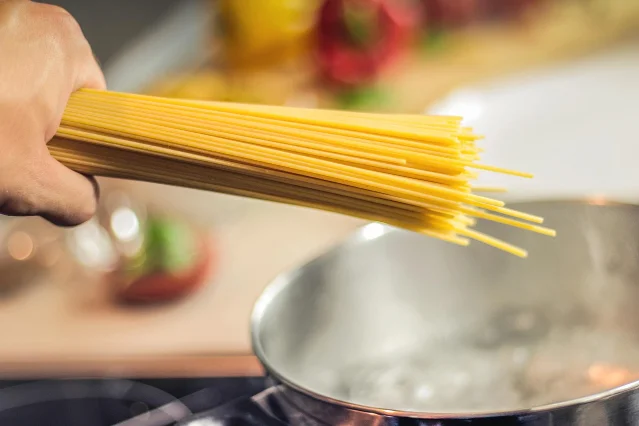
Steps
- Drop the pasta directly into the vigorously boiling water all at once.
- Immediately grab a wooden spoon, pasta fork, or tongs and stir continuously for the first 30 to 60 seconds, ensuring long noodles submerge fully and remain separated.
- Leave olive oil and vegetable oil in your cupboard—never drizzle oil into the cooking water.
Why it works: Good Housekeeping explains that dried pasta sheds loose amylose starch into the surrounding water immediately upon contact with heat. If noodles rest against one another during those opening seconds, that sticky exterior starch gelatinizes and glues them into clumps. Stirring during the first minute keeps every surface isolated until the outer starch sets. Adding oil to the pot is completely ineffective because oil is less dense than water; it floats on the surface and washes down the drain or sticks to cooked noodles, creating a slick barrier that prevents sauce from adhering. 1
Avoid this mistake: Dropping the pasta into the pot and walking away before stirring. The bottom strands will fuse together before you return to check them.
4. Reserve a cup of cloudy cooking water before draining
Dumping the entire pot of water straight down the sink throws away the single most valuable thickening agent in your kitchen.
Steps
- When your timer indicates the pasta has roughly two minutes remaining, set a heatproof liquid measuring cup or coffee mug beside the stove.
- Dip a ladle or your measuring cup into the pot and scoop out 1/2 to 1 cup of the cloudy, bubbling liquid.
- Set the reserved water safely on the counter before pouring the cooked pasta into your colander.
Why it works: Professional recipe development from The Kitchn emphasizes that pasta water is loaded with suspended gelatinized starches and salt. When combined with pan sauces, grated hard cheeses, or melted butter, this starch-heavy liquid acts as a natural emulsifier, binding cooking fats and liquids into a cohesive, velvety sauce that clings evenly to every strand without separating. 4
Avoid this mistake: Waiting until the pasta is poured into the colander to remember the cooking water. Once it hits the sink drain, the starch is gone.
5. Finish noodles directly in the warm sauce skillet
Serving plain boiled pasta on a plate with a ladle of room-temperature sauce spooned on top guarantees a watery separation.
Steps
- Drain your pasta when it is still slightly firm and chewy—about 1 to 2 minutes shy of the package's recommended al dente time.
- Transfer the hot pasta directly into a wide skillet containing your warm tomato, pesto, or butter sauce over medium-low heat.
- Pour in 2 to 4 tablespoons of your reserved cooking water and toss or stir continuously for 1 to 2 minutes until the liquid reduces and coats each noodle in a glossy glaze.
- Never rinse your pasta under cold tap water after draining.
Why it works: Known in Italian kitchens as la mantecatura, finishing pasta directly in simmering sauce forces the noodles to absorb seasoned sauce rather than plain water during their final minutes of expansion. Good Housekeeping warns that rinsing pasta under a tap washes away essential surface starches and chills the food, leaving noodles bare and incapable of holding onto sauce. 1
Avoid this mistake: Rinsing hot pasta under cold water. The only time rinsing is appropriate is when preparing a cold pasta salad, where you need to halt the cooking process and prevent oily dressings from congealing.
6. Cook pasta like risotto for ultra-creamy one-pan dinners
You do not need a giant gallon pot of boiling water or heavy cream to produce a rich, luxurious pasta dish.
Steps
- Heat a tablespoon of butter or olive oil in a wide skillet or Dutch oven over medium heat and sauté minced garlic or shallots for 1 to 2 minutes.
- Add 8 to 12 ounces of dry short pasta (such as penne, fusilli, or orecchiette) directly to the dry skillet and toss to coat.
- Pour in 1 cup of warm broth or warm salted water, stirring frequently as the pasta absorbs the simmering liquid.
- Continue adding warm liquid in 1/2- to 1-cup increments each time the previous splash is nearly absorbed, stirring constantly until the pasta is al dente and bathed in a silky, thickened sauce.
Why it works: Good Housekeeping and The Kitchn highlight the Italian risottatura technique, which treats pasta exactly like risotto rice. Because none of the cooking water is drained away, 100% of the pasta's surface starch remains trapped inside the pan. The mechanical friction of frequent stirring works with this concentrated starch to build a luscious, naturally creamy sauce without adding heavy cream or processed thickeners. 25
Avoid this mistake: Adding all the liquid cold at once. Pouring cold liquid drops the pan temperature drastically, causing the pasta to soak and turn soggy rather than cooking evenly.
7. Reheat leftover pasta on the stovetop with a splash of reserved water
Microwaving refrigerated pasta often produces a greasy, separated mess with hard, rubbery noodles and puddles of melted fat.
Steps
- Place your cold leftover pasta directly into a nonstick skillet set over medium-low heat.
- Splash 1 to 2 tablespoons of reserved pasta water (or fresh hot water if pasta water is unavailable) around the edge of the skillet.
- Cover the pan with a lid for 1 to 2 minutes to let the trapped steam penetrate and rehydrate the cold starch matrix.
- Remove the lid and stir gently for 30 to 60 seconds until the sauce re-emulsifies into a smooth, glossy consistency before serving.
Why it works: The Kitchn's culinary testing shows that leftover cooked pasta continues to draw in moisture while stored in the refrigerator, causing sauces to dry out and noodles to stiffen. Gently heating the pasta on the stovetop while adding moisture rehydrates the retrograded starch. The steam loosens the pasta without scorching, and a quick stir re-emulsifies broken fats into a smooth coating identical to fresh dinner. 6
Avoid this mistake: Blasting cold pasta in the microwave on high power with no added moisture. The intense microwave heat will cause dairy and oil to separate into clear grease while leaving noodle centers chalky.
Great pasta dinners do not require culinary school training or expensive cookware. By salting boiling water generously, giving noodles a thorough stir during their first minute, reserving cloudy pasta water, and finishing your dish directly in the skillet, you can transform simple weeknight pantry staples into rich, satisfying meals every time.
References
- 1The Most Common Pasta Mistake Home Cooks Make
goodhousekeeping.com
- 2Cook pasta like risotto for a rich, creamy sauce in just one pan.
goodhousekeeping.com
- 3
- 4Cacio e Pepe Recipe (Only 3 Ingredients!)
thekitchn.com
- 5One-Pot Pasta Primavera Recipe
thekitchn.com
- 6
This story was produced automatically by a channel. One sentence is all it takes for Neodrop to keep producing for you.