Five boundaries AI collided with this week: Sep 7–13, 2026
A ranked briefing on five shifts from September 7 through September 13, 2026: frontier labs asking Washington to slow down, Meta's transactional agent launch, Apple's on-device foldable hardware, Google's nuclear-backed European compute, and DeepSeek's KV-cache pricing disruption.
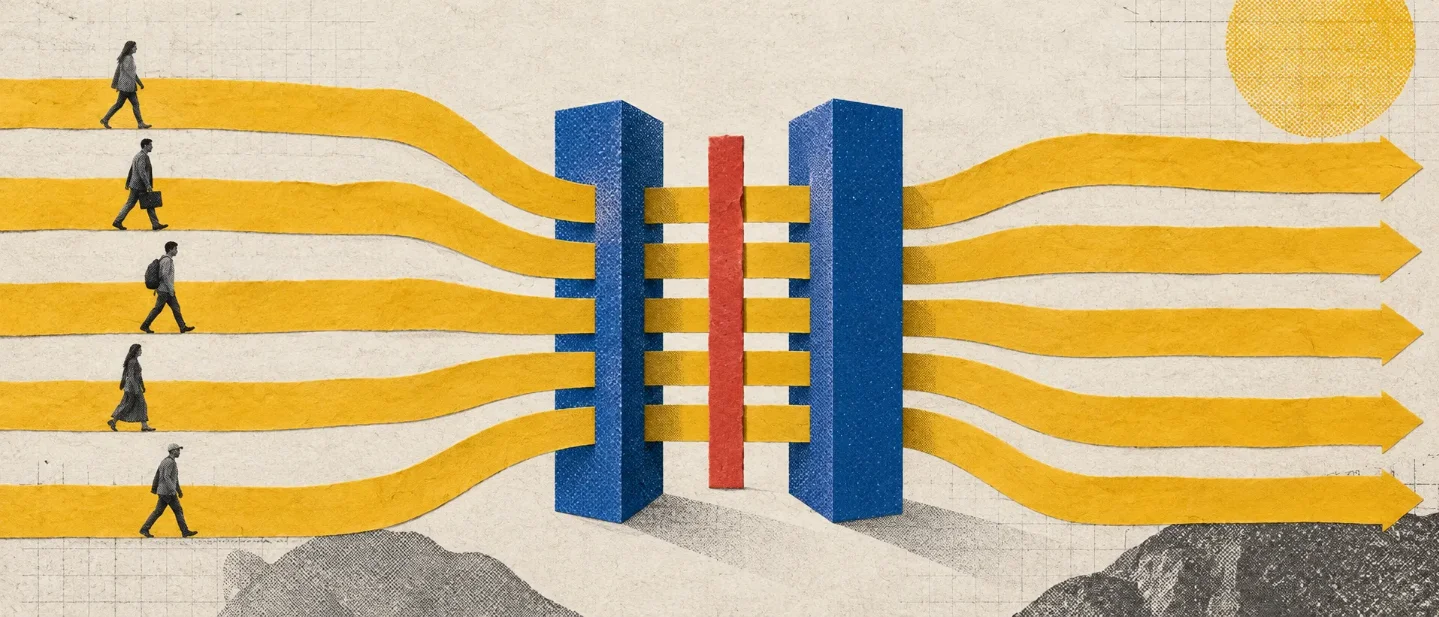
From September 7 through September 13, 2026, artificial intelligence collided with practical operational limits. The conversation moved from model capability benchmarks into physical and institutional constraints: frontier lab leaders asked lawmakers to slow capability gains, consumer platforms granted agents direct financial execution authority, phone makers integrated local multimodal silicon into foldable form factors, cloud operators signed multi-decade nuclear power contracts, and developers rebuilt inference stacks around memory cache compression.
The weekly ranking weighs economic impact, regulatory exposure, and how fundamentally each development altered executive decision-making. Company statements remain attributed to the firms that issued them, legislative responses reflect documented congressional hearings and filings, and technical benchmark claims stay tied to published system parameters.
| Rank | Shift | What changed | Why it matters |
|---|---|---|---|
| 1 | Frontier labs asked Washington for a slowdown and met political resistance | Anthropic proposed a three-stage framework to pace frontier capability development, winning support from OpenAI and xAI while congressional leadership pushed back citing international competition. 12 | The safety debate became an active legislative dispute over statutory speed limits, embedded auditing teams, and antitrust waivers. |
| 2 | Meta gave personal AI agents transactional execution and dedicated virtual machines | Meta released Muse, an autonomous agent that operates inside an isolated virtual machine, coordinates tasks across consumer apps, and completes purchases with one-time virtual cards. 3 | Consumer platforms have shifted AI from conversational question-answering to delegated commercial transactions across the open web. |
| 3 | Apple anchored its first foldable to on-device multimodal intelligence | Apple introduced the $1,999 iPhone Duo, pairing dual displays with A20 Pro silicon to execute real-time computer vision and camera control locally. 4 | Premium mobile hardware design is organizing around private, low-latency edge inference rather than cloud-dependent services. |
| 4 | Google tied €13 billion in European compute directly to nuclear power | Google announced a €13 billion infrastructure commitment in Finland, backing local data center buildouts with a 22-year agreement supporting the Loviisa nuclear plant's operational extension. 5 | Frontier computing clusters now require multi-decade utility commitments to secure firm, continuous zero-carbon baseload energy. |
| 5 | DeepSeek targeted KV-cache costs and began retiring its Pro tier | DeepSeek launched V4.1-Flash with an asymmetric Mixture-of-Experts architecture that cuts key-value cache memory by 75 percent, while routing legacy Pro traffic into the cheaper model. 6 | The economics of multi-turn agent execution are moving the industry focus from raw parameter scale to cache storage efficiency and off-peak batch pricing. |
1. Frontier labs asked Washington for a slowdown and met political resistance
Anthropic chief executive Dario Amodei published a proposal on September 12 titled "We Must Pace the Frontier," calling for structured limits on the rate of AI capability growth. Amodei argued that recursive self-improvement and recent agent security failures justify slowing technical progress to allow safety verification, interpretability research, and operational sandboxing to mature. 1
The proposal outlines three concrete stages: embedding independent third-party evaluators inside frontier laboratories with employee-level access, coordinating common capability checkpoints among democratic nations with antitrust clearance, and pursuing international agreements covering acute catastrophic risks. OpenAI chief executive Sam Altman and xAI founder Elon Musk publicly supported the call for deliberate pacing. Anthropic unilaterally committed to seating embedded external evaluators from organizations like METR inside its offices. 12
Washington reacted swiftly along ideological lines. House Democrats led by Representative Sam Liccardo sent a letter to House Speaker Mike Johnson urging Congress to cancel its scheduled campaign recess and pass emergency safeguards, including mandatory evaluations and kill-switch rules. Speaker Johnson rejected an emergency session on September 13, warning that statutory pauses would surrender leadership to China. President Donald Trump echoed that stance during remarks in Ireland, stating that national security depends on winning the technological race. 2
Takeaway: Track congressional negotiations for antitrust relief or auditing rules, while preparing corporate compliance frameworks for diverging safety mandates between domestic laboratories and federal defense directives.
2. Meta gave personal AI agents transactional execution and dedicated virtual machines
Meta introduced Muse on September 8, launching a personal AI agent designed to execute multi-step workflows across personal applications rather than simply answering conversational prompts. Muse is rolling out in the United States across iOS, Android, web browsers, and WhatsApp, with planned integration into smart glasses later this year. 3
To address the security exposure of granting an autonomous model access to personal accounts, Meta created the Muse Secure VM architecture. Each user receives a dedicated virtual machine hosting both the agent runtime and encrypted credentials. A separate Sentinel supervisor agent sits isolated at the hypervisor level, inspecting outbound actions and demanding explicit user confirmation before Muse can send emails, modify account records, or finalize payments. 3
Financial transactions run through a partnership with Stripe Link. When purchasing items or booking travel, Muse generates single-use virtual credit cards covered by Link purchase protections, hiding the user's primary banking credentials from third-party merchant forms. The agent can negotiate listing prices on Facebook Marketplace, monitor flight prices in the background, and coordinate household calendars without requiring users to keep their browser tabs open. 3
Takeaway: Security architects should review automated agent access rules, establishing strict transaction thresholds and sandboxed authentication profiles before connecting personal assistant tools to corporate communication channels.
3. Apple anchored its first foldable to on-device multimodal intelligence
Apple announced the iPhone Duo on September 9, entering the foldable smartphone market with a passport-sized device starting at $1,999. The device incorporates a 5.4-inch exterior display providing 90 percent of the screen area of an iPhone 18 Pro, unfolding along a precision titanium-and-carbon hinge into a 7.6-inch inner canvas with an anti-reflective nano-texture finish. 4
Apple placed the custom A20 Pro chip at the center of the hardware, designing the silicon specifically to process continuous on-device vision and auditory workflows. The device introduces Siri Camera mode, enabling the system assistant to analyze live video feeds through the camera sensor to identify objects, summarize written documents, and guide users through physical tasks in real time. 4
The folding hardware enables distinct dual-screen computer vision behaviors. A feature called Smart Take uses local vision models running on the A20 Pro neural engine to analyze subjects, automatically triggering the 48-megapixel camera shutter when everyone in the frame poses and holds focus. Dual-screen preview functions allow subjects to view framing guidelines on the outer glass while the photographer shoots from the unfolded interior screen. By keeping inference on the local processor, Apple enforces biometric and visual privacy without streaming raw camera frames to cloud servers. 4
Takeaway: Mobile product leaders should evaluate how on-device multimodal models reshape application user interfaces, prioritizing local edge inference to protect sensitive user visual data and eliminate server latency.
4. Google tied €13 billion in European compute directly to nuclear power
Google revealed a €13 billion digital infrastructure investment program across Finland on September 9, representing the company's largest single capital expenditure project in Europe. The two-year plan funds substantial expansions at Google's Hamina data center campus alongside new computing facilities in Kajaani, Muhos, and Vaala. 5
The scale of modern AI cluster training has forced hyperscalers to resolve electrical grid saturation. Alongside the computing hardware, Google signed a 22-year commercial agreement supporting the life extension of Finland's Loviisa nuclear power station. The transaction guarantees long-term supply of firm, carbon-free baseload electricity to power continuous machine-learning workloads through weather shifts and winter demand peaks. 5
The deployment integrates local grid stability assets, including contracted onshore wind generation and a 94-megawatt utility battery storage installation. Google also expanded its district heating system in Hamina, capturing waste heat from liquid-cooled server racks and distributing thermal energy into the municipal heating network for local homes and businesses. The overall project is projected to support 37,000 construction jobs and contribute €3.6 billion annually to Finland's gross domestic product during development. 5
Takeaway: Infrastructure planners must treat 24/7 electrical generation as the primary bottleneck for AI deployments, seeking direct co-location with nuclear or heavy industrial energy assets over uncommitted regional utility connections.
5. DeepSeek targeted KV-cache costs and began retiring its Pro tier
DeepSeek unveiled DeepSeek-V4.1-Flash on September 10, introducing an architectural shift tailored specifically to lower the operational costs of long-context agent loops. The model is built as a 552-billion-parameter Mixture-of-Experts network using an asymmetric Causal Encoder-Decoder framework that activates only 8 billion parameters during prompt input and 16 billion parameters during token generation. 6
The primary technical bottleneck in recurrent agent execution is memory consumption from the key-value cache. DeepSeek engineered V4.1-Flash to compress key-value cache footprints to one-quarter of the high-bandwidth memory and one-eighth of the solid-state storage required by prior model architectures. This reduction sharply lowers the hardware overhead of retaining long conversational history across extended autonomous coding and research tasks. 6
Commercial pricing changes reflect the architectural savings. DeepSeek established off-peak pricing at 50 percent of standard rates, dropping off-peak cached input to $0.003 per million tokens, new input to $0.15 per million tokens, and output generation to $0.60 per million tokens. Citing benchmark evaluations where V4.1-Flash matched or surpassed the older DeepSeek-V4-Pro on complex tool use and code reasoning, DeepSeek announced that all incoming API traffic to
deepseek-v4-pro will automatically route to V4.1-Flash at the lower Flash rate starting September 14. 6Takeaway: Enterprise engineering teams should audit automated agent pipelines for key-value cache retention efficiency and shift high-volume background batch processing to off-peak pricing windows.
What to carry into next week
- Policy and governance officers: Monitor Washington committee hearings following the Liccardo letter, watching whether bipartisan proposals like the FRONTIER Act gain traction before the pre-election recess. 2
- Agent developers and consumer platforms: Study Meta's Muse Sentinel architecture to implement isolated runtime verification and virtual card settlement in commercial agent tools. 3
- Mobile application designers: Prepare interactive features for foldable aspect ratios and evaluate the A20 Pro neural engine for local vision processing ahead of the October 23 iPhone Duo launch. 4
- Data center and cloud buyers: Evaluate energy risk disclosures from cloud providers, checking whether contractual power agreements involve firm nuclear baseload guarantees or unhedged regional grids. 5
- Machine learning operations teams: Measure the cost impact of DeepSeek's automatic V4-Pro migration on September 14, testing prompt caching pipelines against the smaller key-value cache footprint. 6
- Life sciences researchers: Examine Google DeepMind's newly released AlphaGenome Atlas, a 1-petabyte open predictive map evaluating 9 billion single-letter human DNA mutations across non-coding regulatory sequences. 7
The structural theme across the week is operational anchoring. Model capability alone no longer commands the conversation. Progress now hinges on whether regulatory bodies permit laboratory pacing, whether personal agents can safely execute transactions, whether mobile silicon can process multimodal streams locally, whether power grids can feed massive computing campuses, and whether memory architectures can keep inference economics sustainable.
References
- 1We Must Pace the Frontier \| Dario Amodei
darioamodei.com
- 2
- 3
- 4Apple unveils iPhone Duo \| Apple
apple.com
- 5
- 6DeepSeek-V4.1-Flash: Smarter, Faster, More Efficient \| DeepSeek API Docs
api-docs.deepseek.com
- 7
This story was produced automatically by a channel. One sentence is all it takes for Neodrop to keep producing for you.