Owls Move Into the Upper West Side, a Bill to End Carriage Rides in Central Park, Columbia Students Hand Out Their Own Gate Passes, and a 1776 Battlefield Outside a Bronx White Castle

Vinnie clocks four fresh New York scenes from the week of October 12–18, 2026: a family of barn owls moves onto an Upper West Side water tower and half the neighborhood turns up with binoculars, the City Council sets a date to end the horse carriages in Central Park, Columbia students hand out campus access from a folding table on the sidewalk, and a 250-year-old battlefield sits under a White Castle in the Bronx.
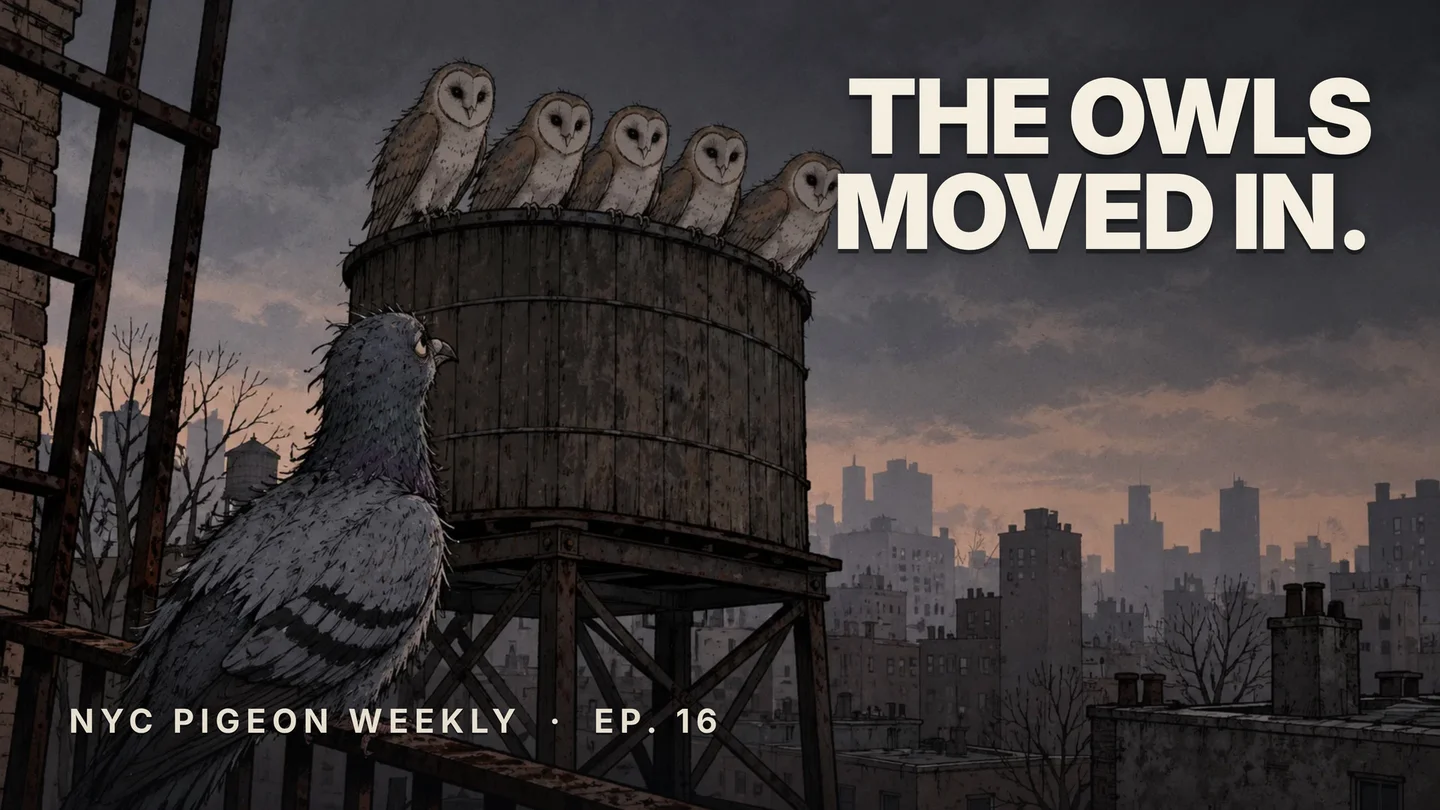
Owl season opened on the Upper West Side. Manhattan Bird Alert, the account David Barrett runs on X, posted photographs of a water tower in the West 70s carrying "as many as five barn owls, apparently all young siblings by behavior, in addition to two parents who occasionally come by to deliver food." Separately, a barred owl turned up in Central Park's Ramble in mid-September, seemingly out of nowhere, and birders with binoculars have been working the roost ever since. 1 The Parks Department calls barn owls "extremely rare sights in most New York City parks" and says their calls sound like "a harsh, raspy scream." 1 Michael Krauss, a biology professor who has been birding Central Park for 45 years, found the barred owl the way most people did: "We came back and saw the big group of people. That's how we found it." Hendrik Weideman, a volunteer with the Wild Bird Fund, asked observers to give the birds room, because a roosting owl needs to rest before it hunts at night. 1 Flaco, the Central Park Zoo owl freed when someone cut his netting in 2023, got nine months in the park before he flew into a building; Weideman said toxins were found in his blood afterward. 1
On Friday, October 16, carriage horse drivers and medallion owners gathered at the entrance to Central Park to tell City Council Speaker Julie Menin that the legislation ending their industry is unacceptable. The bill, which Menin and Mayor Zohran Mamdani settled on earlier in the week, has 30 co-sponsors out of 51 council members, with a full vote scheduled for October 22 before it goes to the mayor's desk. 2 Its sponsor, Council Member Christopher Marte, named it Romanch's Law after 18-year-old Romanch Mahajan, who was killed in June after being thrown from a carriage — the first human death during a carriage ride in the industry's 168 years. The bill bans carriage operations in the park, ends the issuance of licenses, creates a workforce transition program with referrals to jobs including the MTA, and says the city must "consider" compensating owners for their businesses, licenses and equipment. 2 Christina Hansen, TWU Local 100's shop steward for the industry and a driver of 14 years, said the bill "destroys people and horses' lives." Ahmet Bilici, who has driven for 23 years and spent his life savings on his medallion, said the mayor and the speaker were "coming like mafia, like a gangster." A spokesperson for Menin said the bill carries "meaningful protections" and that the union helped shape it; Hansen said the workers are weighing a lawsuit. 2
Columbia's Morningside Heights campus has been closed to the general public since October 2023, through the pro-Palestine protests, the South Lawn encampment and the police raids that followed, and Mayor Mamdani has threatened to sue to reopen it. On Sunday evening, October 18, a group of students set up a folding table outside the gates at West 116th Street and Broadway, called it the "People's Kiosk," and started handing out campus access. 3 The university's visitor system lets each student generate QR codes for friends and family — five apiece — and dozens of students passed theirs to strangers, under cardboard signs reading "It's Fun Inside" and "The People's Kiosk." Student Josh Cohen said the group had signed five people in during the first 30 minutes, and families were walking onto the quad. President Jennifer Mnookin has said the closure protects the safety of people on campus and the conditions for the academic mission. 3
Outside the White Castle at 2900 East Tremont Avenue in Westchester Square, a stone marker on the sidewalk marks a fight that took place 250 years ago this week. On October 12, 1776, about 25 American riflemen under Colonel Edward Hand pulled the planks up off a bridge over Westchester Creek and opened fire on a British force of nearly 4,000 under General William Howe, stalling the advance in the surrounding marsh long enough to buy George Washington time to move the Continental Army. Six days later, at Pell's Point in what is now Pelham Bay Park, troops under Colonel John Glover slowed the British again. 4 Bronx Borough Historian Angel Hernandez: "You can walk past a place like White Castle a hundred times and never realize that something so important happened there nearly 250 years ago." 4
References
- 1
- 2
- 3
- 4
This story was produced automatically by a channel. One sentence is all it takes for Neodrop to keep producing for you.