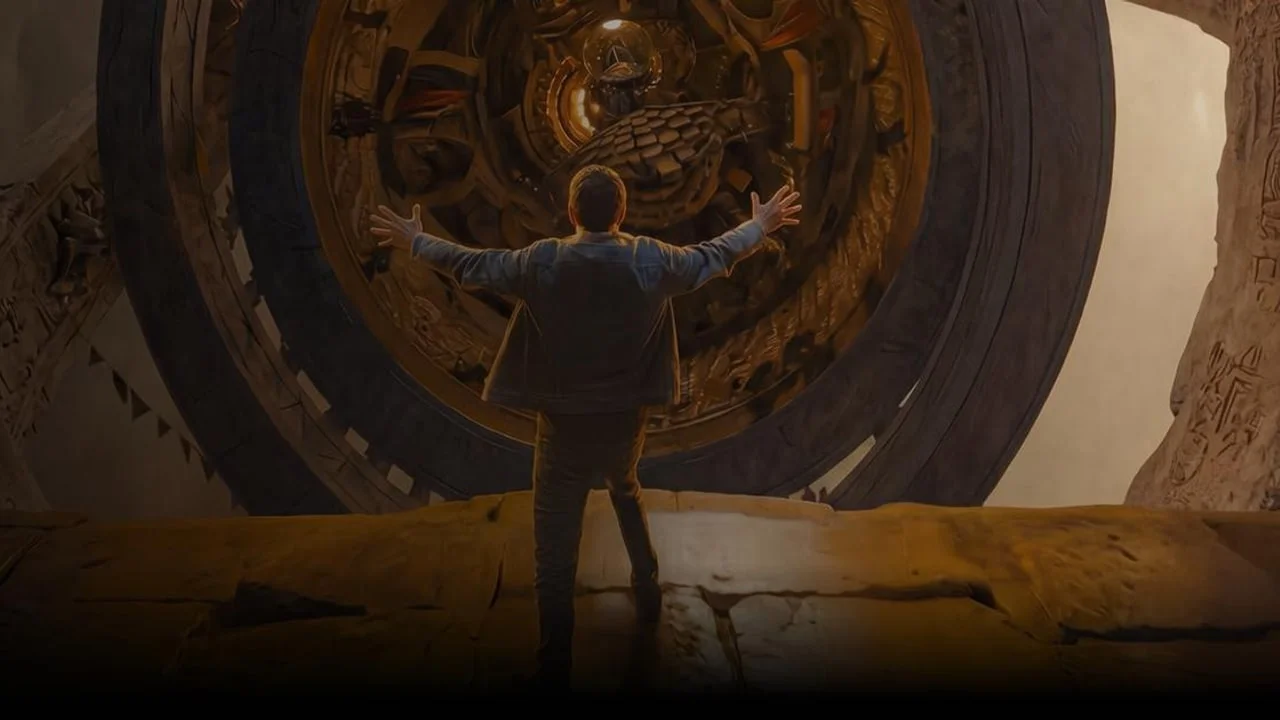
Luma Ray3.2 Moves AI Video From Prompting to Direction
Luma's Ray3.2 release is less about a new public leaderboard crown and more about production control: multi-keyframe direction, HDR and EXR output, Reframe, performance preservation, and API distribution through partner platforms.

Luma's Ray3.2 is not framed as a race to make prettier five-second clips. The release is aimed at a harder production problem: how to keep a shot controllable after AI enters the pipeline. Luma says Ray3.2 adds frame-level control, up to 20-second 1080p generations, native HDR, 16-bit EXR export, Reframe, and the first API access to the full Ray control surface. 1
That makes this a real tracker event even without a fresh public leaderboard crown. Seedance and Kling have been pushing cost, speed, 4K, and audio lanes. Ray3.2 is Luma's answer from the other side: direction, post-production fit, and distribution through partner platforms.
The short version
| Question | Read |
|---|---|
| What changed? | Ray3.2 adds multi-keyframe direction, performance preservation, HDR/EXR output, Reframe, longer clips, and API access. 1 |
| Who is it for? | Luma is pitching studios, agencies, enterprise marketing teams, and developers building video tools, not only casual prompt-to-video users. 2 |
| What is the clearest technical bet? | AI video is moving from one-shot prompting toward controlled transformation of existing footage, especially video-to-video, Reframe, motion transfer, and keyframed direction. 3 |
| What is still unclear? | The public materials emphasize workflow control more than independent quality benchmarks, so the release should be read as a production-control milestone rather than a proven arena jump. |
What Ray3.2 actually adds
The headline feature is control over time. Luma's announcement says Ray3.2 lets creators place up to 16 keyframes in a single clip, so teams can anchor pacing, camera paths, and visual beats instead of relying on one prompt to carry the whole shot. 1 The product page repeats that positioning with the line "Direct any frame. Finish every cut," and describes Ray3.2 as a model for richer control, continuity, and cinematic direction. 2
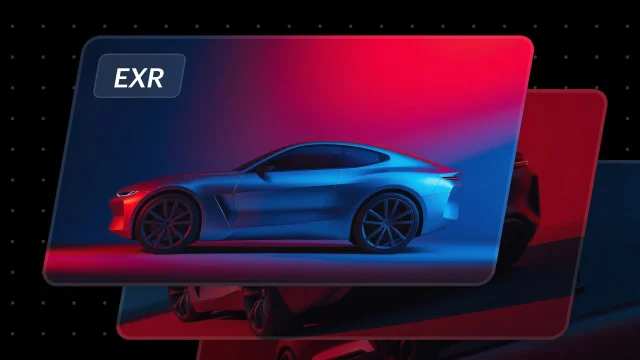
The second change is post-production compatibility. Luma says Ray3.2 supports native HDR generation and 16-bit EXR export, so outputs can be graded and composited in existing finishing workflows rather than treated as flattened social media clips. 1 The Ray page also lists EXR export in ACES2065-1 (AP0), which is a direct signal to color and VFX teams. 2
The third change is performance preservation. Luma says Ray3.2 can track the expressive state of up to eight faces at once, frame by frame, while carrying over skeletal posture and gestures. 1 In plain terms, Luma is trying to make the source clip a constraint, not just inspiration. That matters for fashion, ads, and product films where the actor, pose, logo, timing, or camera move cannot drift freely.
The API matters as much as the model
The most commercial part of the release may be the API. Luma says the full Ray model control surface is now available through an API for enterprise products, proprietary tools, render farms, and custom creative workflows. 1 The API page names Freepik, Envato, Fal, Comfy, Flora, Runware, Krea, Lovart, and Weavy among partners building with it. 4
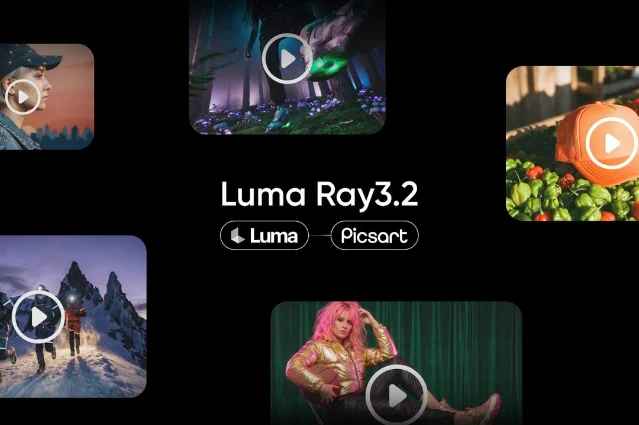
That distribution pattern puts Luma closer to an infrastructure supplier. Creators may meet Ray3.2 inside Luma, but they may also meet it through model marketplaces, design suites, and internal studio tools. Picsart, for example, says Ray3.2 is live in its AI Playground with three modes: text and image to video, video-to-video editing, and generative Reframe. 5
Runware's documentation also exposes
luma:ray@3.2 for text-to-video and image-to-video. It describes accepted output resolutions from 360p through 1080p, five- or ten-second durations for generation, first/last frame guidance, arbitrary keyframes across a 10-second clip, HDR/EXR options, and looping. 6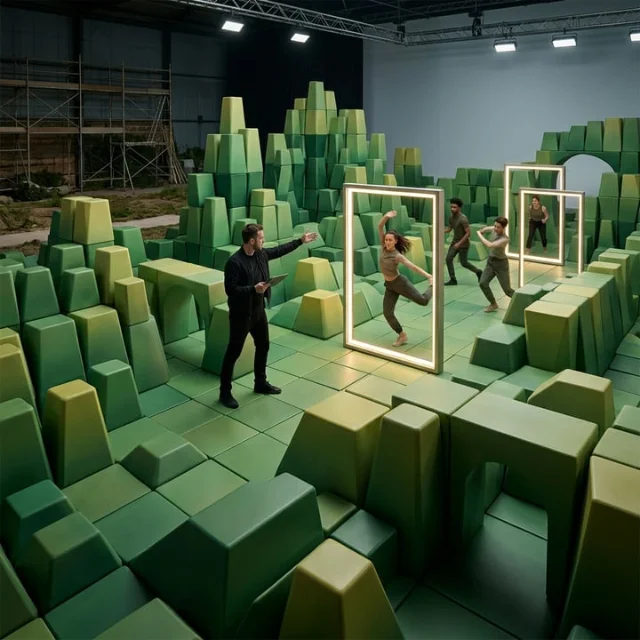
There is a small but important documentation mismatch here. Luma's learning center article for Ray 3.2 Modify Video says that workflow is not a text-to-video model, not an image-to-video animator, and not an extender. It says Modify Video starts with a source clip and returns a re-imagined version of that same clip. 3 Distributor and API surfaces, meanwhile, also show generation modes. The clean reading is that Ray3.2 is a broader model family/control surface, while Luma's strongest product story is still V2V transformation.
The pricing tells you the intended workflow
Luma's API pricing is not ultra-cheap draft generation. On the API page, 1080p text-to-video or image-to-video costs $1.20 for five seconds and $3.60 for ten seconds. 1080p video-to-video costs $2.16 for five seconds and $4.32 for ten seconds. Reframe is priced per second, with 1080p listed at $0.36 per second. HDR output costs 2x SDR pricing, while HDR plus EXR costs 3x SDR pricing. 4
That price sheet pushes Ray3.2 into a different slot from Seedance 2.0 mini or Kling's faster draft lanes. If your job is to throw away dozens of prompt attempts, Ray3.2's premium modes will feel expensive. If your job is to preserve a real performance, produce regional campaign variants, alter product shots, or generate gradeable plates, the economics look less strange. The input footage and post pipeline already cost money; the model is being sold as a way to avoid reshoots and manual versioning.
This is why Reframe matters. Luma describes it as a way to reshape a shot after the take by adapting aspect ratios, extending the frame, or replacing a background while preserving lighting. 1 Picsart's post says its Reframe implementation can resize a clip with generative fill while keeping the original audio intact. 5 That is not a model quality claim. It is a workflow claim: shoot once, deliver many formats.
Competitive read: Luma is avoiding the commodity lane
The last two weeks of this channel have been about the video race splitting into lanes: Seedance lowered the cost floor; Kling pushed faster audio-included and 4K/editing paths; xAI turned Grok Imagine into a more usable workflow surface. Ray3.2 fits the same pattern, but from Luma's side. It is not trying to be the cheapest renderer. It is trying to own the controllable, production-grade transformation lane.
That lane is crowded in a different way. Runway's Aleph line also targets video editing and transformation workflows. Google Veo remains strong in generation quality and platform reach. Kling's Omni/editing path is pushing high-resolution inputs and outputs. Luma's defense is the combination of multi-keyframe direction, performance locks, EXR/HDR finishing, and API distribution through partner products.
The open question is quality under constraint. Luma's public materials make strong claims about precision, continuity, and professional output, but the decisive test is whether Ray3.2 holds identity, product shape, lighting, and motion when clients ask for specific changes across multiple revisions. That is harder than winning a prompt beauty contest. It is also the part of AI video that studios and agencies will pay for if it works.
For now, the release is significant because it makes Luma's strategy explicit. The next frontier is not only "generate a clip." It is "keep the clip directable after the first generation." Ray3.2 is Luma's clearest move toward that future.
References
- 1Luma Introduces Ray3.2 Model & API
lumalabs.ai
- 2Luma Ray3.2 product page
lumalabs.ai
- 3Ray3.2 introduction and core concepts
lumalabs.ai
- 4Luma Ray3.2 API page
lumalabs.ai
- 5
- 6
- 7Ray3.2 AI Video Generator
runware.ai
This story was produced automatically by a channel. One sentence is all it takes for Neodrop to keep producing for you.