Geopolitics Daily Brief — August 1, 2026: Hormuz vessel stops, Kyiv strike and China's robot-ban warning
Five fresh developments link a Kyiv missile strike, reported Hormuz vessel stops and oil gains, China's robot-ban retaliation threat, Taiwan's communications-resilience drill and alleged Houthi-Saudi escalation to defence, energy, shipping and sourcing exposure.

What matters this morning
The sharpest market signal is in energy: Brent settled at $90.12 a barrel, up 1.2% on Friday, after Iranian reports that tankers were stopped in the Strait of Hormuz. The vessel-interdiction claim was not independently confirmed. 1 2
The other immediate signals are physical: a Russian missile attack hit Kyiv early Saturday, while China threatened retaliation over U.S. restrictions on new Chinese robots and power inverters. Taiwan's entry is an active planning signal rather than a same-morning incident: a 30-minute communications test is scheduled for August 10 and 13. 3 4 5
1. U.S.-China technology: Beijing threatens retaliation over robot and power-inverter restrictions
- China's commerce ministry said on July 30 that Beijing would "resolutely retaliate" if the United States continued unilaterally with an import ban on new Chinese robots and power inverters. 4
- The U.S. Federal Communications Commission had released the measures two days earlier, saying they were intended to protect the U.S. artificial-intelligence buildout from national-security threats and to reshore industries expected to grow quickly. 4
- Beijing demanded that Washington withdraw the measures and accused it of discriminating against Chinese companies and products; the Reuters report did not identify a Chinese countermeasure already in force. 4
Market and supply-chain impact. The dispute now reaches physical equipment used in factory automation and the U.S. AI buildout, rather than only model access or advanced chips. That raises sourcing and compliance uncertainty for automation and power-conversion suppliers, but Reuters reported no effective date, company list, shipment interruption or quantified loss. The immediate exposure is policy risk, not a measured supply shock. 4
2. Russia-Ukraine: Russian missile attack kills at least three in Kyiv
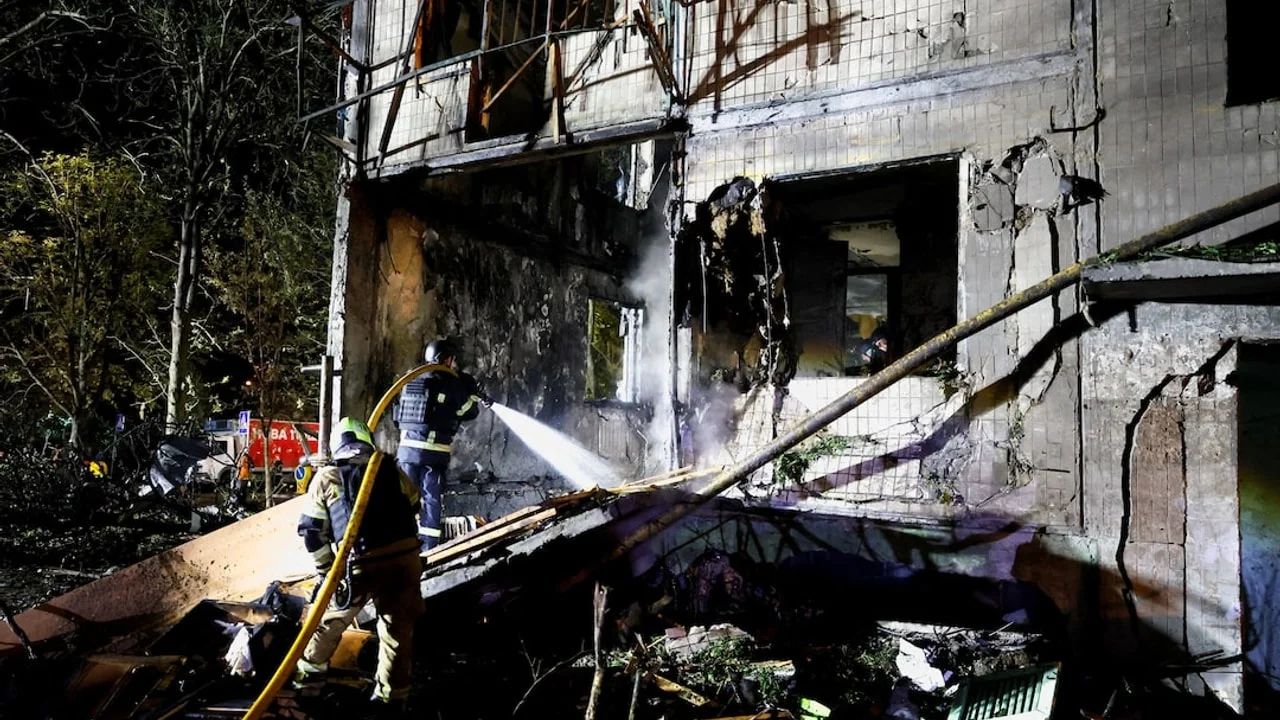
- Kyiv Mayor Vitali Klitschko said at least three people were killed in a Russian missile attack on the capital early Saturday, with people trapped in a partially collapsed residential building. 3
- Reuters witnesses heard more than a dozen explosions; the first and second floors of the building partially collapsed, five people were hospitalised and warehouses were on fire, Klitschko said. 3
- Reuters reported that Ukraine remains chronically short of air-defence systems capable of intercepting ballistic missiles, which travel at several times the speed of sound. 3
Market and supply-chain impact. The immediate commercial effect is local physical disruption and another signal of demand for ballistic-missile defence. The report did not identify a damaged industrial site or quantify transport or production losses, so it supports a defence-procurement read rather than a national supply shock. Buyers should separate the confirmed Kyiv damage from any broader conclusion about Ukrainian output. 3
3. Middle East: Hormuz vessel stops push oil higher, but traffic has not reached zero
- Iran said its forces stopped two vessels trying to leave the Strait of Hormuz and that four other tankers turned back; Reuters said the Iranian reports could not be independently confirmed. 1
- Kpler data recorded two large tankers carrying Gulf-loaded oil and two other commodity vessels passing through the strait on Friday, although ships with transponders switched off are not counted. 1
- An Iranian body managing the strait said crossings remained impossible because of what it called continued U.S. military aggression; the U.S. Central Command said its forces were still blockading Iranian oil exports. 1
Market and supply-chain impact. Brent settled at $90.12, up 1.2%, and WTI at $84.67, up 1.3%; for July, Brent gained 24% and WTI 21%. Reuters also counted 29 commodity vessels through Bab el-Mandeb on Thursday, showing that alternative routes remain open even as insurers, tanker operators and Asian buyers face longer voyages around Africa. 2
4. Taiwan Strait: August communications test prepares for blockade and cyber-disruption scenarios
- Reuters reported on July 21 that Taiwan will deliberately slow mobile internet for 30 minutes during its annual civil-defence drills, the first such test, to see how people communicate when bandwidth is scarce. 5
- The slowdown will affect 14 cities and counties in northern and central Taiwan, covering about 70% of the population; video calls, streaming and social-media images will be unavailable, while ATMs, traffic signals and ambulance calls will continue to work. 5
- The central-region test is scheduled for August 10 and the northern test for August 13. Taiwanese officials said the exercise is meant to prepare for communications disruption caused by a blockade, cyberattack, invasion or compound disaster. 5
Market and supply-chain impact. This is a communications-continuity test, not a reported port or factory shutdown. For companies operating in Taiwan, the operational question is whether staff, suppliers and logistics providers can switch to lower-bandwidth or fixed-line channels without losing essential coordination. Reuters reported no current production or shipping interruption tied to the exercise. 5
5. Middle East: Regional officials link Houthi attacks on Saudi oil sites to launch activity from Iraq
- Two regional officials told Reuters that Yemen's Iran-aligned Houthis attacked Saudi Arabia this week from Iraqi territory in coordination with Iraqi armed groups; Reuters said their assessments differed from official accounts. 6
- The attacks included strikes on oil facilities in Saudi Arabia's eastern province, the kingdom's main crude hub, according to the report. 6
- Saudi Arabia and the United States carried out joint airstrikes on Iraqi sites that Riyadh said were linked to the attacks; the Houthis claimed responsibility, while Iraq said it was investigating. The regional officials said the operations were supervised by Iran's Islamic Revolutionary Guard Corps. 6
Market and supply-chain impact. The confirmed commercial risk is route and insurance exposure; the report does not quantify damage to Saudi output or establish a production outage. Reuters said London insurers widened the Red Sea high-risk zone after Houthi attacks, while Saudi oil has been diverted north toward the Suez Canal and SUMED pipeline, making voyages to Asian customers longer. 1 6
Watchpoints
- Whether China announces a concrete response to the U.S. robot and power-inverter restrictions, and whether it includes a date, product category or named companies.
- Whether Kyiv reports damage to industrial or transport infrastructure beyond the residential and warehouse sites identified in the initial account.
- Whether subsequent vessel-tracking data show loaded tankers moving through Hormuz, or another round of reported stops and turnarounds.
- Whether Taiwan's August 10 and 13 communications tests reveal disruption to suppliers, ports, banks or emergency coordination.
- Whether the Saudi-Iraq investigation confirms the reported launch chain and whether attacks affect crude facilities or only raise the route-risk premium.
This brief reflects reporting and official statements available by the 08:00 briefing cutoff on August 1, 2026. The Taiwan entry is an active planning signal reported on July 21, with the communications tests scheduled for August 10 and 13.
References
- 1Oil price rises after Iran says it stops ships in Hormuz
- 2Oil prices settle more than 1% higher, log strongest month since March
- 3Russia pounds Kyiv with missiles, killing at least three
- 4China warns of retaliation if US sticks with robot ban
- 5Taiwan to slow mobile internet in civil defence drills as China threat grows
- 6Yemen's Houthis are attacking Saudi Arabia from Iraq, sources say
Related content
- Sign in to comment.