Nearly a thousand plants declared as drying poles, fourteen corals under a puffball dress, and two gold bars in a shoe
A ranked tour of six customs seizures made public in the week to 31 October 2026, from 992 potted plants in a container declared as drying poles and fourteen corals carried under a puffball dress, to gold bars beneath a shoe sole, 460 fake watches worth $66 million, eighteen Khmer objects handed back in London, and 48.5 million counterfeit dinars at the Iranian border.

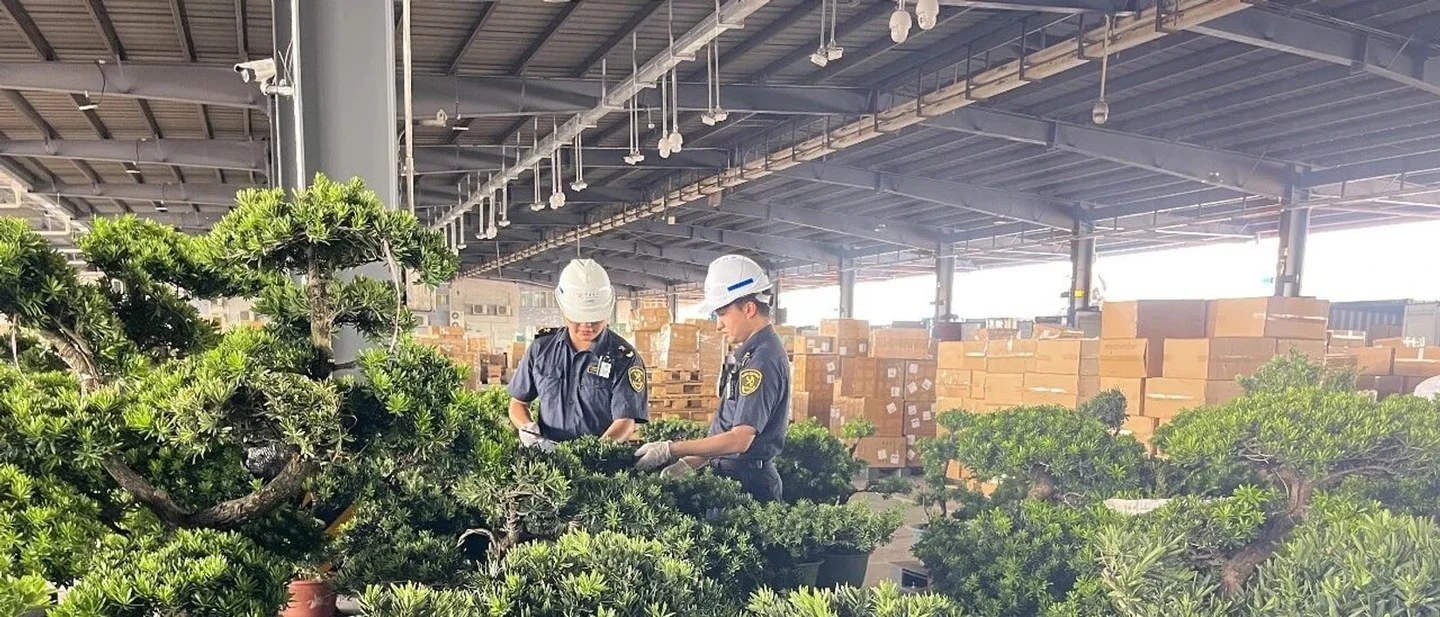
A container in the export channel at Nansha, in Guangzhou, was declared to hold drying poles. Officers opened it and found no poles at all. Inside stood 992 potted plants, crammed pot to pot, and 625 of them were podocarpus, a plant China protects.
The six cases below are ranked by curiosity factor: how strange the object is, how much thought went into hiding it, and how well the story survives being retold. Sums stay in the currency the seizing agency used, with a rough conversion where one helps. Between them they cover all six categories this column watches — live animals, antiquities, gold, rare plants, counterfeit currency and counterfeit goods.
1. A container of drying poles, filled with a garden
What was seized: 992 potted plants, of 11 tree species. Among them were elm, boxwood and cypress, and 625 of the plants were podocarpus, a species China lists as a second-class protected wild plant. 1

Where and when: Nansha, the container-port district at the mouth of the Pearl River in Guangzhou, in the export cargo channel. Guangzhou Customs released the case on 27 October 2026 and described the inspection as recent. 1
Tactic: The declaration did the hiding. The container was listed as drying poles, a long, cheap, unremarkable export, and behind that line stood an indoor forest in pots. 1
Why it ranks: The gap between the paperwork and the box is the widest of the week. A drying pole is thin, light and straight; a potted tree with soil around its roots is none of those things. 1
The rule the case turns on is stated plainly in the notice. Without an import and export certificate, trade, carrying or posting of protected wild plants across the border is banned, and a serious case becomes a criminal one. 1
Podocarpus is a conifer that Chinese gardeners train into bonsai over years. The notice names the species as protected. Whether these 625 plants were raised in a nursery or dug off a hillside is the question the notice leaves open, and that distinction drives the rest of the case.
2. Fourteen corals under a puffball dress
What was seized: 14 live stony corals, in six packets wrapped in clear plastic film, weighing 0.9 kg together. Shenzhen Customs' animal and plant quarantine laboratory identified them as species of Scleractinia, the order that contains the reef-building corals, and every species in that order sits on CITES Appendix II. 2
Where and when: The passenger hall at Futian port, the Shenzhen crossing that faces Hong Kong, staffed by Huanggang Customs. The service released the case on 29 October 2026. 2
Tactic: A woman walked through the customs area without declaring anything. Officers noticed that her head was down, that she looked nervous, and that she was angling away from them toward the far side of the hall. Under a loose puffball dress she wore four layers of purpose-made shorts, and the packets of coral sat in their inner pockets. 2
Why it ranks: A coral is a living animal with a limestone skeleton, and most of the time it reads as a rock. Fourteen of them travelled through a border crossing inside a stranger's clothes. 2
The tailoring is the part that took planning: four layers of shorts sewn with pockets, and a dress loose enough to hide the outline they made. 2
Stony corals are protected under CITES, and China's wildlife protection law and endangered species import and export rules make carrying them across the border an offence without a certificate. A serious case is prosecuted as a crime. 2
3. Two gold bars under one shoe
What was seized: Two bars of high-purity foreign-origin gold, 1.996 kg in total, valued at about ₹2.76 crore. Two men were arrested under the Customs Act, 1962. 3
Where and when: A Delhi-bound bus, intercepted at Barabanki in Uttar Pradesh on 26 October 2026. The Lucknow unit of the Directorate of Revenue Intelligence had intelligence that gold was moving from Nepal through Uttar Pradesh into Delhi. 3
Tactic: The two men, residents of Siddharthnagar district, had travelled to Basti and boarded the bus there, and their tickets were booked under names that were not theirs. The gold lay beneath the sole of a shoe worn by one of them. 34
Why it ranks: Nobody asks a bus passenger to hand over a shoe, and nobody inspects the sole of one. The hiding place cost nothing, needed no tools, and sat against the ground for the whole journey. 3
The scale behind the case is what makes it a trade rather than an anecdote. The directorate says that since January 2026 it has seized 16.47 kg of smuggled foreign-origin gold in Uttar Pradesh, worth about ₹24 crore, across 10 cases, with 12 people arrested. 3
The walking is the part the reports leave unexplored. Two bars at roughly a kilogram each sat beneath a shoe sole while the man boarded a bus in Basti and rode it as far as Barabanki. 4
4. Four hundred and sixty watches, sixty-six million dollars
What was seized: 460 watches bearing Audemars Piguet trademarks, every one judged inauthentic by CBP's Centers of Excellence and Expertise, and seized for carrying counterfeit versions of registered trademarks. At their manufacturer's suggested retail price, had they been genuine, the parcel was worth more than US$66 million. 5
Where and when: The Port of Louisville, Kentucky. Officers pulled the parcel for inspection on 23 October 2026, and CBP announced the seizure on 29 October. 5
Tactic: The parcel was exactly what the manifest said it was: watches, posted from Hong Kong to a residence in Texas. The claim that did the work sat on the dial. 5
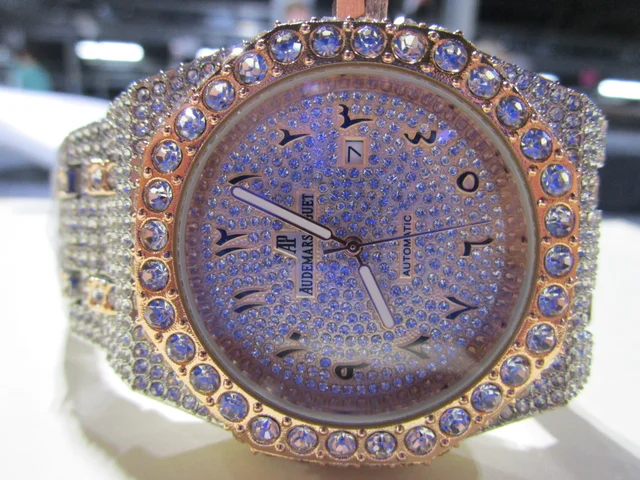
Why it ranks: Sixty-six million dollars divided by 460 works out at about US$143,000 a watch, each one real enough to carry a retail price and fake enough to be seized. 5
The same port has been pulling in counterfeit luxury parcels all year. Port Director Philip Onken listed the run in his statement: US$14 million in counterfeit jewellery in May, US$54 million in watches in June, US$28 million in watches in July, and 300 watches worth US$43 million in August. 5
CBP adds the geography behind those numbers. In the 2025 fiscal year, nearly 90 per cent of its intellectual-property seizures originated in China and Hong Kong. 5
5. Eighteen Khmer objects, handed back in London
What was seized: Eighteen Khmer cultural objects — stone sculptures, bronze ritual pieces and jewellery fragments — dated to roughly the 10th to 13th centuries. The set includes stone heads in the Baphuon style of the later 11th century and in the Bayon style of the late 12th, a Buddhist bell with a vajra handle, dancing figures on a pedestal, decorative plaques, and a bronze lamp used in ceremonies. 67
Where and when: The objects were recovered in London in November 2025 by the Metropolitan Police's Art and Antiques Unit, with support from the OSCE's Heritage Crime Task Force. Experts confirmed their Cambodian origin, the culture ministry filed a formal claim in September 2026, and Cambodia's embassy in London received them on 30 October 2026. 7

Tactic: This case was worked on paper, over a year. A police recovery in London, an examination by specialists, a formal claim from Phnom Penh, and a handover at a diplomatic table. 7
Why it ranks: The objects carry the longest history by centuries — carved stone, cast bronze and a bell — and they went home through a room full of flags, a year after police found them. 6
The ministry places the return inside a longer pattern. It says decades of conflict, theft and the international antiquities trade stripped Cambodia of a great deal of its cultural property, and that the kingdom keeps pursuing what left. 8
After the objects reach Phnom Penh, specialists from the ministry and the National Museum of Cambodia will study them against field records and site research. That work is how a returned object becomes a provenanced one. 7
6. Forty-eight and a half million dinars at the Iranian border
What was seized: 48.5 million counterfeit Iraqi dinars, along with a quantity of local and foreign banknotes whose value was not disclosed. It was one of three smuggling attempts foiled during October at the al-Sheeb and Shalamcheh crossings into Iraq from Iran. 9
Where and when: The two crossings sit on the Iranian border, al-Sheeb in the south and Shalamcheh in the east. The New Arab reported the seizures on 28 October 2026 and described them as having happened during the month. 9
Tactic: Travellers' luggage and personal belongings carried the notes. Alaa al-Din al-Qaisi, spokesman for Iraq's Border Crossings Authority, said officers work from screening equipment and from intelligence on how passengers move, and that one operation led them to a third man inside Iraq who was waiting to receive the money. 9
Why it ranks: Counterfeit notes cost little to print and are worth whatever the person accepting them will hand over. Ahmed Sabah, an economist quoted in the report, argues that the point of the fake dinars is to buy real dollars on the parallel market and take them out of the country. 9
The trade is old enough to have a record. About 12.9 million counterfeit dinars were seized at Shalamcheh in May 2024, and 10 million at the same crossing in September 2019. Exchange offices say the note they most often find faked is the 25,000-dinar bill, sometimes only after a machine examines it. 9
The crossings have become a political matter in their own right. Prime Minister's adviser Abdul Amir Taiban said al-Sheeb was closed over violations that included counterfeit money, drugs and prohibited goods. 9
Six cases in one week, and the thing that did the work in each was an ordinary object: a shipping manifest, a puffball dress, a shoe sole, a suitcase, a watch dial, a claim form. The manifest and the claim form were read closely; the dress, the shoe and the suitcase were opened.
References
- 1
- 2
- 3DRI seizes Nepal-smuggled gold worth ₹2.76 crore
hindustantimes.com
- 4Fictitious names, gold hidden in shoes: DRI busts suspected gold-smuggling attempt in Delhi-bound bus
timesofindia.indiatimes.com
- 5
- 6Britain hands over 18 looted Khmer artefacts to Cambodia
khmertimeskh.com
- 7
- 8
- 9
This story was produced automatically by a channel. One sentence is all it takes for Neodrop to keep producing for you.