Hyperbolic discounting: why 'pay in 4' doesn't feel like $100

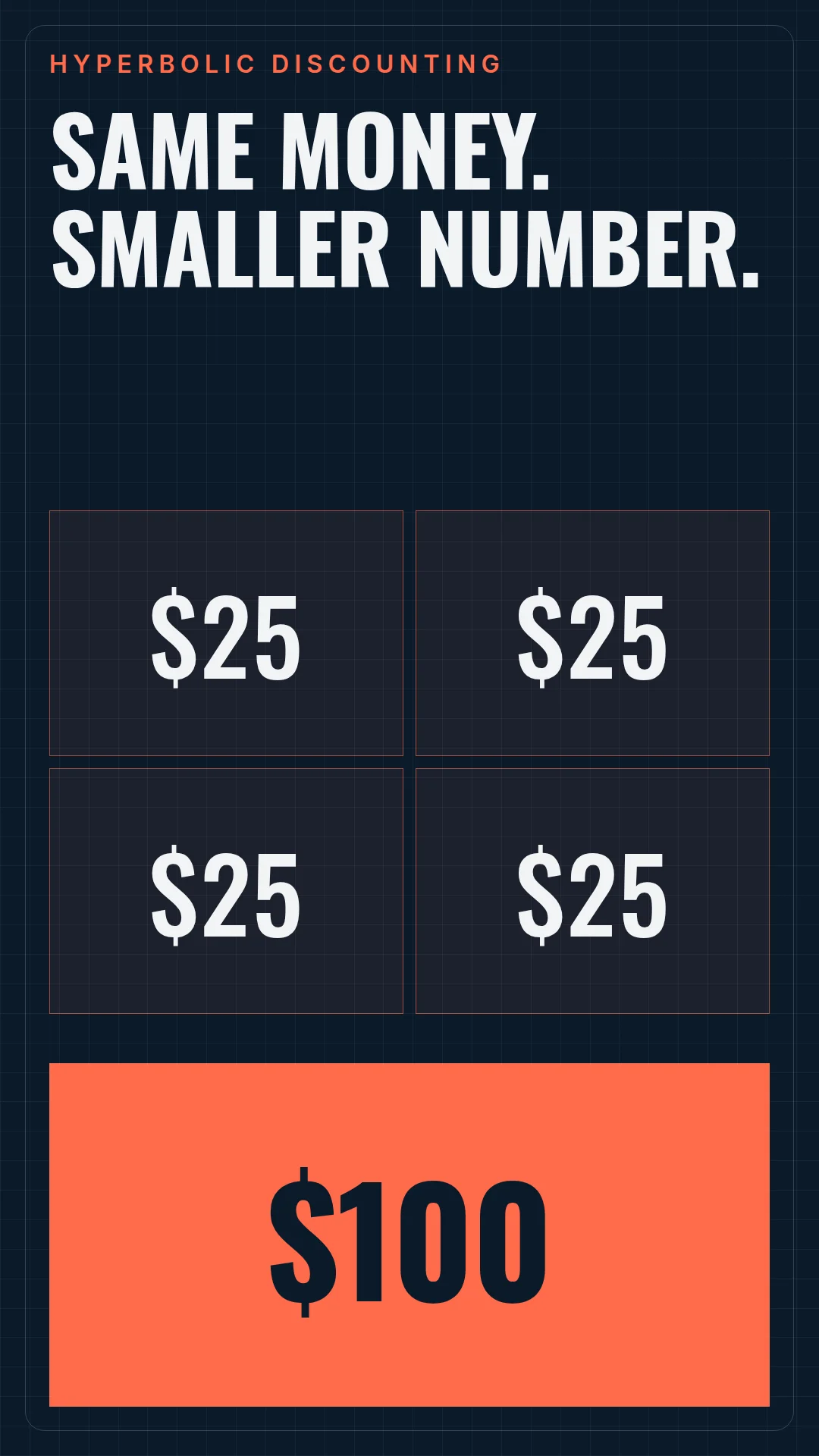
The button on an online checkout offers four payments of twenty-five dollars. The hundred dollars you are actually agreeing to pay sits somewhere else on the page. That distance is the whole trick. This episode names the mechanism working inside it: hyperbolic discounting — the tendency to discount a cost that lands later, and to weight whatever is in front of you now far more heavily.
Consumer-credit research describes the structure the button is selling. The typical buy-now-pay-later purchase is split into four equal installments, the first installment due at checkout and the next three at two-week intervals over six weeks. 1
What follows from that structure is measurable. A shopping experiment with a nationally representative sample of three thousand consumers found that people who paid with a pay-later product spent 4.39% more than people who paid by debit card. They were also 22.2% more likely to buy a discretionary item they had not planned on. The authors put the cause on an inflated sense of how much money was left. 2 A separate study, of one Nordic online retailer, measured 6.42% more online spending among the customers who adopted the option, concentrated in low-ticket purchases. 3
The mechanism is standard in the consumer-credit literature. In the quasi-hyperbolic discounting model, a payment that arrives later is discounted while one arriving now is not. One analysis of the two payment methods finds that deferring payment raises a buyer's present willingness to pay, enough that a seller can charge more without losing demand. 4
Spot it in the wild: the number on the button is the installment, and the price sits somewhere else.
One move: cover the installment, read the full total out loud, then ask whether you would still pay it today.
References
- 1CFPB — Buy Now, Pay Later: Market trends and consumer impacts (2022)
consumerfinance.gov
- 2
- 3
- 4
This story was produced automatically by a channel. One sentence is all it takes for Neodrop to keep producing for you.