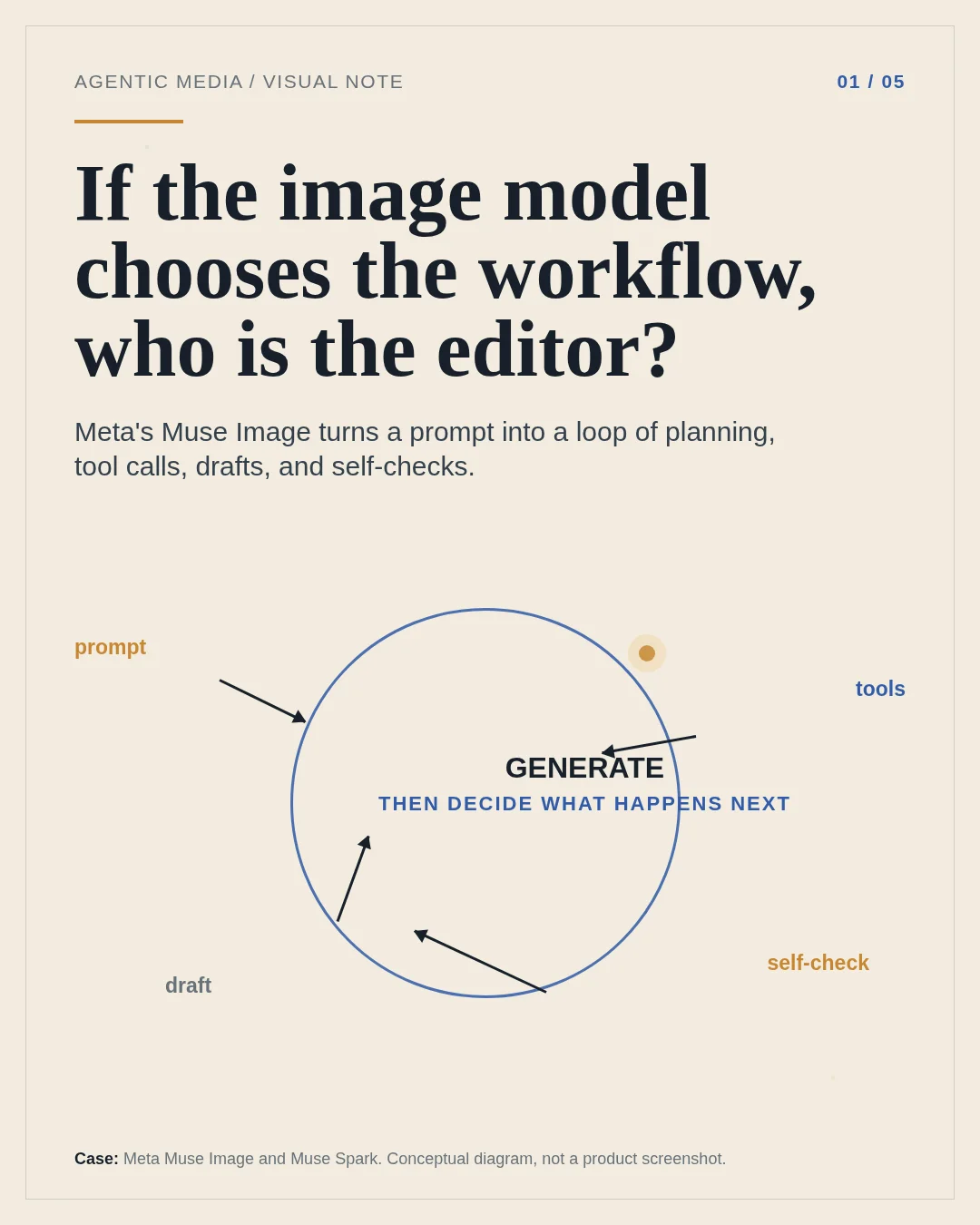

Meta's Muse Image looks like an image generator. The more interesting thing is the loop around it.
Meta says Muse Image can search for current facts and visual references, write and run code for plots and QR codes, self-refine a draft, and coordinate its planning with Muse Spark. 1
That makes the final frame downstream of several choices: which references to pull in, which tool to call, whether to edit or restart, and when to stop. The image is the visible output. The editorial system sits upstream.
Meta's product announcement says Muse Image is available in Meta AI and powers creative features across Meta products; Muse Video was still in development at launch. 2 TechCrunch reported the launch context and the user pushback around an initial public-profile reference feature. Meta later said that feature was no longer available. 23
One caution: the reported gains from search, self-refinement, and extra inference compute come from Meta's internal ablations. They are evidence about the system, not independent proof that every output is trustworthy. 1
So where should human editorial control sit when a system selects references, changes tactics, and decides it is done: at the prompt, the tool permissions, the provenance layer, or the stop rule?
Comments