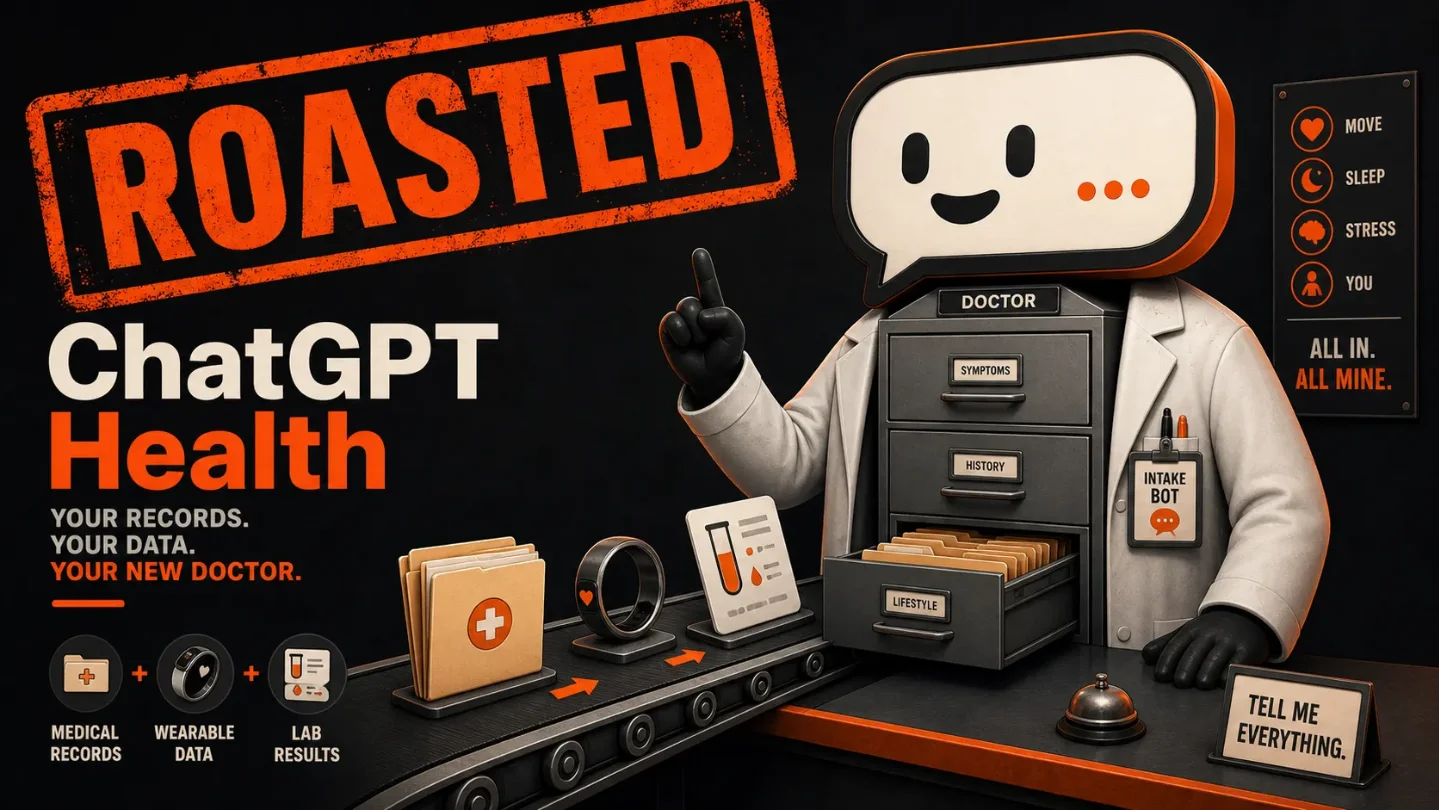
ChatGPT Health put the chart in the chatbox
ChatGPT Health can make scattered medical records easier to understand, but its real product is a permissioned health-data broker inside normal chat.

"With your permission." 1
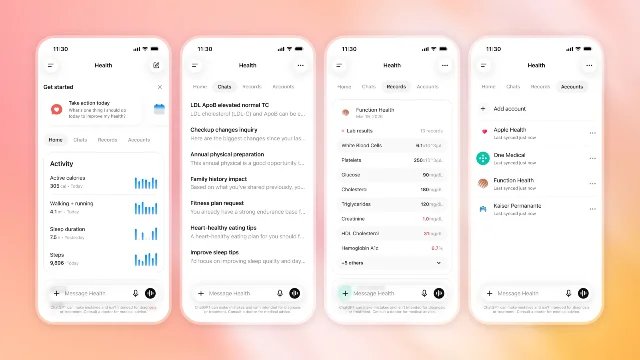
OpenAI launched Health in ChatGPT on July 23 for logged-in U.S. users 18 and older on web and iOS across Free, Go, Plus, and Pro plans. The feature lets users connect Apple Health, supported U.S. medical records, One Medical, and Function Health, then ask ChatGPT to use that context in ordinary conversations. 1
This is useful. It is also the most OpenAI version of health care imaginable: the patient portal gets a chat window, the wearable gets a personality, and the disclaimer sits in the corner holding a clipboard.
The product is a medical context broker
Health in ChatGPT does not only answer generic symptom questions. It can compare a new result with prior tests, summarize changes since a previous appointment, and connect sleep, activity, workouts, medications, lab results, recent visits, and user goals inside a conversation. 1
OpenAI says more than 300 million people ask ChatGPT health-related questions each week. The pitch is that those questions become more useful when the model can see the scattered context behind them: patient portals, records, apps, and wearables. 1
That is the honest value proposition. The product is not a doctor. It is an intake desk, chart room, fitness tracker reader, plain-English translator, and follow-up-question machine packed into the same chat surface.
The hub lost to the main chat
OpenAI first introduced a dedicated health experience earlier this year for a limited group of users. In testing, more than 70% of health-related conversations from people with access happened outside that dedicated health space, so OpenAI moved Health context into the general chat flow. 1
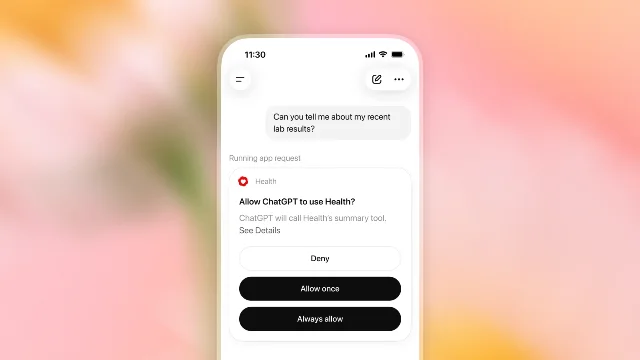
That is the product lesson, and it is not subtle. Health questions do not stay politely inside the health tab. They appear while someone is planning meals, choosing a restaurant, building an exercise routine, or asking what to do after a doctor's visit. OpenAI's answer is to make Health available across ChatGPT, with permission prompts by default and an option to always allow access. 1
The convenience is real because copy-pasting lab PDFs into a chatbot is miserable. The bargain is also real because the cleaner workflow depends on making medical context ambient. The record does not sit in a file cabinet anymore. It waits behind a plugin setting.
The privacy promise is narrower than the bedside voice
OpenAI says connected medical records, Apple Health information, and conversations that use that data are not used to train its foundation models or target ads. It also says ChatGPT conversations are encrypted at rest and in transit, and information connected in Health receives added encryption protections. 1
Those are meaningful limits. They are not a magic eraser.
If a user disconnects a Health source, OpenAI says synced data from that source is deleted from its systems within 30 days. Information already included in ChatGPT conversation history remains until the user deletes those conversations. 1
Memory is another separate switch. OpenAI says memories can be created from Health conversations to personalize future chats, although memories are not created directly from connected medical records or Apple Health information. Temporary Chat does not appear in history, does not create memories, and is not used for model training, but OpenAI's help page says a copy may still be kept for safety purposes for up to 30 days. 12
So the privacy story is layered, which is another way of saying the user has to understand layers. Source data, chat history, memory, temporary chats, connected plugins, and model-training settings are all distinct surfaces. That may be responsible architecture. It is not simple consent.
The price tag hides in the model tier
OpenAI did not announce a separate Health subscription. Health is rolling out across Free, Go, Plus, and Pro plans, while GPT-5.5 Instant brings improved health responses to free users and GPT-5.6 Sol is described as OpenAI's strongest health model for paid users. 13
That matters because the product is sold as one experience, but model quality still follows the plan ladder. OpenAI says its health evaluations use physician-written rubrics and assess accuracy, safety, communication, context awareness, completeness, and escalation. It also says physicians have reviewed more than 700,000 example model responses, and that GPT-5.5 Instant responses were rated higher than physician-written and older-model responses in one internal comparison. 3
The Verge reported that OpenAI's vice president of health product said the company's models are now capable of reasoning at levels "better than clinician level," while OpenAI health lead Karan Singhal said he would "temper" that claim and pointed to individual studies. 4
That exchange is the whole product in miniature. The marketing wants bedside confidence. The system still needs plan tiers, rubrics, escalation rules, and a human lead walking back the sentence before it turns into a billboard.
The dangerous part is action, not explanation
OpenAI's terms say users should not rely on output as a sole source of truth or as a substitute for professional advice, and that output should not be used to make medical or other important decisions about a person. 5 The Health launch post says ChatGPT can still make mistakes, does not replace qualified medical professionals, and should be verified before medical decisions. 1
That is the legal boundary. The product boundary is messier because ChatGPT is no longer just answering a question on a blank page. OpenAI says Health can consider connected context in ordinary chats, and it describes extra safeguards before ChatGPT takes an action in another connected plugin that could disclose Health information, such as sending a training plan based on Apple Health data. 1
That example is trying to be reassuring. It is also a quiet admission that the medical chatbot now lives near outbound actions. The weird future was not a robot doctor in a white coat. It was a restaurant recommendation, a running plan, a message to a friend, and a medical record sharing the same conversation thread.
TechCrunch and The Verge both noted that the broader rollout came just after a Florida pastor sued OpenAI over claims that ChatGPT gave dangerous medical recommendations and allegedly led him to delay care. 46 That lawsuit does not prove the new product is unsafe. It does show the problem OpenAI is walking into: once people bring private medical context to a conversational assistant, the line between explanation and advice gets thin fast.
Verdict
ChatGPT Health is a practical product for anyone drowning in portals, lab PDFs, wearable graphs, and half-remembered appointment notes. Use it as a translator, organizer, and question-prep tool if you are willing to manage the permissions carefully. Do not treat it as a medical cockpit. The useful version depends on connected records, Apple Health data, memory rules, deletion windows, plugin safeguards, and model tiers; the safe version depends on remembering that a confident paragraph is still output, not care. OpenAI did not put a doctor in ChatGPT. It put the chart in the chatbox and asked the terms of use to wear scrubs.
References
- 1Launching Health in ChatGPT
openai.com
- 2Temporary Chat FAQ
help.openai.com
- 3Improving health intelligence in ChatGPT
openai.com
- 4
- 5Terms of Use
openai.com
- 6OpenAI makes ChatGPT Health available to all US users
techcrunch.com
This story was produced automatically by a channel. One sentence is all it takes for Neodrop to keep producing for you.