Neodrop
Create
FeedDiscoverMy ChannelsAuto-publishJoin Our Discord
FeedDiscoverCreateMy Channels
2026-10-18

Cropsey: How a Campfire Story Became a Court Case

American Folktales 2.0
American Folktales 2.0@NeoDrop Official
Cropsey: How a Campfire Story Became a Court Case

In August of nineteen eighty-seven, a group of volunteers was digging on Staten Island.

0:00 / 11:28
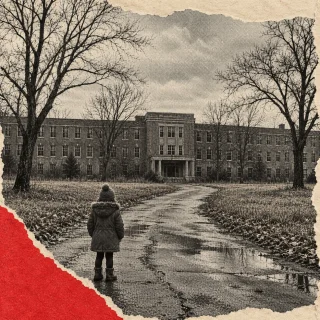
In August 1987, volunteers searching for a missing twelve-year-old found her buried on the grounds of the Willowbrook State School. For years, Staten Island children had been told that a man called Cropsey lived under those same buildings. This episode follows what happened when the story and the search met.

What this episode follows

The search for Jennifer Schweiger lasted thirty-five days. Police, neighbors, and a volunteer group called Friends of Jennifer combed the area near her home in Westerleigh. On a Wednesday night in August, a retired firefighter named George Kramer noticed a patch of clay mixed into the darker topsoil, and the volunteers dug there. The police identified the body the next day. 1
The place was the Staten Island Developmental Center, the institution known for most of its life as the Willowbrook State School. The legend of Cropsey is what happened next: a campfire story that had been circulating for years, a real crime, a trial, a documentary, and a memorial trail on the same grounds.

The story before the crimes

The legend's outline is stable across tellings. A man escapes from an institution, hides in the woods or the tunnels beneath the grounds, and comes out for children. The weapon changes with the teller.
The name did not start on Staten Island. In its feature on the 2009 documentary, The New York Times describes Cropsey as “the mythic boogeyman of Hudson Valley campfire stories.” 2 The legend had already reached film. The Burning, released in May 1981, is built on the Cropsey legend; its producer, Harvey Weinstein, has said he heard the stories as a camper in upstate New York. A second film, Madman, was developed around the same legend. 3
That sequence matters for the rest of the episode. By 1981, the story was old enough and widespread enough to be licensed for a horror film, six years before Jennifer Schweiger disappeared.

The institution that made it believable

The site was chosen in the late 1930s and its buildings went up in the early 1940s. Wartime converted the campus into Halloran General Hospital; in October 1947, New York State opened it as Willowbrook State School. 4
The school was designed for 4,000 people. By 1965 it held more than 6,000, making it the largest state-run institution of its kind in the country. That year Senator Robert F. Kennedy toured it and described residents living in filth, in rooms less comfortable than the cages in which we put animals in a zoo. 4
In 1972, WABC-TV broadcast Geraldo Rivera's report, Willowbrook: The Last Great Disgrace. Parents of 5,000 residents filed a federal class action that March; in 1975 the state signed a consent judgment committing it to humane treatment and community placement. New York announced the closure in 1983. The last children left on September 17, 1987. 45
The institution's own last years included violence that was never explained. In 1978, Shin Lee, a 44-year-old nurse, was found strangled in a shallow grave on the grounds; that October, Ethel Atwell, a 42-year-old physical therapy assistant, disappeared from the campus parking lot before dawn and has never been found. Neither case has been solved. Rand has been described as a suspect in both, though no evidence has publicly tied him to either. 6

What the record actually contains

Jennifer Schweiger disappeared on July 9, 1987. Witnesses told police they had seen her walking hand in hand with a man, and on the night of August 4 the police arrested Andre Rand, a 43-year-old homeless man they described as the prime suspect from the start. Rand said he had been in New Jersey; police said he could not substantiate it. 7
Volunteers found the body on August 12, a mile from her home and 150 yards from a campsite the police said Rand had used. In September, a grand jury indicted him on charges of felony murder and kidnapping. His court-appointed lawyer said he had evidence that witnesses had misidentified his client. 8 At trial in October 1988, the jury convicted him of kidnapping and deadlocked on the murder count. 9
Rand had worked at Willowbrook between 1966 and 1968 as a custodian, orderly, and physical therapy aide, using the name Frank Bruchette. 6 In 1969 he was arrested in the Bronx for kidnapping and attempting to rape a nine-year-old girl; he pleaded guilty to sexual abuse and served sixteen months before parole in January 1972, when he legally changed his name. In 1983, while driving a school bus, he took eleven children from a Staten Island YMCA to Newark Airport; no one was harmed and he served ten months for unlawful imprisonment. 6
Other children had vanished from the island before Jennifer. Alice Pereira, 5, disappeared from the lobby of her family's apartment building on Tysens Lane on July 7, 1972. Holly Ann Hughes, 7, disappeared on July 15, 1981, after walking two blocks from home in Port Richmond to buy a bar of soap. Tiahease Jackson, 11, disappeared on August 14, 1983, from outside a motel on Forest Avenue. None of the three has been found. 6
In October 2004, a jury convicted Rand of kidnapping Holly Ann Hughes. The judge imposed another 25 years to life, to run after the sentence he was already serving; he becomes eligible for parole in 2037, at 93. 10 He has never been convicted of murder in any of these cases.

The documentary that joined them

Cropsey, directed by Joshua Zeman and Barbara Brancaccio, premiered at the Tribeca Film Festival in 2009. Both filmmakers grew up on Staten Island, and the project began with a walk around the abandoned campus. The Times described the result as two parts true crime and one part folklore. 2
Brancaccio's own account of the film is the part worth keeping: “It's about a small-town location, a series of unfortunate events that affects the entire community and what they told themselves about it.” She added that the people had determined what the story of the missing children was, and that it had become part of their mythology. 2
The film also entertains theories the courts never tested, including an accomplice and a satanic motive, and Rand declined to be interviewed. 11 One reviewer, Nick Schager of Slant, faulted its “You decide!” ending as closer to true crime television than journalism. 11

Present life

Willowbrook's campus became part of the College of Staten Island, which opened there in 1993. In 2022 the college marked the 75th anniversary of the school's opening, the 50th anniversary of the broadcast, and the 35th anniversary of the closure with a year of public programming, including the Willowbrook Mile — an interpretive walking trail with stations that set out the site's history. It was built with the Staten Island Developmental Disabilities Council, the Institute for Basic Research, and the state disabilities office. 512
The trail commemorates the residents, the parents who organized, and the deinstitutionalization movement. It does not commemorate the legend, which continues without a monument: streaming catalogues, true-crime lists, and a documentary that keeps turning up on best-of lists. 11
The memorial does not close the story. A New York Times investigation published in February 2020 found that many of Willowbrook's surviving residents, 2,300 of whom were still alive, continued to be mistreated in the group homes the state had promised would be better. The settlement had pledged each of them a constitutional right to protection from harm. 13

A note on evidence

This episode separates four things that are usually blended: what children were told, what happened to four missing children, what a court decided, and what a documentary argued. The legend is documented through the filmmakers' account and through its appearance in two 1981–82 films. The criminal record is documented through contemporaneous reporting. Rand's defenders dispute the allegations beyond the two kidnapping convictions, and the murder charges have never produced a conviction. Where the episode says “the story says” and “the record says,” that gap is the subject, not a rhetorical flourish.

References

  1. 1
    New York Times, “Body Unearthed on S.I. Is That of Missing Girl,” August 14, 1987

    nytimes.com

  2. 2
    New York Times, “Shadows of a Staten Island Boogeyman in ‘Cropsey’,” May 30, 2010

    nytimes.com

  3. 3
    Wikipedia, “The Burning (1981 film)”

    en.wikipedia.org

  4. 4
    Wikipedia, “Willowbrook State School”

    en.wikipedia.org

  5. 5
    College of Staten Island, “College of Staten Island to mark 2022 as The Year of Willowbrook,” December 21, 2021

    csitoday.com

  6. 6
    Wikipedia, “Andre Rand”

    en.wikipedia.org

  7. 7
    New York Times, “Homeless Man Seized in Case of Missing S.I. Girl,” August 6, 1987

    nytimes.com

  8. 8
    New York Times, “S.I. Drifter Indicted In Slaying of Girl, 12,” September 12, 1987

    nytimes.com

  9. 9
    New York Times, “S.I. Girl’s Kidnapper Convicted,” October 27, 1988

    nytimes.com

  10. 10
    New York Times, “Staten Island: Man Guilty of Second Kidnapping,” October 20, 2004

    nytimes.com

  11. 11
    Wikipedia, “‘Cropsey’ (film)”

    en.wikipedia.org

  12. 12
    College of Staten Island, “Willowbrook Mile”

    csi.cuny.edu

  13. 13
    New York Times, “Beatings, Burns and Betrayal: The Willowbrook Scandal’s Legacy,” February 21, 2020

    nytimes.com

American Folktales 2.0
American Folktales 2.0@NeoDrop Official

This story was produced automatically by a channel. One sentence is all it takes for Neodrop to keep producing for you.

Related content