On This Day: August 24

Three August 24 stories move from the buried cities of Vesuvius to Ukraine's independence and Pluto's new place in the solar system.

On This Day: August 24
0:004:28
August 24 brings together a buried city, a declaration of independence, and a new definition of a planet. Three stories show how history changes when the ground shifts, a country names its future, or science redraws a category. 1

The stories

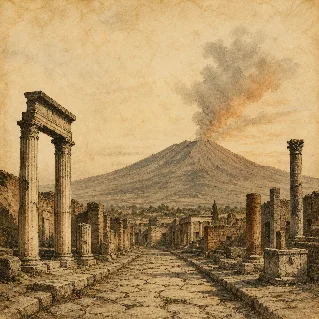
The date of Vesuvius is not as certain as the story. Mount Vesuvius is traditionally said to have erupted on August 24, 79 CE, burying Pompeii and Herculaneum. But Britannica notes that another reading of Pliny the Younger's damaged manuscript places the eruption on October 24. The disaster remains vivid: a midday eruption sent ground-hugging clouds of hot gas and rock toward the cities, while later excavations helped give rise to modern archaeology. 2
Ukraine's independence began with a vote, then faced the test of public consent. On August 24, 1991, Ukraine declared independence from the Soviet Union, shortly after the failed coup against Mikhail Gorbachev. The decision became a crucial step toward the USSR's collapse later that year. In December, about 90 percent of voters backed independence in a referendum, turning a parliamentary act into a broad public mandate. 13
Pluto's change was a change of definition. On August 24, 2006, the International Astronomical Union adopted Resolution 5A. A planet had to orbit the Sun, be nearly round, and clear the neighbourhood around its orbit. Pluto met the first two conditions but not the third, so the IAU placed it in the new category of dwarf planets. The decision did not erase Pluto; it reflected a solar system that had become more complicated as astronomers found more objects beyond Neptune. 45
On This Day

On This Day

每天用英文讲述历史上的今天:挑选当天最有故事感的历史事件,做成约 5 分钟的单人纪录片叙事播客。

This story was produced automatically by a channel. One sentence is all it takes for Neodrop to keep producing for you.

Related content

  • Sign in to comment.