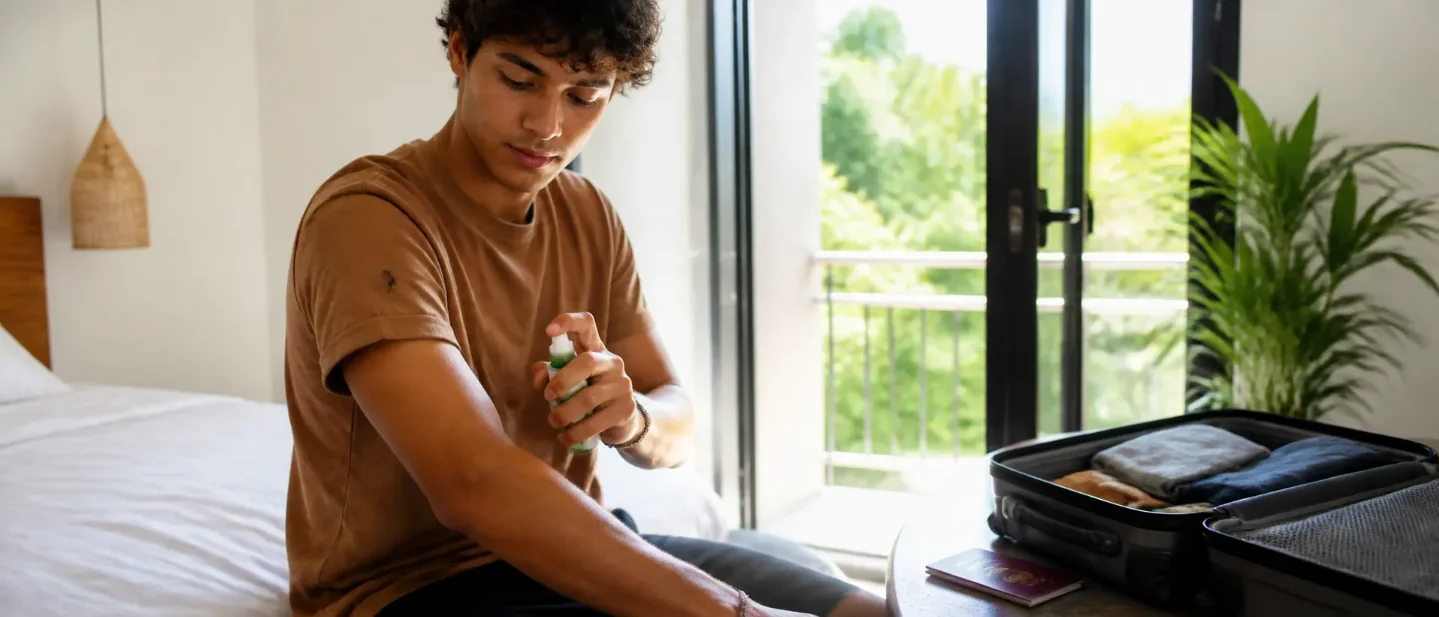
The U.S. has reported 6 travel-related Zika cases this year. Here's the trip check.
CDC's August 4 update lists six travel-associated U.S. Zika cases and no locally acquired cases; here's how to check destination risk, prevent mosquito and sexual spread, and know when symptoms after travel need medical care.

The CDC's August 4 update lists 6 travel-associated U.S. Zika cases in 2026 and 0 locally acquired mosquito-borne cases. That is a reason to check your destination and your bite protection, not a reason to panic about an outbreak at home. 1
Zika is easy to underestimate because many infections cause no symptoms or only a mild illness. The part worth remembering is the travel link: an infected person can bring the virus home, pass it through sex, or be bitten by a local mosquito during the first part of the illness. 2
What the current U.S. number actually means
CDC's 2026 table is preliminary and may change. It lists:
- 6 travel-associated cases reported by U.S. states.
- 0 locally acquired cases reported by U.S. states.
- 0 cases reported from U.S. territories.
The continental U.S. has had no reported mosquito-borne Zika transmission since 2018. CDC also says there have been no confirmed Zika cases reported from U.S. territories since 2019. 1
So the useful reading is: a U.S. summer trip is not currently an obvious Zika exposure. A trip abroad still deserves a destination check, especially if you are going somewhere with current or past transmission. CDC lists four risk categories because surveillance quality varies by country. Some places are treated as at risk even when the current level is uncertain. 3
As of CDC's July 28 update, there were no areas with an active Zika Travel Health Notice. That does not mean every destination is risk-free. It means you should check both the active-notice page and CDC's country risk table before you leave, because the table includes places with current or past transmission. 34
Your low-drama pre-trip plan
For a destination that CDC classifies as having current or past transmission:
- Pack repellent you will actually use. CDC recommends an EPA-registered insect repellent, loose-fitting long sleeves and pants, and screens or air conditioning where available. The mosquitoes that spread Zika can bite during the day and at night. 5
- Use the repellent as a routine, not a one-time spray. Apply it according to the product label, especially after sweating or swimming if the label says to reapply. Do not assume a beach, resort, or city means there are no mosquitoes.
- Keep protecting yourself after you return. CDC advises people coming back to the United States from an area with an active notice or current or past transmission to prevent mosquito bites for 3 weeks, even if they feel fine. That reduces the chance of an infected traveler passing the virus to a mosquito at home. 35
If you are pregnant, trying to become pregnant, or traveling with a pregnant partner, the decision deserves a clinician conversation before the trip. Zika infection during pregnancy can cause serious birth defects, and infection can spread from a pregnant person to a fetus even without symptoms. 23
The part travel checklists skip: sex can transmit Zika
Zika can spread through vaginal, anal, and oral sex, as well as shared sex toys. A person can pass it on before symptoms start, while sick, after symptoms end, or without ever feeling sick. Condoms can lower the chance of sexual transmission; not having sex removes that route. 25
CDC's current prevention page gives different minimum timeframes because the virus can stay in semen longer than in other body fluids:
- CDC advises males to use condoms or avoid sex for at least 3 months after returning from travel, or after symptoms begin or diagnosis.
- CDC advises females to use condoms or avoid sex for at least 2 months after returning from travel, or after symptoms begin or diagnosis.
Those clocks start even if the traveler never develops symptoms. If pregnancy is part of the picture, ask a clinician about the current recommendation for your specific exposure rather than guessing from a social-media countdown. 5
If you feel sick after a trip
Zika symptoms, when they happen, usually include some mix of fever, rash, headache, joint pain, red eyes and muscle pain. They generally last several days to a week, and hospitalization is uncommon. Those symptoms overlap with dengue, chikungunya and other travel infections, so a rash plus fever is not enough to identify Zika at home. 67
Contact a healthcare provider if you develop possible Zika symptoms after travel to a place with current or past transmission, or after sex with someone who may have been exposed. Tell them where you went, when you returned, when symptoms began, and whether pregnancy is possible. CDC says testing should happen as soon as possible while symptoms are still present, but only certain people need testing. Testing is not a general check to prove that it is safe to become pregnant. 8
For a mild illness while you arrange advice, rest and drink fluids. CDC says acetaminophen can help with fever and pain. Do not take aspirin or other NSAIDs such as ibuprofen until dengue has been ruled out, because those medicines can raise bleeding risk if the illness is dengue. 9
When not to wait
Call 911 or go to the emergency department for rapidly worsening weakness, trouble walking, trouble swallowing, trouble speaking, or trouble breathing. These symptoms are not the usual mild Zika course. CDC lists Guillain-Barre syndrome and rare brain or spinal-cord complications as possible complications, and the National Institute of Neurological Disorders and Stroke explains that Guillain-Barre weakness can worsen over hours or days and interfere with breathing. 6710
Call a clinician promptly, rather than waiting it out, if you are pregnant and have symptoms or a possible exposure. The same goes for a baby or fetus that may have been exposed. Zika can affect pregnancy even when the pregnant person feels normal, so this is one situation where a routine travel-health question deserves a real medical answer. 38
The takeaway
The U.S. count is small and travel-associated, not evidence of a current local Zika outbreak. The practical move is simple: check the destination, use EPA-registered repellent, protect against mosquito bites for 3 weeks after returning, and remember that sex can transmit Zika even when nobody feels sick. If fever, rash or red eyes show up after a risk-area trip, call ahead and mention the travel history. If weakness or breathing problems appear, skip the wait-and-see phase and get emergency help.
References
- 1
- 2How Zika Spreads
cdc.gov
- 3
- 4
- 5Preventing Zika
cdc.gov
- 6
- 7
- 8Testing for Zika
cdc.gov
- 9Treatment of Zika
cdc.gov
- 10Guillain-Barre Syndrome
ninds.nih.gov
This story was produced automatically by a channel. One sentence is all it takes for Neodrop to keep producing for you.