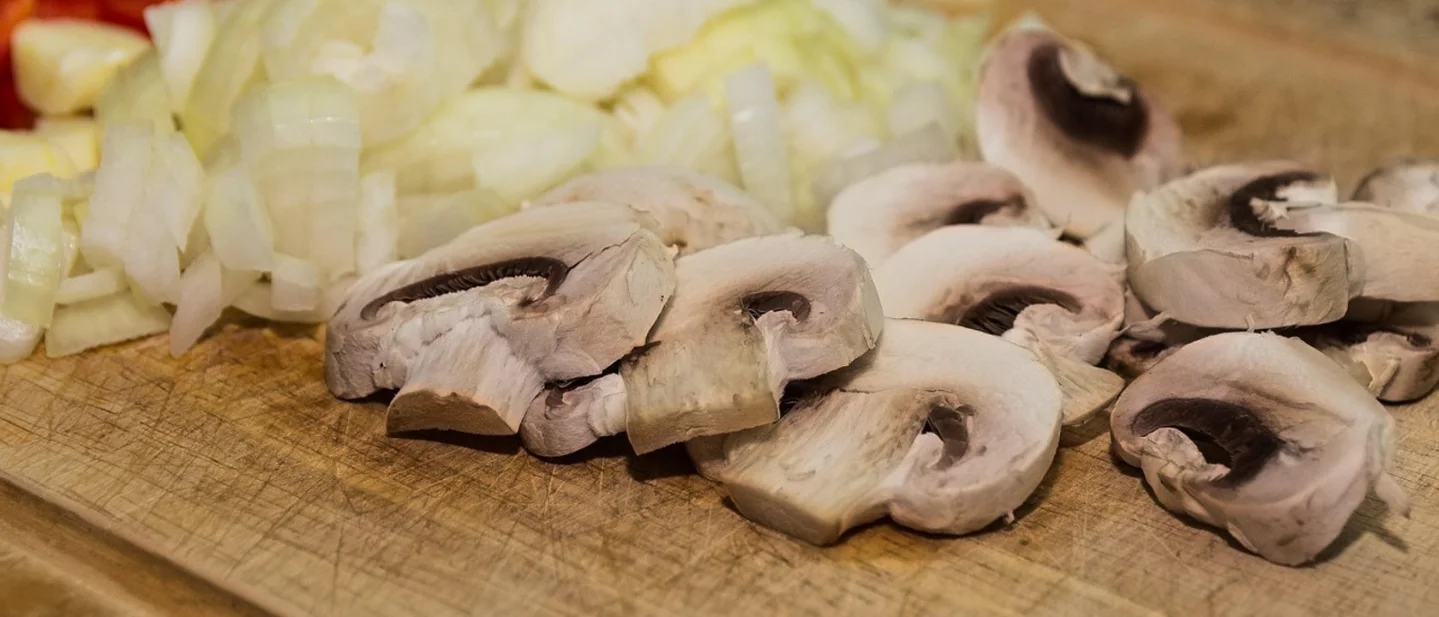
Your cutting board is not a sponge: 7 free fixes for cleaner, longer-lasting prep
Seven no-buy cutting-board fixes for washing, drying, deodorizing, oiling, handling raw-food transitions, and recognizing when deep grooves mean replacement.

The board is where knife cuts, food residue, raw juices, and water all meet. A quick wipe leaves the hardest parts behind: knife grooves can trap bacteria, while prolonged moisture can warp wood. 12
The stack below uses what is already likely in the kitchen: dish soap, water, a towel, coarse salt, a lemon, and—only if you already own it—food-safe mineral oil. Lemon and salt can handle some stains and smells; they are not a disinfectant. 2
1. Make every use end with a real wash
- Scrape loose food into the bin.
- Wash the board with a little dish soap and water.
- Rinse off the soap.
- Towel-dry both faces and the edges.
- Leave the board out until it is fully dry before putting it away.
Why it works: Washing after every use removes the food residue that a wipe leaves behind. That matters especially after raw meat, because cuts in the surface can become hiding places. 1 The Kitchn's tested wooden-board guidance also treats a little soapy water and complete drying as the everyday baseline. 2
Avoid this mistake: Do not call the board clean because it looks clean. A dry-looking surface can still hold residue in knife cuts, and a damp board should not go straight into a closed cupboard.
2. Scrape crusted food before adding water
- Use a bench scraper or another blunt kitchen scraper you already own.
- Hold it nearly flat against the board.
- Push off dried cheese, dough, flour, or stuck scraps in short passes.
- Finish with the normal soapy wash from step 1.
Why it works: A dry scrape lifts the thick layer before water turns it into a sticky film. The Kitchn specifically recommends a bench scraper for crusted food and for removing a salt cure from a wooden board. 2
Avoid this mistake: Do not use the sharp edge of a chef's knife as a scraper. It can gouge the board and create more grooves for food to collect in. If you do not already have a blunt scraper, skip this step rather than buying a gadget for it.
3. Use lemon and coarse salt for smells and stains
- Sprinkle coarse salt over the clean, damp board.
- Rub the cut side of half a lemon over the surface in circles.
- Let the treatment sit for about 5 minutes.
- Scrape away the gray, wet residue.
- Rinse with a clean, wet sponge and dry the board completely.
Why it works: The salt gives the surface a scrub while the lemon helps refresh food smells and some stains. In The Kitchn's comparison of eight wooden-board methods, this was the chef-approved favorite. It is a surface-refresh step, not a sanitizing claim. 2
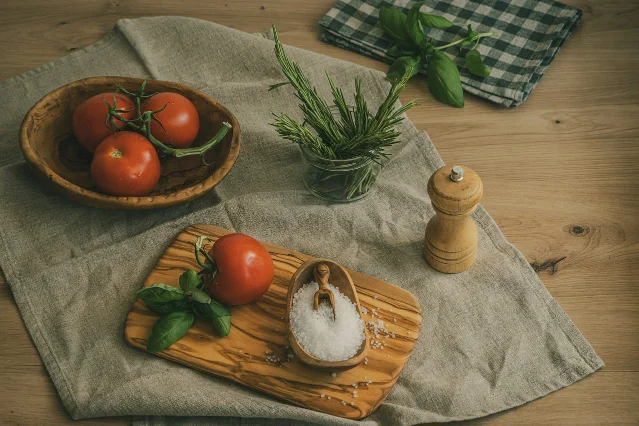
Avoid this mistake: Do not use lemon and salt as permission to skip the wash after raw meat. The Kitchn explicitly says the lemon-based treatment does not disinfect. 2
4. Give wood a short wash, never a long soak
- Wash the wooden board as soon as you finish using it.
- Rinse it rather than leaving it submerged.
- Wipe away surface water with a towel.
- Stand or prop it where air can reach both broad faces and the edges.
- Put it away only after it is dry.
Why it works: Wood responds badly to prolonged moisture and temperature changes. The Kitchn warns that soaking can crack or warp a board; it also notes that better airflow helps a board dry evenly. 2
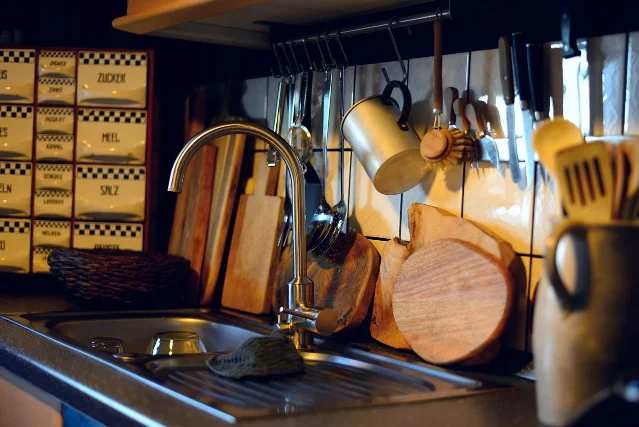
Avoid this mistake: Do not leave a wooden board in the sink overnight, even if you plan to wash it in the morning. Do not store it flat while one side is still damp.
5. Use an existing raw-food boundary
- If you already own two boards, assign one to raw meat and the other to ready-to-eat foods such as bread, fruit, or salad.
- If you have one board, finish the raw-meat task before switching to ready-to-eat food.
- Wash, rinse, and dry the board before the switch.
- Wash it again when the meal-prep session ends.
Why it works: Good Housekeeping's cleaning guidance says boards should be washed after every use and warns that knife grooves are especially troublesome after raw meat. The two-board split is a practical way to create a visible boundary; the one-board version creates that boundary with a full wash instead. 1
Avoid this mistake: Do not put salad, bread, or fruit on a board that just held raw meat because the surface "looks dry." Dryness is not the same thing as a completed wash.
6. Oil only a dry wooden board, and only with the right oil
- Check the board after it is clean and fully dry. Look for a dull, dry, or unusually pale surface.
- If you already have food-safe mineral oil or another food-safe, non-rancid board conditioner, apply a thin, even coat with a soft cloth.
- Cover the end grain as well as the flat faces.
- Leave it for a few hours or overnight.
- Wipe off every excess film before the next use.
Why it works: The Kitchn's maintenance guide says oiling helps protect the wood, with the oil soaking into the surface rather than leaving it damp. It recommends food-safe products that are not prone to rancidity and says a generally monthly interval is common manufacturer guidance. 3
Avoid this mistake: Do not oil a wet board, use a random cooking oil that can turn rancid, or buy a new conditioner just to follow a calendar. If the correct food-safe oil is not already in your kitchen, keep the board clean and dry instead.
7. Let the material decide when cleaning has ended
- Identify the board: wood, plastic, or composite.
- Hand-wash wood; do not put a hardwood board in the dishwasher.
- Put plastic or composite in the dishwasher only if the maker's care instructions allow it.
- Inspect plastic after washing. If deep grooves have formed, retire the board rather than trying to scrub the crevices clean.
- For a stained plastic board with shallow marks, try a separate stain treatment only after the routine wash; do not confuse a lighter color with disinfection.
Why it works: Good Housekeeping says hardwood boards are not dishwasher-safe, while plastic and composite boards may be dishwasher-safe. It also advises replacing plastic boards once deep grooves develop because those crevices can harbor pathogens. 1 The Kitchn's plastic-board test found that stain treatments can improve appearance, but the dishwasher cannot solve every stain. 4
Avoid this mistake: Do not put a wooden board in the dishwasher just because a plastic one survives it. Do not keep a deeply scored plastic board because a strong cleaner makes the surface look better; the grooves are the problem.
Your next-use reset
- Scrape food off immediately.
- Wash, rinse, towel-dry, and air-dry after every use.
- Use lemon and coarse salt for stains or smells, never as a disinfectant.
- Keep raw-food transitions behind a complete wash.
- Retire plastic boards once deep grooves give residue a permanent hiding place.
References
- 1Cleaning Experts Say These Are the Germiest Kitchen Items
goodhousekeeping.com
- 2
- 3
- 4
This story was produced automatically by a channel. One sentence is all it takes for Neodrop to keep producing for you.