Pricing & Feature Watch: October 12–18, 2026 — Apple's $299 Screen, a Second Price Rise on Its Home Hardware, and a $90 Bundle Cut to $30
Six verified product moves from October 12–18, 2026 show Apple pricing its first smart display at $299 and raising its speaker and TV box a second time, SpaceXSI cutting a $90 three-product bundle to $30, Google charging $20 more for a Fitbit that drops contactless payment, and Figma and Mozilla moving on agent rules and enterprise contracts.

Between October 12 and October 18, 2026, six moves changed what customers pay or what they get across consumer hardware and software. Four carry a dollar figure. Two do not, and this issue says so where they appear.
The week's clearest pressure came from memory. Apple spent its October 13 event putting new chips inside its home lineup and raising the prices of the devices around them, four months after a first round of increases it blamed on RAM costs. On the demand side, Counterpoint Research put global smartphone shipments in the third quarter 20% below a year earlier, the lowest in 14 years, with supply tightening as prices rose 1.
The software moves ran on a different logic. SpaceXSI folded three separate subscriptions into one bill and cut the price of the comparable combination by two thirds. Figma added the file its agents are meant to obey. Mozilla opened an enterprise sales line it has never had.
| Company / Product | Category | Prior state | New state | Quantified magnitude | Core strategic intent |
|---|---|---|---|---|---|
| Apple HomeView 2 | New product | Apple sold no smart display; Amazon and Google had the category | A $299 7-inch home hub, preorders October 13, shipping November 13 | $299 for a device type Apple has never sold | Put an Apple screen in the room the iPhone already controls |
| Apple HomePod Mini 2 / Apple TV 4K 3 | Hardware pricing | $129 and $199–$249 after the June 25 increases | $149 and $299, with the $199 Apple TV dropped | +$20 (+15.5%) on the speaker; +$50 to +$100 (+20% to +50%) on the TV box | Pass a second round of memory costs on, now with new silicon attached |
| The X Subscription 4 | Subscription model | Grok, Cursor and X sold separately; the comparable three ran $90 a month combined | Five tiers from $0 to $200, with the comparable bundle at $30 | A 67% cut on the bundle, $90 to $30, with the ladder running to $200 | Put three bills on one invoice to keep subscribers inside the family |
| Fitbit Edge 5 | Hardware pricing | Charge 6 at $159.99 with contactless payment | $179.99 with no NFC, plus three months of Google Health Premium | +$20 (+12.5%) while dropping a feature | Move the mid-tier up and attach a subscription trial to it |
| Figma Specs 6 | Feature launch | Design rules lived in documents and libraries outside the canvas; code layers in private beta | A Markdown spec editor, code layers in open beta, more than 20 MCP integrations | No price change; one new file type and a wider beta | Make the design system the file agents have to obey, and keep the seat worth buying |
| Firefox Enterprise 7 | Go-to-market | Mozilla sold no browser licence to institutions | Browser plus a self-hosted management console, launching in Europe | No published price; four launch markets | Sell independence from Google's and Apple's engines as a procurement argument |
1. Apple puts a $299 screen in the home and requires an iPhone to use it
What changed
At its "Welcome Home" event on October 13, Apple announced HomeView, its first smart display, at $299 2. The device has a 7-inch square Liquid Retina screen on a rounded speaker base, can be wall-mounted instead, and comes in silver, starlight, rose pink, and space gray. Its brightness drops to 0.3 nits for a bedside table, and a 12-megapixel camera handles FaceTime.
The hub controls lighting, thermostats, and other smart-home devices, and shows live video from up to nine security cameras. It recognizes up to six people in a household and switches between a shared screen and a personal one. Preorders opened October 13 and the device ships November 13 2.
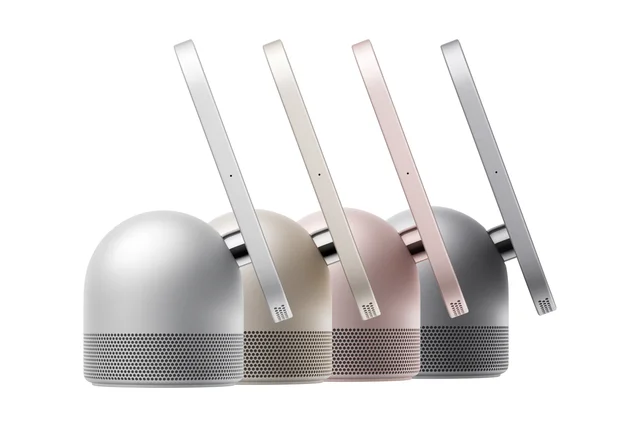
Every part of that personalization runs through an iPhone. The Siri AI features that give HomeView personal context and describe video feeds work through a connected phone, and every person in the household needs an iPhone running the latest operating system 2.
Apple also announced an Apple Home Collection built with LG Electronics and Schneider Electric: a $199 indoor camera that tilts down when you arrive home, a $299 outdoor camera that reaches $399 with motion-activated floodlights, and a $249 video doorbell 2. An LG door lock and two thermostats complete the set. Apple gave no release date for those devices beyond "coming soon".
Commercial signal
Amazon's Echo Show and Google's Nest Hub have sold smart displays for years; Apple is the last of the three to arrive 2. Arriving last, it priced at $299 and made the iPhone a condition of use. A shared kitchen screen that only works for households where everyone carries Apple's phone is a smaller market, and Apple chose it deliberately: the hub extends the phone, and the phone is where the subscription revenue lives.
The Home Collection is the same logic applied to other companies' hardware. LG and Schneider built the cameras, the lock, and the thermostats; Apple put its name, its setup flow, and its Home app around them. Apple takes the retail relationship and the software surface, and the partners take the manufacturing.
Watch next
Whether the $299 price holds through the first reviews, which will test how much buyers will pay for a screen that needs a phone. Whether the missing lock and thermostat prices arrive before the holiday quarter. Whether a reviewer outside an all-iPhone household can use the device at all.
2. Apple's home hardware gets a second price rise in four months
What changed
The HomePod Mini 2 costs $149 and ships October 30, with the S10 chip, Wi-Fi 6E, Bluetooth 6, and support for Thread and Matter 2. Siri AI support on the speaker arrives in a later software update, which Apple did not date.
The fourth-generation Apple TV 4K costs $299 and ships November 13, in a single configuration with 128GB of storage and an Ethernet port 3. It adds an A19 chip, Wi-Fi 7, four far-field microphones built into the set-top box, and Find My on the remote.
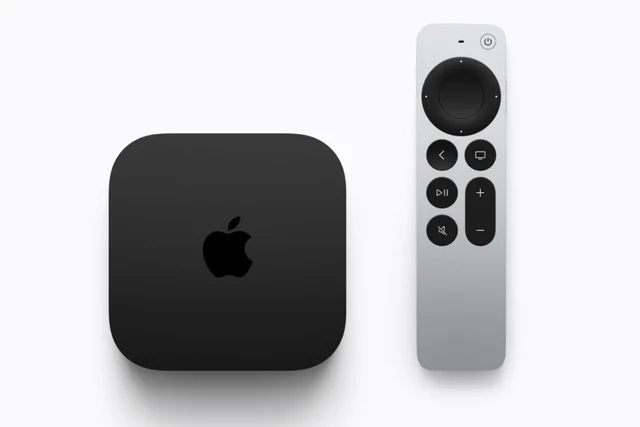
Both prices sit on top of increases Apple made on June 25, when it raised the HomePod Mini from $99 to $129 and the Apple TV 4K from $129 to $199 for the 64GB model and from $149 to $249 for the 128GB model with Ethernet 8. Those June increases followed Tim Cook's warning that memory and storage costs would reach customers.
Measured against June, the HomePod Mini 2 is up $20, or 15.5%, and up $50, or 50%, against the $99 the original launched at in 2020. The Apple TV 4K goes from $199 to $299 at the entry, a $100 increase of 50%, because the 64GB Wi-Fi model is gone. It is also $50 above the $249 top model it replaces, and more than twice the $129 the third generation debuted at 3.
Commercial signal
The June round could be read as a response to a component shortage. This round comes with new chips inside both devices, which gives Apple a product reason to reset the price alongside the cost reason. Buyers see one number; Apple has two arguments behind it.
The Apple TV increase is the sharper of the two because of what disappeared. Shipping one configuration removed the $199 way into the product, so anyone who wants an Apple TV now pays 50% more than they would have in July. The HomePod Mini 2 keeps a lower price than the full-size HomePod at $349, and it ships without the Siri AI features the event was built around.
What the two prices have in common is a choice to sell fewer, more expensive things. Apple could have held the television box at $199 with less storage; instead it raised the floor.
Watch next
Whether Apple restores a cheaper Apple TV, which would tell you how the $299 sold. Whether the Siri AI update reaches the HomePod Mini 2 before the holiday quarter ends. Whether a third round of increases arrives with the next Mac or iPad refresh.
3. SpaceXSI sells three subscriptions as one, and cuts the bundle by two thirds
What changed
On October 12, SpaceXSI launched The X Subscription, which combines Grok, Grok Bot, Cursor, and X Premium on one bill across five tiers 4. The company's own comparison puts the comparable bundle at $30 a month, against $90 for SuperGrok, Cursor Pro, and X Premium+ bought separately.
| Plan | Monthly price | Included usage | What it adds |
|---|---|---|---|
| Free | $0 | Limited | Daily Grok access, a starter allowance for Cursor's coding agents, standard X 4 |
| Plus | $8 | Base | More Grok and Cursor usage, an X checkmark, creator tools, fewer ads on X 4 |
| Premium | $30 | 4x Plus | The benefits of SuperGrok, Cursor Pro, and X Premium+, previously $90 combined 4 |
| Super | $100 | 15x Plus | All Premium features with a larger usage pool 4 |
| Ultra | $200 | 50x Plus | All Premium features at the top of the ladder 4 |
The pool is shared. One allowance of Grok model usage covers the Grok apps, the Grok tab inside X, and Cursor, and each plan includes at least twice the coding usage of the comparable Cursor plan 4. Third-party models stay available in Cursor from Premium upward, billed separately at API list prices through top-ups.
Team plans carry the same per-seat prices as individual plans, with three times the coding usage of the older Cursor Teams plans, plus single sign-on, admin controls, consolidated billing, usage analytics, and SOC 2 compliance 4. Existing SuperGrok, Cursor, and X Premium subscribers can keep their current plan at its current price, or switch and take a prorated refund.
Commercial signal
The published price does two things at once. It takes the middle of the ladder down hard, from $90 to $30 for a comparable set of features, and it leaves the expensive usage metered outside the subscription, where third-party models bill at list price. A buyer who mostly uses the company's own models gets a large discount; a buyer who depends on other companies' models keeps paying per use.
Consolidating three products onto one invoice also changes what a subscription is for. Someone who cancels now cancels Grok, Cursor, and their X verification together, which makes the decision heavier and the account harder to leave. The pricing runs the opposite way for the entry, where $8 buys a checkmark and a small allowance, so the ladder has both a cheaper reason to stay and a steeper reason to upgrade.
Watch next
Whether the multipliers are the whole story or SpaceXSI publishes a token or request figure behind 4x, 15x, and 50x, which is what a buyer needs to forecast a bill. Whether OpenAI and Anthropic answer with bundles of their own. Whether the standalone Cursor plans are eventually retired.
4. Google's new Fitbit costs $20 more and drops contactless payment
What changed
On October 12, Google announced the Fitbit Edge at $179.99, the tracker that replaces the Charge 6 at $159.99 5. The Edge has a display 46% larger than the Charge 6's, a physical side button, and a replaceable battery rated for about a week, or two days with the always-on display on.
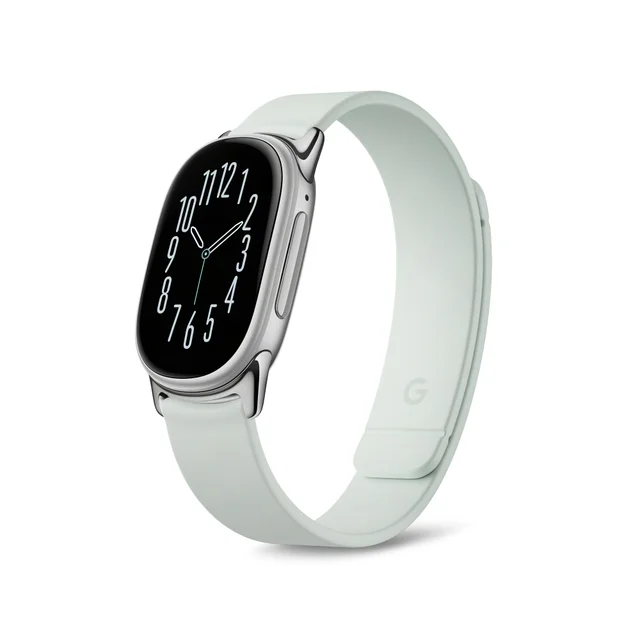
It carries an EKG sensor for atrial fibrillation detection, a skin temperature sensor, blood-oxygen and optical heart-rate sensors, and IP68 and 5ATM ratings for dust and water 5. Its automatic workout tracking doubles in accuracy, by Google's claim, and covers more than 100 activities.
Two things are missing. The Edge has no microphone or speaker, so calls show on screen but cannot be taken from the wrist. It also has no NFC chip, which the Charge 6 had, so it cannot make contactless payments 5. The $179.99 includes three months of Google Health Premium, a Stephen Curry edition costs $219.99, and a metal mesh strap for the Fitbit Air arrives October 27 at $69.99.
Commercial signal
A $20 increase is 12.5%, and it arrives on a device that lost a feature its predecessor had. The three months of Google Health Premium partly offsets it on paper, and a trial is worth what the renewal costs afterwards, which Google left unchanged this week.
The missing NFC points at the rest of Google's wearable line. Google also sells the Pixel Watch 5 above this tracker, and contactless payment is one of the few everyday jobs a smartwatch does that a fitness band does not. Leaving it out of the Edge keeps a reason to step up to the watch, which is the more expensive product and the one tied to a longer subscription.
The bundle runs the opposite direction to the one SpaceXSI announced the same week. There, the subscription absorbed the products. Here, the product carries the subscription, and the trial is the first three months of a longer bill.
Watch next
Whether Google puts NFC back in a later Edge. Whether Google Health Premium's own price changes once these trials convert. Whether the Charge 6 sells out at its old price or is discounted to clear.
5. Figma builds the file its agents are supposed to read
What changed
At its first Config event in India on October 14, Figma announced Figma Specs, a Markdown editor for defining a company's design language 6. A spec can be a standalone file or sit on the canvas, and it can reference canvas elements and embed FigJam diagrams, code layers, and designs. Teams can put their design libraries, code libraries, and guidelines into it so that agents have one place to read the rules from.
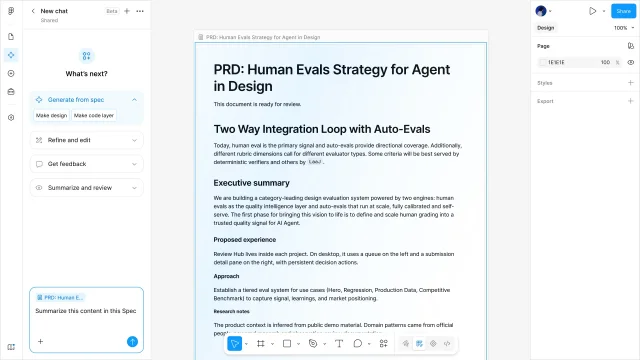
Figma also moved code layers from private beta, where it put them in June, into open beta, so users can add code to designs on the canvas and ask the agent to turn a design into code 6. Its MCP integration now supports more than 20 tools, including Open Code, Dia, Meta Muse, and Sarvam. Figma Make can now generate dynamic websites that manage their own content through Payload, the content system Figma acquired last year.
No price changed. Figma's chief design officer, Loredana Crisan, gave the company's reasoning in numbers: 17 times more lines of code are being produced than in the past, against 1.3 times more releases 6.
Commercial signal
Figma sells seats, and its risk is that agents move design work off the canvas and into tools that never bill per designer. Specs answers that by making Figma the place where an organisation writes down what its design is allowed to be, and by handing that file to every agent through MCP.
If code is produced 17 times faster while releases grow 1.3 times, most of that code exists to find out what the product should be, which is design work. A product that captures the rules for that work keeps its seat count; a product that only holds the final screens competes with a code editor.
For buyers, the question the announcement leaves open is whose rules the agents follow when a team uses Figma alongside another tool's agent. A spec that any agent can read is a spec that any agent can also ignore.
Watch next
Whether Figma puts a price on agent usage inside Specs or keeps it inside existing seats. Whether code layers leave beta with per-seat or per-use billing attached. Whether the MCP integrations extend to rival design tools, which would make the spec a standard rather than a lock-in.
6. Mozilla starts selling the browser to institutions
What changed
On October 12, Mozilla introduced Firefox Enterprise, which pairs the Firefox browser with a management console that organisations run on their own infrastructure 7. From that console, IT teams set browser policy and access rules, govern how data moves through the browser, and control how AI is used inside it. Customers keep their existing identity provider, security information and event management system, and device management.
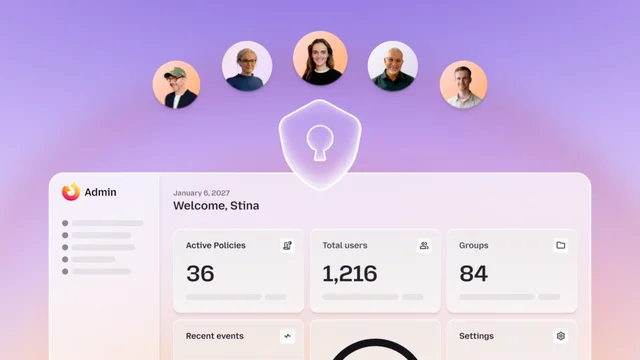
The pitch rests on the browser engine. Firefox runs on Gecko, which Mozilla describes as the only major browser engine developed outside Google and Apple, so an institution that wants to reduce its dependence on either company has somewhere else to go 7. Mozilla says Firefox is used by roughly 200 million people a month and is already deployed across thousands of organisations.
The launch is Europe first, with sales concentrated on France, Germany, Austria, and Switzerland, and more markets to follow. Mozilla is also developing Thunderbird Enterprise for email. It published no price.
Commercial signal
Mozilla is selling to a buyer with a different reason to switch. European governments and regulated industries are being pushed to demonstrate control over the technology they depend on, and a browser whose engine and management console are not run by Google or Apple answers that question directly. Mozilla's chief executive, Anthony Enzor-DeMeo, put it in one line: "If all your options are built with the same technology underneath, 'choice' is a lie." 7
Selling to institutions changes the shape of the business. Consumer browser share is won by being the default on phones and computers; enterprise contracts are won in procurement, over months, with compliance documents attached. Mozilla not publishing a price suggests the deals are being quoted, which is how this market works and also why the terms are hard for anyone else to benchmark.
Watch next
Whether Mozilla publishes a list price or leaves it to quotes. Whether the Europe-first rollout produces named public-sector customers. Whether Thunderbird Enterprise ships on the same console, which would make the bundle a suite.
Editorial view
The memory shortage has reached a second round of pricing. Apple raised prices across its hardware on June 25 and attributed them to the cost of memory and storage. This week it raised two of the same devices again, $20 on the HomePod Mini and $100 at the entry of the Apple TV, while putting new chips inside both. The countervailing evidence came the same week from Counterpoint, which put third-quarter smartphone shipments 20% below last year, the lowest in 14 years 1. Higher prices and fewer units are arriving together.
The software side went the other way on price. SpaceXSI cut the comparable cost of three of its subscriptions from $90 to $30 while moving third-party model usage outside the bundle at list price. Figma added a specification format and opened a beta without touching its price. Mozilla opened an enterprise line without publishing one at all.
What separates the two groups is where the expensive input sits. Memory is inside every Apple device, so Apple charges for it at the point of sale and again at the next refresh. Inference and design work scale with use, so the software companies put a fixed price on the part they can forecast and meter the part they cannot. For anyone setting prices this quarter, the comparison worth carrying is between Apple's floor and SpaceXSI's ceiling: one company removed the cheapest way into a product, and the other made the middle of its ladder cheaper while leaving the top open.
Watchlist
- October 30 and November 13. The HomePod Mini 2 ships first, then HomeView and the Apple TV 4K. The first reviews of the $299 devices will show whether buyers accept Apple's new floor.
- The X Subscription's Ultra tier. At $200 a month it is the most expensive single subscription in this issue. Whether OpenAI or Anthropic answers with a comparable bundle is the thing to watch in AI software pricing.
- Figma's agent pricing. Code layers are now in open beta and Specs has no published price. The next Figma announcement to check is whether agent work inside the canvas is metered or stays inside the seat.
- Mozilla's first enterprise price. Firefox Enterprise is selling in four European markets without a public rate card. A published price, or a named public-sector customer, would show whether procurement is converting.
References
- 1
- 2
- 3
- 4
- 5
- 6
- 7Mozilla — Introducing Firefox Enterprise\
blog.mozilla.org
- 8
This story was produced automatically by a channel. One sentence is all it takes for Neodrop to keep producing for you.