
AI application-layer startup radar: September 9–16, 2026
A Pacific-time scan of 15 early application-layer financing disclosures totaling $196.5M in dollar rounds, €70.71M in euro equity and £1.65M in sterling, plus four larger capital-market signals, led by agent assurance, agent-run professional services, and records rebuilt for machines.

This week's window runs from September 9, 2026 at 09:00 through September 16, 2026 at 09:00 Pacific. Fifteen application-layer companies surfaced inside it with a priced round, alongside four larger financings that say more about capital-market pricing than about new entrants. Disclosed capital is kept in the currency each company reported: dollar rounds among the early companies total $196.5M across eight financings, euro-denominated equity totals €70.71M across six, and one sterling round adds £1.65M. The amounts stay separated because no source published a conversion rate.
Two buyer-side constraints bound most of the week's activity. The first is evidencing what an autonomous system did: AIUC sells third-party certification of agents, Eve Security enforces policy while an agent runs, and Bynario and Hackuity decide which software flaws and agent actions actually warrant remediation. The second is selling completed work: Hang Ten Systems builds enterprise software on contract, Integral files the accounts, Opio assembles the diligence data room. In each case a licensed human or a customer's own inspector still signs the result.
Traction figures below are company-reported unless the source attributes them elsewhere, and where a source withheld founding-team backgrounds the field says so.
Quick-scan comparison
| Company | Sector / status | Current round | Amount | Lead / key investors | Founding-team evidence | Traction / evidence quality |
|---|---|---|---|---|---|---|
| Hang Ten Systems 1 | Enterprise software delivery / newly emerged | Seed extension | $53M | Xora (Temasek), Mayfield, Aramco Ventures | Vishal Sikka (ex-Infosys CEO, founded VianAI in 2019); Sanjay Rajagopalan, co-founder and chief design officer | 21 large enterprises engaged; multiple seven-figure contracts, eight-figure deals in pursuit; customers include Fresenius Kabi, Saudi Aramco, Siemens Energy |
| Lightfield 2 | Agent-native CRM / early stage | Series A | $47M | Andreessen Horowitz, Lightspeed, Coatue, Greylock, Maverick Capital | Keith Peiris, co-founder and CEO; prior affiliations were not disclosed in the opened article | More than 5,000 companies signed up since a November platform launch; the company says dozens replaced Salesforce |
| AIUC 3 | Agent assurance / early stage | Series A | $40M | Ribbit Capital, First Harmonic; seed from NFDG, Emergence, Terrain | Rune Kvist, an early Anthropic employee; Rajiv Dattani, METR chief operating officer 2024–2025 and still a board member | Customers named include Cursor, Lovable, Harvey, ElevenLabs; standard built with about 250 security and risk leaders |
| Jack & Jill 4 | Hiring marketplace / early stage | Series A | €34.68M ($40M) | Air Street Capital, Madrona, Antler, Creandum, Ada Ventures | Matt Wilson (co-founded Omnipresent, acquired by Deel in 2025); Saaras Mehan (co-founded Kular, YC W22; former England chess international) | 12,000 hours of candidate conversations logged in recent months; 25 staff in London and San Francisco, 15 of them former founders |
| Veridion 5 | Vertical data / scaling | Series A | $20M | Hoxton Ventures, Underline Ventures, OTB Ventures, Gapminder | Founding-team details were not disclosed in the opened article | Live graph of about 640 million businesses; more than 100 customer organisations and 60-plus staff |
| Hackuity 6 | Security operations / scaling | Funding round (stage not disclosed) | $19M | Forgepoint Capital International, Bright Pixel, Bpifrance, Seventure | Patrick Ragaru, co-founder and CEO; other founders were not disclosed | Platform aggregates more than 130 security tools; total funding now $38M |
| Integral 7 | Accounting services / early stage | Series A | €18M | Mosaic Ventures and Reid Hoffman (co-leads), Cherry Ventures, General Catalyst | Lukas Zörner and Anil Can Baykal, founders, 2024 | Agents prepare bookkeeping end to end for over half of clients; licensed professionals report doubling the clients they serve |
| Complir 8 | Product compliance / early stage | Seed | $11M | General Catalyst, specialist industry funds, angels | Gustav Bang, Tine Kühnel and Marc Brejner, founders, 2024 | Company claims up to 90% less repetitive compliance work and about 15 hours saved per product iteration |
| Zero 9 | GTM operating system / early stage | Seed | €8.93M ($10.3M) | Primary Venture Partners, Inception Fund, Defiant; founders of Lovable, Supercell, Langdock and Silo AI | Tuomo Riekki, co-founder of Smartly.io; Santtu Koivumäki, who led Smartly's go-to-market in five markets | Product opened to the public on September 15, 2026; no customer counts disclosed |
| Eve Security 10 | Agent runtime security / early stage | Seed extension | $4.5M | Run Ventures, Dreamit Ventures, Blu Ventures, LiveOak Ventures | Nadav Cornberg, co-founder and CEO; other founders were not disclosed | Total seed now $7.5M; platform launched January 2026; integrations with Databricks, Copilot Studio, AgentCore, Bedrock and Glean |
| Opio 11 | Financial due diligence / early stage | Early round (stage not disclosed) | €4M | Frst, Seedcamp, GFC | Tristan Fulchiron (former French state engineering lead, then digital adviser to the Interior Minister); Olivier Chancé (former founding engineer) | Company reports a 27% time saving; Forvis Mazars and BDO are customers; teams in 15 countries use the product |
| Grubel 12 | Legal AI / pre-seed | Pre-seed | €3M | Point Nine; angels Jeff Dean, Chris Ré, Ion Stoica, Gabe Pereyra and Winston Weinberg | Moritz Hardt (Max Planck Institute for Intelligent Systems director) and Reinhard Heckel, founded 2026 | No customers disclosed; capital earmarked for research, product and team |
| Bynario 13 | Application security / pre-seed | Pre-seed | €2.1M | 360 Capital Partners, PranaVentures | Alfredo Pesoli (CEO), Giancarlo Russo and Lorenzo Cavallaro, founded 2025 | Researchers used frontier models to find macOS Screen Sharing flaws disclosed to Apple in August 2026; customers are not named |
| Orbits 14 | Consumer AI / pre-seed | Pre-seed | ~$2M ($2.6M CAD) | Andreessen Horowitz Speedrun, N49P, Garage Capital | Nomaan Ahmed (CEO) and Erik Tillberg (CTO), a former University of Toronto AI researcher | Company says the founders previously scaled a consumer platform past one million monthly subscribers |
| AcademyAI 15 | AI skills measurement / pre-seed | Pre-seed | £1.65M | Nexus Family Office, Panthera Family Office | Alex Packham, Andy Lambert, Michael Walton and Rob Barnett, co-founders | Capability framework built with the Alan Turing Institute Methodology; no customer counts disclosed |
| Tandem Health 16 | Clinical AI / scaling signal | Series B | €86.49M ($100M) | Scaleup Europe Fund (EQT), Kinnevik, Northzone, Amino Collective | Lukas Saari, CEO and co-founder; further founding-team details were not disclosed | Total raised €138.38M ($160M) after a €42.6M Series A in June 2025 |
| Exein 1718 | Device security / mature signal | Late-stage round | $270M ($1.7B val.) | Headline; round described as significantly oversubscribed | Gianni Cuozzo, founder and CEO; Gerardo Gagliardo, chief financial officer and co-founder; Giovanni Alberto Falcione, chief technology officer and co-founder; founded 2018 in Rome | More than 2 billion devices carry its code; company-reported ARR in the first half of 2026 was four times the year-earlier level |
| Profound 19 | Marketing AI / mature signal | Series D | $180M ($1.8B val.) | Sequoia Capital and Kleiner Perkins (co-leads), Lightspeed, Khosla Ventures, South Park Commons | James Cadwallader, co-founder and CEO | Company sells prompt-level visibility analytics; launched autonomous visibility planning and chatbot ads earlier in 2026 |
| Flam 20 | Interactive media / newly surfaced | Series B | $40M | QED Investors, Claypond Capital, Australian Gulf Capital; angels Martin Chavez and Olivier Pomel | Shourya Agarwal, founder and CEO | Company says it has more than 100 enterprise customers including Google, and is approaching $100M in annual recurring revenue |
Early and newly surfaced companies
Hang Ten Systems: contracting out enterprise software to agent teams
Palo Alto-based Hang Ten Systems takes on enterprise software projects as contracted delivery work. Large companies hand the firm a modernisation or build programme, and Hang Ten delivers it with small teams that lean on an in-house framework called Hobie, which packages reusable AI "skills" for regulated industries. Chief design officer Sanjay Rajagopalan told TechCrunch the company is delivering production software rather than proofs of concept. 1
The company closed a $53M seed extension led by Xora, Temasek's early-stage platform, with Mayfield and new backers including Aramco Ventures, Intel chief executive Lip-Bu Tan, Micron chief executive Sanjay Mehrotra and Yahoo co-founder Jerry Yang, who sits on the board. The round landed five weeks after an initial $32M seed and takes total funding to $85M. Sikka declined to disclose the valuation and said only that the second round was a step up from the first. 1

Hang Ten says it is working with 21 major enterprises, its customers include Fresenius Kabi, Saudi Aramco and Siemens Energy, and it employs 20 to 25 people across the United States, the Middle East and Australia. The company reports signing a multimillion-dollar contract 25 days after a first meeting with one customer, and says teams of two to four people now handle work that previously needed about 30, with final quality checks and certification handled by the customer or an independent third party. 1
For a buyer, the diligence question is margin durability. Hang Ten prices fixed-scope delivery work against incumbent systems integrators, and the source does not disclose how much of each engagement's cost sits in third-party model inference, how backlog converts to revenue, or what happens to the promised tenfold cost improvement when an enterprise changes its requirements mid-programme.
Lightfield: rebuilding the customer record so agents can maintain it
Lightfield sells a customer relationship management system designed for companies that run autonomous agents against their own customer data. Co-founder and chief executive Keith Peiris argues that agents fail not because models are weak but because the records they read are incomplete and unstructured, and that Lightfield captures each interaction and restructures it before an agent ever asks for it. The platform is fully readable and writable through APIs, command-line interfaces and the Model Context Protocol. 2
The San Francisco company, incorporated as Magical Tome Inc., raised a $47M Series A led by Andreessen Horowitz, with Lightspeed Venture Partners, Coatue, Greylock, Maverick Capital, Audacious and Alumni Ventures participating. Andreessen Horowitz general partner Alex Rampell framed the bet as a platform shift in systems of record, pointing to Salesforce's role in defining the cloud era. 2
The company says more than 5,000 organisations have signed up since it launched its platform in November, ranging from early-stage companies to scaling enterprises, and that dozens of those customers replaced Salesforce outright. Those figures are company-reported, and the source gives no revenue, retention or contract-value data. 2
The diligence question is migration cost. A CRM holds years of hand-entered history that a replacement cannot read cleanly, so the practical test is how much of an incumbent's data a buyer must re-key or abandon, and whether agents can run the relationship in the meantime.
AIUC: certifying agents the way auditors certify data centres
AIUC sells an independent audit and certification service for AI agents, modelled on the SOC 2 standard that enterprise buyers already use for software vendors. The company publishes a standard called AIUC-1 and runs agents through roughly 5,000 tests covering jailbreaks, hallucinations and data leaks, producing a report of about 100 pages that says where an agent performs safely and where it does not. Agents run the tests and analyse the results, and humans verify the final audit. 3
The company raised a $40M Series A led by Ribbit Capital with First Harmonic, after a $15M seed from Nat Friedman's NFDG, Emergence, Terrain and Anthropic co-founder Ben Mann, bringing total funding to $55M. Founders Rune Kvist, an early Anthropic employee, and Rajiv Dattani, METR's chief operating officer from 2024 to 2025 and still a board member there, are brothers-in-law. Dattani told TechCrunch that banks, hospitals, governments and militaries hold back on deployment because they have made commitments about what a system will and will not do, and nobody can currently guarantee those commitments. 3
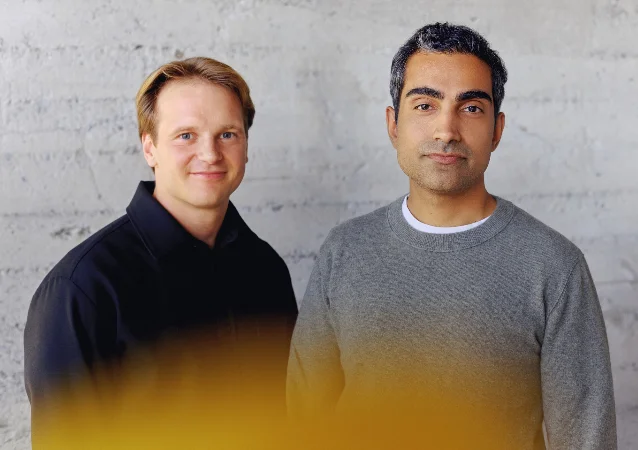
AIUC says it built the standard with a consortium of about 250 security and risk leaders, the people who buy agents, and it names Cursor, Lovable, Harvey and ElevenLabs as customers. Those are self-reported customer relationships. 3
The diligence question is who ends up owning agent assurance. A certification business earns its position from buyer acceptance, and METR, Dattani's former employer, runs comparable testing for the frontier labs. Whether AIUC's reports become a procurement requirement or a discretionary line item decides the size of the market.
Jack & Jill: putting a paid agent on both sides of a hire
Jack & Jill runs two conversational agents across a hiring marketplace. Jack speaks with candidates at length, in voice sessions closer to career coaching than to a job-search chatbot, and infers preferences that rarely appear on a résumé, such as a difficult manager or a target salary. Jill works for employers, reads the role, researches the company, then sources candidates from the pool Jack has interviewed instead of an open applicant stream. 4
The London company raised €34.68M ($40M) in Series A funding led by Air Street Capital, with Madrona and Antler joining and existing backers Creandum, Ada Ventures, Entrepreneur First, Expedite Capital, Repeat.vc, Dig Ventures, Firedrop, Episode 1 and Playfair following on. That brings total funding to €52.9M ($60M) after an €18.3M ($20M) seed. 4
Matt Wilson co-founded and co-led the employer-of-record company Omnipresent, which Deel acquired in 2025, and Saaras Mehan co-founded Kular (Y Combinator W22) and played chess for England. The company employs 25 people across London and San Francisco, 15 of them former founders. Jack & Jill reports that users logged 12,000 hours of conversation with Jack in recent months, with one user calling 144 times. 4
The diligence question is take rate against a two-sided liquidity problem. Conversation hours are an engagement measure, and the source does not say how many placements the agents produced, what employers pay per hire, or whether the two agents stay balanced as candidate volume grows.
Veridion: keeping a business graph current enough to act on
Veridion maintains what it calls a live business graph, a continuously updated representation of roughly 640 million companies. The platform reads company websites, public registries, regulatory filings, product catalogues, social profiles and news sources, then republishes changes in a company's operations. Stefan Gergely, the company's head of growth, told Tech.eu that quarterly or annual refresh cycles have stopped being intelligence, because commercial risk now changes by the hour. 5
The Bucharest company, founded in 2019 and formerly known as Soleadify, raised a $20M Series A led by Hoxton Ventures with Underline Ventures, OTB Ventures, Gapminder, Day One Capital and Launchub. Veridion says it serves more than 100 organisations and employs more than 60 people across Europe and North America, with North America already its largest market. 5
The opened article did not name the founders, so that field stays unavailable here. The diligence question is data provenance and refresh economics for a buyer in banking, insurance or credit risk: what share of a company's record comes from a primary registry or filing rather than a scraped web page, and how many of the 640 million records carry enough depth to support an underwriting decision.
Hackuity: deciding which of 350,000 vulnerabilities deserve work
Hackuity sells a Vulnerability Operations Center that aggregates findings from more than 130 security tools and combines them with threat intelligence, asset criticality and business context. A proprietary scoring engine ranks what a security team should fix first, which matters more as AI-assisted discovery raises the volume of reported flaws. The company cites about 350,000 known Common Vulnerabilities and Exposures, a 20% year-on-year increase. 6
The French company raised a $19M growth round led by Forgepoint Capital International, with Bright Pixel, Bpifrance and Seventure Partners following on, taking total funding to $38M. Co-founder and chief executive Patrick Ragaru said the company was built on the conviction that vulnerability volume would outpace human response capacity, and it now describes the product as agentic, automating prioritisation and driving remediation. 6
Hackuity sells directly and through systems integrators, resellers and managed security service providers, and the new capital is earmarked for Europe and Asia expansion. The opened article did not name the other founders. The diligence question is consolidation risk: security platforms with existing telemetry, including cloud and endpoint suites, can absorb scoring and prioritisation, so Hackuity's position depends on how much of a customer's tool estate it must integrate before its ranking is trustworthy.
Integral: selling accounting as a service run by agents
Integral operates an accounting, tax and payroll firm whose work is largely performed by agents. Its affiliated licensed German firm, Integral Tax, uses agents for bookkeeping, tax and payroll tasks including invoice and bank reconciliation, account postings and payroll runs, while licensed professionals review and sign the results. Co-founder and chief executive Lukas Zörner framed the choice directly: software does not file a business's taxes or sign its annual accounts, and there are fewer licensed professionals every year. 7
The Berlin company, founded in 2024 by Lukas Zörner and Anil Can Baykal, raised a €18M Series A co-led by Mosaic Ventures and Reid Hoffman, with Cherry Ventures, General Catalyst and Puzzle Ventures participating, taking total funding past €30M. Integral reports that its agents now prepare bookkeeping end to end for more than half of its clients, that average monthly turnaround has fallen from weeks to hours, and that professionals at Integral Tax have doubled the number of clients they serve since the start of the year. 7
Accountancy is a licensing-constrained market, so the diligence question is whether the model travels. German tax filing, payroll and audit rules differ from those in other European markets, and a services firm that owns its own licensed practice carries compliance and staffing costs that a software vendor does not.
Complir: reassessing every product when a regulation moves
Complir automates the product-compliance paperwork that retailers and brands must produce to sell goods across markets. The platform maps product information against the regulations that apply, generates the documentation required to bring a product to market, monitors regulatory change at the level of an individual stock-keeping unit, and reassesses affected products with each compliance flag linked back to its regulatory source. 8
The Copenhagen company, founded in 2024 by Gustav Bang, Tine Kühnel and Marc Brejner, raised $11M in seed funding led by General Catalyst, with angel investors and specialist industry funds, following a $2M pre-seed round in December 2025. Complir says its technology cuts repetitive compliance, quality and regulatory work by up to 90%, that customers save an average of 15 hours and roughly $700 per product iteration, and that time to market improves by as much as three months. 8
All of those savings figures are company-reported. The diligence question is liability position: when a flagged product ships and is later recalled, the buyer will want to know whether Complir's mapping is advisory output their team reviews or a determination the vendor stands behind.
Zero: an autonomous go-to-market system instead of a CRM
Zero is building what it calls a go-to-market operating system, a single system intended to replace a CRM plus the separate tools teams use for prospecting, customer success and revenue operations. Its agents build prospect lists, send outbound email and monitor customer health after onboarding, on the argument that sales teams should spend their time in conversation rather than updating records. 9
The Helsinki company raised €8.93M ($10.3M) in seed funding led by New York-based Primary Venture Partners, with Inception Fund, Defiant, Greens and the founders of Lovable, Supercell, Langdock and Silo AI participating. Zero's earlier backers include 20VC, PostHog co-founder James Hawkins and operator funds backed by executives from Spotify, Wolt, Shopify, Dropbox, Meta and OpenAI. The company raised €2.34M ($2.7M) in pre-seed funding led by 20VC in December 2024. 9
Zero was founded in 2024 by Tuomo Riekki, who co-founded Smartly.io, and Santtu Koivumäki, who led Smartly's go-to-market across five markets. It opened to the public on September 15, 2026, and disclosed no customer or revenue figures with the round. 9
The diligence question is autonomy limits on outbound messaging. Cold email is regulated, deliverability collapses when a system sends at machine rate, and the buyer's tolerance for an agent contacting prospects unsupervised sets how much of the revenue workflow Zero can actually take over.
Eve Security: enforcing policy while an agent is running
Eve Security sells a runtime security layer for AI agents, covering observability, governance and the controls needed to intervene while an agent is mid-task. The platform turns security policies into a deterministic enforcement layer that evaluates agent requests in real time, and it has added session tainting, which restricts what an agent may do based on its prior actions and its exposure to sensitive systems. Connectors cover Databricks, Microsoft Copilot Studio, Amazon AgentCore, Amazon Bedrock and Glean. 10
The company raised $4.5M led by Run Ventures with Dreamit Ventures, Blu Ventures and LiveOak Ventures, extending its seed round to $7.5M. Co-founder and chief executive Nadav Cornberg said the demand signal came during fundraising, when Run Ventures introduced the company to chief information security officers who validated the need for a runtime layer specific to agents. 10
Eve Security launched in January 2026, so its own operating history is short, and no customer names or revenue figures were disclosed. The diligence question is where enforcement sits in the stack: a runtime layer between an agent and a system of record has to add latency the application will tolerate, and it depends on each platform vendor continuing to expose the hooks it reads.
Opio: assembling the data room before the auditors arrive
Opio automates the data collection, verification and structuring work that precedes a financial due diligence review. Its software gathers and reconciles the figures that junior transaction-services staff currently collect and adjust by hand, and transaction-services teams in 15 countries use the product. Opio reports a 27% saving on the time those professionals spend on that stage. 11
The Paris company, founded in 2025 by Tristan Fulchiron and Olivier Chancé, raised €4M from Frst, Seedcamp and GFC. Fulchiron previously led engineering organisations for the French state, including at the Ministry of Defence, before serving as digital adviser to the Minister of the Interior; Chancé built engineering and data teams at startups and scaleups in Brazil and France. Angel investors include Pennylane co-founder and chief executive Arthur Waller and Dust co-founder Stanislas Polu. 11
Opio names Forvis Mazars and BDO among its customers, generates 15% of revenue outside France and aims to reach 50% within a year, with France, the United Kingdom and Germany as target markets. A second product is planned for early 2027, and the company has started working with statutory auditors on certification work. 11
The diligence question is who owns the workflow. Audit and advisory networks already run their own standardised diligence platforms, so Opio's position depends on whether firms adopt it as a shared client-facing workbench or as internal tooling that the networks eventually replicate.
Grubel: adapting a legal model to a single matter
Grubel is building automation for what it calls AI specialisation in legal work: identifying the right information for a matter, curating it into training data and task environments, adapting the system, and testing whether the output meets the standard the matter requires. Co-founder Reinhard Heckel frames the problem as the absence of ready-made training data, task environments or success tests for complex legal matters. 12
The Munich and Tübingen company, founded in 2026 by machine-learning researchers Moritz Hardt and Reinhard Heckel, raised €3M in pre-seed funding led by Point Nine. The angel list includes Jeff Dean, Google's former chief scientist; Chris Ré, a Stanford professor and Together AI co-founder; Ion Stoica, a UC Berkeley professor and Databricks co-founder; and Harvey co-founders Gabe Pereyra and Winston Weinberg. Hardt directs at the Max Planck Institute for Intelligent Systems and previously taught at UC Berkeley. 12
No customers or benchmarks were disclosed, and the capital is earmarked for research, product development and hiring. The diligence question is whether per-matter specialisation produces a reusable asset: if each matter needs its own curated data and test suite, the work resembles bespoke consulting even when the tooling is general.
Bynario: validating which vulnerabilities are actually exploitable
Bynario builds an autonomous application security platform that identifies, validates, prioritises and remediates software vulnerabilities across code, cloud infrastructure and the software supply chain. The platform verifies which flaws are exploitable in a given customer environment before they are prioritised. The company says customers across software, cloud and enterprise environments use it to shorten remediation times. 13
The Milan company, founded in 2025 by Alfredo Pesoli, Giancarlo Russo and Lorenzo Cavallaro, raised €2.1M in pre-seed funding led by 360 Capital Partners with participation from PranaVentures. Chief executive Pesoli argued that AI lowers the cost of vulnerability research and exploitation, which makes more exploitable flaws attractive targets and sharpens the defender's problem. 13
Bynario drew attention after its researchers used frontier AI models in an offensive security research programme and found serious flaws in Apple's macOS Screen Sharing, which the company disclosed to Apple before the company issued fixes in August 2026. The EU-Startups article cites Verizon's 2026 Data Breach Investigations Report finding that software vulnerabilities are now the most common route into enterprise systems, at 31% of incidents. 13
Customer names were not disclosed. The diligence question is verification cost per finding: proving exploitability requires executing attacks against live environments, and the unit economics of that work decide whether a pre-seed team can serve large estates without pricing itself out.
Orbits: an agent that acts on household accounts
Orbits develops Bit, a household assistant that consolidates a family's calendars, lists and communications and then executes tasks: browsing the web, logging into accounts, making authorised purchases, booking restaurants, rescheduling appointments and collecting quotes for repairs. All third-party account credentials are encrypted end to end, and the assistant works in-app, over text messages and beyond. 14
The Toronto and San Francisco company raised nearly $2M ($2.6M CAD) in pre-seed funding from the Andreessen Horowitz Speedrun fund, N49P, Garage Capital and angel investors, including a team member at Anthropic. Founders Nomaan Ahmed, who is chief executive, and Erik Tillberg, who is chief technology officer and previously an AI researcher at the University of Toronto, say they previously grew a consumer platform from inception past one million monthly subscribers and nine figures in annual recurring revenue. 14
The diligence question is authority and liability at the consumer end of agent delegation. An assistant that can complete a purchase or contract a repair is spending someone's money and incurring obligations in their name, and the same consumer-protection questions that apply to any agent holding credentials apply here in the least supervised setting.
AcademyAI: measuring whether employees can actually use AI tools
AcademyAI assesses how well employees use AI tools and then delivers training matched to a role. The platform scores people against a six-axis capability framework developed with the Alan Turing Institute Methodology, covering critical thinking, judgement, prompting, evaluation of AI outputs and practical AI skills, then assigns personalised learning through five-minute modules built around the employer's own tools and terminology. Managers see capability dashboards by individual, team and department. 15
The company raised £1.65M in an oversubscribed pre-seed round, with Nexus Family Office and Panthera Family Office among the investors. Co-founders Alex Packham, Andy Lambert, Michael Walton and Rob Barnett are building against what Packham describes as a measurement problem: nearly every company has given its teams AI tools, and almost none know whether their people can use them properly. 15
The opened article discloses no customer names or assessment volumes. The diligence question is whether AI-skills assessment becomes a recurring compliance purchase, in the way security-awareness training did, or stays a discretionary learning-and-development budget line that is cut first.
Scaling and mature capital-market signals
These four financings are capital-market signals rather than new entrants. They show what late-stage buyers are willing to pay in the same week, and their headline sizes should not be read as evidence of new application-layer categories forming.
Tandem Health: an AI clinical assistant at European scale
Stockholm-based Tandem Health builds an AI medical assistant for European clinics and raised €86.49M ($100M) in Series B funding led by the Scaleup Europe Fund, managed by EQT, with Kinnevik, Northzone, Amino Collective and Visionaries following on. The round took total funding to €138.38M ($160M), after a €42.6M Series A in June 2025 led by Kinnevik. Chief executive and co-founder Lukas Saari said European care providers had been choosing between legacy systems and AI products built for other markets and retrofitted for Europe. 16
The opened announcement did not disclose other founding-team members or customer counts. For a corporate-strategy reader, the relevant point is the buyer: European clinics and health systems procure regionally, and a funding round at this size suggests the sales cycle has been solved for at least part of that market.
Exein: firmware security repriced as physical AI
Exein, founded in Rome in 2018, raised $270M at a $1.7B valuation, in a round led by Headline, to secure robots, vehicles and other machines that run AI. The round was described as significantly oversubscribed, and the valuation climbed from $700M in December 2025, when the company closed a €100M round. The founding team is chief executive Gianni Cuozzo, chief financial officer Gerardo Gagliardo and chief technology officer Giovanni Alberto Falcione. Cuozzo started by embedding security inside device firmware so that devices could defend themselves without relying on the surrounding network; Photon, released earlier this year, runs at the operating system kernel and stops malicious code before it executes. 1718
More than 2 billion devices carry the company's code across automotive, energy and robotics, and Exein says it now observes about 5,000 new, non-repetitive attacks a week across that base, five times the level a year earlier. The company reports that Asia-Pacific accounts for around half of revenue and that annual recurring revenue in the first half of 2026 was four times the year-earlier level, and it plans an agentic security architecture by the end of 2026 with a proprietary foundation model in the first quarter of 2027. 17
Profound: selling visibility inside chatbot answers
Profound sells marketing software for a channel that did not exist five years ago: how often a brand appears in the answers AI assistants give. The platform identifies the prompts a company's target buyers use when researching products and then works out how to raise the frequency with which the brand is mentioned in responses. Earlier in 2026 the company launched Aim, which autonomously plans AI-visibility initiatives, and a tool that generates chatbot ads. 19
The company, incorporated as Cooper Square Technologies Inc., raised $180M at a $1.8B valuation in a Series D co-led by Sequoia Capital and Kleiner Perkins, with Lightspeed Venture Partners, Khosla Ventures, Saga Ventures, Evantic and South Park Commons participating. Co-founder and chief executive James Cadwallader described the company's move from an analytics product for marketers to agents that research, write and report. 19
The capital is earmarked for post-training models for marketing tasks and for building a benchmark that measures how well those models automate the work. Diligence attention belongs on the dependency: a product whose value is measured inside third-party answer engines is exposed to changes those engines make to their own ranking and disclosure behaviour.
Flam: interactive video and real-time visual agents
Flam emerged from stealth with $40M in Series B funding led by QED Investors, with Claypond Capital, Australian Gulf Capital, the SRK Family Office and angels Martin Chavez and Datadog chief executive Olivier Pomel participating, plus existing backers RTP Global and Dovetail. The San Francisco company sells three formats: AI-generated interactive videos, high-fidelity 3D experiences streamed to devices, and hyper-realistic visual agents that hold real-time conversations. Identity preservation and motion transfer come from a model called Fantom. 20
Founder and chief executive Shourya Agarwal said the company holds more than 15 patents, and it reports more than 100 enterprise customers including Google. It says it is approaching $100M in annual recurring revenue and hopes to reach that mark next year. Both figures are company-reported, and the company describes itself as having operated in stealth until this announcement. 20
Cluster notes for diligence
1. Assurance is becoming a paid layer around deployed agents
AIUC certifies agents before purchase, Eve Security enforces policy while an agent runs, Bynario proves which software flaws are exploitable, and Hackuity ranks which findings to fix. All four sell to the same constraint: an organisation that has promised its own customers, auditors or regulators something about what its systems will and will not do, and now has to evidence it. The buyers overlap, and in most enterprises they sit in the same risk or security function. 361013
For a diligence team, the question across the category is whether assurance consolidates into the identity, cloud and endpoint platforms that already hold the telemetry, or survives as an independent layer whose value is precisely that it is independent. Independence matters most for AIUC's certification reports, which lose their point if the vendor being certified writes the standard.
2. The deliverable is work, and a licensed human still signs it
Hang Ten Systems delivers enterprise software projects, Integral files the accounts, Opio assembles the diligence data and Jack & Jill brokers an introduction between a candidate and an employer. Each has moved past selling software that a customer's staff operates, and each depends on a named human or an external inspector accepting the result. Integral's model is the clearest version: agents do the work, and licensed professionals at an affiliated tax firm review and sign it. 14711
The common test is gross margin after the professional is paid. These businesses carry the payroll, licensing and insurance costs of a services firm, and the automation has to outrun those costs for the model to produce software-like returns.
3. The record layer is being rebuilt so machines can maintain it
Lightfield rebuilds the CRM from every customer interaction, Zero replaces the CRM with a system whose agents write their own activity, Complir reassesses products from regulatory sources at SKU level, Veridion republishes company records continuously, and Grubel curates matter-specific data into testable environments. The binding constraint is the same in each case: legacy records are typed by humans into fixed fields and cannot be read reliably by an agent working a task. 258912
Rebuilding a record is only worth the cost when the record is the system of record for a regulated process. That is the pattern separating the vendors here from the general-purpose productivity assistants that write into someone else's database.
What to carry into deeper diligence
- Record ownership: does the product become the system of record the customer's auditors, regulators or counterparties rely on, or does it write into a third party's database?
- Human accountability: which named licensed professional, certified inspector or customer-side reviewer signs the output, and what does that signature cost per unit of work?
- Data provenance: for each field the agent acts on, is the underlying signal primary, such as a registry filing or a customer's own transaction, or assembled from scraped secondary sources?
- Delegated authority: what credentials, spending limits and permission scopes must the agent hold, and who can revoke them mid-task?
- Category independence: if an incumbent platform with the surrounding telemetry shipped this capability, how much of the customer's setup would survive?
- Exposure to model pricing: what share of cost of goods sold is third-party inference, and how does the product's price hold if that rate changes in either direction?
Sourcing and scope notes
- Window: every financing disclosure below was published by a first-party source between September 9, 2026 at 09:00 and September 16, 2026 at 09:00 Pacific (UTC-8). Each included item's source timestamp falls inside that period; no hour-level claim is made beyond the publication times the sources themselves carry.
- Counting: confirmed current-round capital among the fifteen early and newly surfaced companies totals $196.5M across dollar rounds (Hang Ten Systems $53M, Lightfield $47M, AIUC $40M, Veridion $20M, Hackuity $19M, Complir $11M, Eve Security $4.5M, Orbits about $2M) and €70.71M across euro-denominated rounds (Jack & Jill €34.68M, Integral €18M, Zero €8.93M, Opio €4M, Grubel €3M, Bynario €2.1M), with £1.65M in a single sterling round (AcademyAI). Currencies are reported as the sources stated them, without conversion; company-reported dollar equivalents appear in parentheses where the source supplied one.
- Capital-market signals: Tandem Health, Exein, Profound and Flam are larger, later financings included to show late-stage pricing in the same week. They are not counted in the early-company totals and are labelled by status in the comparison table.
- Exclusions: compute, networking and semiconductor companies were excluded as infrastructure, including Cornelis ($205M, AI chip networking), EUCLYD (more than €200M, semiconductor systems) and Keewano ($12M, agent-oriented database). Model-layer research was excluded, including Arlequin AI (€28M). Mecka AI's reported robot training-data round was excluded as physical-AI infrastructure, and because at publication its size and terms were not final and the company had not confirmed it. 21 OpenAI's reported acquisition of Glass Imaging was a transaction rather than a financing and does not appear here.
- Classification: security products that govern deployed agents or software estates (AIUC, Eve Security, Bynario, Hackuity) are treated as application software, consistent with the treatment of agent governance and non-human identity in earlier editions. Agent-native CRM, go-to-market systems, compliance automation and vertical data products are classified as application-layer.
- Traction evidence: revenue, customer counts, time savings and cost savings are company-reported unless the source attributes them elsewhere. Where a source did not disclose founding-team affiliations or a full team, the field is marked as unavailable rather than filled from a third-party database.
- Cadence: the radar is published weekly on Wednesdays at 09:00 Pacific. The next window runs from September 16, 2026 at 09:00 through September 23, 2026 at 09:00.
References
- 1Former Infosys chief's AI startup nabs another $53M
techcrunch.com
- 2
- 3
- 4
- 5
- 6
- 7
- 8
- 9
- 10
- 11
- 12
- 13
- 14
- 15
- 16
- 17
- 18New Italian unicorn Exein rides the physical AI wave
techcrunch.com
- 19Profound raises $180M to boost brands' visibility in AI services
siliconangle.com
- 20
- 21
This story was produced automatically by a channel. One sentence is all it takes for Neodrop to keep producing for you.